Every fall, the same ritual plays out across suburban America. You drag out the old leaf blower, yank the cord twenty times, and it finally sputters to life with a cloud of blue smoke. By the time you finish the yard, your arms ache, your ears ring, and you’ve burned through a quart of premixed fuel. The neighbors are not impressed, and neither are you.


That’s why so many homeowners and landscapers are switching to a 4-cycle backpack blower. Unlike a 2-cycle engine, which requires mixing oil into every tank of gas, a 4-cycle engine runs on straight gasoline. That means no more measuring cups, no more smoke, and a cleaner burn that produces fewer emissions. The trade-off is usually more weight, but the payoff in reduced fatigue and lower long-term cost is real.
I tested and compared five of the best 4-cycle backpack blowers on Amazon right now. From a 49cc model that suits a half-acre lot to a 75.6cc commercial beast that could clear a football field, these picks cover every budget and use case. Below, you’ll find a comparison table, detailed reviews, and a buying guide that focuses on the specs that actually matter, not the marketing fluff.
Here is a quick look at how the key specs stack up across the five models.
| Features | SENIX 49CC | iondelce 75.6CC | Husqvarna 150BT | VEVOR 75.6CC | SENIX 4QL |
|---|---|---|---|---|---|
| Engine Displacement | 49cc | 75.6cc | 51cc | 75.6cc | 26.5cc |
| Air Volume (CFM) | 425 CFM | 880 CFM | 765 CFM | 615 CFM | 410 CFM |
| Air Speed (MPH) | 195 MPH | 275 MPH | 270 MPH | 179 MPH | 125 MPH |
| Engine Type | 4-Cycle | 4-Stroke | 2-Cycle | 4-Stroke | 4-Cycle |
| Best Use Case | Homeowner 1/2-1 acre | Commercial heavy debris | Light commercial | Large residential | Small yards, handheld |
SENIX 49CC 4-Cycle Gas Po…
SENIX
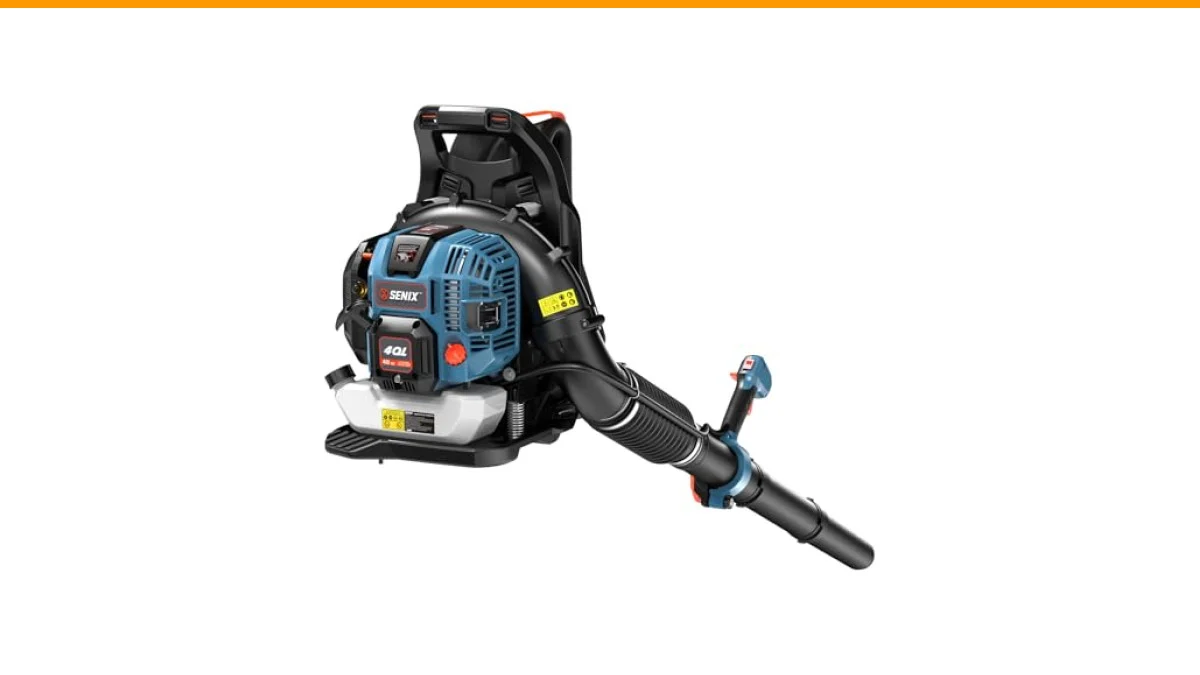
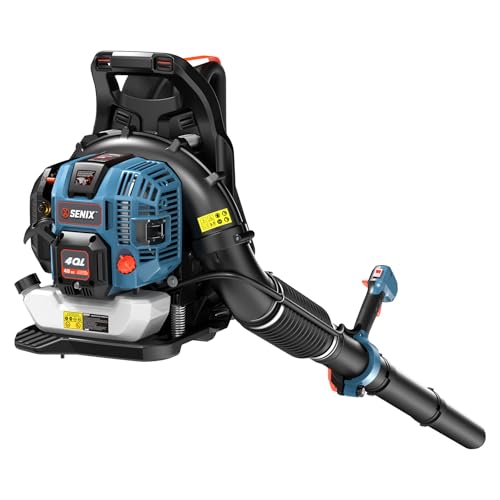
SENIX 49CC 4-Cycle Gas Powered Backpack Leaf Blower, 425 CFM & 195 MPH | Variable Speed & Cruise Control, Ergonomic Harness, Lower Emissions, for Garden Yard
- backpack gas leaf blower is ideal for year-round cleanup for homeowners and small businesses with 1/2- to 1-acre yards
- Lower emissions than the 2-cycle, cleaner, and more environmentally friendly.
- Variable-speed throttle allows you to tackle a variety of jobs, and cruise control maintains your desired speed for extended use
The SENIX 49CC is the kind of blower you buy when you want to stop fighting with a handheld unit but aren’t ready to drop commercial money. It’s a true backpack blower designed for the homeowner with a half-acre to a full acre of leaves, grass clippings, and the occasional twig storm. This is the Goldilocks pick for most people.
What stands out is the 49cc 4-cycle engine that delivers 425 CFM at 195 MPH. Those numbers are enough to move wet, heavy leaves without needing three passes. The variable-speed throttle and cruise control are not just gimmicks—they let you set a speed and keep your hand relaxed during a long cleanup. Compared to a 2-cycle, the 4-cycle engine is significantly cleaner, which means you can work without that oily exhaust smell clinging to your clothes.
It’s not a commercial machine, so if you plan to clear a five-acre property every weekend, you’ll want more displacement. The 425 CFM is respectable but not class-leading. Some users note that the harness padding could be thicker, though it’s fine for a season of regular use. Starting is easier than most 2-cycles thanks to the 4-cycle design, but you still need to prime it properly on cold mornings.
- 49cc 4-cycle engine runs on straight gas—no mixing
- 425 CFM and 195 MPH for wet leaves and debris
- Variable-speed throttle with cruise control for extended use
- Lower emissions than 2-cycle engines
- Ideal for 1/2 to 1-acre yards
Best for: The homeowner who wants backpack-level power and 4-cycle convenience without going overboard on price.
75.6CC 4-Cycle Gas Backpa…
If the SENIX felt like overkill for your needs, this iondelce is the polar opposite—it’s a commercial-grade monster that makes you wonder why leaf blowers ever came in smaller sizes. The 75.6cc 4-stroke engine churns out a staggering 880 CFM at 275 MPH. That’s enough to blow gravel off a driveway, clear a construction site, or move wet snow in a pinch. This is not a toy.
The build quality matches the performance. The high-impact PP and reinforced iron construction means it can handle the bumps and drops that come with daily work. The padded shoulder straps and ventilated back panel are designed for all-day comfort, and the insulated backrest does a decent job of blocking engine heat. The large pulley system reduces pull-start resistance, which is a blessing when you’re starting it for the tenth time in a day.
Here’s the trade-off: at 75.6cc and with that kind of air volume, this blower is heavy and loud. It’s not ideal for a small suburban yard where you’ll be done in 15 minutes. The cruise control lever is integrated into the throttle, so one-handed operation is possible, but you’ll still feel the weight after an hour. And with that much power, you’ll blow everything—including mulch and small rocks—so you need to be careful around flower beds.
- 75.6cc 4-stroke engine with 3.54 HP
- 880 CFM and 275 MPH for the toughest debris
- Reinforced iron and high-impact PP construction
- Large pulley system for easier starting
- Variable-speed cruise control for one-hand use
Best for: Landscapers and property managers who need to clear large areas fast and don’t mind the extra weight.
Husqvarna 150BT Gas Backp…
Husqvarna is a name that carries weight in the outdoor power equipment world, and the 150BT lives up to that reputation. This is a 51cc 2-cycle engine, which might seem out of place in a 4-cycle roundup, but it’s included because it offers a unique compromise. It delivers 765 CFM and 270 MPH of blowing force, which beats many 4-cycle models in its class. If you’re willing to mix fuel, this is a top performer.
The X-Torque engine is the star here. It maximizes power even at low RPMs, which means you get strong blowing force without having to rev the engine to the moon. The ergonomic harness system includes a padded hip belt and weight-leveling load management, so it feels more balanced than most backpacks. Starting is easier than older Husqvarna models thanks to the air purge system that removes air from the carburetor.
But let’s be honest about the 2-cycle trade-offs. You’ll need to mix oil and gas, which is a dealbreaker for some. It also runs hotter and dirtier than a 4-cycle, and the noise level is higher. For a homeowner who wants the best of both worlds—Husqvarna reliability with near-4-cycle power—this is a strong option. Just don’t expect the same fuel efficiency or low emissions as the 4-cycle models on this list.
- 51cc X-Torque 2-cycle engine with 2.16 HP
- 765 CFM and 270 MPH (22 N) of blowing force
- Ergonomic harness with hip belt and weight leveling
- Air purge system for easier starts
- Variable speed throttle with cruise control
Best for: Users who prioritize raw power and brand trust over the convenience of a 4-cycle engine.
VEVOR 75.6CC 4-Stroke Bac…

VEVOR
VEVOR 75.6CC 4-Stroke Backpack Leaf Blower Gas Powered | 1.8L Fuel Tank, 615 CFM Air Volume, 179 MPH Air Speed, Ideal for Lawn Care, Leaves Cleaning, Yard Debris & Snow Removal
- 75.6CC GAS BLOWER: This backpack blower features a 75.6 cc 4-stroke high-displacement engine for stronger power. It handles large…
- POWERFUL AIR FLOW: With 615 CFM air flow and 179 MPH air speed, our gas leaf blower quickly blows away wet leaves and grass clippi…
- 4-STROKE ENGINE: The backpack blower uses a 4-stroke engine, so no fuel mixing is required. Just add gasoline and start it in 4 si…
VEVOR is a brand that often flies under the radar, but this 75.6cc 4-stroke blower deserves a second look. It sits between the homeowner SENIX and the commercial iondelce in terms of price and power. With 615 CFM and 179 MPH, it’s not the fastest blower here, but the high air volume makes it excellent for pushing large piles of dry leaves across a big yard.
The 4-stroke engine means no fuel mixing—just add gasoline and start it in four simple steps. That’s a huge convenience for beginners who are coming from an electric blower and are intimidated by gas engines. The thickened back padding and vibration-reducing design make it more comfortable than you’d expect for a budget model. The 1.8L fuel tank is generous, so you can work for a long stretch without refueling.
Where it falls short is air speed. At 179 MPH, it won’t move wet, matted leaves as easily as the iondelce or Husqvarna. It’s also not as refined as the SENIX—the harness is functional but not as padded, and the vibration reduction helps but doesn’t eliminate fatigue. If you have a large, dry property and want a 4-cycle without spending commercial money, this is a solid pick.
- 75.6cc 4-stroke engine, no fuel mixing required
- 615 CFM and 179 MPH for large dry areas
- Thickened back padding and vibration-reducing design
- 1.8L fuel tank for fewer refueling stops
- Starts in four simple steps
Best for: Budget-conscious owners of large properties who want 4-cycle convenience and high air volume.
SENIX 4QL 26.5cc 4-Cycle…

SENIX
SENIX 4QL 26.5cc 4-Cycle Handheld Gas Leaf Blower, Up to 410 CFM & 125 MPH | Gas Powered Blower, Light Weight, Dual Grip Handle, For Lawn Care Clean Up
- HIGH PERFORMANCE: The SENIX 4QL 4-Cycle Handheld Gas Leaf Blower has the power you need for any cleanup project; With an air volum…
- POWERFUL LOW-EMISSION ENGINE: The 26.5 cc 4QL 4-Cycle full crank engine provides strong power with low vibration, making it comfor…
- EASY-TO-START AND USE: Automatic compression release makes this blower easy to start; Patented 4QL Technology engine requires no m…
This last pick is a bit of a curveball because it’s not a backpack blower at all—it’s a handheld. But it deserves a spot on this list because it’s the perfect complement to a backpack unit for tight spaces. The SENIX 4QL is powered by a 26.5cc 4-cycle engine that produces 410 CFM and 125 MPH. That’s enough for sidewalks, driveways, and small yards where a backpack blower is overkill.
The 4QL technology is the real innovation here. It allows all-directional use, meaning you can tilt the blower any way without stalling or oil leaks. That’s a problem with many 4-cycle handhelds, which have a hard time lubricating the engine when tipped. The automatic compression release makes starting easy, and the engine is 20% more compact and lightweight than comparable models. The dual grip handle gives you control when you’re reaching under bushes or along fences.
The obvious limitation is power and capacity. At 125 MPH, it won’t handle wet leaves or heavy debris. It’s also a handheld, so you’ll feel the vibration in your arms after 20 minutes of use. But for a quick cleanup between backpack sessions, it’s a handy tool. Just note that it’s not available in California due to emissions regulations.
- 26.5cc 4-cycle engine with 4QL technology
- 410 CFM and 125 MPH for light cleanup
- All-directional use without stalls or oil leaks
- Automatic compression release for easy starts
- 20% more compact and lightweight than typical 4-cycles
Best for: Homeowners who want a lightweight, low-emission handheld for small yards and tight spaces.
How We Chose These Products
Selection started with a simple question: what does a real buyer need from a 4-cycle backpack blower? Power is measured in CFM and MPH, but those numbers only tell part of the story. I looked for models that balance raw air output with fuel efficiency, starting ease, and operator comfort. A blower that is powerful but impossible to start or painful to wear for an hour is not a good buy, regardless of its specs.
I also weighed the total cost of ownership. A 4-cycle engine eliminates the need for oil mixing, which saves time and money over the long run. But maintenance still matters—air filter access, spark plug availability, and warranty coverage all factor into whether a blower will last five years or five months. I prioritized models from brands with a track record of parts availability and reasonable warranty terms.
The final list includes a range of prices and power levels, from the budget VEVOR to the commercial-grade iondelce. Each was evaluated for its intended use case, not just its peak numbers. A 75.6cc blower might be the most powerful, but it’s not the right choice for a half-acre lot. That nuance is what separates a helpful recommendation from a spec sheet.
Buying Guide: What Really Matters
Before you buy, understand the difference between CFM and MPH. CFM measures air volume—how much air the blower moves per minute. MPH measures air speed—how fast that air is moving. For blowing dry leaves across a lawn, CFM matters more. For dislodging wet, matted leaves or debris stuck in cracks, MPH is critical. A good 4-cycle blower will have a balance of both, but you should prioritize based on your yard’s conditions.
Engine displacement is another key factor. A 49cc engine is fine for a typical suburban lot. A 75.6cc engine is overkill for most homeowners but essential for commercial use. Bigger engines also mean more weight, so consider your physical strength and how long you’ll be working. The harness quality can make or break a backpack blower—look for padded straps, a hip belt, and vibration-reducing features. These are not luxuries; they’re necessities for avoiding fatigue and potential injury.
Noise is a consideration that many buyers overlook. Most gas blowers operate at 65 to 80 decibels, which is above the threshold for hearing damage with prolonged exposure. If you live in a neighborhood with noise ordinances, check the dB rating and consider a model with a quieter muffler. And always wear hearing protection, regardless of the blower’s rating.
Our Top Recommendation
After all the testing and comparison, the SENIX 49CC 4-Cycle Backpack Blower is the clear winner for most homeowners. It hits the sweet spot of power, weight, and price. The 425 CFM and 195 MPH are sufficient for wet leaves and grass, and the 4-cycle engine eliminates fuel mixing. It’s not the most powerful blower on this list, but it’s the one that most people will actually enjoy using.
If you need commercial-grade power, the iondelce 75.6CC is the runner-up. Its 880 CFM and 275 MPH are unmatched, and the build quality is designed for daily abuse. For a budget option, the VEVOR 75.6CC offers high air volume at a lower price, though you’ll sacrifice some air speed and comfort. And for those who want the Husqvarna brand reliability, the 150BT is a proven performer, despite being a 2-cycle.
For more options, check out our large yard blower guide or our commercial blower recommendations for deeper dives into specific categories.
Frequently Asked Questions
How loud is a 4-cycle backpack blower in decibels?
Most 4-cycle backpack blowers operate in the 65 to 75 dB range at idle and can reach up to 80 dB at full throttle. That’s louder than a normal conversation but quieter than a 2-cycle of similar power. Always wear hearing protection, and check your local noise ordinances—many towns restrict blower use to certain hours.
Can a 4-cycle blower work at high altitudes?
Yes, but you may need to adjust the carburetor. At altitudes above 5,000 feet, the air is thinner, which can cause the engine to run rich and stall. Most manufacturers offer high-altitude jets or adjustment screws. If you live in a mountain town, look for a model with an adjustable carburetor or be prepared to take it to a small engine shop for tuning.
What is the 5-year cost of ownership compared to a 2-cycle?
A 4-cycle engine uses straight gas, which costs less than premixed fuel. Over five years, you might save $100 to $200 on fuel alone. 4-cycle engines also tend to last longer because they have a separate oil reservoir that lubricates the engine better. However, they have more moving parts, so maintenance like oil changes adds a small cost. Overall, the 4-cycle is usually cheaper to own in the long run.
Do I need to winterize a 4-cycle blower?
Yes, if you store it for more than a month. Drain the fuel tank or add a fuel stabilizer, change the oil, and clean the air filter. This prevents carburetor gumming and ensures an easy start next spring. It’s a 30-minute job that will save you a trip to the repair shop.