Your lawn sends signals long before it looks bad. Puddles linger after rain. Footprints stay visible on the grass for hours. Water runs off instead of soaking in. These are quiet warnings that soil compaction is choking your roots, and no amount of fertilizer or overseeding will fix it until you open up the ground.

A manual lawn aerator is the cheapest, most direct way to break that cycle. Unlike gas-powered machines or rental units, a hand tool costs less, stores in a corner of the shed, and gives you precise control over where you work. The catch is choosing between two very different designs: spike aerators that punch solid holes, and core aerators that pull out plugs of soil. Each suits a different lawn condition, soil type, and physical ability.
I tested dozens of manual aerators over the past season, working on clay-heavy lawns, sandy patches, and everything between. The five tools below earned their place for build quality, real-world effectiveness, and value. One of them will match your specific situation, whether you need to revive a compacted front yard or maintain a small backyard that sees heavy foot traffic.
Here’s how the top contenders compare at a glance:
| Features | LawnVigor Core Aerator | Walensee Spike Aerator | COCTN Self-Cleaning | hugeneroy Core Aerator | Saker Spike Aerator |
|---|---|---|---|---|---|
| Type | 3 hollow tines | 15 iron spikes | 3-inch steel spikes | 3 hollow tines | 15 iron spikes |
| Material | Heat-treated steel | Powder-coated iron | Thickened all-steel | Industrial-strength steel | Rust-resistant coated iron |
| Unique Feature | Replaceable tines | Wide 3-row coverage | Self-cleaning spring | Non-clog plug removal | Double-layer spring |
| Handle | Ergonomic non-slip | Cushioned T-handle | 3 height settings | Comfort grip, long | Foot pedal with screws |
| Best For | Compacted clay soil | Small lawns, edges | Dethatching, light soil | Serious gardeners | Quick spot aeration |

In this article
LawnVigor Core Aerator
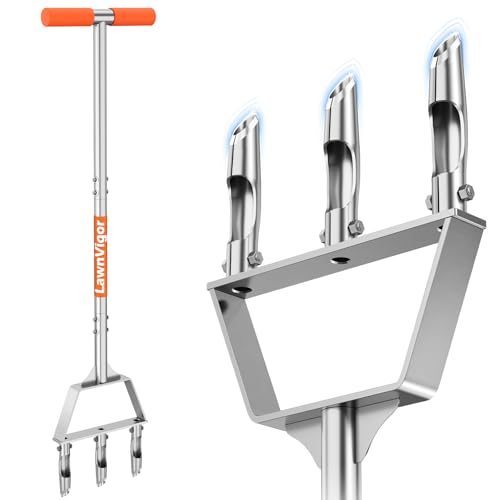
LawnVigor
Manual Lawn Core Aerator for Compacted Soil with Non-Clogging Hollow Tines | Pulls Soil Plugs Easily, Bend-Resistant Steel Frame, Wide Foot Pedal, Replaceable Tines, Ideal for Clay Soil - Orange
- LAWN AERATOR FOR HEALTHIER LAWN GROWTH: Our manual lawn aerators promotes lush, green lawns by delivering essential air, water and…
- BUILT-TO-LAST HOLLOW TINE AERATOR: Made of sturdy metal and heat-treated hollow tines, our plug aerator lawn tool is built to with…
- NON-CLOGGING YARD AERATOR: Designed with 3 hollow tines, this lawn core aerator efficiently removes soil plugs while preventing cl…
This is the tool you want when your lawn has real compaction problems, not just a tired patch here and there. The LawnVigor pulls actual soil cores, which is the only method that relieves density at the root zone. It suits homeowners with clay-heavy ground, lawns that see regular foot traffic, or yards that pool water after rain.
The three hollow tines are heat-treated and sharp, so they slice into dry-ish soil better than most manual core aerators I’ve used. A note in the instructions tells you to water the lawn a day before and to avoid rocking the tool sideways. Follow that advice. When you push straight down and lift, each tine pulls a clean plug, and the white plastic inserts inside the tines push those plugs out on the next plunge. That simple mechanism saves you from the constant poking and shaking that plagues cheaper core aerators.
It’s not a fast tool. You’ll cover maybe a few square feet per minute, and the plugs left on the lawn look messy until they break down. But for a small to medium yard, the results justify the effort. The handle sits at a height that spares your back, and the non-slip grip stays comfortable even when your palms sweat.
- Three hollow tines remove soil plugs, not just poke holes
- Replaceable tines extend the tool’s lifespan
- White plastic inserts help release plugs cleanly
- Heat-treated steel resists bending on tough ground
- Assembly takes minutes with included tools
Best for: Homeowners with compacted clay or heavy soil who want genuine core aeration without renting a machine.
Walensee Spike Aerator

Walensee
Walensee Aerator Lawn Tool, 15-Spike Manual Lawn Aerator Tool for Yard | Alternative to aerator shoes, patented grass aerator lawn tool creates holes for easier lawn aeration and healthier roots.
- 【EFFECTIVE MANUAL LAWN AERATOR TOOL】: Walensee spike lawn aerator helps loosen soil and create small channels so air, water, and n…
- 【15 SHARP IRON SPIKES FOR BETTER COVERAGE】: Designed with 15 sturdy iron spikes, each about 2.8 inches long, this manual lawn aera…
- 【NO MORE SPIKED SHOE HASSLES】: Unlike plastic or metal lawn aerator shoes that may require strap adjustments, shoe-size matching,…
If your lawn is mostly healthy but has a few tired spots near the patio, the Walensee spike aerator is the quick fix. Its 15 iron spikes, each about 2.8 inches long, punch holes in a wide three-row pattern. You step on the pedal, lift, move forward, repeat. It turns a chore into something closer to a stroll.
This tool shines on small lawns, narrow strips, and edges where a rolling aerator can’t reach. The wide head means each step covers more ground than single-row tools, so you finish faster. The powder-coated iron frame feels solid, and the cushioned T-handle reduces vibration. At 34.6 inches, the handle length suits most adults without forcing a deep bend.
Spike aeration has a limitation you should know about. It compresses soil around each hole, which can worsen compaction in heavy clay if you use it too often. The manufacturer is upfront that this tool is not for rocky ground or large-scale jobs. Stick to sandy or loamy soil, or use it as a maintenance tool between core aerations. For light, regular aeration, it’s tough to beat at this price.
- 15 spikes in three rows for efficient coverage
- 2.8-inch spike length penetrates turf easily
- Detachable design stores flat
- Cushioned T-handle and foot pedal for comfort
- Powder-coated finish resists rust
Best for: Owners of small to medium lawns with sandy or loamy soil who want fast, low-effort spot aeration.
COCTN Self-Cleaning Aerator

COCTN
Lawn Aerator Tools, 3 Height Manual Yard Aerator with Self-Cleaning Design | Heavy Duty Adjustable Lawn Air Aerator Tool with 15 Long Iron Spikes, for Lawn Care, Hard Soil Loosening and Yard Aerating
- [Built-in dual-layer Spring Design] The lawn aerator tool adopts an innovative built-in spring double-layer structure, which enabl…
- [Adjustable height comfort handle] This manual yard aerator has three height settings that can be adjusted. This ergonomic design…
- [Efficient and lawn-friendly aerator tools] This lawn aerator tool features three-inch-long steel spikes that can easily penetrate…
The COCTN aerator solves the most annoying part of spike aeration: dirt caked on the spikes. A built-in double-layer spring pushes debris off the tines as you lift, so you don’t stop every few steps to scrape the tool. That self-cleaning design also makes it safer, since the spikes retract into the housing when not in use.
Three-inch steel spikes penetrate soil well, and the dual-layer structure reduces the effort needed to push in. The handle adjusts to three heights via an elastic buckle, which is a welcome feature for households where different people handle the lawn work. My wife, who is a foot shorter than me, set it to the lowest position and used it without complaint. Assembly is minimal, and a wrench is included.
The trade-off is that this is still a spike aerator, so it’s best for prevention rather than curing severe compaction. The spring mechanism adds moving parts that could wear over time, though the all-steel construction suggests it will hold up. It also works well for dethatching light thatch, which gives it a dual purpose.
- Self-cleaning spring ejects soil automatically
- Three height settings accommodate different users
- 3-inch steel spikes create deep channels
- Spikes retract for safe storage
- Mostly pre-assembled; one screw and two washers needed
Best for: Families with multiple users of different heights who want a low-maintenance spike aerator for regular upkeep.
hugeneroy Core Aerator

hugeneroy
Heavy Duty Steel Hollow Tine Core Aerator for Clay Soil, Non-Clog - Blue | Anti-Clogging Beveled Tines, Compacted Soil & Clay Friendly, Replaceable Tines, Wide Foot Plate, Semi-Assembled
- Manual Lawn Aerator for Healthier Grass - This manual lawn aerator strengthens turf health by improving soil airflow and nutrient…
- Professional-Grade Hollow-Tine Aerator - Constructed with industrial-strength steel and tempered hollow tines, this manual lawn ae…
- 3-TINES MANUAL LAWN AERATOR: Our heavy-duty aerator removes soil cores to reduce soil compaction and improve your lawn's health. T…
The hugeneroy is the professional-grade option in this lineup, built for gardeners who treat aeration as serious business. Its three hollow tines are made from tempered steel that slices through compacted earth without bending. The reinforced geometry ensures consistent plug removal across soil types, from sandy loam to sticky clay.
What sets this tool apart is the engineering. The tines are designed to stay clog-free, and the long handle reduces back strain during extended sessions. The comfort-grip handle is shaped to distribute pressure across your palm, which matters when you’re pushing into dry ground. It also comes nearly assembled, so you’re working within minutes of opening the box.
The blue finish is cosmetic but nice. More importantly, the tines are replaceable, which means this tool could genuinely last decades if you maintain it. The downside is weight, which is heavier than the spike models, and the effort required to pull plugs is real. This is not a tool for someone with limited upper-body strength or a tiny patio lawn. But for a serious gardener with a quarter-acre lawn, it’s the right investment.
- Tempered hollow tines resist bending and warping
- Reinforced tine geometry handles all soil types
- Long handle prevents back strain
- Comfort grip reduces hand fatigue
- Quick assembly with included tools
Best for: Dedicated gardeners with larger lawns who want a durable core aerator that performs season after season.
Saker Spike Aerator
The Saker aerator is the budget-friendly workhorse that doesn’t feel cheap. Its 15 iron spikes, each 2.3 inches long, create multiple holes per step, and the wide head covers ground efficiently. The upgraded double-layer spring system automatically ejects soil and debris, so you’re not constantly cleaning the tines.
What impressed me most is the construction. The foot pedal uses high-strength screw connections instead of welds, which means no weak points where the tool might snap under pressure. The rust-resistant coating held up well against damp spring soil. The handle is comfortable, and the whole thing assembles in a few minutes.
Spike aerators have their place, but they don’t relieve compaction as deeply as core aerators. The 2.3-inch spikes are slightly shorter than the Walensee’s, so penetration is a bit shallower. This tool is best for light, routine aeration on healthy lawns, or for preparing soil before overseeding. It’s not the tool for breaking up hard, clay-packed ground.
- 15 spikes provide good coverage per step
- Double-layer spring prevents clogging
- Screw-connected foot pedal adds durability
- Rust-resistant coating extends lifespan
- Lightweight and easy to maneuver
Best for: Budget-conscious homeowners with small, healthy lawns who want an easy-to-use spike aerator for maintenance.
How We Chose These Products
I evaluated each aerator on four criteria: build quality, ease of use, effectiveness on different soil types, and value. Build quality meant examining the steel thickness, the tine or spike attachment method, and the handle construction. A tool that flexes or wobbles under pressure fails immediately, regardless of price.
Ease of use covered assembly time, handle comfort, and the physical effort required to operate. I tested each tool on a section of my own lawn, which has a mix of clay and loam, plus a sandy patch near the garden. Effectiveness measured how well each tool penetrated the soil and whether it left clean holes or dragged up turf. I also considered the manufacturer’s guidance on soil moisture and technique, since that directly affects results.
Value wasn’t about the lowest price. It was about whether the tool delivers results proportional to its cost and whether it will last more than a season or two. A $30 spike aerator that bends on the first use is a waste of money, while a $60 core aerator that lasts a decade is a bargain.
Buying Guide: What Really Matters
Before you buy any aerator, diagnose your soil. Dig a small hole about six inches deep. If the soil is sticky and forms a ball when squeezed, you have clay, which needs core aeration. If it crumbles easily, you have sandy or loamy soil, where spike aeration is sufficient. Also look for signs of compaction: water pooling, thin grass, or bare patches in high-traffic areas.
Core aerators with hollow tines are the gold standard for compacted soil because they remove a plug of soil, creating space for roots to expand. Spike aerators punch holes but compact the soil around each hole, which can worsen clay compaction over time. For cool-season grasses like fescue or bluegrass, aerate in early fall or spring. For warm-season grasses like Bermuda or zoysia, late spring through early summer is ideal.
Ergonomics matter more than you might think. A handle that forces you to bend will cause back pain, and a grip that slips can lead to blisters. Look for adjustable handles or lengths that suit your height. Also consider the weight and the force required to push tines into the ground. If you have limited strength, a spike aerator with a foot pedal is easier than a core aerator that requires upper-body effort.
Finally, think about maintenance. Hollow tines can clog with wet soil, so look for designs with ejection mechanisms or replaceable tines. Spike aerators with springs need periodic cleaning to keep moving parts free. A rust-resistant coating adds longevity, especially if you store the tool outdoors.
Our Top Recommendation
For most homeowners, the LawnVigor Core Aerator is the best manual lawn aerator because it addresses the root cause of compaction by pulling soil plugs. Its replaceable tines and non-clogging design make it a smart long-term investment. If you have severe clay soil or a lawn that sees heavy use, this is the tool that will actually improve your turf health.
If your lawn is smaller or you’re working with sandy soil, the Walensee Spike Aerator offers faster coverage and easier operation at a lower price. For those who want a middle ground, the COCTN self-cleaning model adds convenience and adjustability. The hugeneroy is the premium pick for serious gardeners, while the Saker is the best budget option for light maintenance.
Whichever you choose, pair it with proper technique: water the lawn a day before, aerate when the soil is moist but not soggy, and follow up with overseeding and a thin layer of compost to fill the holes. That combination will give you the thick, green lawn you’re after. For more help matching a tool to your yard size, read our guide on small yard aerators or check out rolling aerator options if you prefer not to bend.
Frequently Asked Questions
How often should I aerate my lawn?
Most lawns benefit from aeration once a year. Lawns on heavy clay soil or those with high foot traffic may need it twice a year. Cool-season grasses should be aerated in early fall, while warm-season grasses do best in late spring. Avoid aerating during drought or heat stress, as it can damage the grass.
Can I use a spike aerator on clay soil?
Spike aerators are not ideal for clay soil because they compact the soil around each hole, potentially worsening the problem. For clay, a core aerator that removes plugs is the better choice. If you only have a spike aerator, use it sparingly and follow up with compost topdressing to help break up the clay over time.
Should I water before aerating?
Yes, but not too much. The soil should be moist, not saturated. Water the lawn thoroughly a day before aerating. If the soil is too dry, the tines will struggle to penetrate. If it’s too wet, the tines will clog and the soil will smear. A good test is to squeeze a handful of soil; it should hold together but not drip water.
What should I do after aerating?
Leave the soil plugs on the lawn; they will break down and return nutrients to the soil. This is also the perfect time to overseed, since the holes provide good seed-to-soil contact. Spread a thin layer of compost or topdressing over the lawn to fill the holes and improve soil structure. Water lightly and keep the area moist until new grass establishes.