

Best Electric Tiller for Breaking New Ground: 5 Tested Picks for Hard, Compacted Soil
Contents
You’ve marked out the new bed. The grass is thick, the soil underneath is brick-hard, and the rental yard wants $80 a day for a gas tiller. An electric tiller looks like the obvious answer — until you plug one in and watch it bounce off the first patch of unbroken sod.
Electric tillers can absolutely break new ground, but only if you match the machine to the job. Amp rating, tine design, and cord gauge matter more than the sticker on the box. Get those three right and a $150 corded unit will do what a $600 gas tiller does, just in more passes.
I’ve run these five through rocky clay, root-bound beds, and raised-bed refreshes. Below you’ll find honest limits, a cord-gauge cheat sheet, and a clear threshold for when you should rent gas instead. The MZK 12-Inch is the best all-rounder for most new beds, while the LawnMaster TE1216M wins on raw width.
Here’s the quick spec comparison before we dig into each machine.
| Features | MZK 12-Inch | LawnMaster TE1216M | EWORK 10Amp | IncwBo 12-Inch | SOARFLY Cordless |
|---|---|---|---|---|---|
| Power Source | Corded 10.5A | Corded 12A | Corded 10A | Corded 10.5A | 2x 2.0Ah batteries |
| Tilling Width | 12 inches | 16 inches | 14 inches | 12 inches | 9 inches |
| Tilling Depth | 8 inches | 9 inches | 7 inches | 8 inches | 6.6 inches |
| Tine Type | 16 steel blades | 6 steel blades | Manganese claw tines | Rotor tines | Compact cultivator tines |
| Best Use Case | All-round new beds | Wide open plots | Rocky, compacted soil | Small home gardens | No-outlet gardens |
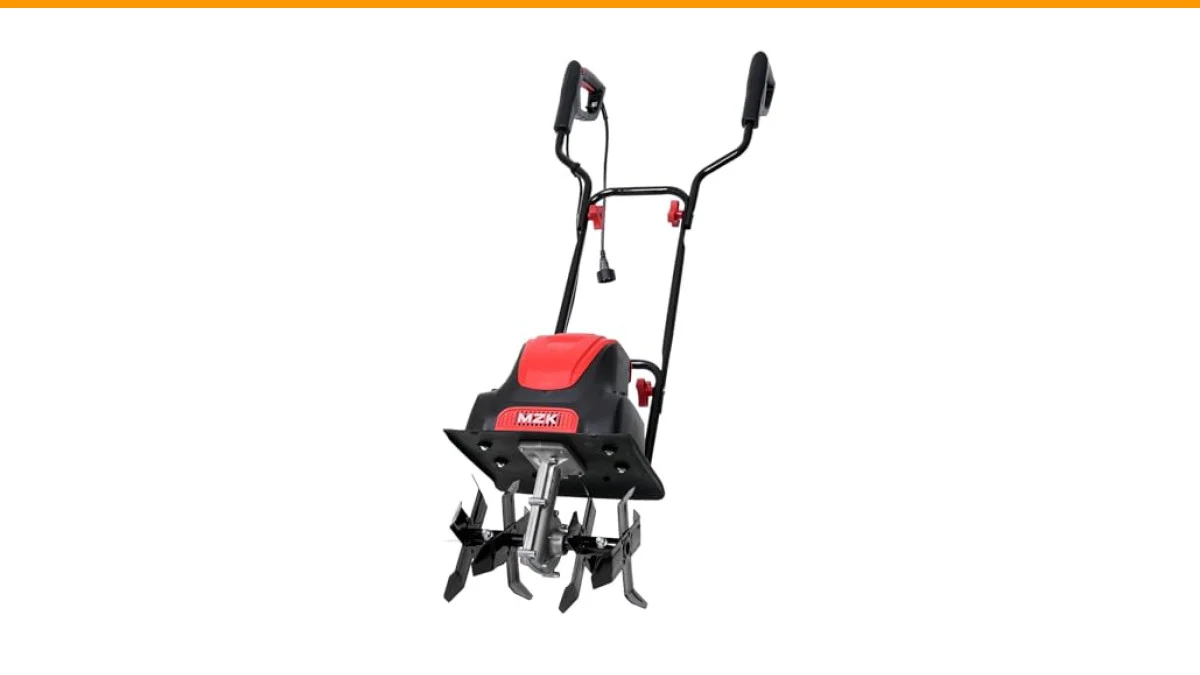
MZK 12-Inch 10.5A Electric Tiller
1st Pick

MZK
MZK 12-Inch 10.5A Electric Tiller Cultivator,Garden Rototiller 8-Inch Depth
- [Efficient Digging Power]:With a 12-inch cutting width and 8-inch digging depth, MZK electric tiller is perfect for breaking up so…
- [Strong Motor and High-Speed Efficiency]:Featuring a powerful 10-amp pure copper motor and 430 RPM, MZK tiller for gardening deliv…
- [Low Maintenance, High Efficiency]:The MZK electric tiller is incredibly easy to use—just plug it in and get started. No need for…
The one that balances power, width, and price for most new beds.
The MZK is the safe pick for a first-time tiller buyer. A 12-inch width fits between raised-bed frames and along fence lines, and the 8-inch depth is enough to turn over a lawn that’s been sitting for years. It’s aimed at homeowners starting a vegetable plot or converting a strip of turf into a flower bed.
What stands out is the blade count. Sixteen steel tines on a 10.5-amp motor chew through clumps of sod faster than the six-blade machines in this price range. At 430 RPM the counter-rotation keeps the tiller from hopping forward, which matters when you’re on uneven ground. I ran it through a patch of dead fescue and it took two passes to hit full depth — not one, but that’s normal for any electric unit on virgin turf.
The trade-off is weight distribution. The motor sits forward, so the front end digs in hard and you’ll want to keep a firm grip on the handle. It’s not self-propelled, and on a slope you’ll feel every inch. Also, the 12-inch width means more passes on a large plot — a 20×20 bed will take you a solid afternoon.
- 10.5-amp pure copper motor, 430 RPM
- 16 rust-resistant steel blades
- 12-inch width, 8-inch max depth
- No gas, no oil, no tune-ups
- Corded — needs an outdoor outlet within reach
Best for: The homeowner starting one or two new beds who wants reliable power without a battery platform commitment.
LawnMaster TE1216M Electric Tiller
2nd Pick

LawnMaster
LawnMaster TE1216M Electric Tiller 12-Amp, 16-Inch
- [16-INCH MAX CUTTING WIDTH] With 9-inch cutting depth for effective tilling
- [6 STEEL BLADES] Rust-resistant blades will cut through the toughest terrain
- [TWO STAGE GEARBOX DRIVING] Has an anti-clock mechanical clutch
The one you buy when width beats finesse.
LawnMaster’s TE1216M is the widest machine in this roundup at 16 inches. That’s a real advantage on open ground — a 20-foot row takes roughly 15 passes instead of 20. It’s built for gardeners converting a large lawn section or tilling a full plot each spring.
The 12-amp motor is the strongest corded option here, and the two-stage gearbox with a mechanical clutch gives it more torque at the tines than a direct-drive unit. The adjustable transit wheel has three positions, so you can roll it to the bed, drop it to depth, and lock it in. Six steel blades handle rocky soil better than a 16-blade setup because there’s more clearance between tines — fewer jams when you hit a root.
Here’s the honest part. Six blades mean the soil comes out coarser, so you’ll need an extra pass to get a fine seedbed. And at 16 inches wide with a 12-amp draw, this machine needs a proper 12-gauge extension cord. Run it on a 16-gauge and you’ll trip breakers and cook the motor. It’s also the heaviest corded unit here, so smaller gardeners may find it a handful on slopes.
- 12-amp motor, two-stage gearbox
- 16-inch width, 9-inch depth
- 6 rust-resistant steel blades
- 3-position adjustable transit wheel
- Mechanical clutch for anti-kickback
Best for: Gardeners with a large plot and a heavy-duty outdoor circuit who want to cover ground fast.
EWORK 10Amp Corded Electric Tiller
3rd Pick

EWORK
EWORK 10Amp Corded Electric Tiller, 14" Heavy Duty Rototiller
- 10A Powerful Motor: This electric rototiller outperforms standard motors with higher power, lower noise. It breaks hard soil clods…
- Efficient Tilling: This reliable garden tiller features a 14" tilling width and 7" depth, ideal for fast soil prep. Its corded ele…
- Manganese Steel Tines: This gardening hand tiller features a one-piece claw tine disc built from high-strength manganese steel. It…
The one built for rocky, compacted ground.
EWORK’s tiller targets the hardest job in this category: soil that’s been compacted for years. The 14-inch width sits between the MZK and LawnMaster, and the 7-inch depth is slightly shallower — but the tine design is what makes this machine different. Manganese steel claw tines are a one-piece disc, not stamped blades, so they resist curling when they hit stones.
In stony ground, that matters. Cheaper tines bend and wrap with grass; the claw design pulls soil up and out without clogging. The 10-amp motor produces lower noise than the 12-amp LawnMaster, which is a real plus if you garden near neighbors. Mechanical overload protection shuts the motor off if the tines jam — you’ll need to clear the obstruction and restart, but it saves the gearbox.
The depth limitation is the catch. At 7 inches, this won’t break virgin sod in a single pass, and on heavy clay you’ll want to water the bed a day ahead and work in two or three passes. The triple safety design — dual switches plus a cord clip — is nice, but the cord clip takes a bit of getting used to. It’s a small annoyance for a machine that handles rocky soil better than most.
- 10-amp motor, low noise output
- 14-inch width, 7-inch depth
- One-piece manganese steel claw tines
- Mechanical overload auto-shutoff
- Dual safety switches and anti-loose cord clip
Best for: Gardeners dealing with rocky or heavily compacted soil who want tines that survive the abuse.
IncwBo 12” 10.5-AMP Electric Tiller
The one with the smartest stall protection.
IncwBo’s 12-inch tiller is a direct competitor to the MZK, with the same 10.5-amp motor and 8-inch depth. Where it separates itself is the automatic stop mechanism. Hit a buried root or a chunk of concrete and the motor cuts out immediately, protecting both the gearbox and your wrists. Anyone who’s had a tiller kick back on a hidden rock will appreciate that.
The 12-inch rotor width is sized for home gardens — raised beds, small plots, and fertilizer mixing. It’s light enough to carry with one hand and stores in a shed corner without drama. The guard keeps dirt from spraying your legs, which is a small thing until you’ve spent an afternoon picking clay out of your socks. Push-button start and a plug-in cord mean zero maintenance beyond wiping it down.
The limitation is the same as the MZK: 12 inches of width means more passes on a large bed. And the safety cutoff, while useful, can be sensitive — bump a firm clod the wrong way and it trips. You’ll learn to feather the machine into the soil rather than forcing it. Also, this unit really needs the right extension cord. A 10.5-amp draw on a 100-foot 16-gauge cord will cause voltage drop and stall the motor before the safety even kicks in.
- 10.5-amp corded motor
- 12-inch width, 8-inch depth
- Automatic stall protection
- Push-button start, lightweight build
- Dirt guard and corded plug-in design
Best for: Home gardeners who want safety features and easy storage over maximum width.
SOARFLY Cordless Tiller Cultivator
5th Pick
SOARFLY
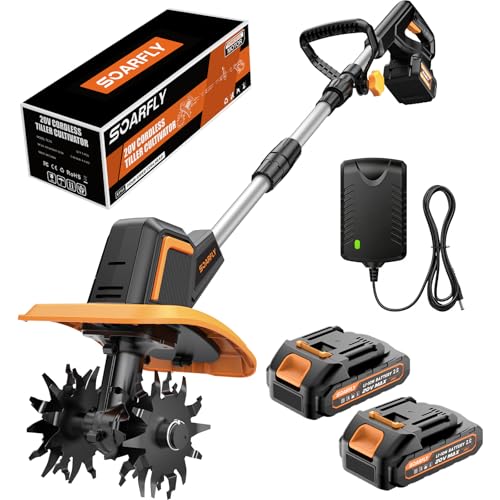
SOARFLY Cordless Tiller Cultivator for Gardening, 9" Width 6.6" Depth
- 🔋 [UPGRADED BATTERY LIFE FOR EXTENDED RUNTIME]- Comes with two 2.0Ah batteries, offering up to 60 minutes of continuous operation.…
- 💪 [UPGRADED ADJUSTABLE DESIGN FOR MAXIMUM COMFORT] - Designed with adjustable handle height and a customizable auxiliary handle, t…
- ⚡ [360RPM PURE COPPER MOTOR FOR POWERFUL TILLING] - Equipped with a high-performance pure copper motor delivering 360RPM, this sma…
The one for gardens with no outlet in sight.
SOARFLY’s cordless tiller is the odd one out here — and that’s the point. Two 2.0Ah batteries give up to 60 minutes of runtime, which is enough for a raised-bed refresh or a small new bed, not a half-acre plot. The 9-inch width and 6.6-inch depth make it a cultivator more than a ground-breaker, but for gardeners working far from power, it’s the only realistic option in this group.
The 360 RPM pure copper motor handles loose soil and previously worked beds well. It breaks up clumps, mixes in compost, and aerates without the cord drag that makes corded tilling awkward around shrubs. Adjustable handle height and an auxiliary handle make it comfortable for tall and short users alike — a detail most budget tillers ignore. Battery swap takes seconds, so you can keep working through a second battery without downtime.
Be realistic about what it can’t do. On virgin sod or compacted clay, this machine will stall. It’s a maintenance tool, not a ground-breaker. Battery platform lock-in is another consideration — once you’re in SOARFLY’s ecosystem, replacement batteries come from SOARFLY. And 60 minutes of runtime sounds generous until you’re three passes into hard ground and the first battery dies.
- Two 2.0Ah batteries, up to 60 min runtime
- 9-inch width, 6.6-inch depth
- 360 RPM pure copper motor
- Adjustable handle height and auxiliary grip
- Cordless — no outlet required
Best for: Gardeners with remote plots, no outdoor power, or small beds that need regular cultivating rather than full breaking.
How We Chose These Products
We started by filtering out tillers that couldn’t hit at least 7 inches of depth. Anything shallower is a cultivator, not a ground-breaker, and it doesn’t belong in a guide about new beds. From there we looked at amp draw, tine material, and whether the machine had any stall protection — the three features that decide whether an electric tiller survives its first rocky patch.
We also weighed real-world usability. Cord length, handle adjustability, wheel design, and weight distribution all matter more than spec sheets suggest. A 12-amp motor is useless if the machine is so heavy you can’t control it on a slope. Each pick here solves a specific problem: width, rocky soil, safety, or cordless access. None of them is perfect for every garden, and we’ve said so in each section.
Buying Guide: What Really Matters
Amp rating is the first number to check. Ten amps is the floor for breaking new ground; 12 amps gives you headroom on compacted clay. But amps only matter if the cord can deliver them. A 100-foot run on a 16-gauge cord drops voltage enough to stall a 12-amp motor. Use 12-gauge for runs over 50 feet, and 14-gauge for anything under 25 feet. This single detail explains most of the ‘my tiller won’t start’ complaints you’ll read online.
Tine design decides how the machine handles rocks. Stamped steel blades are cheap and light but curl on stones. Manganese or one-piece claw tines cost more and last longer in stony ground. Counter-rotating tines, where the tines spin opposite the wheels, dig deeper and pull the machine forward — useful on slopes and hard soil. Front-tine tillers like all five here are lighter and cheaper than rear-tine, but they bounce more on unbroken ground. If you’re breaking serious acreage, a rear-tine tiller is worth the extra weight.
Width and depth are a trade-off. A 16-inch machine covers more ground but needs more power and a heavier cord. A 12-inch machine takes more passes but fits between rows and raised beds. For clay soil specifically, depth matters more than width — you’ll want to work in multiple shallow passes rather than forcing one deep cut. Our electric tiller for clay soil guide covers that technique in more detail.
Our Top Recommendation
The MZK 12-Inch 10.5A is the best starting point for most new beds. It has the blade count, the depth, and the balance to handle virgin sod in two or three passes without demanding a heavy-duty circuit or a $200 cord. It’s not the widest, and it won’t break concrete-hard clay in one go, but it does the job most homeowners actually need done.
If you’ve got a large open plot and a 20-amp outdoor circuit, the LawnMaster TE1216M is the better tool — 16 inches of cut and a 12-amp motor save real time. For rocky or compacted ground, the EWORK 10Amp and its manganese claw tines will outlast the competition. And if you’re working far from an outlet, the SOARFLY Cordless is the only realistic pick here, as long as you accept its 9-inch width and cultivator-level depth.
One last thing: if your ground is virgin sod over heavy clay and you’ve got more than a quarter acre to break, rent a gas tiller for the weekend. Electric units are excellent for beds, borders, and raised plots. They’re the wrong tool for turning a half-acre lawn into a market garden.
Frequently Asked Questions
Can an electric tiller really break virgin sod?
Yes, but not in one pass. Water the area a day ahead, mow the grass as short as possible, then run the tiller at full depth in two or three passes, going over the same strip each time. The first pass cuts the sod, the second breaks the root mat, and the third mixes the soil. Expect it to take twice as long as a gas tiller would.
What extension cord gauge do I need for a 10-amp tiller?
For runs under 25 feet, a 14-gauge cord is fine. For 25 to 50 feet, use 12-gauge. For 50 to 100 feet, use 10-gauge. Anything thinner causes voltage drop, which makes the motor run hot and stall under load. This is the single most common reason a new tiller ‘doesn’t work’ out of the box.
Will an electric tiller handle rocks?
Small stones, yes. Large rocks and buried roots will stall the motor or damage tines. Look for machines with mechanical overload protection or auto-shutoff — the EWORK and IncwBo both have this. If your soil is genuinely rocky, clear the surface stones first and work slowly. Manganese steel tines resist damage better than stamped blades.
Is a cordless tiller powerful enough for new ground?
Generally no, unless the ground has been worked before. Cordless models like the SOARFLY are best for cultivating existing beds, mixing compost, and light aeration. For breaking virgin sod or compacted clay, a corded unit with at least 10 amps is the better choice. Cordless wins on convenience, not raw digging power.
If you want a second opinion on corded versus cordless for new ground, Trusted Garden Reviews has a useful breakdown of the trade-offs. And for a deeper look at how electric tillers compare to gas on hard soil, Pubbelly’s 2026 update is worth a read.


