
Native plants thrive on neglect. They want lean soil, not the rich, nitrogen-heavy stuff your tomatoes crave. If you’ve been dumping standard compost around your coneflowers and milkweed, you might actually be doing more harm than good. The wrong compost can suppress mycorrhizae, push lush leafy growth that attracts pests, and even introduce weed seeds that outcompete your natives.
What native gardens need is a different kind of compost—one that’s fungal-dominant, low in soluble nutrients, and free of invasive weed seeds. That means your bin choice matters just as much as what you put in it. A tumble bin that heats up properly will kill weed seeds. A worm bin gives you castings that are perfect for seed starting. A simple wire enclosure lets you make leaf mold, which mimics the forest floor where many natives evolved.
Below are five bins that cover the full spectrum, from a 246-gallon behemoth for prairie restoration to a countertop collector for kitchen scraps. I’ve matched each to a specific native gardening scenario, so you can pick the one that fits your yard, your soil, and your patience level.
Here’s a quick comparison of the key specs to help you narrow things down.
| Features | VIVOSUN Tumbler | Geobin | KIBAGA Countertop | UNIFAMILY Worm Bin | Epica Kitchen Bin |
|---|---|---|---|---|---|
| Capacity | 43 gallons (dual) | 246 gallons | 1.1 gallons | 2 small bins | 1.3 gallons |
| Material | PP plastic + metal frame | Recycled plastic | Powder-coated carbon steel | Stainless steel wire | Stainless steel |
| Best For | Hot composting, weed seed control | Leaf mold, large batches | Kitchen scrap collection | In-ground vermicomposting | Indoor odor control |
| Assembly | Moderate | Tool-free, 5 minutes | None | None | None |
| Turning Method | 360° tumbling | Manual, pitchfork | N/A | Worms do the work | N/A |
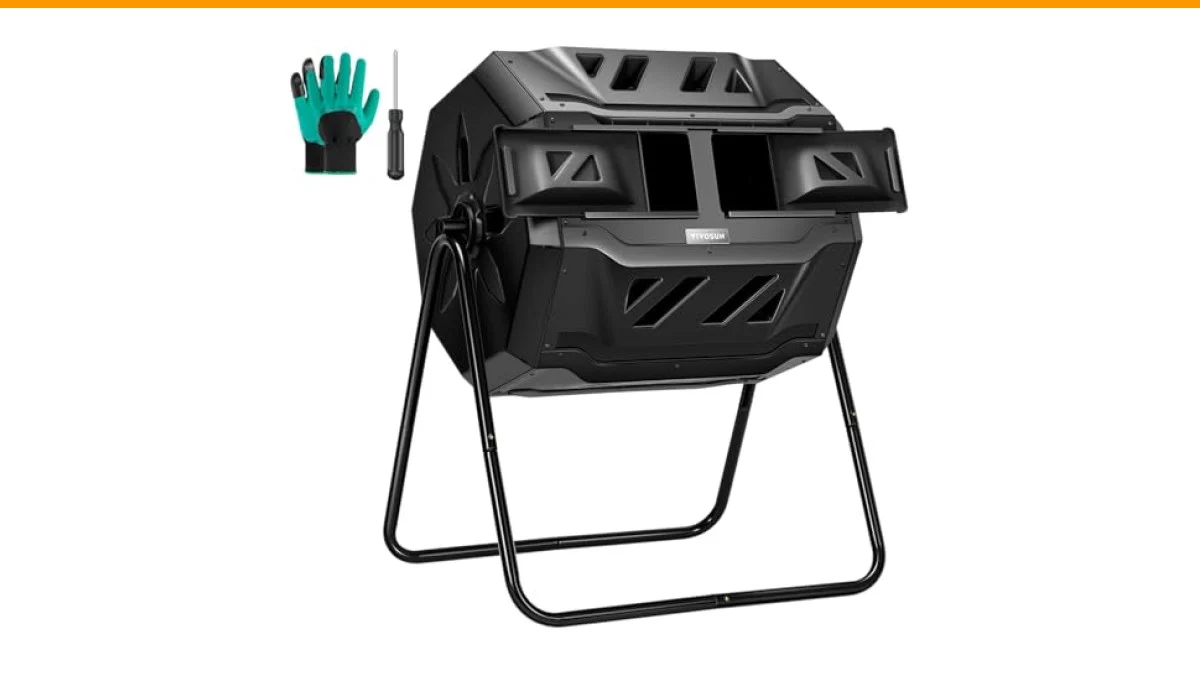
VIVOSUN Outdoor Tumbling

VIVOSUN
VIVOSUN Outdoor Tumbling Composter Dual Rotating Batch Compost Bin, 43 Gallon Black Door
- Twin chambers: Two separate chambers allow one side to finish composting while leaving the other side available to add fresh waste…
- 360⁰ Tumbling Design: The rotating design prevents you from digging or mixing the pile by hand; And the deep fins on eight panels…
- Excellent Aeration: Air vents can make the air fully circulate and will not cause an explosion due to excessive internal pressure;…
If you’re serious about making compost that won’t sprout weeds all over your native planting beds, the VIVOSUN 43-gallon tumbler deserves a close look. It’s a dual-chamber unit, which means you can fill one side while the other finishes. That continuous rotation is a game-changer when you’re trying to keep a steady supply of compost for top dressing established natives.
What stands out here is the 360-degree tumbling action and the deep fins inside the drum. Those fins break up clumps as you turn, so you get even aeration without ever sticking a pitchfork in the pile. The dual chambers let you maintain a hot, active pile on one side—reaching temperatures that kill weed seeds—while the other side cures. That’s critical if you’re worried about invasive species spreading through your compost.
Trade-offs? Tumblers are notorious for drying out, and this one is no exception. In hot, dry summers you’ll need to add water occasionally. The 43-gallon capacity is split between two chambers, so each side holds about 21 gallons—plenty for a small to mid-sized native garden, but not enough for a large restoration project. Assembly takes about an hour, and the included garden gloves are a nice bonus.
- Dual chambers: fill one side while the other cures
- Deep fins on eight panels break up clumps as you tumble
- Air vents promote oxygen flow to feed aerobic bacteria
- PP plastic body resists corrosion and weathering
- Includes waterproof garden gloves with ABS claws
Best for: Homeowners with a medium native bed who want hot compost that kills weed seeds without manual turning.
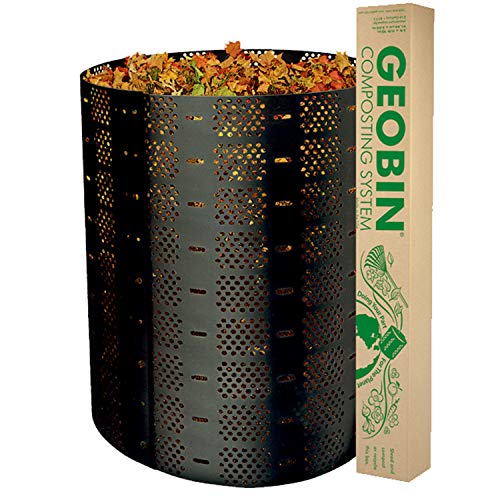
Geobin Compost Bin – 246
GEOBIN
Geobin Compost Bin - 246 Gallon, Expandable, Easy Assembly, Made in the USA, Outdoor & Backyard Composter
- Large capacity—expandable to 3.75 feet (237 gallon)
- Easy to assemble with closure keys. Easy to move. Easy to reassemble.
- The best value composting bin on the market.
The Geobin is the workhorse of the native plant world. It’s a simple, expandable wire enclosure that holds up to 246 gallons—enough to process an entire season’s worth of leaves, grass clippings, and spent native plant stalks. If you’re managing a larger area, like a prairie patch or a rain garden, this is the bin you want.
Assembly takes five minutes with no tools. You just unfold the plastic mesh, connect the ends with the closure keys, and set it on the ground. Because it’s open at the bottom, earthworms and soil microbes can move freely in and out, which accelerates decomposition and builds soil biology right where you need it. This is a cold composting bin, so it won’t get hot enough to kill weed seeds—but for making leaf mold and slow, fungal-rich compost, it’s hard to beat.
The trade-off is that you have to turn the pile yourself with a pitchfork, and it’s not rodent-proof. If you add food scraps, you’ll need to bury them deep or mix with plenty of browns. But for pure yard waste—leaves, stems, and spent flowers from your natives—this bin is nearly perfect. It’s also the best value per gallon of any bin on this list.
- Expandable capacity: up to 246 gallons (3.75 feet tall)
- Tool-free assembly with closure keys
- Open bottom allows worm and microbe access
- Easy to move and reassemble in a new spot
- Made in the USA from recycled plastic
Best for: Gardeners with large native plantings who want an inexpensive, low-tech bin for making leaf mold and cold compost.
Beautiful Kitchen Compost

KIBAGA
Beautiful Kitchen Compost Bin with Smell Proof Lid for Your Countertop
- Effortless Recycling: Revolutionize your kitchen with KIBAGAs’ countertop compost bin, designed for recycling food & other organic…
- Odorless Composting: The compost bin for the kitchen comes with a built-in charcoal filter compartment ensuring odor-free composti…
- Practical Premium Design: Built to last with rust-free, powder-coated carbon steel, the kitchen compost bin for your countertop el…
Every native gardening routine starts in the kitchen. The KIBAGA countertop bin is the first step in collecting the food scraps that will eventually feed your soil. It’s a 1.1-gallon bin with a charcoal filter in the lid, which keeps odors under control for a week’s worth of vegetable peels, coffee grounds, and eggshells.
What I appreciate about this bin is the design. The powder-coated carbon steel body resists rust, and the wooden handle adds a warm touch that doesn’t look out of place on a kitchen counter. The charcoal filter compartment is built into the lid, and air holes provide aeration so your scraps don’t go anaerobic and start smelling. Two filters are included, which gives you about six months of odor control before you need replacements.
It’s not the largest bin—1.1 gallons means you’ll empty it every few days if you cook a lot. But that’s actually a good thing: it forces you to transfer scraps to your outdoor bin regularly, which keeps the compost process moving. The beige color and modern design mean you won’t feel the need to hide it in a cabinet.
- 1.1-gallon capacity fits on most countertops
- Charcoal filter compartment neutralizes odors
- Rust-free powder-coated carbon steel
- Wooden handle for easy carrying to the outdoor bin
- Two replacement filters included
Best for: Anyone who wants a stylish, odor-free way to collect kitchen scraps before they go to the outdoor composter.
UNIFAMILY 2pcs Inground W

UNIFAMILY
UNIFAMILY 2pcs Inground Worm Composting Bin, Stainless Steel Outdoor Compost Bin with Handle, Worm Composter, Worms Bins for Composting Recycling Kitchen Food Waste
- Efficient composting: The worm composting bin is ventilated 360 degrees to increase air circulation and ensure smooth heat dissipa…
- Removable Top Design: The outdoor compost bin is designed with a removable lid with a movable pull handle, which makes it easy for…
- Suitable for small home gardens:Two Size; 2 compost bin measures approximately 12.2x 3.93x 3.93 inches/31 x 10 x 10 cm, and the ot…
Vermicomposting is a different beast, and the UNIFAMILY in-ground worm bin is a clever twist on the classic worm farm. Instead of a freestanding bin, you bury these stainless steel cylinders directly in your garden beds. The perforated metal allows worms to come and go freely, so they process your food scraps in place and deposit worm castings right at the roots of your native plants.
These bins are small—each measures about 12 inches tall and 4 inches wide—so they’re best for a small home garden or for spot-feeding individual plants. You simply open the lid, drop in your kitchen waste, and let the worms do the work. The 360-degree ventilation keeps the contents aerobic, which prevents the foul smells you get from soggy, airless compost piles.
The catch is that you need an established worm population in your soil for this to work well. If your soil is compacted or lifeless, you’ll need to introduce worms first. Also, these bins are on the small side, so they’re not suited for processing large volumes of waste. But for a native plant enthusiast who wants to build soil biology in a specific bed, this is a low-effort, high-impact tool.
- Two sizes included: 12.2″ and 11.8″ tall
- Perforated stainless steel allows worm access
- Removable lid with locking handle
- No assembly required—just bury and use
- Ideal for small garden beds and individual plants
Best for: Gardeners who want to compost directly in the soil, feeding worms and native plants simultaneously.
Epica Kitchen Compost Bin

Epica
Epica Kitchen Compost Bin for Kitchen Countertops, 1.3 Galllon - Silver
- FEATURED IN BON APPETIT & FORBES: Recognized by renowned magazines, EPICA’s compost bin is a perfectly sized marvel for your kitch…
- CONTROL KITCHEN ODORS NATURALLY: This indoor compost bin with a charcoal filter features an airtight lid and a replaceable activat…
- EASY TO CLEAN & RESISTANT TO LEAKS: This countertop bin features a one-piece molded design that resists rust and leaks. The contai…
The Epica countertop bin has been featured in Bon Appetit and Forbes, and for good reason. It’s a 1.3-gallon stainless steel container with an airtight lid and a replaceable activated-charcoal filter. The design is simple, sturdy, and leak-proof, which makes it a reliable choice for daily kitchen use.
What sets the Epica apart is the one-piece molded construction. There are no seams or joints where liquid can seep out, so you won’t find a puddle of leachate on your counter. The charcoal filter sits in the lid and neutralizes odors effectively—even if you forget to empty it for a few extra days. The filter lasts three to six months with regular use, and you can rinse it gently to extend its life.
The trade-off is that the Epica is a bit taller than some countertop bins, at 11 inches high. If you have low cabinets, you might need to find a spot on the counter that’s not underneath them. Otherwise, it’s a well-built, no-nonsense bin that does exactly what it promises. The stainless steel resists scratches and rust, so it looks good for years.
- 1.3-gallon capacity: holds several days of scraps
- Airtight lid with replaceable charcoal filter
- One-piece molded design resists leaks and rust
- Easy to hand-wash with warm water
- Filters last 3-6 months with proper care
Best for: Cooks who want a durable, odor-free countertop bin that won’t leak or rust.
How We Chose These Products
I evaluated each bin based on how well it serves native plant gardens, not just general composting. Native plants have specific needs: they prefer low-nutrient soil, they rely on fungal networks, and they’re vulnerable to competition from weed seeds. So I looked for bins that could either produce hot compost to kill weed seeds, or create fungal-rich leaf mold and worm castings that feed the soil without over-fertilizing.
Capacity and scale mattered too. A small urban meadow might need only a countertop bin and a worm farm, while a prairie restoration project requires hundreds of gallons of processing space. I also considered ease of use, assembly, and durability, because a bin that’s a chore to maintain will end up sitting empty in the corner. Every product here has a clear role in a native plant garden, and I’ve noted where each one shines and where it falls short.
Buying Guide: What Really Matters
Before you buy any compost bin, think about your native plant garden’s soil biology. Most native plants evolved in soil that’s low in nitrogen but rich in fungi. That means you want compost that’s well-decomposed, dark, and crumbly, not fresh and smelly. A bin that allows for slow, cool decomposition—like a Geobin—will produce a more fungal-dominant compost than a hot tumbler. If you need to kill weed seeds, you’ll need a bin that can reach 130-140°F for several days, which means a tumbler or a well-managed pile.
Airflow and moisture are the two biggest factors in compost success. Bins with good ventilation, like the VIVOSUN’s air vents or the UNIFAMILY’s perforated metal, prevent anaerobic conditions that cause odors and slow decomposition. You also need to manage moisture—not too wet, not too dry. A tumbler can dry out quickly, while an open bin might get waterlogged in heavy rain. Consider your climate and how much effort you’re willing to put into turning and watering.
Rodent resistance is another key issue, especially if you’re composting food scraps. Open bins like the Geobin are fine for yard waste but will attract rats if you add kitchen scraps. Tumblers and enclosed bins are better for food waste, but make sure the lid seals properly. And don’t forget about the leachate—the liquid that drains from compost. Some bins collect it, which is great for making compost tea, but you don’t want it pooling in your yard.
Our Top Recommendation
For most native plant gardeners, the VIVOSUN Outdoor Tumbling Composter is the best all-around choice. It gives you the heat needed to kill weed seeds, the dual chambers for continuous composting, and the ease of tumbling instead of hand-turning. It’s not the cheapest option, but it’s built to last and will produce weed-free compost that’s perfect for top dressing native beds.
If you’re on a budget or you’re mostly composting leaves and yard waste, the Geobin is the runner-up. It’s inexpensive, expandable, and makes excellent leaf mold with almost no effort. For kitchen scrap collectors, the Epica is a solid choice that won’t leak or smell. And if you’re interested in vermicomposting, the UNIFAMILY in-ground bin is a unique way to feed your soil directly.
Frequently Asked Questions
Can I use regular compost on native plants?
Yes, but use it sparingly. Native plants adapted to low-nutrient soils can be overwhelmed by rich compost, leading to floppy growth and fewer flowers. Mix a small amount of finished compost into the soil at planting time, or use it as a thin top dressing in the fall. Avoid fresh, nitrogen-heavy compost.
How do I make compost that won’t introduce weed seeds?
Hot composting is the key. Your pile needs to reach 130-140°F for at least three days to kill most weed seeds. A tumbler like the VIVOSUN makes this easier because you can turn it regularly to maintain heat. Avoid adding weeds that have gone to seed, and always let the compost cure fully before using it.
Is compost tea good for native plants?
Compost tea can be beneficial if it’s made from fungal-rich compost, but it’s not necessary. Native plants prefer to get nutrients from mycorrhizal fungi in the soil. If you use compost tea, brew it from well-decomposed leaf mold or worm castings, and apply it to the soil, not the leaves.
Should I add compost to my native plant soil every year?
Not necessarily. Native plants often do better with minimal amendments. Instead of adding compost annually, focus on building soil organic matter by leaving fallen leaves in place and planting native groundcovers. If your soil is very poor, add compost once at planting time, then let the plants establish their own fungal networks.
Final Verdict: Choose the Bin That Feeds Your Soil Web
The right compost bin for native plants is the one that matches your garden’s scale and your willingness to manage the process. A tumbler gives you weed-free compost quickly, a static bin builds fungal-rich leaf mold slowly, and a worm bin feeds the soil web directly. Start with your end goal: what kind of soil do your natives want, and how much compost do you need? Then pick the bin that gets you there without becoming a chore. For most people, the VIVOSUN offers the best balance of speed, convenience, and weed control. But if you’re patient and want to build soil biology on a larger scale, the Geobin is a fantastic choice. And don’t forget to check our drought-tolerant plants guide for more tips on matching compost to your garden’s needs. For more on continuous compost production, see our dual chamber compost guide. And if you’re considering vermicomposting, our vermicomposting guide has you covered.