

The Best Electric Weed Burner: What Actually Works in the Real World
Contents
You know the drill. You spend a Saturday morning on your knees with a trowel, pulling crabgrass from between patio pavers, and by Tuesday it’s back. Or you grab a spray bottle of herbicide, but you have pets and kids, so you are not thrilled about soaking your yard in chemicals. A third option exists, and it does not involve propane tanks or toxic sprays. An electric weed burner uses focused heat to rupture plant cell walls, which kills the weed above ground quickly and without residue.
This guide covers what separates a genuinely useful electric weed burner from a frustrating one. We will talk about wattage, heat output, nozzle design, cord management, and safety features. You will also see a direct comparison of methods so you can decide if electric heat fits your specific weed problem. By the end, you will know exactly which specs matter and which marketing claims you can ignore.

NAWESRVA
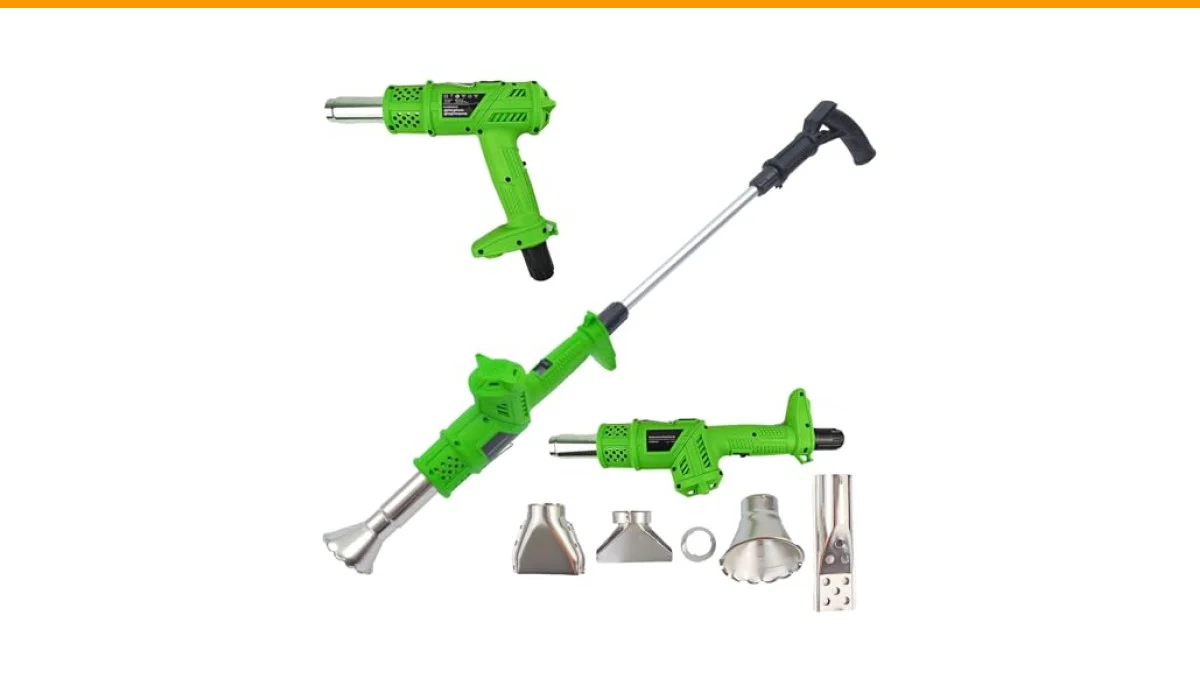
1500W Electric Weed Burner & Heat Gun, 3-in-1 Hot Air Wand with 5 Nozzles, 80°C/650°C Dual Temperature, Long Handle Thermal Weeder & Charcoal Lighter for Garden, Patio, DIY Heating Tasks, 120V
- 3-IN-1 WEED BURNER, HEAT GUN & CHARCOAL LIGHTER: Get more use from one powerful heating tool. Designed for thermal weed treatment,…
- POWERFUL 1500W HEATING WITH 2 TEMPERATURE MODES: The 1500W heating system delivers airflow up to approximately 500 L/min with two…
- VERSATILE HEAT GUN FOR HOME & DIY PROJECTS: Beyond garden maintenance, the handheld configuration functions as a practical heat gu…
One tool that handles this job well is the NAWESRVA 3-in-1 Electric Weed Burner Wand. It offers 1500W of power with adjustable heat up to 650°C, which puts it in the practical range for killing weeds and melting ice. We will use it as a reference point throughout this article because its design choices highlight what to look for in any model.
How Hot Does an Electric Weed Burner Actually Need to Be?
Most people assume hotter is always better. That is not quite true. Weed cells burst when their internal temperature reaches about 55°C (131°F). You do not need to incinerate the plant to ash. You need to heat the foliage fast enough that the water inside the cells expands and ruptures the cell walls.
Here is the practical difference. A 1000W burner might kill a dandelion, but it takes a slow pass. A 1500W burner, like the NAWESRVA model, reaches up to 650°C at the nozzle tip. That heat lets you move the wand at a steady walking pace instead of hovering over every single leaf. For a large driveway with cracks full of weeds, that speed difference matters. You will finish a 20-foot driveway in about ten minutes with a 1500W unit. A weaker unit might take twice as long.
Adjustable temperature is not a gimmick. You want a lower setting for dry grass near a wooden fence and a higher setting for thick, established weeds growing out of asphalt cracks. Fixed-heat units force you to rely on distance from the plant, which is clumsy. Look for a trigger or dial that lets you control output.
Electric vs. Gas vs. Chemical: The Honest Comparison
You might wonder if you should just buy the cheap propane torch from the hardware store. I have used both. Propane torches are undeniably powerful, but they come with baggage. You have to buy fuel, haul the tank, and deal with an open flame near dry brush. That last point is not minor. Every summer, people start accidental fires using propane weed torches in dry conditions.
Chemical sprays are faster for large areas, but they wash off in rain and require you to store hazardous liquids away from children. Some weeds have also developed resistance to common herbicides like glyphosate. Heat does not have that problem. No weed on earth is resistant to being cooked.
| Method | Cost Per Use | Safety Risk | Speed | Residue | Best For |
|---|---|---|---|---|---|
| Electric Burner | Pennies (electricity) | Low (no open flame) | Medium | None | Driveways, patios, walkways |
| Propane Torch | Fuel cost per tank | High (open flame, fire risk) | Fast | None | Large rural lots, thick brush |
| Chemical Spray | Low per batch | Medium (chemical exposure) | Fast | Chemical residue | Large lawns, agricultural areas |
| Manual Pulling | Free | Low | Very Slow | None | Small gardens, single weeds |
The electric route occupies a sweet spot for residential use. It is not the fastest method on paper, but it is the most convenient because there is no prep time. Plug it in and go. No mixing chemicals, no filling a tank.
What to Check Before You Buy: Cord, Weight, and Nozzles
The biggest complaint I hear about electric burners is the cord. A 5.9-foot cord, which the NAWESRVA model includes, sounds short until you realize you will likely use an extension cord anyway. You need a heavy-duty outdoor extension cord rated for at least 15 amps. A thin indoor cord will overheat and trip your breaker.
Weight matters more than you think. You will hold this tool at an angle for extended periods. A burner that weighs 3 pounds feels like 10 pounds after fifteen minutes of waving it over a patio. Look for models under 4 pounds. The NAWESRVA unit uses aluminum and ABS plastic specifically to keep weight down while staying durable.
Nozzle design determines how precise you can be. A wide fan nozzle is great for melting ice on a driveway. A focused point nozzle works better for a single dandelion growing between bricks. The best electric weed burner should offer interchangeable nozzles. The 3-in-1 model I mentioned comes with five different nozzles, which covers everything from narrow cracks to wide flat surfaces.
Check the handle ergonomics too. A straight stick forces you to bend your wrist awkwardly. Look for a D-shaped or angled handle that keeps your arm in a natural position. Some models offer an extension pole, which is useful if you have back problems or want to reach weeds in the middle of a flower bed without stepping on your plants. For more specific scenarios, you can look at guides for driveway weed burners or balcony crack solutions.
Safety and Technique: Using It Right Without Burning Your Yard Down
Electric burners do not produce a visible flame, which makes some people careless. Do not be. The nozzle still reaches several hundred degrees Celsius. You can melt plastic landscaping fabric, scorch tree bark, or start a smolder in dry mulch if you hold the wand in one spot too long.
The correct technique is a sweeping motion. Pass the nozzle over the weed, hold for two to three seconds, then move on. You are looking for the leaves to wilt and turn glossy, not to catch fire. If you see flames, you are holding still too long.
Do not use this tool on a windy day. The heat dissipates quickly, and you will waste time re-heating the same weed. Also, avoid using it right after rain. Wet weeds require significantly more energy to heat because the water absorbs the heat first. Wait for a dry day, ideally in the late morning after the dew has evaporated.
One more tip: this works best on young weeds. A weed with a taproot that is two inches thick will regrow from the root even if you char the top completely. Heat kills the foliage, which starves the root over time, but it is not instant. You may need to re-treat every few weeks for persistent perennials. For deep-rooted problems, you might need a different strategy, so check out options for deep rooted weeds.
Can you use an electric weed burner on wet grass?
Technically yes, but it is inefficient. The water on the leaves absorbs the heat before the plant tissue does. You will need to move much slower and may not kill the weed effectively. Wait for everything to dry out. A sunny afternoon after two dry days is ideal.
Is it safe to use around children and pets?
Electric burners are safer than propane torches because there is no open flame and no fuel storage. However, the nozzle is still dangerously hot. Treat it like a soldering iron. Use it when kids and pets are indoors, and let the tool cool completely before storing it. The NAWESRVA model includes an electronic ignition, so there is no pilot light to worry about.
Will an electric weed burner kill the roots?
Not instantly. The heat kills the above-ground growth. If the root system is shallow, like annual weeds, the plant dies completely. For deep taproots, the plant may regrow from the root because the soil insulates it from the heat. Repeated treatments will eventually exhaust the root’s energy reserves, but it takes persistence.
How long does an electric weed burner last?
A quality unit with a ceramic heating element should last for years of regular seasonal use. The weak points are usually the power cord connection and the switch. Look for strain relief where the cord enters the handle. Avoid yanking the cord to unplug it. Store the unit indoors where it will not be exposed to freezing temperatures.
Can you use it to melt ice on your driveway?
Yes, and this is a hidden benefit. A wide fan nozzle directs heat across the ice surface to create traction without using salt. Salt damages concrete and kills nearby grass. An electric burner melts a path without chemical residue. It is slower than salt for a whole driveway, but it is perfect for a small walkway or steps. You can read more about this dual-purpose use in our snow melt and weed guide.
Practical Takeaways Before You Spend Money
- Buy a 1500W model minimum. Anything less will frustrate you with slow performance.
- Insist on adjustable temperature. A fixed heat setting limits where and how you can use the tool safely.
- Check the nozzle selection. Five nozzles give you flexibility for cracks, flat surfaces, and ice melting.
- Plan for a 50-foot outdoor extension cord, even if the unit has a built-in cord. You will need the reach.
- Use a sweeping motion and never hold the wand still for more than three seconds on one spot.
- Treat this as a maintenance tool, not a one-time fix. Expect to re-treat perennial weeds every few weeks.
- Store it out of reach of children and wait for the nozzle to cool completely before putting it away.


