Pole Pruner vs Ladder for Tree Trimming: Which One is Right for You?
Contents

Understanding the Basics
Tree trimming can be a daunting task, especially when dealing with tall branches that pose risks to both the tree and the person doing the trimming. Many homeowners face the dilemma of choosing between a pole pruner and a ladder. A pole pruner allows you to reach high branches without the need for a ladder, while a ladder can provide stability and access to certain areas. Each option has its strengths, and knowing when to use one over the other can make a significant difference in your trimming experience.
This article will help you understand the advantages and disadvantages of using a pole pruner versus a ladder for tree trimming. You’ll learn about specific conditions that make one tool more suitable than the other, factors to consider when choosing, and critical safety tips. By the end, you’ll feel equipped to make an informed decision that meets your tree trimming needs efficiently.
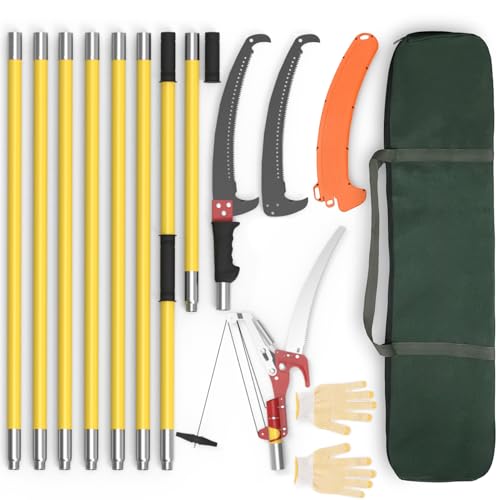
LETYANGER
7.3-27FT Extendable Long Handle Pole Saw with Blade and Branch Scissors
- Package Includes: Our pole saw and pruner set contains 7 long poles, 1 head with saw, 1 pruner head, 1 spare saw with sheath, and…
- Lightweight Material: All rods are made of high quality, thickened,epoxy resin and connected by aluminum alloy joints. The blades…
- Intelligent Design: The tree pruner is included to cut all the crossing branches. The pulley system helps to change the pulling di…
For those looking for a reliable tool, consider the 7.3-27FT Extendable Long Handle Pole Saw with Blade and Branch Scissors from LETYANGER. This versatile pole saw features an extendable range of 7.3 to 27 feet, making it a practical choice for reaching high branches with ease.
Advantages of Using a Pole Pruner
A pole pruner is designed specifically for trimming branches that are out of reach. Here are some key advantages:
- Height Variability: Most pole pruners can extend significantly, allowing you to reach branches up to 27 feet without needing a ladder.
- Stability: Using a pole pruner minimizes the risk of falling since you won’t be climbing. You stand on solid ground while maneuvering the tool.
- Precision Cutting: Many pole pruners come equipped with sharp saw blades or pruner heads, enabling precise cuts without damaging the tree.
However, there are limitations. Long reach can make controlling the tool challenging, especially if you’re not strong. It’s advisable to wear back support when working at extended heights.
Advantages of Using a Ladder
Ladders serve as a traditional means of reaching high branches. Here’s why some prefer ladders:
- Stability and Control: A sturdy ladder provides a solid base, allowing for better control when cutting branches.
- Versatility: Ladders can be used for various tasks around the property, not just tree trimming.
- Access to Different Angles: Ladders allow for movement and positioning, enabling you to access branches from various angles.
However, ladders require careful placement and pose a risk of falling, especially on uneven ground. It’s critical to ensure the ladder is secure before climbing.
When to Use Each Tool
The choice between a pole pruner and a ladder depends on several factors:
- Height of Branches: For branches higher than 10-12 feet, a pole pruner is generally more effective.
- Branch Thickness: If branches are thick, a pole saw attachment on a pole pruner can provide the necessary cutting power.
- Ground Conditions: If the ground is uneven or soft, a pole pruner offers more safety than a ladder.
- Duration of Work: For extended trimming sessions, using a pole pruner may reduce fatigue.
Comparison Table: Pole Pruner vs Ladder
| Feature | Pole Pruner | Ladder |
|---|---|---|
| Height Reach | Up to 27 feet | Depends on ladder type (usually 6-12 feet) |
| Stability | High stability on the ground | Requires careful positioning |
| Control | Requires strength for long reach | Better control when standing still |
| Versatility | Primarily for pruning | Multi-purpose use |
| Safety | Less risk of falling | Higher risk of falls if not careful |
What is a pole pruner?
A pole pruner is a tool designed for trimming branches that are high up. It typically consists of a long pole with a cutting head at one end, allowing you to reach and cut branches without climbing.
When should I use a ladder instead of a pole pruner?
Use a ladder when branches are within a comfortable height range, and the ground is stable. Ladders are also beneficial if you need to make cuts at various angles.
Can I use a pole pruner for thick branches?
Yes, many pole pruners come with saw attachments that can handle thick branches effectively. Choose a model with a sharp blade for better performance.
Are there safety concerns associated with using a ladder?
Absolutely. Always ensure the ladder is on firm ground, avoid overreaching, and maintain three points of contact when climbing.
Do pole pruners require much maintenance?
Regular maintenance includes sharpening the blades and checking for any loose parts. Keep the pole clean and free from debris for optimal performance.
Final Thoughts on Choosing the Right Tool
- Evaluate the height and thickness of branches before choosing.
- Consider your physical strength and comfort level with each tool.
- Prioritize safety with proper equipment and precautions.
- Invest in a quality pole pruner like the LETYANGER model if you opt for that route.
- Remember that both tools have their place in tree care; choose based on the specific job.