
Maintaining a lush, green lawn requires the right tools, and at the heart of any effective lawn mower is its transmission. Imagine spending your weekend mowing your yard, only to find your mower struggles to keep up or, worse, stalls in the middle of the job. The type of transmission your mower employs plays a significant role in its performance, efficiency, and ease of use. In this article, we’ll break down the various lawn mower transmission types, so you can make an informed choice for your mowing needs.
Understanding these transmission types can help you select a mower that suits your lawn size, terrain, and personal preferences. We’ll cover the common types, their pros and cons, and provide a straightforward comparison table. Along the way, you’ll also learn about a specific product that can enhance your mower’s performance — the General Transmissions Transaxle RS800P. This genuine OEM part ensures reliable operation and is compatible with various mower models.

General Transmissions
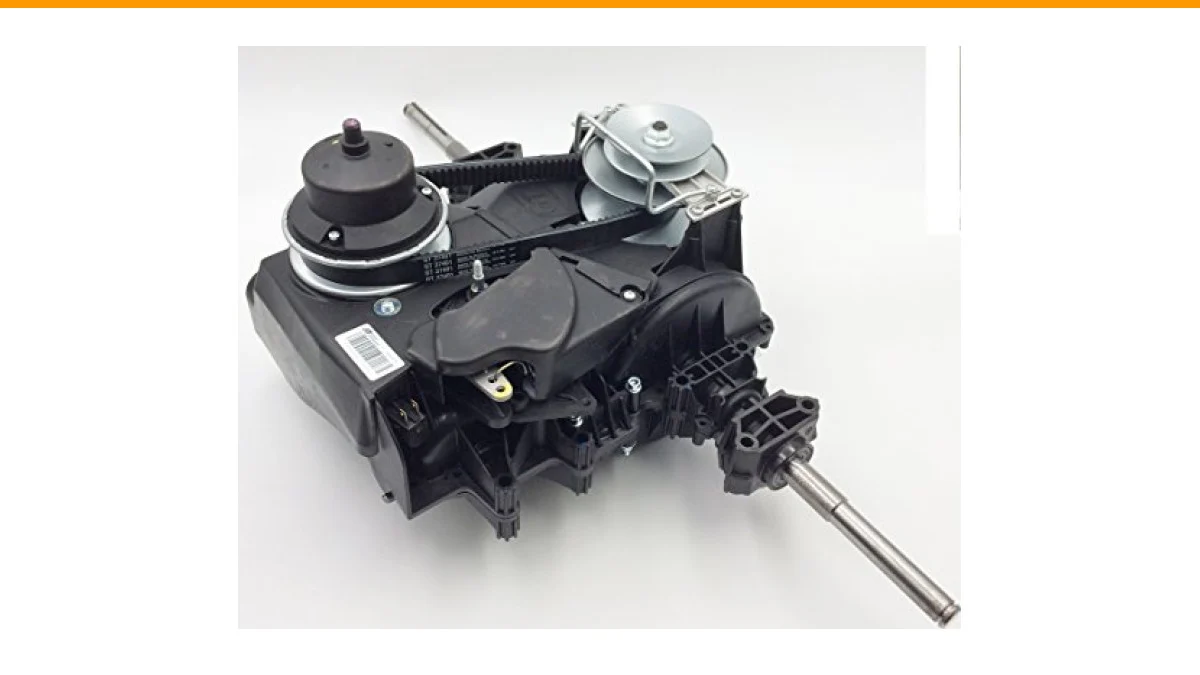
General Transmissions Transaxle RS800P
- Genuine OEM General Transmissions parts
- General Transmissions part number GT87145 (Supersedes GT87128)
- OEM part number 590277501 (Supersedes 587884401)
Types of Lawn Mower Transmissions
There are primarily three types of transmissions found in lawn mowers: manual, automatic, and hydrostatic. Each type has its own characteristics, advantages, and drawbacks, making it essential to understand how they work.
1. Manual Transmission
A manual transmission requires the operator to shift gears manually, similar to a standard vehicle. This type often appeals to those who prefer control over their mower’s speed and power.
- Pros: Greater control over speed; often more affordable.
- Cons: Requires more effort; not ideal for large or hilly lawns.
For instance, if you have a small, flat lawn, a manual transmission can provide the precision needed for intricate mowing patterns.
2. Automatic Transmission
Automatic transmissions adjust the mower’s speed based on the throttle input, allowing for a smoother mowing experience without the need for shifting gears.
- Pros: Easier operation; less fatigue during use.
- Cons: Generally more expensive; may have less control than manual systems.
This type is suitable for medium-sized lawns, where ease of use can significantly enhance your mowing experience.
3. Hydrostatic Transmission
Hydrostatic transmissions utilize fluid to transmit power, providing seamless speed control and eliminating the need for gears. This type is often found in higher-end mowers.
- Pros: Smooth operation; excellent for uneven terrain.
- Cons: Higher cost; potential for maintenance issues.
For larger or hilly properties, a hydrostatic transmission can make a noticeable difference, allowing for better maneuverability and comfort.
Comparison of Lawn Mower Transmission Types
| Transmission Type | Control | Cost | Ideal Use |
|---|---|---|---|
| Manual | High | Low | Small, flat lawns |
| Automatic | Medium | Medium | Medium-sized lawns |
| Hydrostatic | Very High | High | Larger, uneven lawns |
Frequently Asked Questions
What is the best transmission type for a small lawn?
A manual transmission is often the best choice for small lawns. It offers precise control and is generally more cost-effective, making it ideal for homeowners with smaller spaces.
Are hydrostatic transmissions worth the investment?
Yes, hydrostatic transmissions are worth it for larger or uneven lawns. They provide smoother operation and better handling, which can save time and reduce fatigue during long mowing sessions.
How do I know if my mower needs a new transmission?
Signs of transmission issues can include difficulty shifting gears, unusual noises, or the mower not moving at all. If you notice these symptoms, it may be time to consider a replacement like the General Transmissions Transaxle RS800P.
Can I upgrade my lawn mower’s transmission?
In some cases, upgrading a lawn mower’s transmission is possible, especially if you have a model designed to accommodate different types. Consult your manufacturer for compatibility options.
What maintenance do different transmission types require?
Manual and automatic transmissions typically require less maintenance than hydrostatic systems, which may need regular fluid checks and potential filter changes. Always refer to your mower’s manual for specific maintenance guidelines.
Actionable Insights for Choosing a Lawn Mower Transmission
- Assess your lawn size and terrain before choosing a transmission type.
- Consider comfort; automatic and hydrostatic options reduce fatigue.
- Look for mowers with easily replaceable parts to simplify maintenance.
- Check for genuine OEM parts, such as the General Transmissions Transaxle RS800P, when replacing components.
- Test drive different models to get a feel for operation and handling.
- Research and read reviews to understand long-term performance for each transmission type.
- Be aware of your budget; weigh the costs versus benefits of each type.



