
Imagine stepping out onto your lawn, ready to tackle the overgrown grass that has taken over your yard. You want a tool that can make this task easy and efficient, yet choosing the right lawn mower can feel overwhelming. With various power sources available, understanding their strengths and weaknesses is essential for selecting the best option for your needs.
This article offers a detailed comparison of the different lawn mower power sources: gas, electric, and battery. You’ll gain insights into their performance, maintenance, and suitability for various lawn sizes. After reading, you’ll have a clearer understanding of which type may be the best fit for your lawn care requirements.
Greenworks
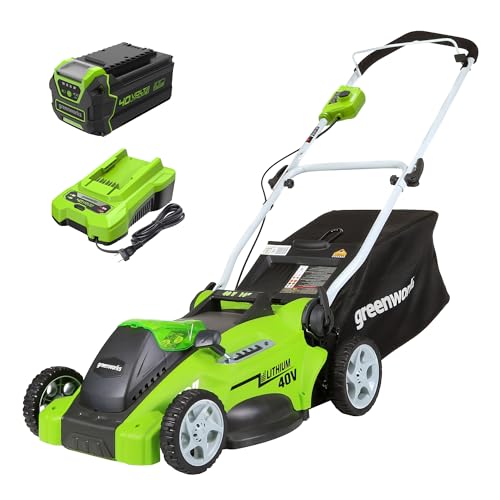
Greenworks 40V 16in Push Lawn Mower, 4.0 Ah Battery and Charger | Quiet walk-behind mower with push-button start; gas-free operation eliminates fumes and pull starts
- [16" LAWN MOWER] - This 40V lawn mower cuts up to 1/3 acre with fully charged 4.0Ah battery (varies based on grass condition and o…
- [ULTRA LIGHTWEIGHT] - 35% lighter than steel deck mowers
- [SINGLE LEVER HEIGHT ADJUST] - 5 position height adjustment
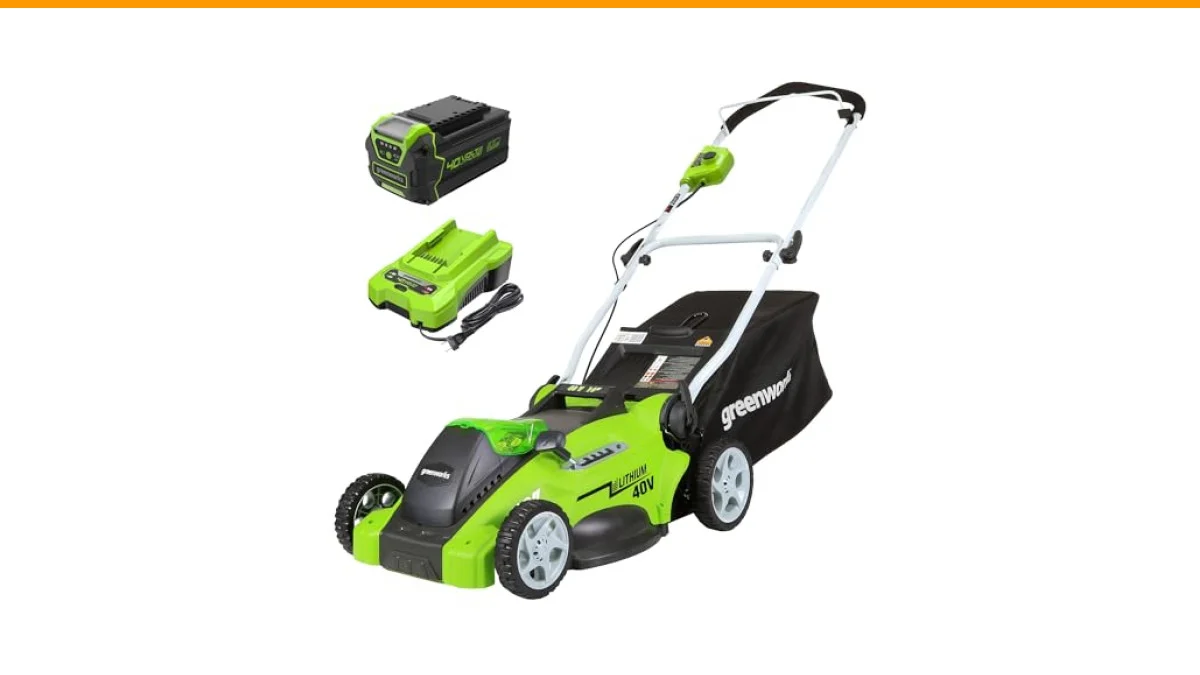
One option that exemplifies battery-powered convenience is the Greenworks 40V 16in Push Lawn Mower. This model is designed for efficiency, featuring a lightweight build and the ability to handle up to a third of an acre with a fully charged battery.
Gas-Powered Lawn Mowers
Gas-powered mowers are known for their power and ability to handle larger lawns or tougher terrains. Typically, they have a two-stroke or four-stroke engine, which can generate significant torque for cutting through thick grass. However, they also come with some downsides.
- Pros:
- High power output suitable for large areas and tough grass.
- Ability to mow for extended periods without needing to recharge.
- Cons:
- Heavier than electric or battery models, which can make maneuverability challenging.
- Higher maintenance due to oil changes and spark plug replacements.
- Emits fumes, contributing to environmental pollution.
Gas mowers typically range from 140cc to 190cc engines, with larger engines providing more power. However, they can also be more costly over time with fuel and maintenance expenses.
Electric Lawn Mowers
Electric mowers operate on either corded or cordless battery power. Corded models plug into an outlet, while battery models run on rechargeable batteries. Both types have their unique characteristics.
- Pros:
- Lower operating costs compared to gas models.
- Quieter operation and no emissions, making them environmentally friendly.
- Cons:
- Limited runtime on battery models; corded models restrict mobility.
- Less power, making them less effective on large or rough terrains.
Electric mowers are ideal for small to medium-sized lawns, particularly in urban areas where noise and emissions are concerns. Battery capacities often range from 20V to 80V, impacting runtime and cutting power.
Battery-Powered Lawn Mowers
Battery-powered mowers are a subset of electric mowers, gaining popularity due to their convenience and portability. These tools use lithium-ion batteries that are lightweight and rechargeable.
- Pros:
- Easy to start with a push of a button, eliminating the hassle of pull cords.
- Lightweight and easy to maneuver.
- Cons:
- Limited runtime, typically around 30 to 70 minutes depending on the battery.
- Performance may vary based on grass thickness and moisture.
The Greenworks 40V 16in Push Lawn Mower is an excellent example of a battery-powered mower. It features a 4.0Ah battery that allows you to cut a third of an acre on a full charge, providing a practical solution for many homeowners.
Comparison Table of Lawn Mower Power Sources
| Power Source | Pros | Cons | Best For |
|---|---|---|---|
| Gas | High power, longer runtime | Heavier, noisy, emissions | Large lawns, tough terrains |
| Electric (Corded) | Lower cost, quiet | Mobility restrictions | Small to medium lawns |
| Electric (Battery) | Portable, easy to use | Limited runtime, variable performance | Small to medium lawns |
1. What is the most powerful lawn mower power source?
Gas-powered mowers typically provide the most power. Their engines can handle thick grass and uneven terrain effectively, making them suitable for larger properties.
2. How long do battery-powered lawn mowers last on a single charge?
Battery-powered mowers can last anywhere from 30 to 70 minutes on a full charge, depending on the model and grass conditions. Heavy grass can reduce runtime.
3. Are electric mowers suitable for large lawns?
Electric mowers, particularly corded models, can be used on larger lawns but may require extension cords for mobility. Battery models generally struggle with larger areas due to limited runtime.
4. How often do gas mowers need maintenance?
Gas mowers require regular maintenance, including oil changes, air filter replacements, and spark plug checks. This typically translates to at least once a season, depending on usage.
5. Can I use a battery-powered mower for thicker grass?
Battery-powered mowers can handle moderately thick grass, but performance may vary. For very thick or wet grass, gas mowers are generally more effective.
Final Thoughts on Choosing the Right Lawn Mower
- Gas mowers offer power for large areas but require more maintenance.
- Electric mowers are quieter and environmentally friendly, ideal for small to medium lawns.
- Battery-powered mowers like the Greenworks model provide convenience without the hassle of gas or cords.
- Consider your lawn size and terrain when selecting a power source.
- Evaluate long-term costs, including maintenance and fuel or battery replacement.



