You planted everything perfectly in early spring. Tomatoes, peppers, a few rows of lettuce. By mid-July, the lettuce bolts, the tomato leaves curl, and the soil in your pots looks like dry coffee grounds by noon. Sound familiar? Rooftop gardens do not behave like ground-level plots. They sit in full sun, catch every gust of wind, and drain fast. Watering them on a fixed schedule copied from a book written for in-ground gardens will fail you.
This guide gives you a practical system for deciding when to water, not just a number to follow. You will learn the specific factors that dry out rooftop containers, how to check soil moisture like a pro, and what to do during heat waves. You will also see why a drip system with a timer is the single best investment for anyone with more than four pots up high.

SMIDOLE
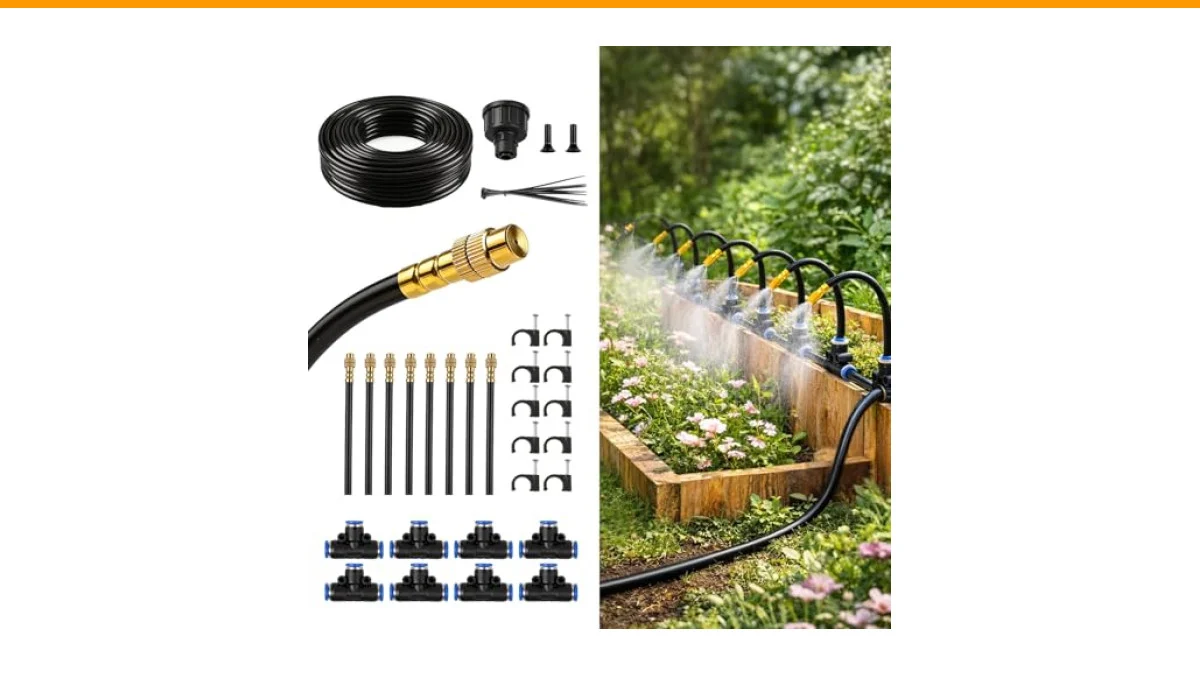
50FT Drip Irrigation Kit, 360° Adjustable Garden Watering System with 1/4" Tubing, Brass Misting Nozzles, DIY Irrigation System for Plants, Raised Beds, Greenhouse
- 🌿 Complete 50FT Irrigation Kit – Ready to Install Includes 50FT tubing, 12 brass misting nozzles, 12 three-port connectors, faucet…
- 🟡 Heavy-Duty Brass Nozzles – Rustproof & High Performance Built with premium brass, the nozzles are durable, explosion-proof, and…
- 🔄 360° Bendable Spray Heads for Precision Each nozzle features a flexible metal tube that bends freely and stays in place, allowin…
A kit like the SMIDOLE 50FT drip irrigation kit solves the biggest rooftop problem: consistency. Wind and sun can dry a pot in hours while you are at work. This kit delivers water slowly at the root zone through adjustable brass nozzles, so you are not blasting the leaves or losing half the water to evaporation. It is not perfect for every layout, but for raised beds and long container rows, it cuts your daily watering chore down to turning a valve.
Why Rooftop Gardens Dry Out Faster Than Anything You Have Grown Before
Think of a rooftop as a desert on top of a building. The pavement radiates heat upward. Wind speeds are two to three times higher than at street level because there are no trees or buildings to block the flow. Every breeze pulls moisture out of the top inch of soil. Your plants lose water through their leaves faster, and the soil surface dries into a crust that repels water instead of absorbing it.
Pot size changes everything. A 6-inch-deep window box holds maybe a gallon of soil. On a 90-degree day with a breeze, that soil can go from soaked to bone dry in six hours. A 15-gallon fabric pot holds much more water and gives your roots room to hunt for moisture. If you are growing tomatoes, squash, or cucumbers on a rooftop, you need at least a 10-gallon container per plant. Anything smaller means you will water twice a day in summer.
Soil mix matters more than most people realize. Bagged potting mix with peat moss or coco coir holds water well when it is moist, but once it dries out completely, it becomes hydrophobic. Water runs straight through the pot and out the drainage holes without wetting the root ball. That is why watering frequency is less important than watering technique. You have to wet the soil fully, not just sprinkle the surface.
Check the Soil, Not the Calendar
Here is the honest answer to how often to water rooftop vegetable garden plants: it depends on the day, the wind, and the plant. A fixed schedule like “every morning” fails you in spring when it rains for four days straight. It also fails you in August when a heat wave hits 95 degrees with a 20 mph wind.
Use the finger test. Stick your index finger into the soil up to the second knuckle, about two inches deep. If that soil feels dry, water thoroughly. If it feels cool and slightly damp, wait another day. For smaller pots under 8 inches deep, check at one inch instead of two. Do this every morning before work and again around 4 p.m. during hot spells.
You also need to watch the plant itself. Leaves that look dull or start to droop in the afternoon are telling you they are thirsty. But do not panic and drown them. A tomato plant that wilts at 2 p.m. in 90-degree heat might perk up by evening on its own. Wilting in the morning is the real red flag; that means the plant went into the night dry and never recovered.
Weight is a reliable trick for pots under 15 gallons. Lift the pot right after watering. It will feel heavy. Lift it again the next day. As the soil dries, the pot gets noticeably lighter. Once you do this a few times, you will know the “dry weight” of each pot without guessing. This works better than any moisture meter I have tried, and most of those cheap analog meters are wildly inaccurate.
Building a Watering Schedule That Works for Different Plants
Group your plants by their water needs so you are not overwatering your rosemary to keep your cucumbers alive. Herbs like thyme, oregano, and sage prefer drier soil. Leafy greens like lettuce, spinach, and kale need consistent moisture or they bolt and turn bitter. Fruiting plants like tomatoes and peppers want deep, less frequent watering that encourages roots to grow down.
Here is a realistic weekly rhythm for a rooftop garden in summer, assuming no rain:
- Leafy greens and seedlings: Water daily, sometimes twice daily if the temperature passes 85°F. These have shallow roots and dry out fast.
- Tomatoes, peppers, eggplants: Water deeply every 2 to 3 days. Give each plant a slow soak until water runs out the bottom. This trains roots to go deep.
- Root crops (carrots, radishes, beets): Water every 2 days. Inconsistent moisture causes radishes to split and carrots to fork.
- Mediterranean herbs (rosemary, thyme): Water every 4 to 5 days. Let the soil dry out completely between waterings.
- New transplants: Water daily for the first two weeks until roots establish. Shade them for the first few afternoons if you can.
Rain changes the math. A light drizzle does nothing for a container garden because the leaves block most of it and the pot edges stay dry. You need at least half an inch of steady rain to count as a watering. Check the pots after a storm; you will often find the top inch is wet but the bottom half is bone dry. That is why you should still test the soil at two inches deep after it rains.
Heat Waves, Wind, and the Drip Irrigation Fix
When the forecast hits 90°F or higher, throw your schedule out the window. During a heat wave, you check pots twice a day, period. Morning watering is essential. If the afternoon check shows dry soil at one inch and the plants are wilting, water again even if you watered that morning. Container plants cannot reach deep groundwater like in-ground plants, so they rely entirely on what you give them.
Mulch is your best friend on a rooftop. A two-inch layer of straw, shredded bark, or even grass clippings on top of the soil cuts evaporation by half. It also keeps the soil temperature down, which protects roots from cooking in black plastic pots. This one step will reduce your watering frequency more than any other change you can make.
For anyone with a full-time job, manual watering twice a day is not sustainable. This is where a drip irrigation system with a timer earns its keep. You set it to run early morning for 20 minutes, and again in the late afternoon if needed. The slow drip soaks the soil properly instead of running off the surface. It also keeps the leaves dry, which reduces fungal diseases that love humid rooftop conditions.
If you are setting up a drip system for the first time, the SMIDOLE drip irrigation kit has most of what you need in the box. The brass nozzles are a step up from the cheap plastic ones that crack after one season. You can bend the spray heads to target the base of each plant rather than spraying the whole bed. It took me about an hour to set up a 40-foot run for a row of raised beds. The included hose buckles keep the line flat on windy rooftops, which is a detail most kits overlook.
One honest caveat: the kit comes with 12 nozzles, which is fine for a modest setup. If you have more than 12 plants spread across a large area, you will need a second kit or a different manifold setup. And you will want a timer to attach to the faucet connector, because the kit itself does not include one. Check the current price on Amazon to see what you get for the money.
Watering Method Comparison
| Method | Best For | Water Efficiency | Time Required | Downside |
|---|---|---|---|---|
| Hand watering with a hose or can | Small gardens (under 10 pots) | Low to medium, water often runs off | 10–20 min daily | Easy to overwater or underwater inconsistently |
| Drip irrigation with timer | Medium to large gardens, working people | High, water goes to roots slowly | Minimal after setup | Initial cost and installation time |
| Self-watering containers | Single large plants, vacation periods | High, reservoir holds excess | Refill every 2–4 days | Limited size options, roots can sit in water |
| Soaker hoses | Long raised beds | Medium, some evaporation from hose surface | Low after setup | Uneven pressure across long runs |
| Ollas (buried clay pots) | Tomatoes, peppers in large pots | Very high, no surface evaporation | Refill every 3–5 days | Fragile, takes space in the pot |
Most rooftop gardeners end up combining methods. You might use drip lines for the main vegetable beds and hand water a few herb pots that need less frequent attention. That is smart. Match the method to the plant’s needs and your schedule, not to what looks impressive.
Signs You Are Watering Wrong
Overwatering kills more rooftop plants than underwatering. When you water every day because you are afraid, the soil stays soggy. Roots cannot breathe. They rot. The classic symptom is yellowing lower leaves, wilting despite wet soil, and a musty smell from the pot. If you see that, stop watering for several days and let the soil dry out before you resume.
Underwatering shows up as crispy brown leaf edges, soil pulling away from the sides of the pot, and stunted growth. If your pot has pulled away from the soil, water will run down the inside edge and out the drainage hole without soaking the root ball. Fix this by setting the pot in a tray of water for 30 minutes so the soil can rehydrate from the bottom up.
Another common mistake is watering at night. Wet leaves overnight invite powdery mildew and other fungal issues, especially in humid climates. Water in the morning so the foliage dries out during the day. If you must water in the evening, point the water at the soil, not the leaves.
Tap water quality matters on a rooftop. City water with chlorine is fine for most vegetables. But if you notice white crust forming on the soil surface, that is salt buildup from fertilizer and hard water. Every few weeks, water heavily until water runs freely from the bottom to flush those salts out. Do this in the morning so the pots do not stay waterlogged overnight.
Frequently Asked Questions
Should I water my rooftop garden every day in the summer?
Not automatically. Check the soil first. In a heat wave with temps above 90°F and wind, yes, most pots need daily water and some need it twice. But on a mild 70°F day with clouds, you can often skip a day. The finger test at two inches deep is your guide. If it is dry, water. If it is damp, wait.
What is the best time of day to water rooftop vegetables?
Early morning, between 6 a.m. and 9 a.m., is ideal. The water soaks in before the sun gets intense, and the leaves dry quickly. Evening watering works in a pinch but increases the risk of fungal disease. Avoid watering in the middle of the day; most of it evaporates before reaching the roots.
How do I know if I am overwatering my container vegetables?
Yellowing lower leaves, wilting even though the soil is wet, and a sour smell from the pot are the main clues. Lift the pot; if it feels unusually heavy and water pools on the surface, you are overwatering. Stop watering for several days and improve drainage by adding perlite to the soil mix.
Can I leave my drip irrigation on a timer while I am on vacation?
Yes, with a reliable timer and a backup plan. Set it to water early morning every day, and test it for a few days before you leave to confirm coverage. Ask a neighbor to check once mid-week for clogs or leaks. Put the timer on a hose bib that you trust not to leak while you are gone.
Does wind really make that much difference for rooftop plants?
It does. Wind strips moisture from the soil surface and from the leaves faster than still air. A 15 mph wind can dry a pot twice as fast as a calm day. If your rooftop is exposed, consider a windbreak like a trellis with vines or a mesh screen. You will water less and your plants will thank you.
What to Do Next with This Information
You do not need a PhD in horticulture to get this right. You need observation and a little discipline.
- Test the soil at two inches deep every morning before you water. Let that be your rule, not the calendar.
- Water deeply until it runs out the bottom, then wait. Shallow sprinkling encourages weak surface roots.
- Mulch every pot with two inches of straw or bark to cut evaporation and keep roots cool.
- Group plants by water needs so you are not drowning your thyme to save your lettuce.
- Invest in a drip system with a timer if you work full time or travel. It pays for itself in saved plants and peace of mind.
- Watch the forecast. Windy days and heat waves mean extra checks. Rainy weeks mean you can skip a day.
- Keep a simple log for two weeks. Note the weather and when you watered each pot. Patterns will emerge, and you will stop guessing.
Rooftop gardening is a constant conversation between you, the sky, and the soil. The more you listen, the better your tomatoes will taste. For more on getting started with structure and layout, read this rooftop garden starter guide. If wind is your main enemy, check out these wind protection strategies. And for a deeper look at automated watering, this irrigation systems overview covers the options in detail.