
Imagine stepping onto your lawn, admiring the lush green grass, perfectly trimmed and healthy. The secret to that enviable lawn often lies in the simple yet crucial task of setting the right height for your lawn mower blades. A well-maintained lawn mower not only enhances your yard’s appearance but also promotes grass health, reduces weeds, and improves drought resistance. Understanding how high lawn mower blades should be set can make a significant difference in achieving that pristine look.
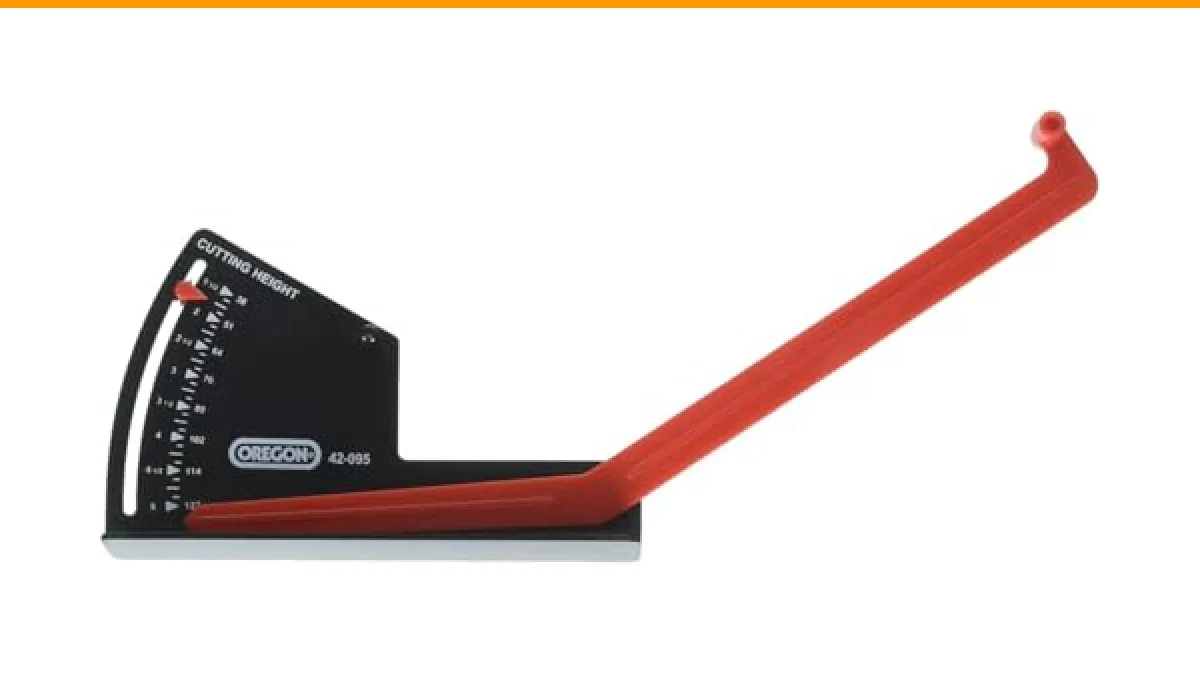
This article will guide you through optimal blade height settings, factors influencing those settings, and tools that can help, including the Oregon Universal Small Engine Deck Leveling Gauge. This tool simplifies the process of leveling your mower deck, ensuring a consistent cut.

Oregon
Oregon Universal Small Engine Deck Leveling Gauge | Corrects Unlevel Mower Blades & Deck, Ensures Longevity, Safety & Performance, Fits Most Standard Riding & Push Lawn Mowers
- Oregon Replacement Deck Leveling Gauge
- Oregon Genuine Replacement Part
- No Assembly Required
Optimal Height Settings for Different Grass Types
The ideal height for mowing varies based on the type of grass in your lawn. Here’s a breakdown of commonly found grass types and their recommended mowing heights:
- Cool-Season Grasses (e.g., Kentucky Bluegrass, Fescue): 2.5 to 4 inches
- Warm-Season Grasses (e.g., Bermuda, Zoysia): 1 to 3 inches
- Tall Fescue: 3 to 4 inches
- Ryegrass: 2 to 3 inches
Pro Tip: Mowing at the higher end of the recommended range can help your grass develop a deeper root system, making it more drought-resistant.
Factors Influencing Mower Blade Height
Several factors impact the ideal mowing height:
- Season: In spring and fall, grass typically grows faster. Adjust your mower blades to a higher setting to avoid cutting too much at once.
- Soil Quality: Healthy soil supports taller grass, while poor soil might require shorter cuts to prevent stress on the plants.
- Weather Conditions: Mowing during dry periods may necessitate a higher cut to protect grass from heat stress.
- Grass Variety: Different grass types thrive at different heights, as mentioned earlier.
Mower Blade Height Adjustment: A Step-by-Step Guide
Adjusting your mower blade height is straightforward. Follow these steps:
- Gather Your Tools: You’ll need a wrench, a ruler or measuring tape, and a deck leveling gauge like the Oregon Universal Small Engine Deck Leveling Gauge.
- Prepare the Mower: Ensure the mower is on a flat, level surface and turn it off. Disconnect the spark plug for safety.
- Measure Current Height: Use the ruler to measure the height of the mower blades from the ground. This will help you know how much to adjust.
- Adjust the Blades: Use the wrench to adjust the height of the mower deck according to your desired setting.
- Check Leveling: Use the leveling gauge to ensure the deck is even and level. This prevents uneven cuts.
- Test the Mower: Start the mower and make a few test passes to see if any adjustments are still needed.
Regularly checking and adjusting your mower blades helps maintain a healthy lawn.
Comparison of Mower Blade Height Settings
| Grass Type | Ideal Height (inches) | Notes |
|---|---|---|
| Cool-Season Grasses | 2.5 – 4 | Higher cuts encourage deeper roots. |
| Warm-Season Grasses | 1 – 3 | Aim for shorter cuts in hot weather. |
| Tall Fescue | 3 – 4 | Best for drought resistance. |
| Ryegrass | 2 – 3 | Frequent mowing may be necessary. |
What happens if I mow too short?
Mowing too short can stress the grass, making it vulnerable to pests, diseases, and drought. It can also lead to a patchy lawn as the grass struggles to recover.
How often should I mow my lawn?
The frequency depends on growth rate, typically every 1-2 weeks during peak growth seasons. Adjust based on rainfall and temperature.
Can I use the same height for all my grass types?
It’s not advisable. Different grass types have varying optimal heights. Mowing them all at the same height can lead to uneven growth and health issues.
What tools do I need to adjust my mower blades?
You’ll need a wrench, measuring tape, and a leveling gauge. The Oregon Universal Small Engine Deck Leveling Gauge simplifies the leveling process.
Does mower blade sharpness affect height settings?
Yes, sharp blades cut more effectively, allowing for cleaner cuts even at higher settings. Dull blades can tear grass, leading to stress.
Final Thoughts on Lawn Mower Blade Height
- Know your grass type and its ideal cutting height.
- Adjust blade height seasonally based on growth patterns.
- Use tools like leveling gauges for precision.
- Regularly check and sharpen mower blades for best results.
- Aim for a higher cut during dry spells to protect grass.
- Monitor lawn health and adjust practices accordingly.
- Consider professional help for complex lawn care needs.



