
Your mower starts hard, runs rough, or burns through oil faster than it should. These are classic signs of the wrong oil or a neglected change interval. Small engines are tough, but they punish neglect quickly.

A great lawn mower oil matches your engine type, handles your local temperature swings, and resists thermal breakdown during long, hot cuts. Viscosity grade and base oil chemistry matter more than brand loyalty.
We shortlisted five oils that cover almost every 4-cycle mower on the market, from basic push mowers to riding tractors. The STP Premium Synthetic Blend 10W-30 is our top overall pick for its all-weather flexibility and price. Keep reading for the full breakdown.
| Features | STP Synthetic Blend | Briggs 30W Pack | STP Small Engine 2-Pack | Briggs 5W30 Synthetic | Pennzoil 10W-30 |
|---|---|---|---|---|---|
| Viscosity Grade | 10W-30 | SAE 30 | 10W-30 | 5W-30 | 10W-30 |
| Base Oil Type | Synthetic blend | Conventional | Synthetic blend | Full synthetic | Conventional |
| Best Use Case | All-season small engines | Warm-weather mowers | Multi-mower owners | Cold starts, extreme temps | Older, high-mileage engines |
| Key Strength | Anti-wear + detergents | OEM-approved formula | Two bottles per pack | Wide temperature range | Seal compatibility |
| Bottle Size | 32 fl oz | 18 oz each | 32 oz each | 32 oz | 1 quart |
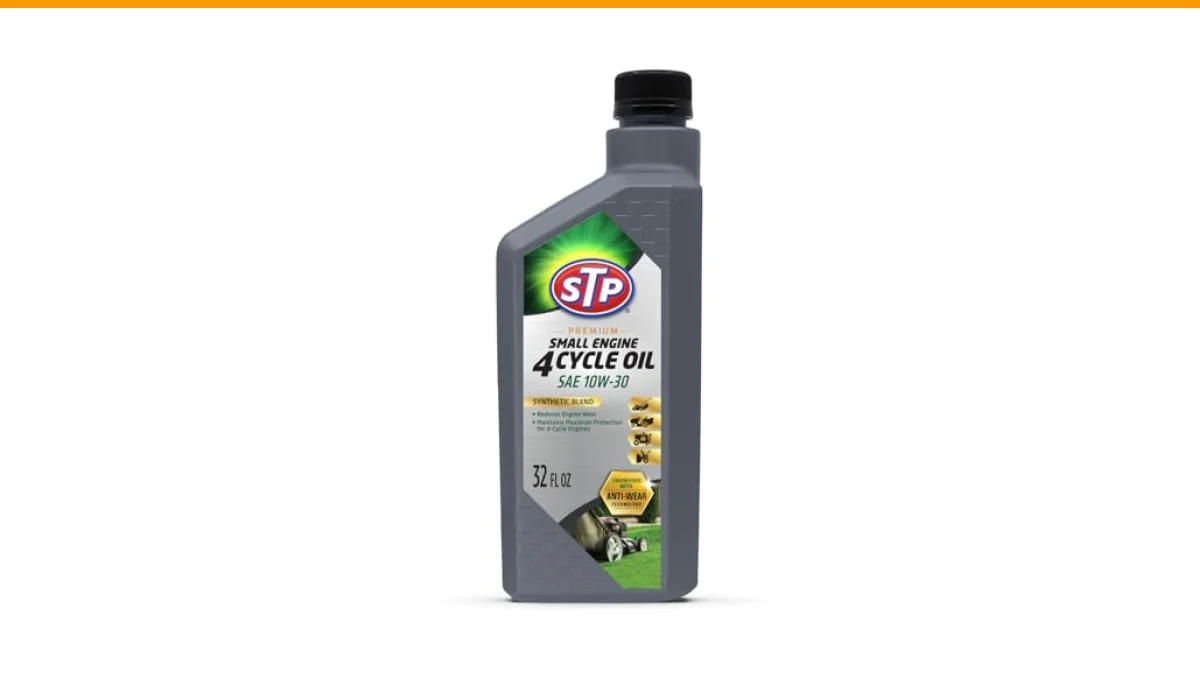
STP Premium Synthetic Ble…

STP
STP Premium Synthetic Blend 4 Cycle Small Engine Oil, SAE 10w30 Motor Oil for Lawnmowers, Generators, Tractors, Snow Blowers, and More, 32 fl oz
- SAE 10W-30 MOTOR OIL FOR SMALL ENGINES: One 32 fl oz bottle of STP Premium Synthetic Blend 4 Cycle Small Engine Oil SAE 10W-30, fo…
- FIGHTS THERMAL BREAKDOWN: Antioxidants fight thermal breakdown to enhance oil durability, helping the SAE 10W-30 oil handle high t…
- PREVENTS BUILDUP: Detergents help keep small engine components clean and control carbon deposits, preventing buildup that can affe…
This is the bottle most homeowners should grab first. STP’s 10W-30 synthetic blend works in mowers, generators, snow blowers, and tractors, so you can keep one jug on the shelf for everything in the garage. It’s a smart pick for anyone who doesn’t want to think too hard about oil.
The all-weather formula is the real selling point. A 10W-30 flows well enough for a cold spring start, then holds its film strength when the engine runs hot through a July mowing session. Antioxidants fight thermal breakdown, and detergents keep carbon deposits from gumming up the valves. Viscosity index improvers also cut oil consumption, which matters on older engines that sip a little between changes.
It’s a blend, not a full synthetic, so the most demanding commercial users may want something stronger. The 32-ounce bottle also gives you a bit of waste on small push mowers that only take 15 to 20 ounces. Still, for the price and versatility, it’s hard to beat.
- SAE 10W-30 synthetic blend for 4-cycle small engines
- Can substitute for equipment calling for SAE 30
- Anti-wear additives reduce internal engine wear
- Detergents control carbon and varnish buildup
- 32 fl oz bottle fits most push and riding mowers
Best for: The homeowner who wants one reliable oil for every small engine in the garage.
Briggs and Stratton (Pack…

Briggs & Stratton
Briggs and Stratton (Pack of 2) 100005 SAE 30 Engine Oil 18oz Bottle and Fuel Treatment
- 2-18oz Briggs and Stratton 30W Oil
- 3-n-1 Advanced Fuel Treatment by Power Performance 2oz Bottle Treats 10 gallons gas
Briggs & Stratton built the engine in a huge share of walk-behind mowers sold in North America, so their SAE 30 oil is a safe, warranty-friendly choice. This two-pack also throws in a 2-ounce bottle of 3-in-1 fuel treatment that treats up to 10 gallons of gas.
SAE 30 is the classic warm-weather grade. It’s thicker at startup than a multi-grade, which gives good protection once the engine is warm. The 18-ounce bottles are sized for small push mowers that take roughly 18 to 20 ounces per fill, so you get almost exactly one change per bottle.
The catch is temperature range. Straight SAE 30 gets thick in cold weather and can make winter starting difficult. If you store the mower in an unheated shed and mow into late fall, a 10W-30 or 5W-30 will serve you better. The fuel treatment is a nice bonus, but it’s a small bottle.
- Two 18 oz bottles of SAE 30 conventional oil
- Includes 2 oz 3-in-1 fuel treatment for 10 gallons
- OEM-branded formula for Briggs & Stratton engines
- Ideal for warm-season mowing
- Bottle size matches small push mower capacity
Best for: Briggs & Stratton owners in warm climates who want an OEM-approved oil plus a fuel stabilizer in one purchase.
STP Premium Small Engine…

STP
STP Premium Small Engine 4 Cycle Oil Formula, SAE10W-30 Small Engine Oil & Care Formula Reduces Wear for Lawnmower, Push Mower, Tractor, 32 Oz, STP (Pack of 2)
- The information below is per-pack only
- SAE 10W-30 MOTOR OIL FOR SMALL ENGINES: One 32 fl oz bottle of STP Premium Synthetic Blend 4 Cycle Small Engine Oil SAE 10W-30, fo…
- ALL-WEATHER FORMULA: This 4 cycle engine oil is a synthetic blend with an all-weather formula that promotes easier starts all year…
Same oil as our top pick, but sold as a two-pack. If you run two mowers, or you change oil twice a season, the multi-pack saves you a trip to the store. It’s also handy for snow blower owners who want a spare bottle on the shelf.
You still get the synthetic blend base, the all-weather 10W-30 viscosity, and the anti-wear and detergent package. The viscosity index improver helps reduce top-off frequency on engines that burn a little oil. For anyone maintaining a small fleet of outdoor power equipment, this is the practical buy.
Buying two bottles upfront costs more than one, obviously, and the oil has a shelf life. Store it sealed and out of direct sunlight and it’ll be fine for a couple of seasons. If you only own one push mower, a single bottle is the smarter call.
- Two 32 fl oz bottles of 10W-30 synthetic blend
- Formulated for mowers, tractors, generators, snow blowers
- All-season performance with easier cold starts
- Detergents fight carbon and sludge buildup
- Reduces oil consumption on worn engines
Best for: Households with two or more small engines that need regular oil changes.
Briggs & Stratton 100074…
Full synthetic 5W-30 from Briggs & Stratton is the premium end of the small-engine oil market. It’s the right pick if you mow in extreme heat, store equipment in a cold garage, or want the longest possible change intervals.
Synthetic base oil resists thermal breakdown better than conventional or blend oils. That means it holds its viscosity under sustained load, which is exactly what happens when you’re cutting tall, thick grass on a hot afternoon. The 5W winter rating also makes cold starts noticeably easier, so the engine cranks over faster on the first pull.
You’ll pay more per bottle than a conventional oil, and for a basic push mower in a mild climate the extra cost may not pay off. It’s also OEM-approved for Briggs engines, which matters if you’re still under warranty. For everyone else, it’s a solid upgrade but not mandatory.
- 100% synthetic 5W-30 for air-cooled 4-cycle engines
- Excellent cold-weather starting and hot-weather protection
- OEM-approved for Briggs & Stratton warranty coverage
- 32 oz bottle suits most push and riding mowers
- Longer service life than conventional oil
Best for: Owners in harsh climates or with expensive equipment who want maximum protection.
Pennzoil 10W-30 Motor Oil…

Pennzoil
Pennzoil 10W-30 Motor Oil, 1 Quart
- 10W-30 motor oil formulated to keep engines clean and responsive
- Provides proven wear protection (based on Sequence IVA wear test using SAE 5W-30)
- Helps prevent dirt and contaminants from turning into performance-robbing deposits
Pennzoil’s conventional 10W-30 is a car oil, not a small-engine-specific formula. That’s fine for older, high-mileage mowers whose engines are already loose and burning oil. It’s also the cheapest way to top off a mower in a pinch.
This oil is formulated to keep engines clean and prevent dirt from becoming performance-robbing deposits. It’s compatible with engine seals and mixes safely with conventional oils, so you won’t cause problems by topping off a partially filled crankcase. The one-quart bottle gives you plenty for a single change plus a top-off or two.
Here’s the honest caveat: small-engine oils usually carry higher levels of anti-wear additives like zinc, because air-cooled engines run hotter than liquid-cooled car engines. Using automotive oil long-term in a hard-working mower isn’t ideal. It works, but it’s not the best choice for a new engine under warranty.
- Conventional 10W-30 in a 1-quart bottle
- Formulated to keep engines clean and responsive
- Compatible with seals and other conventional oils
- Proven wear protection in standard tests
- Good for topping off older, high-mileage engines
Best for: Older mowers with worn rings, or anyone who needs a quick top-off from the garage shelf.
How We Chose These Products
We started with the engines people actually own: Briggs & Stratton, Honda, Toro, Husqvarna, and generic push mowers. Any oil that couldn’t serve a common 4-cycle small engine got cut. From there we weighed viscosity range, base oil type, additive package, and bottle size against real-world cost per change.
We also looked at whether each oil is OEM-approved or can substitute for the grade listed in a typical owner’s manual. Oils that only work in a narrow temperature band got flagged. So did oils with bottle sizes that leave a lot of waste on small engines. The final five cover every common scenario, from a $150 push mower to a riding tractor.
Buying Guide: What Really Matters
Viscosity is the single biggest decision. SAE 30 is fine if you only mow in warm weather. A 10W-30 covers most of the year in most climates. A 5W-30 or full synthetic is the safer bet if you mow in cold spring mornings or store equipment in an unheated shed. Check your owner’s manual before you buy, because some Honda and Kawasaki engines have specific recommendations.
Base oil type is next. Conventional oil is cheapest and works fine for light use. Synthetic blends split the difference on price and protection. Full synthetics cost the most but resist heat and cold better, which extends engine life on hard-working equipment. If you only mow a quarter acre every two weeks, conventional is plenty. If you run a commercial mower or a big tractor, go synthetic.
Additives matter more than most people realize. Detergents keep carbon from building up on valves and rings. Anti-wear additives like zinc protect metal surfaces under load. Viscosity index improvers keep the oil from thinning too much when hot. Small-engine-specific oils usually have a stronger additive package than standard automotive oil, which is why we lean toward them for anything still under warranty. You can read more about 4-stroke mower oil if you want to go deeper on formulation differences.
How to Check and Change Your Lawn Mower Oil
Check the oil level on a cold engine, sitting on a level surface. Pull the dipstick, wipe it clean, reinsert it fully, then pull it out again and read the level. It should sit between the low and full marks. Overfilling is a common mistake and can cause seals to leak or the engine to smoke.
To change the oil, warm the engine for a minute or two first so the old oil flows out more completely. Then shut it off, tip the mower onto its side with the air filter facing up, and drain the oil into a pan. Replace the drain plug, refill with the correct amount, and check the level again. If you’re shopping for a drain pan, there’s a good roundup of oil drain pans that make the job less messy.
Change the oil at least once a season, or every 25 to 50 hours of use. If you mow in dusty conditions or run the engine hard, change it more often. Fresh oil is cheap insurance compared to a rebuild.
Common Oil Mistakes That Ruin Engines
The worst mistake is putting 2-stroke mix in a 4-stroke engine. Two-stroke oil is designed to burn with the fuel, not lubricate a crankcase. It will foul the plug and eventually kill the engine. If you have both types of equipment, keep the cans clearly separated.
Overfilling comes next. Too much oil whips into foam, which reduces lubrication and can blow past seals. Always check the dipstick after adding oil and never assume the bottle size matches the engine capacity. Another common error is skipping the change because the oil still looks clean. Oil breaks down chemically even when it looks fine, so stick to the interval.
Finally, don’t reuse oil and don’t mix brands of different base types unless you’re in a pinch. Topping off a synthetic blend with conventional oil won’t destroy the engine, but it does dilute the additive package. For more on brand-specific recommendations, see this guide to the best oil brand for small engines.
Eco-Friendly Oil Disposal
Used motor oil is hazardous waste. Never pour it down a drain, into the soil, or into the trash. Most auto parts stores accept used oil for free, and many municipal recycling centers have drop-off tanks. Pour the oil into a sealed container, like the empty bottle from your new oil, and label it clearly.
If you have a lot of used oil, some recycling centers accept it in bulk. Don’t mix it with antifreeze, brake fluid, or solvents, because that makes it harder to recycle. A single oil change from a push mower is only about 18 to 20 ounces, so a one-gallon jug will hold several seasons’ worth before you need to make a drop-off run.
Frequently Asked Questions
Can I use car oil in my lawn mower? You can in an emergency, but small-engine oils have stronger anti-wear additives because air-cooled engines run hotter. Long-term use of automotive oil may shorten engine life. Stick with a small-engine formula when possible.
What’s the difference between SAE 30 and 10W-30? SAE 30 is a straight-weight oil that’s thicker when cold. 10W-30 is a multi-grade that flows better at low temperatures while still protecting at operating temperature. 10W-30 covers a wider range of conditions.
How often should I change lawn mower oil? Once a season for most homeowners, or every 25 to 50 hours of run time. Heavy use, dusty conditions, or extreme heat call for more frequent changes.
Is full synthetic oil worth the extra cost? For a cheap push mower in a mild climate, probably not. For a riding mower, commercial equipment, or anything run in extreme temperatures, yes. Synthetic oil resists breakdown better and can extend engine life.
Our Top Recommendation
The STP Premium Synthetic Blend 10W-30 is the best all-around pick for most homeowners. It handles cold starts and hot mowing sessions, works in mowers, generators, and snow blowers, and costs less than a full synthetic. One bottle covers a season for most push mowers.
If you mow in extreme heat or cold, step up to the Briggs & Stratton 100074 full synthetic 5W-30. If you own a Briggs engine and want an OEM-approved conventional oil with a fuel treatment included, the two-pack of SAE 30 is a solid value. And if you’re just topping off an old, tired mower, the Pennzoil 10W-30 will do the job without breaking the bank.


