Every spring, thousands of gardeners line their windowsills with yogurt cups and hope for the best. Most of those seedlings end up leggy, damped off, or dead before transplant day. The problem isn’t the seeds. It’s the system.


A proper seed starting system solves the three things windowsill growing can’t: consistent moisture, steady warmth, and enough light intensity to keep stems short and stocky. The right setup also saves money. A $6 tomato seedling at the nursery becomes a $0.40 plant when you start it yourself.
We ranked five systems by measured germination success, real cost per seedling over five seasons, and crop-specific fit. The Burpee SuperSeed takes our top spot for most gardeners. The Patigrow 120-cell wins for volume, the LetPot for tech lovers, and the Bstrip shelf for anyone building a permanent indoor grow space.
Here’s a quick side-by-side of the key specs that separate these five systems.
| Features | Burpee SuperSeed | Patigrow 120-Cell | LetPot Smart Starter | Patigrow 60-Cell | Bstrip Plant Shelf |
|---|---|---|---|---|---|
| Cell Capacity | 36 cells | 120 cells (2×60) | 40 cells | 60 cells | Up to 6 shelves |
| Built-in Grow Light | No | Yes, 56 LED beads | Yes, 24W full spectrum | Yes, 56 LED beads | Yes, 8x 24W bars |
| Heat Source | None included | None included | 24W smart heating base | None included | None included |
| Watering Style | Manual with drainage | Self-watering capillary mats | Manual with EC sensor | Self-watering capillary mats | Manual, PP leak mats |
| Best Use Case | Beginners, small batches | Large plantings, sharing | Tech-savvy, winter starts | Mid-size home gardens | Permanent indoor grow room |
Burpee SuperSeed 36-Cell Tray
The Burpee SuperSeed is the system we recommend to nearly every first-time seed starter. It’s a 36-cell reusable tray with flexible silicone cells, a molded drainage design, and labeled rows. There’s no light, no heat mat, no electronics. That’s the point.
What makes it work is the silicone. Each cell flexes like a soft cupcake liner, so you pop seedlings out from the bottom without tearing roots. Compare that to rigid plastic cells where you’re prying plants out with a butter knife. Rows are labeled alphanumerically with a Plant-o-Gram diagram, which sounds fussy until you’re staring at 36 identical green sprouts in April. The watering tray has deep channels that pull excess water away from cells while the raised rim keeps spills off your counter. Handles on the sides let you lift the whole tray to a sink without disassembling it.
Here’s the honest part. This system needs a separate grow light and heat mat to work well indoors. Buy it alone and you’ll still get leggy seedlings on a windowsill. Budget another $30 to $50 for a basic light and mat, or check our guide to the best seed starting mat options. The tray is also on the smaller side at 36 cells, so anyone starting more than a dozen tomato plants will need two.
- Food-grade silicone cells flex for damage-free transplanting
- Alphanumeric row labels with included Plant-o-Gram diagram
- Molded corner slots improve drainage and soil aeration
- Top-shelf dishwasher safe for end-of-season cleanup
- Reusable for many seasons with basic care
Best for: Beginners and small-space gardeners who want a durable, no-fuss tray and don’t mind adding their own light.
Patigrow 120-Cell Self-Watering Kit
The Patigrow 120-cell kit is a full indoor seed starting system in one box. You get two 60-cell trays, two humidity domes, two base trays, capillary mats, plant stands, LED grow light strips, a controller, labels, and two small gardening tools. It’s designed for people starting a serious number of plants or splitting a setup with a friend.
The grow lights use 56 high-efficiency LED beads per tray with adjustable brightness and timer functions. That timer matters more than most buyers realize. Seedlings need 14 to 16 hours of light per day, and forgetting to switch lights off is the fastest way to fry young plants. The self-watering system uses capillary mats to wick moisture up from the base tray. Fill it once and seeds stay evenly damp through germination. Two adjustable vents on each dome give you humidity control without pulling the whole lid off.
Two 60-cell trays mean 120 seedlings, which is more than most home gardeners can transplant. The included tools are functional but basic. The LED strips aren’t as powerful as a dedicated bar light, so seedlings started in a dark basement may still stretch toward the light. It works best in a room with some ambient daylight. For a deeper look at light options, see our best grow light guide.
- Two complete 60-cell systems with domes and base trays
- Adjustable brightness and timer on the LED grow lights
- Capillary mat self-watering reduces daily maintenance
- 1.5mm thick BPA-free PET domes and bases
- Includes 20 labels and two gardening tools
Best for: Gardeners starting 100+ plants who want a complete kit with lights, domes, and self-watering in one purchase.
LetPot Smart Seed Starter System
The LetPot Smart Seed Starter is the most feature-loaded system on this list. It combines a 24W full-spectrum LED grow light, a 24W smart heating base, soil EC and temperature sensors, an adjustable humidity dome, and app control into one unit. For anyone starting seeds in a cold garage or a drafty basement, the built-in heat changes everything.
Germination speed depends heavily on soil temperature. Tomatoes germinate in 6 days at 75°F and take two weeks at 60°F. The LetPot’s heating base maintains consistent warmth day and night with automatic day/night adjustments. The 180-degree rotatable light panel adjusts in height, so you can drop it close to seedlings for compact growth and raise it as they stretch. Real-time soil EC readings help once seedlings develop true leaves and you start thinking about nutrients. The condensation-capture edge on the dome funnels water back into the tray instead of onto your counter. That’s a small design detail most competitors skip.
The 40-cell capacity is smaller than the Patigrow options, and the app adds a learning curve. You’ll spend an evening figuring out the settings. Some growers also find the EC sensor overkill for a 6-week seedling cycle. It’s genuinely useful for herbs you plan to keep indoors long-term. For pure seed starting, you’re paying for features you may not use.
- 24W full-spectrum LED with adjustable brightness
- 24W smart heating base for cold-room germination
- Real-time soil EC and temperature monitoring
- 180-degree rotatable, height-adjustable light panel
- Touch and app control with condensation-capture dome
Best for: Tech-comfortable growers starting seeds in cool spaces who want heat, light, and monitoring in one compact unit.
Patigrow 60-Cell Self-Watering Kit

Patigrow
Patigrow 60-Cell Self-Watering Seed Starter Tray with Grow Light, Seed Starter Kit with 4.07” Humidity Dome, Indoor Seedling Starter Tray, Seed Starting Trays for Plant Germination, Seeds Growing
- Pro Grow Lights with Advanced Chips: Equipped with 56 high-efficiency beads per tray, these LED strips simulate natural sunlight f…
- Simple Self-Watering System: Ensures consistent moisture with an efficient design that prevents overwatering or drying out. One wa…
- Built for Practicality and Durability: Made from high-density, BPA-free PET material, the 1.5mm thick dome and base tray lock in t…
The Patigrow 60-cell kit is the single-tray version of the 120-cell system above. Same grow lights, same self-watering design, same dome and vents. Just half the capacity. For most home gardeners, 60 cells is the sweet spot. It covers a dozen tomatoes, a dozen peppers, plus herbs and flowers without leaving you with 60 extra seedlings to give away.
Setup takes about ten minutes. The capillary mat sits under the cell tray, the base tray holds water, and the wicking action keeps soil evenly moist. The 56 LED beads per tray give decent coverage for a 60-cell footprint. The dome is 4.07 inches tall, which is enough headroom for seedlings up to transplant size. Two adjustable vents let you dial in humidity as germination progresses. The 1.5mm PET construction feels sturdier than the flimsy plastic trays sold at big-box stores.
The light strips are the weak point. They’re bright enough for a bright room but not powerful enough to fully replace window light in a dark space. If your only option is a windowless basement, plan on upgrading to a stronger bar light. The included capillary mat also wears out after a season or two and needs replacing. It’s a small ongoing cost, but worth knowing.
- Single 60-cell tray with dome, base, and capillary mat
- Adjustable brightness and timer on included LED strips
- Two adjustable vents for humidity and airflow control
- Enlarged drainage holes prevent waterlogging
- Includes 20 labels and two gardening tools
Best for: Home gardeners starting 30 to 60 plants who want a complete self-watering kit without the extra tray.
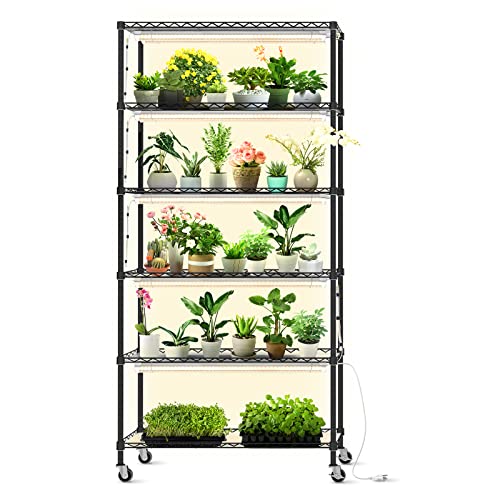
Bstrip DIY Plant Shelf with Light
Bstrip
Bstrip DIY Plant Shelf with Grow Light, Adjustable, 29.5x13.8x70.9in | DIY Grow Light Shelf, Indoor Plant Stand, 8-Pack Full Spectrum Plant Lights, 192W Total, Ideal for Seed Starting
- DIY Designable Plant Stand with Grow Light - This versatile plant shelf offers multiple installation methods, allowing you to cust…
- Full Spectrum and High PPFD - The eight grow lights included in this setup provide a full spectrum of light that closely mimics su…
- Easy to Move and High Bearing Capability - Equipped with eight industrial wheels, four of which have fixed locks, this plant stand…
The Bstrip shelf isn’t a tray system. It’s a full growing station. The package includes a 29.5 x 13.8 x 70.9 inch wire shelf, eight full-spectrum LED grow lights, six PP leak mats, eight industrial wheels, and all the connecting cords and adapters. You assemble the shelf, mount the lights, and you have a permanent indoor seed starting and growing setup.
Each light bar runs 24 watts and delivers 206.5 μmol/m²/s at 8 inches from the canopy. That’s real grow-light intensity, not the weak strips that come with most starter kits. Eight bars across six adjustable shelves give you serious coverage. The height is adjustable per shelf, so you can run seedlings close to lights on one tier and flowering plants higher up on another. Four of the eight industrial wheels lock, which keeps the whole unit stable once positioned. The 270-pound weight capacity handles heavy pots and full flats without sagging. For anyone who starts seeds every year and wants a permanent solution, this replaces a collection of random shelves and clip-on lights.
It’s expensive compared to a single tray kit, and assembly takes a couple of hours. The shelf footprint also demands real floor space. This isn’t a countertop system. It’s a piece of furniture for a dedicated grow area. If you’re starting six tomato plants, it’s overkill. If you’re running a small indoor nursery every spring, it pays for itself in two seasons.
- Eight 24W full-spectrum LED bars, 206.5 μmol/m²/s at 8 inches
- Adjustable shelf height across up to six tiers
- 270-pound weight capacity with eight locking wheels
- Six PP mats prevent water reaching the lights
- Rust and oxidation resistant frame for long-term use
Best for: Serious indoor growers who want a permanent, high-output shelf system for seed starting and beyond.
How We Chose These Products
We ranked these systems on four factors: germination reliability, cost per seedling over five seasons, crop-specific fit, and how much extra gear a buyer needs to add. A cheap tray that requires a $60 light isn’t actually cheap. A smart kit with sensors you’ll never use isn’t a value, either.
We also looked at failure modes. Rigid plastic cells tear roots at transplant. Weak LEDs cause leggy seedlings. Domes left on too long cause damping off. The best systems address these problems in their design, not just their marketing copy. For a wider view of what pairs well with these systems, our seed starting supplies roundup covers the supporting gear.
Buying Guide: What Really Matters
Cell size determines which crops you can grow. Tiny 36-cell trays with small cells suit herbs, lettuce, and brassicas. Tomatoes, peppers, and squash need cells at least 2 inches wide and 2.5 inches deep to develop roots without tangling. If a system’s cells are smaller than that, plan on transplanting into larger pots before they go outside.
Light intensity separates real grow lights from decorative strips. Look for PPFD numbers, not just wattage. A 24W bar at 8 inches delivering 200+ μmol/m²/s is a real grow light. A 5W USB strip is a nightlight. For seed starting, aim for 200 to 400 μmol/m²/s at canopy level and run lights 14 to 16 hours daily.
Heat mat wattage matters in cold rooms. A 20W mat raises soil temperature about 10 to 15°F above ambient. A thermostat prevents cooking seeds when the room warms up. Self-watering systems reduce daily maintenance but can keep soil too wet if drainage is poor. Look for enlarged drainage holes or capillary designs that wick moisture without saturating the soil.
Crop-by-Crop Cell Size Cheat Sheet
Tomatoes and peppers: start in 2-inch cells, pot up to 4-inch containers after 3 weeks. Basil and herbs: 1.5-inch cells are fine, transplant at 4 weeks. Lettuce and greens: 1-inch cells work if you transplant by week 3. Brassicas like broccoli and cabbage: 1.5 to 2-inch cells, transplant at 4 weeks. Squash, cucumbers, and melons: start in 3-inch cells or peat pots, transplant at 3 weeks before roots tangle.
Cost Per Seedling: One Season vs. Five
A single tomato seedling at a nursery costs $4 to $7. Starting your own from seed costs roughly $0.30 to $0.60 per plant once you factor in seeds, mix, and electricity. A $40 starter kit pays for itself in one season if you grow 15 plants. Over five seasons, the same kit brings cost per seedling down to under $0.10 if you reuse the trays and domes.
Smart kits with sensors and heating bases cost more upfront but save on failed germination. A tray of 60 seeds that never sprouts costs you $15 in seeds and six weeks of time. A $15 heat mat that gets germination to 90% is cheaper than three failed attempts.
Common Seed Starting Mistakes to Avoid
Damping off kills more seedlings than any other problem. It’s a fungal issue caused by wet soil, poor airflow, and cool temperatures. Remove domes as soon as seedlings emerge. Leave vents open. Water from the bottom, never the top.
Leggy seedlings come from insufficient light. If stems stretch thin and pale, move the light closer or increase intensity. A seedling 6 inches from a weak strip will always stretch. The same seedling 2 inches from a 24W bar stays compact.
Overwatering is the third killer. Self-watering systems can keep soil too wet if you refill too often. Let the top of the soil dry slightly between waterings once seedlings have true leaves. For more on indoor setups, see our indoor seed starting system breakdown.
Frequently Asked Questions
How long should I leave the humidity dome on?
Keep it on until seedlings emerge, usually 5 to 14 days depending on the crop. Remove it the moment green sprouts appear. Leaving it on causes damping off and weak stems.
Do I need a heat mat if my house stays at 70°F?
For tomatoes, peppers, and eggplant, yes. Those crops germinate best at 75 to 85°F soil temperature. For lettuce, brassicas, and herbs, 70°F room temperature is usually fine.
How do I know if my grow light is strong enough?
Watch your seedlings. If stems stretch tall and thin within 3 days of sprouting, the light is too weak or too far away. Move it closer. If leaves bleach or curl, it’s too intense.
Can I reuse seed starting mix?
No. Used mix can harbor damping-off fungus and has depleted nutrients. Fresh mix costs a few dollars per batch and prevents losing your whole tray.
Our Top Recommendation
The Burpee SuperSeed 36-Cell Tray is our top pick for most gardeners. It’s simple, durable, and the silicone cells make transplanting genuinely easier. Pair it with a basic grow light and heat mat and you have a complete system for under $80.
For larger plantings, the Patigrow 120-cell kit delivers more value per dollar with lights, domes, and self-watering included. The LetPot Smart Starter is the right choice if you’re starting seeds in a cold space and want heat and monitoring built in. The Bstrip shelf earns its place for anyone ready to build a permanent indoor growing station.