
Best Raised Vegetable Garden Beds: 5 Expert Picks for Deep Roots and Big Harvests
Contents
A raised bed solves problems in-ground gardening creates. Weeds, poor soil, bad drainage, back pain, and pets trampling your lettuce. But the wrong bed creates new problems. Rusted panels, bowed sides, soil that dries out in a day, and a price tag that doesn’t match the yield.
The best raised vegetable garden beds balance three things: root depth for the crops you actually grow, material lifespan in your climate, and assembly that doesn’t require a second person or an engineering degree. Depth matters more than most shoppers realize. A 6-inch bed works for lettuce and herbs. Carrots, tomatoes, and broccoli want 12 to 24 inches.
We evaluated five beds across metal, fir wood, and galvanized steel. Each pick serves a different grower: the deep-root gardener, the patio container farmer, the budget-conscious beginner, and the small-space balcony grower. Here’s how they compare, which crops fit each one, and what the real cost per growing season looks like.
Here’s a quick spec comparison to see how these beds stack up side by side.
| Features | Best Choice 6×3 Metal | Best Choice 48″ Fir | Best Choice 48″ Liner | Land Guard Galvanized | Best Choice 6×3 Sage |
|---|---|---|---|---|---|
| Material & Build | Powder-coated steel | Solid fir wood | Chinese fir wood | Q195 galvanized metal | Powder-coated steel |
| Growing Depth | 24 inches | 16 inches | Not specified | 12 inches | 24 inches |
| Soil Volume | 269 gallons | Spacious area | 5 cubic feet | 7.14 cubic feet | 269 gallons |
| Assembly | Tool-free wingnuts | Reinforced corners | All-wood build | 5-minute setup | Tool-free wingnuts |
| Best Use Case | Deep-root vegetables | Patio root crops | Balcony ergonomic garden | Budget in-ground bed | Deep-root sage garden |
Best Choice Products 6x3x…
1st Pick
Best Choice Products
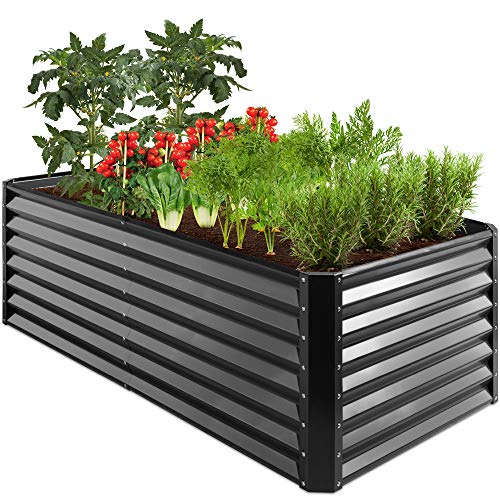
Best Choice Products 6x3x2ft Outdoor Metal Raised Garden Bed, Deep Root Box Planter for Vegetables, Flowers, Herbs, 269 Gallon Capacity, 100% Non Toxic Materials - Gray
- 2FT GROWING DEPTH: 24 inches of depth holds up to 269 gallons of soil-great for medium to deep rooting plants and vegetables like…
- 100% NON TOXIC MATERIALS FOR SAFE GARDENING: Made with non-toxic materials and independently tested to meet FHSA standards; free f…
- TOOL-FREE ASSEMBLY: Beveled steel panels come together with a set of included wingnuts and bolts with rubber edging for your added…
The one you buy when root depth matters more than anything else. This is a serious growing bed for gardeners who want to plant broccoli, beans, and deep-rooting perennials without hitting a floor. The 24-inch depth holds 269 gallons of soil across a 6 by 3 foot footprint. That’s enough volume to grow tomatoes, peppers, and even small root crops like short carrots.
What sets this apart from cheaper metal beds is the material story. The powder-coated steel panels carry a non-corrosive finish, and the company had the product independently tested for heavy metals, phthalates, and PFAS. That matters if you’re growing food. Four ground stakes and two stabilizing rods keep the panels from bowing outward under soil pressure, which is the number one failure mode on thin metal beds.
Assembly is genuinely tool-free. Beveled panels connect with wingnuts and bolts, and rubber edging covers the sharp top edge. Plan on 30 to 45 minutes. The trade-off? No bottom panel. This bed sits directly on soil or gravel, so you’ll want a weed barrier underneath if you’re placing it over grass. It’s also heavy once filled, so pick your spot before you start shoveling.
- 24-inch growing depth handles medium to deep-rooting crops
- 269-gallon soil capacity across a 6×3 footprint
- Powder-coated steel with non-corrosive finish
- Tool-free assembly with wingnuts and rubber edging
- Four ground stakes and two stabilizing rods included
Best for: The grower who wants maximum root depth and a non-toxic metal bed that won’t leach into the soil.
Best Choice Products 48″…
2nd Pick

Best Choice Products
Best Choice Products 48" x 24" x 30" Raised Garden Bed with Extra Deep 16" Depth, Elevated Wood Planter Box Stand for Backyard, Patio, Balcony, Natural Fir Wood - Acorn Brown
- DEEP PLANTER FOR MAXIMUM YIELD: With 16" of soil depth and a spacious planting area, this elevated bed supports healthy root veget…
- HEALTHY SOIL, HEALTHY PLANTS: Built-in drainage keeps soil breathable and properly watered, helping your vegetables and herbs thri…
- LONG-LASTING MATERIALS: Crafted from solid fir wood known for its strength and natural resistance to rot and insects, while reinfo…
The patio bed for root vegetables that need real depth. This elevated fir wood planter stands 30 inches tall with a 16-inch soil depth. That combination is rare. Most elevated beds top out at 8 to 10 inches of soil, which rules out carrots, beets, and radishes. This one handles all three.
The fir wood construction uses reinforced corner posts and thick panels, so the frame stays square and wobble-free. Built-in drainage keeps soil breathable, and the elevated height means you’re not kneeling on concrete to harvest. Pets and ground-level pests can’t reach the plants either, which is a real benefit on a patio where dogs and rabbits roam.
Here’s the honest limitation: fir wood has a lifespan. Untreated, you’re looking at 5 to 7 years before rot sets in, depending on your climate. In wet coastal areas, expect less. The bed is also compact at 48 by 24 inches, so it’s not a replacement for a full in-ground plot. It’s a high-yield container for a focused crop list.
- 16-inch soil depth supports carrots, beets, and radishes
- 30-inch standing height reduces bending and kneeling
- Solid fir wood with reinforced corner posts
- Built-in drainage keeps soil from waterlogging
- Compact 48×24 footprint fits patios and decks
Best for: Patio and deck gardeners who want deep-root crops at a comfortable working height.
Best Choice Products 48 x…
The ergonomic workhorse for balcony growers with back pain. This is the older sibling of the fir bed above, and the key difference is the included bed liner. That liner separates the wood from the soil, which slows rot and discourages weeds and burrowing animals from pushing up through the bottom. If you’ve ever pulled a weed only to find it came from underneath the bed, you know why this matters.
The 30-inch height puts the soil surface right at hip level for most adults. Planting, pruning, and harvesting happen without crouching. The 5 cubic foot soil capacity is enough for a solid crop of herbs, lettuce, peppers, or determinate tomatoes. Proper drainage holes let excess water escape, protecting roots from mineral buildup and rot.
The all-wood Chinese fir construction is water and weather resistant, but it’s not rot-proof forever. The liner buys you extra seasons, though. Expect 6 to 8 years with the liner in place. The 200-pound weight capacity is generous for soil and plants, but don’t sit on the edge. It’s a planter, not a bench.
- 30-inch ergonomic height protects back and knees
- Included bed liner slows wood rot and blocks weeds
- 5 cubic feet of soil capacity
- Proper drainage prevents waterlogging and mineral buildup
- 200-pound weight capacity
Best for: Balcony and patio gardeners who want an ergonomic, liner-protected wood bed for herbs and shallow-root vegetables.
Land Guard Galvanized Rai…
4th Pick
Land Guard
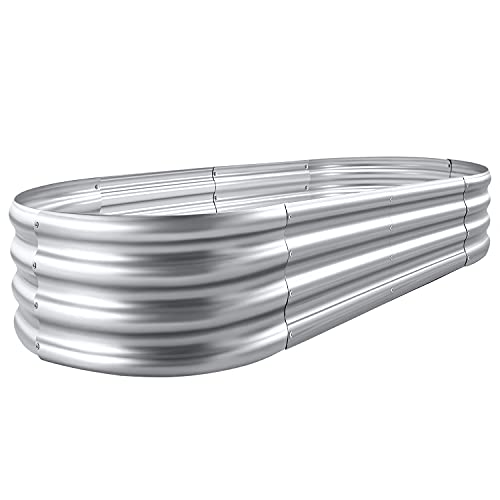
Land Guard Galvanized Raised Garden Bed Kit, Galvanized Planter Garden Boxes Outdoor, Oval Large Metal Raised Garden Beds for Vegetables…………
- Each raised metal garden bed size: 4×2×1ft ,7.14Cu
- Upgraded quality and structure: raised garden beds outdoor are made of Q195 galvanized metal sheet, double-layer anti-corrosion ga…
- Easy to set up, this galvanized stock tank only takes about 5 minutes to easily assemble and continue planting plants.
The budget pick that punches above its price. This oval galvanized bed measures 4 by 2 by 1 foot with 7.14 cubic feet of soil volume. It’s the smallest and shallowest bed on this list, but it’s also the cheapest way to get a durable metal bed into your yard. For lettuce, herbs, radishes, and bush beans, 12 inches of depth is plenty.
The Q195 galvanized metal sheet uses double-layer anti-corrosion galvanizing. Average thickness is 0.78mm, with the thickest sections reaching 1.56mm. Compare that to the 0.3mm sheet metal on generic rectangular beds, and the difference shows up in how the bed holds its shape after a few seasons of wet soil pushing outward. The oval design distributes pressure better than sharp corners, so the interface stays tight.
Assembly takes about 5 minutes. The open base prevents water accumulation and lets roots grow down into the ground soil if you place it directly on earth. The trade-off is depth. You won’t grow parsnips or long carrots here. And galvanized metal can heat up in full sun, which stresses cool-season crops in midsummer. Afternoon shade helps.
- 4x2x1 foot oval bed with 7.14 cubic feet of soil
- Q195 galvanized sheet with double-layer anti-corrosion coating
- 0.78mm average thickness, up to 1.56mm at stress points
- 5-minute assembly with open base for drainage
- Oval shape resists bowing better than rectangular beds
Best for: Budget-minded beginners who want a durable metal bed for shallow-root crops and herbs.
Best Choice Products 6x3x…
5th Pick

Best Choice Products
Best Choice Products 6x3x2ft Outdoor Metal Raised Garden Bed, Deep Root Box Planter for Vegetables, Flowers, Herbs, 269 Gallon Capacity, 100% Non Toxic Materials - Sage Green
- 2FT GROWING DEPTH: 24 inches of depth holds up to 269 gallons of soil-great for medium to deep rooting plants and vegetables like…
- 100% NON TOXIC MATERIALS FOR SAFE GARDENING: Made with non-toxic materials and independently tested to meet FHSA standards; free f…
- TOOL-FREE ASSEMBLY: Beveled steel panels come together with a set of included wingnuts and bolts with rubber edging for your added…
The same deep-root champion, now in sage green. This is the identical build to the first pick, just in a different color. Same 24-inch depth, same 269-gallon capacity, same tool-free assembly and non-toxic material testing. The sage green finish is a muted, garden-friendly tone that blends better with foliage than the gray version.
If you’re placing this bed in a visible spot, like a front yard or alongside a patio, the color matters more than you’d think. Gray metal reads as industrial. Sage green reads as intentional landscaping. The powder coating is the same either way, so durability doesn’t change. Four ground stakes and two stabilizing rods come in the box.
The limitation is identical to the gray version: no bottom panel. You’re committing to a ground-contact installation. And 269 gallons of soil is a real investment. At roughly 36 cubic feet, you’ll need about 1.5 cubic yards of soil mix to fill it. That’s a cost most shoppers don’t calculate before buying.
- 24-inch depth and 269-gallon capacity
- Sage green powder-coated steel finish
- Non-toxic materials tested to FHSA standards
- Tool-free assembly with wingnuts and bolts
- Ground stakes and stabilizing rods included
Best for: Gardeners who want the deep-root metal bed but prefer a color that disappears into the landscape.
How We Chose These Products
We started with material honesty. A bed that claims galvanized steel but uses 0.3mm sheet metal will bow within two seasons. We looked for thickness specs, corrosion treatment details, and whether the manufacturer published independent safety testing. Beds without that transparency didn’t make the cut.
Depth and soil volume drove the second filter. A raised bed’s job is to give roots room. We prioritized beds with at least 12 inches of depth, and we flagged which crops each depth actually supports. Assembly difficulty, drainage design, and whether the bed includes a liner or bottom panel rounded out the evaluation. You can see how these criteria compare against broader industry testing in Bob Vila’s raised bed reviews.
Buying Guide: What Really Matters
Depth is the spec most shoppers ignore, and it’s the one that determines what you can grow. Six inches handles lettuce, herbs, and radishes. Twelve inches opens up carrots, beets, and bush beans. Eighteen to 24 inches supports tomatoes, broccoli, and deep-root perennials. Match the depth to your crop list before you match it to your budget.
Material lifespan varies more than most product pages admit. Galvanized steel lasts 15 to 20 years in most climates. Powder-coated steel runs 10 to 15 years if the coating isn’t scratched. Fir wood, even with a liner, gives you 6 to 8 years before rot compromises the structure. Cedar outperforms fir but costs more. For a deeper look at wood options, see this guide to cedar raised garden beds.
Drainage design separates beds that work from beds that drown roots. Open-base beds drain into the ground. Elevated beds need drainage holes or a permeable liner. Metal beds in full sun gain heat, which stresses cool-season crops. Wood beds insulate better but rot faster. There’s no perfect material, only the right trade-off for your climate and crops.
Our Top Recommendation
The Best Choice Products 6x3x2ft metal bed in gray takes the top spot. It offers the deepest growing profile on this list, non-toxic material testing, and tool-free assembly at a price that undercuts most comparable metal beds. If you’re growing tomatoes, broccoli, or anything with a serious root system, this is the bed that won’t limit you.
For patio growers, the 48-inch fir bed with 16-inch depth is the runner-up. It’s the only elevated option here that supports root vegetables. Budget shoppers should look at the Land Guard galvanized bed. It’s shallow, but it’s durable and cheap. Balcony gardeners with back concerns will appreciate the liner-equipped 48-inch model. Pick the bed that matches your crops and your space, not the one with the best marketing photos.
Frequently Asked Questions
How much soil do I need to fill a raised bed?
Calculate cubic feet by multiplying length times width times depth in feet. A 6x3x2 bed needs 36 cubic feet, which is about 1.3 cubic yards. A 4x2x1 bed needs 8 cubic feet. Buy slightly more than the math suggests, since soil settles after watering.
Do metal raised beds get too hot for vegetables?
In full sun, dark metal beds can raise soil temperature 5 to 10 degrees compared to wood. Cool-season crops like lettuce and spinach bolt faster. Light-colored finishes and afternoon shade reduce the effect. Root crops and warm-season vegetables handle it fine.
How long do fir wood raised beds last?
Untreated fir lasts 4 to 6 years in most climates. With a liner separating soil from wood, expect 6 to 8 years. Wet coastal climates shorten that timeline. Cedar and galvanized steel both outlast fir significantly.
Can I put a raised bed directly on concrete?
Yes, but you need a bottom or a liner to hold soil in. Open-base beds are designed for ground contact. On concrete, choose an elevated bed with a floor panel, or add a permeable liner and accept that drainage will be slower. For tool recommendations to maintain your beds, check this guide to garden trowels for vegetable beds.