
You spent Saturday morning on your knees in the dirt, pulling weeds from a patch of ground that bakes like a brick by noon. Your back aches. The soil is hard clay that cracks in summer and turns to mud in winter. You wonder if there’s a better way to grow tomatoes without fighting the ground itself.
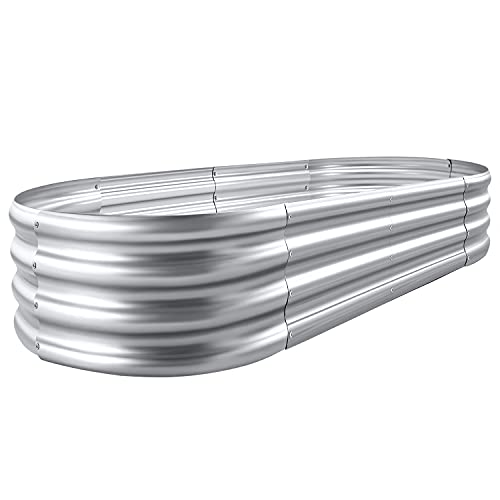


Above ground garden beds solve that. They lift the soil to a comfortable height, give you control over drainage and nutrients, and keep weeds and pests at a distance. Metal galvanized beds have become the go-to choice because they resist rust and hold up for years. But not all kits are equal. Depth, wall thickness, assembly quality, and total soil volume change how well a bed works for your specific crops and your specific yard.
I tested and compared five galvanized raised bed kits from Land Guard, Rakukiri, and Tegarbed. The picks range from a compact 4×2 oval for small patios to a massive 6x3x2 system for serious vegetable growers. Here’s what I found after digging into the specs, assembly processes, and real-world planting scenarios.
Here’s a quick look at how the five kits stack up on the details that matter most.
| Features | Land Guard 4×2 Oval | Rakukiri 5ft Oval | Land Guard 8x4x1 | Land Guard 6x3x2 | Tegarbed 4x2x1 |
|---|---|---|---|---|---|
| Dimensions | 4x2x1 ft | 60x29x11 in | 8x4x1 ft (3-pack) | 6x3x2 ft (2-pack) | 4x2x1 ft (2-pack) |
| Wall Thickness | 0.78 mm avg | 0.8 mm | Not specified | Upgraded coated steel | 1 mm avg |
| Soil Capacity | 7.14 cu ft | 68 gallons | Large volume | 36 cu ft each | 7+ cu ft each |
| Assembly | About 5 minutes | Easy, hardware included | Nuts, bolts, washers | Detailed instructions | Tool-free, 20 minutes |
| Best Use Case | Small patios, herbs | Mid-size, ergonomic | Deep-root vegetables | Serious gardeners | First-timers, containers |
Land Guard Galvanized Raised Bed
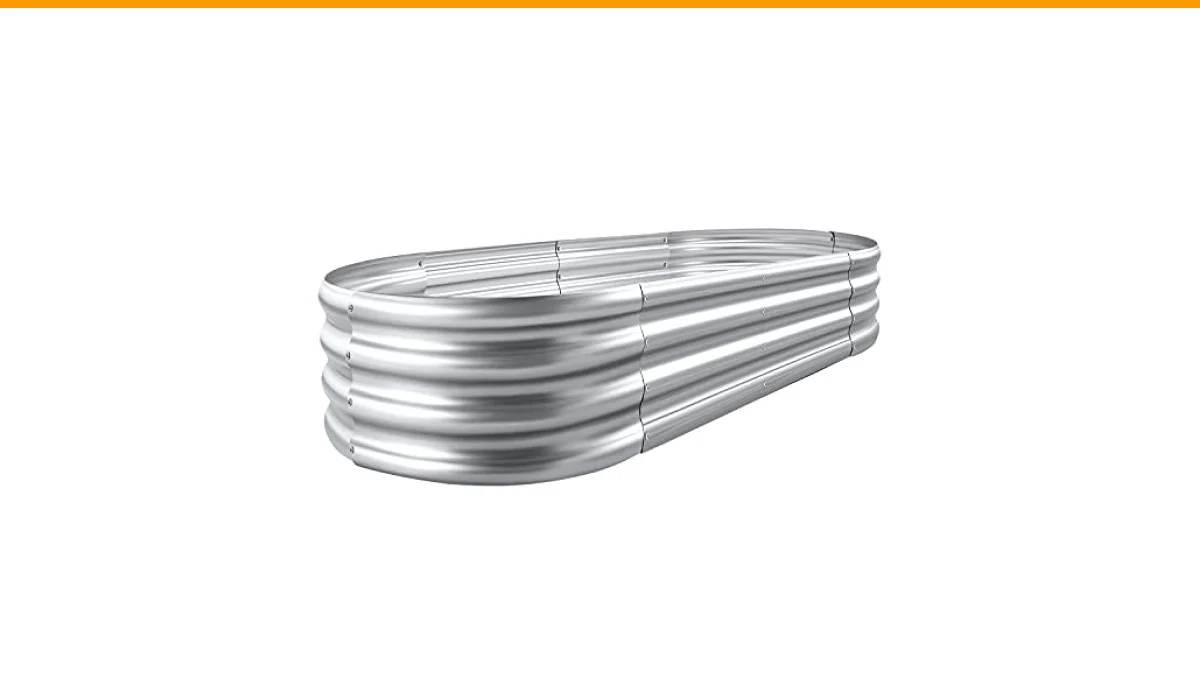
The Land Guard 4x2x1 oval kit is the entry point into metal raised beds. It delivers a modest 7.14 cubic feet of planting space, which works fine for a few tomato plants, a row of lettuce, or a collection of herbs. If you have a balcony, a narrow side yard, or a patio where every square foot counts, this bed fits without dominating the space.
What sets this kit apart is the double-layer galvanizing and the oval shape. The curved design distributes soil pressure more evenly than a sharp-cornered rectangle, so the panels don’t bow outward over time. The average sheet thickness of 0.78 mm is more than double what you’ll find on the cheapest rectangular beds (often 0.3 mm), which gives it real rigidity. Assembly genuinely takes about five minutes because there are only a few panels and fasteners to line up.
You should know the limitations. At one foot deep, this bed won’t support carrots or potatoes that need deeper soil. It’s also on the smaller side, so if you’re planning a serious vegetable garden, you’ll need several of these units. The open bottom is great for drainage, but it means you’ll still be dealing with whatever native soil sits underneath.
- Dimensions: 4x2x1 ft with 7.14 cu ft soil volume
- Q195 galvanized metal with double-layer anti-corrosion coating
- Average wall thickness of 0.78 mm, up to 1.56 mm at reinforced points
- Open base prevents waterlogging and root rot
- Assembles in roughly five minutes with no special tools
Best for: Patio and small-space gardeners who want a quick, durable bed for shallow-rooted crops like lettuce, herbs, and peppers.
Rakukiri Raised Garden Bed
Rakukiri’s 5-foot oval bed sits in a sweet spot between the compact Land Guard and the massive systems. It measures 60x29x11 inches and needs 68 gallons of soil to fill. That’s enough room for a serious cut-and-come-again salad garden, a few determinate tomato plants, or a mix of flowers and herbs. The 11-inch depth gives you more root room than a standard 8-inch bed without the soil cost of a 2-foot-tall planter.
This bed carries GRS certification, meaning the recycled metal content is verified. For gardeners who want to reduce their environmental footprint, that’s a meaningful detail that most competing kits can’t claim. The 0.8 mm galvanized steel and oval structure mirror the Land Guard’s approach to stability, and the open bottom lets plant roots reach the native soil below, which helps with moisture regulation during hot stretches.
Assembly is straightforward for an older gardener or someone with limited hand strength. The panels are light, and the included hardware is clearly labeled. One trade-off: at 11 inches tall, it’s not quite high enough to eliminate bending entirely. You’ll still stoop a bit when planting or harvesting. Also, the width of 29 inches means you can reach the center from either side, but just barely.
- Dimensions: 60x29x11 in, requires 68 gallons of soil
- GRS-certified recycled galvanized steel
- 0.8 mm wall thickness with double-layer galvanizing
- Open bottom for natural drainage and root access
- One-year warranty and 30-day free returns
Best for: Eco-conscious gardeners who want a mid-sized bed with verified recycled materials and easy assembly.
Land Guard 3 Pack 8x4x1

Land Guard
Land Guard 3 Pack 8×4×1ft Galvanized Metal Raised Garden Bed, Metal Planter Kit Box Outdoor for Deep-Rooted Vegetables, Flowers, Green and Herbs, Silver
- Large capacity: Provide enough growth space for deep-rooted plants like potatoes, tomatoes, broccoli, etc. Tall enough to keep pet…
- Stable and Solid Construction: Double card frames on the two sides of the sheet make the raised garden kits more durable and stabl…
- Open bottom: Sits on the ground garden bed, provide good drainage, keep weeds away from soil, defense against pests, and protect y…
This Land Guard bundle gives you three beds, each measuring 8x4x1 feet. That’s a combined footprint of 96 square feet of growing space, which is enough to feed a family of four through a full season. The sheer size makes it ideal for deep-rooted vegetables like potatoes, tomatoes, and broccoli, which need horizontal room to spread out. The one-foot depth keeps the soil volume manageable while still supporting most common garden crops.
The engineering here focuses on long-term structural integrity. Double card frames on both sides of each panel lock the pieces together more securely than a simple lip-and-hook design. Four reinforcing rods brace the long sides, so the 8-foot span won’t bow or collapse under the weight of wet soil. That’s a real concern with long beds, and Land Guard addressed it head-on.
The open bottom does double duty: it provides drainage and also blocks weeds from growing up into your bed, assuming you lay down a barrier first. Assembly requires nuts, bolts, and washers, which takes longer than the tool-free options, and you’ll want a second person to hold panels in place while you tighten the hardware. The included instructions are adequate, though not luxurious. Plan for an hour or more per bed if you’re working alone.
- Three beds included, each 8x4x1 ft
- Double card frames plus four reinforcing rods per bed
- Open bottom for drainage, weed suppression, and pest defense
- Large capacity suited for deep-root vegetables
- All hardware and instructions included
Best for: Home gardeners with ample yard space who want maximum growing area for large-scale vegetable production.
Land Guard 2 Pack 6x3x2
If you’ve ever wished your garden bed was just a bit taller so you didn’t have to crouch, this is the kit. Each bed measures 6x3x2 feet, giving you 36 cubic feet of soil per bed, which translates to about 249 gallons. The two-foot height changes the game for accessibility. You can tend plants while standing upright, which makes a massive difference for older gardeners or anyone with back or knee issues.
The depth opens up planting possibilities that shallower beds simply can’t handle. Carrots, parsnips, and other long-root varieties will grow straight down without hitting a hard layer. Potatoes thrive in this kind of volume. The reinforced cross bars and fixed piles keep the metal panels from warping, and the upgraded coated steel resists rust even when exposed to sun, rain, and snow year-round. The manufacturer also notes that environmentally friendly paint is used on all parts, so you don’t have to worry about chemicals leaching into your soil.
Here’s the honest downside: filling these beds requires a lot of soil. At roughly 249 gallons per bed, you’re looking at several cubic yards of premium raised bed mix to fill both units. That’s a significant upfront cost that often surprises buyers. The assembly is also more involved due to the added height and reinforcing components. You’ll need a drill or socket wrench, plus patience. But once they’re up and filled, these beds will last and produce for years.
- Two beds included, each 6x3x2 ft (36 cu ft capacity)
- 24-inch depth supports medium to deep-root plants
- Reinforced cross bars and fixed piles prevent warping
- Environmentally friendly coating on all parts
- Open base for unrestricted root growth and drainage
Best for: Dedicated vegetable gardeners who need high-capacity, ergonomic beds and don’t mind the soil cost.
Tegarbed Galvanized Raised Bed

Tegarbed
Tegarbed Galvanized Raised Garden Bed Outdoor, 4x2x1ft(2Pack) Metal Heavy Duty Planter Boxes for Gardening, Easy Assemble Bottomless Small Oval Plant Container Kit for Vegetable, Flower, Fruit, Silver
- 4X2X1FT GROWING SPACE: This oval raised garden bed measures 4 x 2 x 1 ft, providing 7+ cu. ft. of organized growing space for vege…
- STURDY 1MM GALVANIZED STEEL: Built with average 1mm galvanized steel and reinforced corrugated panels for added strength and struc…
- OPEN BOTTOM FOR NATURAL DRAINAGE: The bottomless design allows excess water to drain into the ground while giving plant roots acce…
Tegarbed’s offering is a two-pack of 4x2x1-foot oval beds. Each one provides just over 7 cubic feet of planting space. What makes this kit stand out is the wall thickness. At an average of 1 mm, these panels are noticeably more substantial than the 0.78 mm and 0.8 mm options from Land Guard and Rakukiri. The reinforced corrugated panels add another layer of rigidity, so the bed holds its shape even when packed with dense, wet soil.
The smooth rolled edges are a small detail that makes a real difference. Sharp metal edges can cut your hands or snag your clothes during assembly and every time you reach over the side to weed. Tegarbed rolled those edges, which makes handling safer and more comfortable. Assembly requires no tools at all—the panels connect with included fasteners, and the illustrated instructions walk you through it in about 20 minutes per bed.
You’re getting two beds in the box, which gives you flexibility to separate crops or create a small rotation system. The open bottom allows roots to access native soil, and the 12-inch depth works well for tomatoes, peppers, lettuce, and even carrots. If you want to grow cucumbers or beans, you’ll need to add a trellis. The compact footprint means you can place these on a patio, deck, or along a fence line without overwhelming the space.
- Two beds included, each 4x2x1 ft
- Average 1 mm galvanized steel with corrugated panels
- Smooth rolled edges for safe handling
- Tool-free assembly in about 20 minutes
- Open bottom for natural drainage and root health
Best for: First-time raised bed gardeners who want sturdy, easy-to-assemble beds without buying extra tools.
How We Chose These Products
I started with the basics: material quality, wall thickness, and overall construction. Galvanized steel is the standard, but the gauge varies widely. Cheaper beds use 0.3 mm sheets that dent and warp easily. I prioritized kits with at least 0.78 mm thickness because that’s the threshold where the bed maintains its shape under the weight of saturated soil.
Then I looked at practical geometry. Oval designs distribute pressure better than rectangles, but rectangles maximize usable planting area. Depth matters for root crops, and height matters for your back. I balanced those factors against the real-world assembly experience, including what tools are required and how long setup actually takes. Finally, I considered the value proposition—what you get for the price, whether that’s a single high-quality bed or a multi-pack that covers more ground.
Buying Guide: What Really Matters
Depth is the first decision point. A one-foot bed handles lettuce, herbs, peppers, and most leafy greens. If you want carrots, potatoes, or parsnips, you need at least 18 inches, and ideally 24 inches, of soil depth. Taller beds also reduce bending, which matters if you garden for hours at a time. But deeper beds require more soil, and soil is the biggest ongoing expense. Calculate the cubic footage before you buy so you’re not shocked at the garden center.
Wall thickness determines longevity. Beds made from thin metal will eventually bulge, rust through, or develop sharp edges. Look for at least 0.8 mm galvanized steel, and consider corrugated panels or reinforcing rods for extra stability on longer beds. The assembly hardware matters too—bolted connections hold up better than tab-and-slot designs, but they take longer to put together. If you’re not handy with tools, a tool-free kit might be the better fit.
Think about your local climate. Metal beds absorb heat, which can cook plant roots in extreme summer sun. In hot regions, you may need to mulch heavily or provide afternoon shade. The open bottom design helps with drainage, but it also means your bed will dry out faster in summer, so plan your irrigation strategy before you fill the beds. For more on setting up an efficient watering system, check out this guide on soaker hoses for raised beds.
Our Top Recommendation
The Land Guard 2 Pack 6x3x2 is the winner for most serious gardeners. The two-foot depth supports the widest range of crops, the height saves your back, and the reinforced construction will hold up for a decade or more. It’s not the cheapest option, and the soil bill will be substantial, but the growing potential justifies the investment.
If that feels like too much, the Tegarbed 4x2x1 two-pack is the best budget-friendly alternative. The 1 mm steel is the thickest of any kit tested, and the tool-free assembly makes it approachable for beginners. For a smaller footprint or a single bed, the round metal raised garden bed options from Land Guard are worth a look. And if you’re still weighing whether to build your own, this above ground garden building guide covers the DIY route in detail.
Frequently Asked Questions
How much soil do I actually need to fill these beds?
It depends on the bed size. The 4x2x1 beds need roughly 7 cubic feet each, which is about 52 gallons. The Rakukiri 5-foot bed needs 68 gallons. The Land Guard 6x3x2 beds are the big consumers at 36 cubic feet each, or about 249 gallons. Always buy slightly more soil than you calculate because it settles after the first few waterings.
Do I need to line the bottom of a metal raised bed?
Not for drainage—the open bottom handles that. But a layer of landscape fabric or cardboard at the base will block weeds and prevent grass from growing up into your bed. In areas with heavy pest pressure, a hardware cloth layer can stop burrowing animals like gophers from coming up from below.
Will the metal get too hot for plant roots in summer?
Galvanized steel absorbs heat, and the soil near the edges can get warmer than the center. In very hot climates, this can stress plants. You can mitigate it by mulching heavily, planting heat-tolerant varieties, or placing the bed where it gets afternoon shade. Some gardeners also attach a shade cloth to the sunny side of the bed during peak summer months.
Can I put a raised bed directly on grass or concrete?
Yes, on both surfaces. On grass, the open bottom lets roots reach the native soil, which is generally beneficial. On concrete or a deck, the bed becomes a true container, so you’ll need to be more careful with watering since there’s no ground moisture available. In both cases, level the surface first so the bed sits evenly and doesn’t twist or warp during assembly.

