

You’ve picked out the perfect spot in your yard. You’ve got a bag of potting soil in the garage. There’s just one problem: the ground beneath your feet is hard, rocky, or full of weeds. Maybe you’re staring at a concrete patio or a balcony railing. The dream of fresh tomatoes and herbs feels out of reach.

Raised garden beds solve this problem. They give you total control over soil quality, drainage, and root depth. But the container itself is only half the equation. The plants you choose determine whether you harvest baskets of food or just a few sad leaves. Some vegetables need deep soil. Others hate having wet roots. Herbs want their own space. Flowers need good drainage. Matching the plant to the bed is the difference between a hobby and a harvest.
We looked at five raised bed options, from a deep metal box for heavy feeders to a compact wooden planter for herbs. We also included a book that helps you plan small-space flower gardens. Our top pick is the Best Choice Products 6x3x2ft Metal Raised Garden Bed. It offers the deepest soil volume for big root crops. If you want a waist-high bed for easy access, the 48-inch wooden model is a strong runner-up. Let’s dig into the details.
Here is a quick comparison of the key specs to help you see the differences at a glance.
| Features | Best Choice 6x3x2ft | Best Choice 48×24 | How to Grow Flowers | Best Choice Herb Bed | SnugNiture 3 Pcs |
|---|---|---|---|---|---|
| Material & Build | Powder-coated steel | Chinese fir wood | Paperback book | Fir wood | Galvanized metal |
| Growing Depth | 24 inches | 30 inches elevated | N/A | 30 inches elevated | 17 inches |
| Best Use Case | Deep-root vegetables | Patio gardening | Small-space flowers | Herbs and greens | Oval flower beds |
| Key Feature | 269-gallon capacity | Ergonomic height | Illustrated planning guide | 10 grid compartments | Oval anti-deform design |
| Assembly | Tool-free wingnuts | Wood screws needed | N/A | Wood screws needed | Detailed instructions |
In this article
- Best Choice Products 6x3x2ft Metal Raised Garden Bed
- Best Choice Products 48 x 24 x 30 Inch Raised Garden Bed
- How to Grow Flowers in Small Spaces
- Best Choice Products Raised Herb Garden Bed
- SnugNiture 3 Pcs 4x2x1.5ft Raised Garden Bed
- How We Chose These Products
- Buying Guide: What Really Matters
- Our Top Recommendation
- Frequently Asked Questions
Best Choice Products 6x3x2ft Metal Raised Garden Bed
Best Choice Products
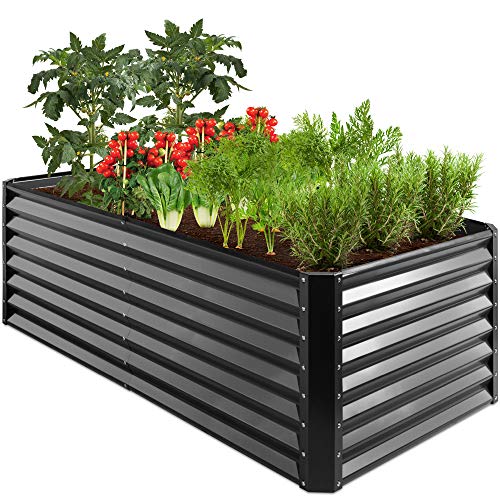
Best Choice Products 6x3x2ft Outdoor Metal Raised Garden Bed, Deep Root Box Planter for Vegetables, Flowers, Herbs, 269 Gallon Capacity, 100% Non Toxic Materials - Gray
- 2FT GROWING DEPTH: 24 inches of depth holds up to 269 gallons of soil-great for medium to deep rooting plants and vegetables like…
- 100% NON TOXIC MATERIALS FOR SAFE GARDENING: Made with non-toxic materials and independently tested to meet FHSA standards; free f…
- TOOL-FREE ASSEMBLY: Beveled steel panels come together with a set of included wingnuts and bolts with rubber edging for your added…
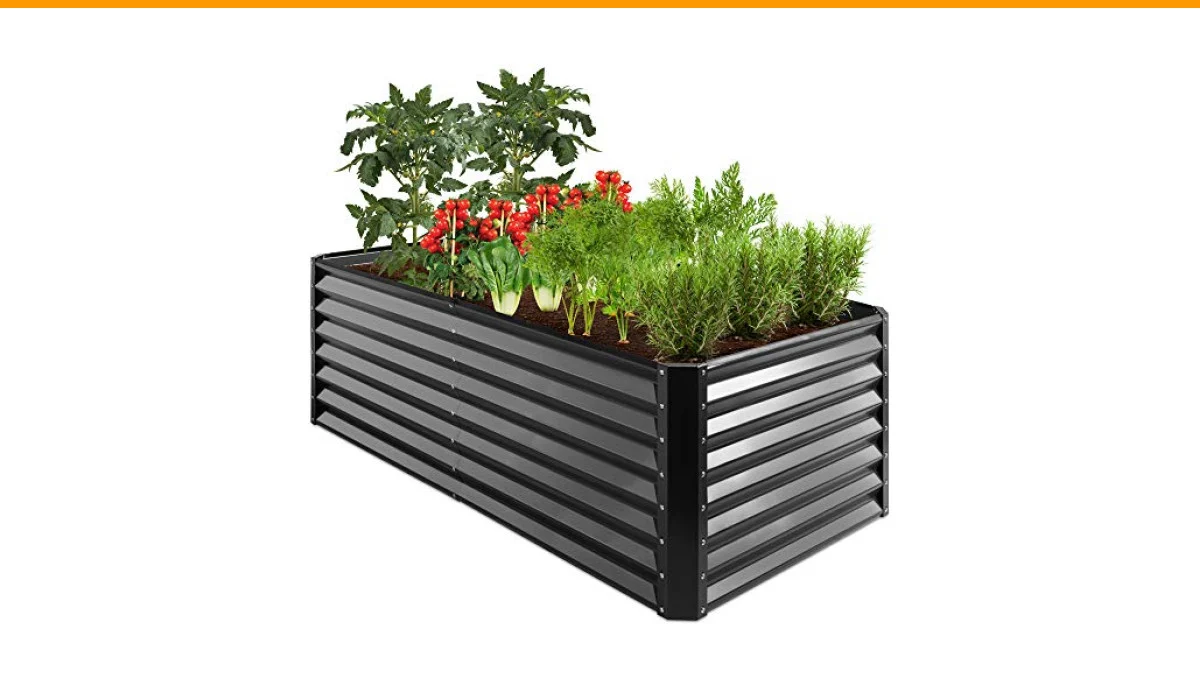
This is a serious piece of gardening hardware. The 6x3x2ft footprint gives you 36 cubic feet of soil. That’s enough for a full vegetable garden. The 24-inch depth is the standout feature. Most raised beds stop at 11 or 12 inches. That’s fine for lettuce and radishes. It’s not fine for carrots, parsnips, or long-rooted tomatoes. This bed handles those crops without cramping. The 269-gallon capacity means you can plant a dense polyculture. Broccoli, beans, and kale all have room to stretch. If you want a self-contained micro-environment for non-native plants, this box delivers.
The steel panels are powder-coated. That finish resists rust and corrosion. Four ground stakes and two stabilizing rods keep the structure from bowing when you fill it with wet soil. The assembly is genuinely tool-free. Wingnuts and bolts hold the beveled panels together. Rubber edging covers the sharp metal edges. Best Choice Products also tested the materials to meet FHSA standards. They are free from heavy metals and phthalates. That matters if you’re growing food for your family. The gray finish looks clean against a fence or along a driveway. It’s not a decorative piece, but it doesn’t look cheap either.
Here’s the honest trade-off: this bed does not include a bottom panel. That’s intentional. An open bottom lets earthworms and deep roots access the native soil. But it also means weeds can creep in from below. You’ll need to lay down cardboard or landscape fabric before you fill it. The 269-gallon capacity also means you’ll spend a small fortune on soil. Buying bagged mix for a bed this size gets expensive fast. Most owners fill the bottom third with logs, branches, or straw to save money. That’s a real consideration. The metal panels can also get hot in full sun. Root vegetables near the edge might cook on a 95-degree day. Mulch helps. So does planting a living mulch like clover around the perimeter.
- 24-inch depth supports carrots, parsnips, and long-rooted tomatoes
- 269-gallon soil capacity for dense planting
- Tool-free assembly with wingnuts and rubber edging
- Powder-coated steel resists rust and corrosion
- No bottom panel; open base requires weed barrier
Best for: gardeners who want to grow deep-root vegetables and have the budget for bulk soil.
Best Choice Products 48 x 24 x 30 Inch Raised Garden Bed
Best Choice Products
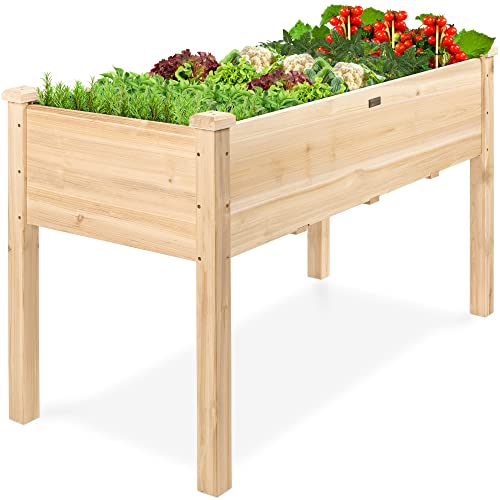
Best Choice Products 48 x 24 x 30 Inches Raised Garden Bed, Elevated Wood Planter Box Stand for Backyard, Patio, Balcony with Bed Liner, 200 Pound Capacity - Natural
- LARGE PLANTING SPACE: Designed with a long bed space (5CuFt) deep enough to provide your plants and vegetables with ample room to…
- PROPER DRAINAGE: Allows excess water to drain out, keeping soil fresh and protecting plants from waterlogging or mineral buildup
- ALL-WOOD CONSTRUCTION: Naturally strong Chinese fir wood provides a water- and weather-resistant structure
Not everyone wants to kneel in the dirt. This elevated wooden planter brings the garden up to waist height. The 30-inch tall design means you can tend tomatoes and peppers standing up. That’s a game-changer for anyone with back or knee issues. The 48×24-inch bed holds about 5 cubic feet of soil. That’s enough for a dozen lettuce plants or a few determinate tomato varieties. The Chinese fir wood is naturally weather-resistant. It won’t warp or sag like cheaper pine. A liner separates the wood from the soil. That liner does two things. It keeps the wood from rotting prematurely. It also discourages weeds and burrowing animals from entering the root zone.
Drainage is handled well. Excess water escapes through the bottom. That prevents waterlogging and mineral buildup. Your plants won’t sit in soggy soil after a heavy rain. The natural wood finish looks good on a deck or patio. It blends with outdoor furniture better than metal or plastic. The 200-pound weight capacity is plenty for soil and mature plants. Assembly takes about 30 to 45 minutes. You’ll need a screwdriver and a bit of patience. The instructions are clear, but the wood pieces are heavy. Having a second person helps when you’re aligning the side panels.
The main limitation is soil volume. Five cubic feet sounds like a lot until you start planting. A single zucchini plant will dominate this bed. Two tomato plants will crowd each other by August. This is a bed for herbs, greens, and compact vegetables. It’s not a replacement for an in-ground plot. The wood also requires some maintenance. Chinese fir holds up well for several seasons, but it will gray over time. A yearly coat of linseed oil or outdoor wood stain extends its life. The liner helps, but it’s not a permanent barrier. After three or four years, you may need to replace it. That’s the trade-off for a natural wood look.
- 30-inch height eliminates bending and kneeling
- 5 cubic feet of soil volume for compact crops
- Chinese fir wood with a protective liner
- Drainage holes prevent waterlogging
- 200-pound weight capacity
Best for: patio gardeners and anyone who wants to avoid back strain while gardening.
How to Grow Flowers in Small Spaces

Raised beds aren’t just for vegetables. Flowers thrive in them too. But small-space flower gardening has its own rules. This illustrated guide covers them in plain language. The book walks you through planning, planting, and caring for a compact flower garden. It’s not a coffee-table book. It’s a working manual. The illustrations show you how to layer bulbs, annuals, and perennials in tight quarters. You’ll learn which flowers tolerate crowding and which ones need breathing room. That knowledge saves you from the classic mistake of overplanting in spring and watching everything struggle by July.
The section on container and raised bed design is especially useful. It explains how to choose flowers for different light conditions. A south-facing bed gets different plants than a north-facing balcony. The book breaks down bloom times so you can plan for continuous color. It also covers soil preparation for small spaces. That’s important because raised beds dry out faster than ground soil. The author includes a troubleshooting chapter for common problems. Wilting, yellowing leaves, and leggy growth all get specific solutions. The writing is direct. No flowery prose. Just practical steps.
What’s the downside? This is a niche book. If you’re growing vegetables, it won’t help much. The focus is strictly on flowers. Some readers might find the plant recommendations limited to common varieties. It won’t introduce you to rare or exotic species. The illustrations are helpful but not photographic. You won’t get lush full-color photos of every bloom. That’s a minor complaint. The information is solid. For the price of a few seed packets, you get a reference you’ll use for years. It pairs well with any of the raised beds on this list. Use it to plan your flower layout before you buy a single bulb.
- Illustrated guide for small-space flower gardens
- Covers planning, planting, and care
- Includes light, soil, and bloom-time guidance
- Troubleshooting chapter for common problems
- Focuses on common flower varieties, not exotics
Best for: balcony and patio gardeners who want to grow flowers in raised beds or containers.
Best Choice Products Raised Herb Garden Bed

Best Choice Products
Best Choice Products Raised Herb Garden Bed Planter Box - Elevated Wooden Planter with 10 Grid Growing Compartments, Drainage Holes, Vegetable Flower Garden Box for Patio Balcony Backyard - Natural
- ORGANIZED 10 GRID PLANTING: Modular raised garden bed planter with 10 individual growing compartments keeps herbs vegetables flowe…
- PROPER DRAINAGE: Allows excess water to drain out, keeping soil fresh and protecting plants from waterlogging or mineral buildup
- ALL-WOOD CONSTRUCTION: Naturally strong fir wood provides a sturdy, weather-friendly structure that will avoid warps and sagging o…
Herbs have different needs than vegetables. Mint spreads aggressively. Basil wants rich soil and full sun. Rosemary hates wet feet. This raised bed solves the compatibility problem with 10 individual growing compartments. Each grid section holds its own plant. You can grow mint without it strangling the thyme. You can give rosemary the dry, sandy soil it prefers while basil gets a compost-rich mix. The modular design makes crop rotation simple. When one section plays out, you refresh the soil and replant. Plant markers and liners are included. The 30-inch height keeps the garden at waist level. No bending, no kneeling.
The fir wood construction is sturdy. It resists warping and sagging better than softwoods. Drainage holes in each compartment prevent water from pooling. That’s critical for herbs like lavender and oregano that rot in soggy soil. The elevated design also keeps pets and rodents out. A ground-level herb garden is a buffet for rabbits and groundhogs. This one puts the plants out of reach. The 48×24-inch footprint fits on a patio, balcony, or deck. It’s not a huge bed, but the grid layout maximizes usable space. You can grow 10 different herbs in the same square footage that would hold four or five in a traditional bed.
The grid design has a downside. Each compartment is small. You won’t grow a massive basil bush in a single section. You’ll get a modest plant that produces enough for fresh use but not enough for pesto by the gallon. The wood also needs occasional sealing to last. And the open bottom means you’ll want to line the base with weed fabric. The liners help, but they’re not a permanent solution. After a couple of seasons, you may need to replace them. This bed works best for someone who wants a variety of herbs in small quantities. If you’re planning to dry herbs in bulk, a larger open bed is a better choice.
- 10 individual growing compartments for separation
- 30-inch height eliminates bending
- Drainage holes in each compartment
- Fir wood construction resists warping
- Includes plant markers and liners
Best for: home cooks who want a dedicated herb garden on a patio or balcony.
SnugNiture 3 Pcs 4x2x1.5ft Raised Garden Bed
Three beds in one box. That’s the appeal here. Each oval planter measures 46 inches long, 23.6 inches wide, and 17 inches tall. You get three separate growing spaces. You can dedicate one to flowers, one to vegetables, and one to herbs. Or you can line them up along a fence for a continuous garden. The oval shape is thicker than standard rectangular panels. That extra thickness makes the structure more durable. It resists deformation better than thin metal beds. The galvanized coating fights rust and corrosion. This bed will handle rain, snow, and summer sun without falling apart.
The open base prevents water accumulation. That’s a simple design choice with big benefits. Roots won’t sit in stagnant water. The soil won’t turn sour. Safety rubber edging covers the metal seams. That protects your hands and arms when you’re reaching into the bed. It also reinforces the structure. Assembly is straightforward. The kit includes detailed instructions and all the hardware. Most people can put one bed together in 20 to 30 minutes. The 17-inch height is a middle ground. It’s not waist-high, but it’s taller than a standard 11-inch bed. You’ll still need to kneel or squat to tend the plants. But the extra depth gives roots more room than a shallow bed.
Here’s the honest limitation: 17 inches is not deep enough for long carrots or parsnips. You’ll get short, stubby roots. That’s fine for radishes and lettuce. It’s not fine for maincrop carrots. The three-bed setup also means you’re managing three separate soil volumes. That’s more watering and more mulching than a single large bed. The brown finish is neutral and blends into most landscapes. But the metal panels can dent if you hit them with a lawnmower or string trimmer. Keep them away from heavy foot traffic. The oval shape looks nice, but it’s slightly harder to fit against a straight wall than a rectangular bed. You’ll have small gaps at the corners. Those gaps are fine for airflow but might annoy neat freaks.
- Set of three oval raised beds
- Galvanized metal resists rust and corrosion
- 17-inch height with open base
- Safety rubber edging on all seams
- Easy assembly with detailed instructions
Best for: gardeners who want flexible, movable beds for flowers and shallow-root vegetables.
How We Chose These Products
We started with the plants. The best raised bed for one gardener is useless for another. A tomato grower needs depth. An herb grower needs compartments. A flower gardener needs drainage and light. So we evaluated each bed against the plants it’s designed to hold. We looked at soil volume, depth, drainage, and material durability. We also considered assembly difficulty and long-term maintenance. A bed that takes four hours to assemble and needs yearly sealing is a different commitment than a tool-free metal box.
We avoided beds with flimsy construction or unclear instructions. We skipped options that claimed to be self-watering but had no real reservoir. We prioritized beds with honest specifications. The Best Choice 6x3x2ft bed earned the top spot because it solves the deepest problem: root space. The 48-inch wooden bed earned runner-up for accessibility. The herb bed earned a spot for organization. The SnugNiture set earned a spot for flexibility. The book earned a spot because plants are only half the equation. You need to know what to grow and how to care for it.
Buying Guide: What Really Matters
Depth is the first thing to check. Most vegetables need at least 12 inches of soil. Root crops like carrots and parsnips need 18 to 24 inches. If you’re growing tomatoes, peppers, or broccoli, look for a bed that’s at least 18 inches deep. Shallow beds dry out faster and restrict root growth. A 24-inch bed gives you options. A 12-inch bed limits you to lettuce, radishes, and herbs. Measure your space before you buy. A 6×3-foot bed takes up more room than you think.
Material matters for longevity. Wood is natural and insulates soil well. It also rots over time. Cedar and fir last longer than pine. Metal is durable and rust-resistant if it’s powder-coated or galvanized. It heats up in full sun, which can stress roots near the edges. Plastic is cheap and lightweight but can become brittle in cold weather. Fabric beds are portable and breathable but tear easily. Pick the material that matches your climate and your commitment level. A metal bed in Arizona will last longer than a wooden bed in Seattle.
Drainage is non-negotiable. Roots need oxygen. Soggy soil kills plants faster than drought. Look for beds with open bottoms or drainage holes. Avoid beds with solid bottoms unless you’re prepared to drill your own holes. Elevation helps too. A bed that sits 30 inches off the ground drains better than one sitting on the soil surface. It also keeps pests out. Rabbits can’t reach a waist-high bed. Slugs have a harder time climbing metal or wood. The trade-off is soil volume. Elevated beds hold less soil than ground-level beds of the same footprint. You’ll water more often. You’ll also need to fertilize more frequently because nutrients leach out faster.
Our Top Recommendation
The Best Choice Products 6x3x2ft Metal Raised Garden Bed wins. The 24-inch depth is the deciding factor. It opens up your planting options. You can grow carrots, parsnips, and long-rooted tomatoes without fighting cramped roots. The 269-gallon capacity supports a dense, productive garden. The powder-coated steel will outlast most wooden beds. The tool-free assembly is a genuine convenience. Yes, you’ll spend more on soil. Yes, you’ll need a weed barrier. Those are manageable problems. The payoff is a bed that works for almost any plant you want to grow.
If you need a waist-high bed, choose the Best Choice Products 48 x 24 x 30 Inch Raised Garden Bed. It saves your back and fits on a patio. If you want organized herbs, the 10-grid Best Choice Products Raised Herb Garden Bed is the better pick. If you want multiple movable beds, the SnugNiture set gives you three. And if you’re growing flowers, pick up How to Grow Flowers in Small Spaces. It will help you plan a garden that looks good from spring to frost.
Frequently Asked Questions
What plants grow best in a 12-inch deep raised bed?
Lettuce, spinach, radishes, chives, and most herbs do fine in 12 inches. Bush beans and determinate tomatoes can work if you keep them well-watered. Avoid long carrots, parsnips, and full-size tomatoes. Their roots need more room.
Do I need to line the bottom of a raised bed?
Yes, if the bed has an open bottom. A layer of cardboard or landscape fabric stops weeds from growing up through the soil. It also slows drainage slightly, which helps in sandy soil. Don’t use plastic. It traps water and creates a swamp.
How often should I replace the soil in a raised bed?
You don’t replace it all at once. Top it off each season with compost. Every three to four years, refresh about a third of the volume. Nutrients deplete over time. Replacing the entire soil volume is expensive and unnecessary.
Can I grow root vegetables in a metal raised bed?
Yes, but watch the soil temperature. Metal conducts heat. In full sun, the soil near the edges can get too warm for carrots and beets. Mulch the surface with straw or leaves. That keeps the root zone cool and moist.
