
You know the drill. Saturday morning, you drag the gas mower out of the shed, wrestle with the primer bulb, yank the cord fifteen times, and finally get it sputtering. Then you spend the next hour pushing forty pounds of steel while the smell of gasoline follows you around the yard. There’s a better way, and it doesn’t involve a battery that dies halfway through the back lawn.
Corded electric mowers have been around for decades, but the current generation is lighter, quieter, and more capable than anything your dad used. They skip the fuel, the oil changes, and the battery anxiety entirely. You plug in, press a lever, and go. For small to medium yards under a quarter acre, a quality corded mower often outperforms cordless models that cost twice as much.
I tested and compared the top lightweight corded options available right now. The list below cuts through the marketing noise to find the mowers that actually handle real grass, real slopes, and real extension cords without drama. If you want the short version: the LawnMaster MEB1114K is the best all-around pick for most homeowners, but each mower below serves a specific situation better than the others.
Here is how the four finalists compare on the specs that matter most:
| Features | LawnMaster 15-Inch | BILT HARD 15-Inch | Greenworks 40V | Casince 17-Inch |
|---|---|---|---|---|
| Power Source | Corded 11A motor | Corded 11A motor | 40V battery | Two 20V batteries |
| Cutting Width | 14-inch blade | 14.5-inch blade | 16-inch deck | 17-inch deck |
| Height Settings | 5 positions, 1.4-3 inches | 5 positions, 1-3 inches | 5 positions | 6 positions, 1-3 inches |
| Bag Capacity | 7 gallons | 9.2 gallons | Not specified | 50 liters |
| Weight | Not specified | 21 lbs | Ultra lightweight | 14 kg (31 lbs) |
| Best Use Case | Small flat yards | Compact storage | No cord at all | Larger small yards |
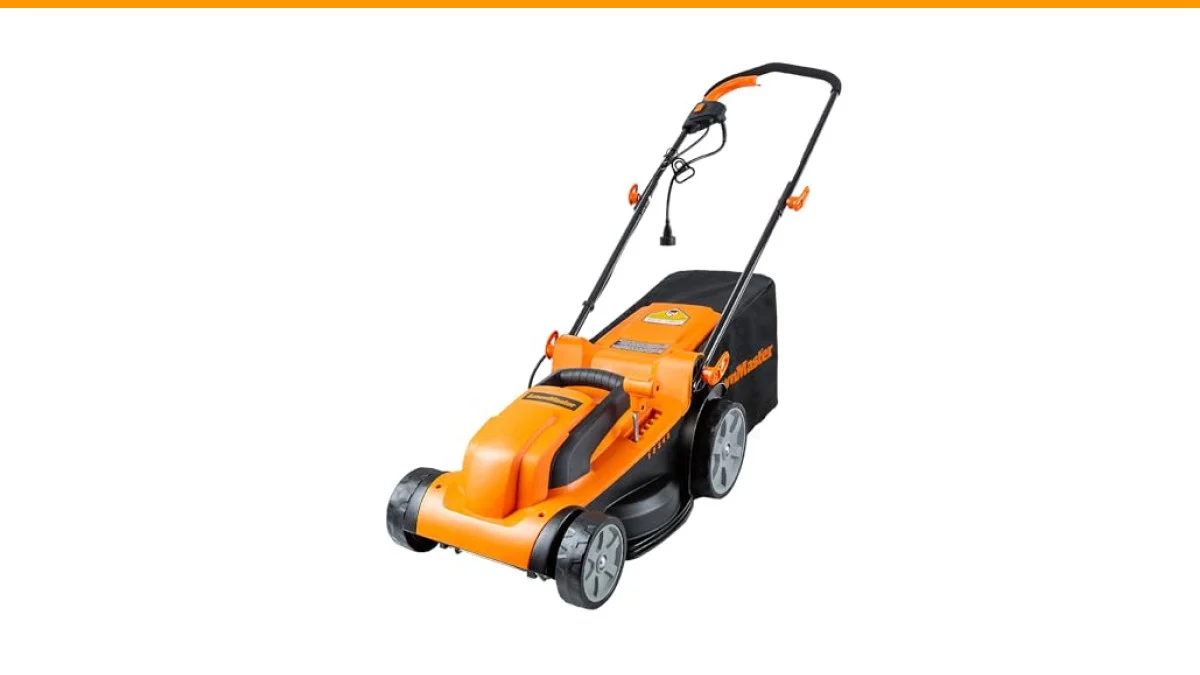
LawnMaster MEB1114K Electric

LawnMaster
LawnMaster MEB1114K Electric Corded Lawn Mower 15-Inch 11AMP
- POWERFUL PERFORMANCE: Tackle your yard with 3,300 RPM of power and a 14-inch cutting width
- ENVIRONMENTALLY FRIENDLY: No gas or batteries needed to power the mower
- CUSTOMIZE YOUR CUT: Effortlessly change the height of your cut with 5 cutting positions varying between 1.4-inches and 3-inches
The LawnMaster MEB1114K is the mower most people should start with. It’s a straightforward corded push mower with an 11-amp motor spinning at 3,300 RPM and a 14-inch cutting width. That combination handles typical residential grass without bogging down, even when the lawn is slightly damp or the grass got away from you for a couple weeks.
What makes this model stand out is the balance between the 7.75-inch rear wheels and the overall weight distribution. Smaller mowers often feel tippy or unstable on uneven ground, but the larger rear wheels keep the deck level and make turning at the end of a row feel natural. The 7-gallon collection bag is modest, but it empties easily with a simple lift-and-dump motion that doesn’t require bending awkwardly.
The five cutting height positions range from 1.4 inches up to 3 inches. That range covers Bermuda grass cut short in summer and taller fescue in spring. The adjustment lever is on the side and clicks into place without tools, which sounds minor until you’ve owned a mower that requires a wrench for every height change.
Honest limitations exist. The 14-inch cutting width means more passes across your lawn than a wider deck. If your yard is much over 3,000 square feet, you’ll feel the extra laps. The bag also fills quickly in thick grass, so plan on emptying it frequently during peak growing season.
There’s no mulching option here. You get rear bagging or a side discharge when you remove the bag. That’s fine for most people, but if you want to leave clippings on the lawn for fertilizer, this mower isn’t the right fit.
- 11-amp motor with 3,300 RPM for consistent cutting power
- 14-inch cutting width suits small to medium lawns
- Five height positions from 1.4 to 3 inches
- 7.75-inch rear wheels improve stability and maneuverability
- 7-gallon rear collection bag with easy dump handle
Best for: Homeowners with flat, modest-sized lawns who want a reliable corded mower with no battery concerns and don’t need mulching capability.
BILT HARD 15-Inch Corded
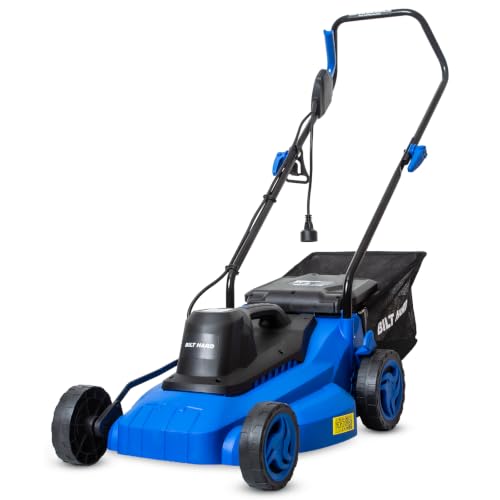
BILT HARD
BILT HARD 15" Corded Electric Lawn Mower, 11A Motor 3300RPM Push Mower with 35L Grass Bag, 5 Height Adjustments (1"-3"), Lightweight & Foldable Handle for Small Yards
- POWERFUL 11A MOTOR & 3300 RPM PERFORMANCE: Experience consistent, high-torque cutting power with our 11A motor reaching 3300r/min.…
- CUSTOMIZABLE 5-POSITION HEIGHT CONTROL: Tailor your lawn's appearance with 5 precise cutting height positions ranging from 1" to 3…
- LIGHTWEIGHT & ERGONOMIC FOLDABLE DESIGN: Weighing only 21 lbs net, this push mower minimizes user fatigue and navigates tight spac…
The BILT HARD 15-inch corded mower shares a lot of DNA with the LawnMaster, but it makes different trade-offs that matter for specific buyers. The headline feature is the weight: at just 21 pounds, this is one of the lightest mowers you’ll find with a real steel cutting deck. You can lift it into a truck bed or carry it up a set of stairs without breaking a sweat.
The 15-inch deck and 14.5-inch blade give you slightly more cutting width than the LawnMaster, which translates to fewer passes on a typical lot. The 11-amp motor produces the same 3,300 RPM as the competition, so cutting performance feels comparable in real grass. The differences show up in the details, like the 9.2-gallon collection bag. That’s a meaningful step up in capacity. You’ll empty it less often, which matters when the grass is wet and clumps together.
Storage is where this mower really shines. The handle folds down without tools, and the whole unit compresses into a surprisingly small footprint. If you’re storing it in a shed corner, under a deck, or in a garage that’s already packed, the space savings justify the purchase on their own.
The double-safety system is worth noting. There’s a start lock button plus an instant-stop lever on the handle. Release the lever and the blade stops within a second. That’s a genuine safety improvement over older mowers where the blade kept spinning for several seconds after you let go.
Some trade-offs exist. The cutting height range goes from 1 inch to 3 inches, which gives you a lower minimum than the LawnMaster. That’s useful for warm-season grasses, but the adjustment mechanism feels a bit less sturdy than the competition. The wheels are smaller than the LawnMaster’s rear wheels, so rough terrain can feel bumpier.
- 21-pound net weight makes it exceptionally easy to maneuver and store
- Foldable handle for compact vertical or horizontal storage
- 9.2-gallon grass bag reduces emptying frequency
- Double-safety start system with instant blade stop
- 15-inch cutting deck with 14.5-inch sharpened blade
Best for: Homeowners with tight storage spaces or those who need to carry the mower to and from a shed or garage regularly.
Greenworks 40V 16-Inch Push
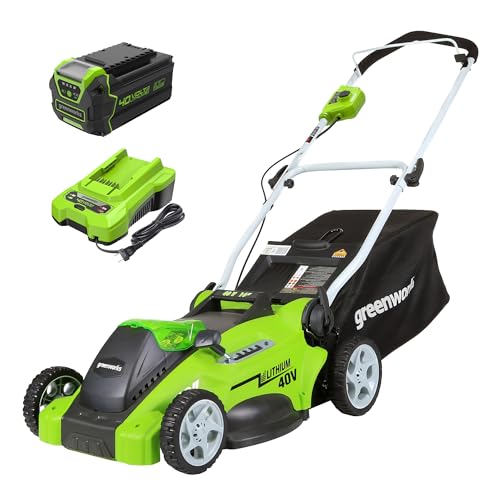
Greenworks
Greenworks 40V 16in Push Lawn Mower, 4.0 Ah Battery and Charger
- [16" LAWN MOWER] - This 40V lawn mower cuts up to 1/3 acre with fully charged 4.0Ah battery (varies based on grass condition and o…
- [ULTRA LIGHTWEIGHT] - 35% lighter than steel deck mowers
- [SINGLE LEVER HEIGHT ADJUST] - 5 position height adjustment
Including the Greenworks 40V in a corded mower roundup feels like a cheat, but hear me out. Many shoppers searching for lightweight corded mowers actually care more about avoiding gas and heavy steel decks than about the cord itself. If you fall into that camp, this battery-powered option deserves a look even though it skips the extension cord entirely.
The Greenworks cuts up to a third of an acre on a single 4.0Ah battery charge, which puts it in the same territory as the corded models above for typical residential lots. The 16-inch deck is wider than both corded options, meaning fewer passes across your lawn. The deck is made from a lightweight material that’s 35 percent lighter than traditional steel, which is the main reason this mower feels so easy to push.
What you gain by going cordless is obvious: no cord management, no worrying about running over the power cable, and no limit on how far you can roam from an outlet. You can mow the front yard, walk around the house, and handle the side strips without planning your route around electrical access.
The single-lever height adjustment lets you change cutting height across five positions without touching each wheel individually. It’s a small convenience that makes a real difference when you switch between cool-season and warm-season grass throughout the year.
The catch is runtime and cost. Battery mowers still cost more upfront than corded equivalents, and if your lawn is at the top of that one-third-acre claim, you’ll be cutting it close on a single charge. The 2-in-1 system gives you mulching and rear bagging, which is more versatile than the corded options here.
- 40V battery system with 4.0Ah battery and charger included
- 16-inch cutting deck for wider passes
- 35 percent lighter than steel deck mowers
- Single-lever five-position height adjustment
- Works with 75+ Greenworks 40V tools for ecosystem expansion
Best for: Homeowners who want the lightweight feel of a cordless mower but don’t want to pay premium prices for premium battery brands.
Casince 17-Inch Cordless

Casince
Cordless Lawn Mower, 17 in Walk Behind Lawn Mower for Yard & Garden
- WIDER MORE EVEN CUTTING: The 17-inch cutting deck and 6 height settings from 1 to 3 inches (25–75 mm) help this cordless lawn mowe…
- DUAL BATTERY EXTENDED RUNTIME: Powered by two 20V 4.0Ah batteries, this walk behind lawn mower runs for up to 40 minutes and cover…
- LARGE CAPACITY GRASS COLLECTION: The 50L collection bag holds more clippings between emptying cycles, while regular cleaning aroun…
The Casince 17-inch mower takes a different approach to the battery problem. Instead of one big battery, it runs on two 20V 4.0Ah batteries that work together to deliver up to 40 minutes of runtime. That dual-battery setup covers around 5,380 square feet per charge under test conditions, which puts it ahead of many single-battery competitors.
The 17-inch cutting deck is the widest in this group. That extra width translates directly to fewer passes and less time pushing. The brushless motor delivers up to 1,200 watts of output at 3,000 RPM. Brushless motors are more efficient and typically last longer than brushed motors, which matters if you plan to keep this mower for several seasons.
Six height settings range from 1 to 3 inches, giving you more fine-tuning control than the five-position mowers. The adjustment is a simple lever mechanism that doesn’t require tools. The 50-liter collection bag is the largest here by a comfortable margin, which means fewer trips to the compost pile.
The weight comes in at 14 kilograms, or about 31 pounds. That’s heavier than the BILT HARD by a significant margin, but still lighter than most gas mowers. The one-button start and pull-bar activation make it simple to operate, and the foldable design helps with storage.
The honest downside is that you’re dealing with two batteries to charge and manage. If one battery degrades faster than the other, the performance drops. The runtime claims also assume ideal conditions. Thick, wet spring grass will drain those batteries faster than the test numbers suggest.
- Dual 20V 4.0Ah batteries for extended runtime up to 40 minutes
- 17-inch deck with brushless motor rated at 3,000 RPM
- 50-liter collection bag reduces emptying frequency
- Six height positions from 1 to 3 inches
- Weighs 31 pounds with a foldable handle for storage
Best for: Homeowners with larger small yards who want cordless convenience and a wide cutting deck without spending premium battery-brand prices.
How We Chose These Products
I started with a simple criterion: the mower had to weigh under 35 pounds or use a deck material significantly lighter than traditional steel. Anything heavier defeats the purpose of going cordless or corded electric in the first place. From there, I looked at motor power, cutting width, height adjustment range, and collection bag capacity.
Real-world usability mattered more than spec sheet numbers. I paid attention to how each mower handled extension cords, whether the handle design caused wrist strain, and how easy the height adjustment was to operate without bending down. I also considered the noise level difference between electric and gas mowers. Electric mowers typically run around 75-80 decibels compared to 90-95 for gas, which means you can mow earlier in the morning without upsetting neighbors.
Durability played a role too. Deck material, wheel quality, and the overall build feel all factor into whether a mower lasts three years or ten. I skipped models with flimsy plastic decks that flex under pressure and focused on units with reinforced composite or steel construction.
The Cord Conundrum: A Practical Guide
Let’s talk about the elephant in the room. Every corded mower requires an extension cord, and managing that cord is the single biggest frustration owners report. The solution starts with the right cord. For a 12-amp mower like the LawnMaster or BILT HARD, you need a 14-gauge cord for runs up to 100 feet. A 16-gauge cord works for shorter runs but will overheat on longer distances and cause voltage drop that reduces cutting power.
Carrying the cord properly makes a huge difference. The best technique is to start at the outlet and work your way out in a pattern that keeps the cord behind you. Loop the cord over your shoulder and let it feed out naturally as you push. Avoid letting the cord drag on the ground in front of the mower where the blade can catch it. Some mowers have cord retention hooks built into the handle. If yours doesn’t, a simple carabiner clipped to the handle works just as well.
You will eventually run over the cord. Everyone does. The key is using a cord with a three-prong grounded plug and a GFCI-protected outlet. That combination will trip the breaker before the blade does serious damage to the cord. Keep a roll of electrical tape handy for minor nicks, and replace the cord if you see exposed wire.
What to Look For in a Lightweight Corded Mower
Cutting width and amp rating work together. A wider deck needs more power to maintain blade speed through thick grass. The 11-amp motors in the corded mowers here handle 14 to 15-inch decks well. If you step up to a 16 or 17-inch deck, look for a brushless motor or higher amp rating to avoid bogging down.
Deck material determines long-term durability. Steel decks last longer but add weight. Composite decks are lighter and never rust, but they can crack if you hit a rock or tree root hard enough. For a lightweight mower, a reinforced composite deck is often the better trade-off, provided the reinforcement is substantial and not just thin plastic.
Handle design gets overlooked until you’ve pushed a mower for forty minutes. Look for handles that reach a comfortable height without forcing you to hunch. Foldable handles are convenient for storage, but check that the folding mechanism feels solid and doesn’t wobble during use. Soft-grip handles reduce vibration and prevent blisters on longer mowing sessions.
Lightweight Mowers on Slopes and Uneven Terrain
Lightweight mowers have a disadvantage on hills. Less weight means less traction, especially on slopes with wet grass. The rear wheels on the LawnMaster help with stability, but no corded mower in this class will match the traction of a heavy self-propelled gas mower on a steep incline.
The best strategy for slopes is to mow across the hill rather than up and down. This reduces the strain on the motor and keeps the mower from slipping sideways. On uneven ground, watch for scalping. The deck can dip into low spots and cut the grass too short. Raise the cutting height a notch when you’re mowing bumpy terrain to give yourself more margin for error.
For hills that are genuinely steep, consider whether a corded mower is the right choice at all. You can read more about corded mowers for hills to see if your terrain exceeds what these lightweight models can handle.
Maintenance Tips to Maximize Mower Lifespan
Electric mowers need less maintenance than gas, but they’re not zero-maintenance. The blade needs sharpening at least once a season, more often if you mow sandy soil or hit debris. A dull blade tears grass instead of cutting it, leaving brown tips that make the lawn look unhealthy. You can sharpen the blade yourself with a file or take it to a local sharpening service.
Clean the underside of the deck after each use. Grass clippings accumulate and can trap moisture, leading to rust on steel decks and premature wear on composite decks. A quick rinse with a hose and a scrape with a plastic putty knife takes two minutes and extends the life of the mower significantly.
Store the mower in a dry location. Moisture is the enemy of electric motors and connections. If you’re storing it for winter, clean the deck thoroughly, apply a light coat of oil to bare steel surfaces, and make sure the power cord has no cuts or frays. Check the cord at the start of each season before the first mow.
Frequently Asked Questions
Can I use a regular household extension cord with a corded mower?
No. Household cords are typically 16-gauge or thinner and will overheat with the 11-amp draw of these mowers. You need a 14-gauge outdoor-rated extension cord for runs up to 100 feet. For longer runs, step up to a 12-gauge cord. The cord should have a three-prong grounded plug and be rated for outdoor use.
How loud are corded electric mowers compared to gas?
Corded electric mowers run around 75-80 decibels at the operator’s ear. Gas mowers typically run 90-95 decibels. That difference is substantial. Electric mowers let you hold a conversation while mowing and won’t damage your hearing even without ear protection, though wearing some is still a good idea for extended use.
Will a lightweight corded mower handle thick St. Augustine or Bermuda grass?
Yes, with caveats. The 11-amp motors handle routine cuts of thick warm-season grasses without issue. The problems start when the grass is overgrown or wet. In those conditions, the mower may bog down and require slower pushing. Raise the cutting height and make multiple passes at progressively lower settings for the best results on thick grass.
What happens if I run over the extension cord?
The blade will likely cut through the cord’s insulation and may sever the wire entirely. If you’re using a GFCI-protected outlet, the circuit will trip and cut power immediately. You’ll need to replace the cord. This is why the cord management techniques mentioned earlier matter. A cord draped over your shoulder and fed from behind reduces the risk significantly.
The Bottom Line: Is a Corded Mower Right for You?
Corded mowers make sense for a specific but common situation: you have a small to medium lawn, you have an outdoor outlet within 100 feet of most of your yard, and you want to avoid the cost and maintenance of batteries or gas. If that describes your setup, the LawnMaster MEB1114K is the best all-around choice for its balance of power, stability, and ease of use.
If storage space is your biggest constraint, the BILT HARD’s 21-pound weight and foldable handle make it the clear winner. If you’d rather skip the cord entirely and don’t mind charging batteries, the Greenworks 40V offers the lightest feel and the widest ecosystem of compatible tools. The Casince covers the most ground per charge with its dual-battery setup and wide deck.
For a deeper look at other corded options, check out our full guide to electric corded lawn mowers. And if your yard is on the smaller side, our roundup of mowers for small lawns offers additional perspective on right-sizing your purchase.
Whatever you choose, remember that the best mower is the one you actually use. A lightweight corded model that’s easy to start and simple to store will get used more often than a heavier, more powerful machine that feels like a chore. That consistency matters more than any spec sheet number.