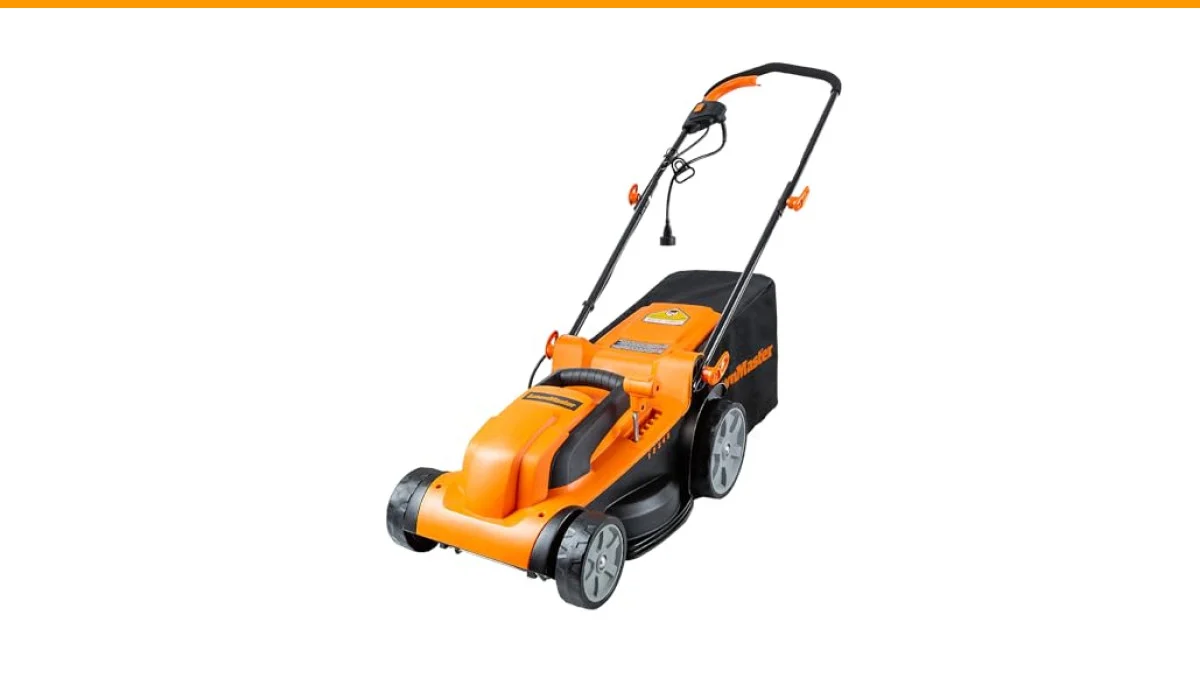
Your mower runs at 95 decibels or more. That’s loud enough to damage hearing in under an hour. Regular earbuds won’t save your ears, and plain earmuffs leave you stuck with nothing but engine drone.
The right pair of mowing headphones combines certified noise reduction with music, radio, or Bluetooth audio. You get protection and entertainment in one piece of gear. But not every pair fits every mower or every head.
This guide breaks down five solid options, matched to gas mowers, electric mowers, and different budgets. I’ll also cover the decibel math you need to pick the right NRR, plus the safety tradeoffs nobody talks about.
Here’s a quick side-by-side of the key differences between these five picks.
| Features | PROHEAR 037 BT | Kalence BT 6.0 | PROHEAR 027 Radio | PROTEAR AM FM | ProCase Earmuffs |
|---|---|---|---|---|---|
| Noise Reduction | SNR 30dB | NRR 26dB / SNR 30dB | NRR 25dB | NRR 25dB | SNR 33dB / NRR 28dB |
| Audio Source | Bluetooth 6.0 | Bluetooth 6.0 + AUX | AM/FM radio + AUX | AM/FM radio + AUX | None (passive only) |
| Battery Type | 1100mAh rechargeable | 1200mAh rechargeable | 2 AA batteries | 2 AA batteries | Not applicable |
| Claimed Runtime | 120 hours | 120 hours | Battery dependent | Battery dependent | Not applicable |
| Best Use Case | All-around Bluetooth mowing | Gloved hands, long sessions | Radio fans, rural areas | Budget radio listening | Maximum isolation, no audio |
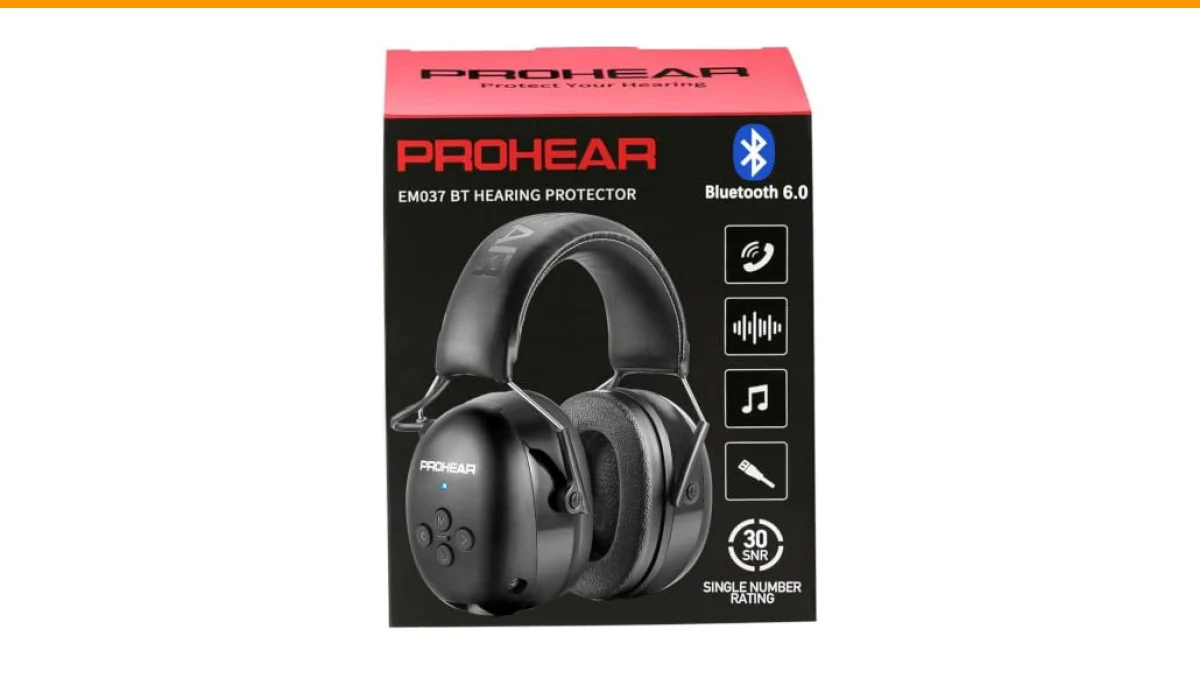
PROHEAR 037 Bluetooth 6.0
This is the pair most people picture when they think of mowing headphones. It pairs Bluetooth 6.0 audio with an SNR 30dB noise reduction rating, which puts it in the sweet spot for gas mowers in the 95-105 dB range. The wireless range hits about 80 feet, so you can leave your phone on the porch and still keep the music going.
What stands out is the control layout. PROHEAR added raised bumps on the buttons so you can find play, pause, and volume without looking down. That matters when you’re wearing work gloves and pushing a mower across a slope. The 1100mAh battery is rated for up to 120 hours of playtime, which translates to weeks of normal mowing sessions between charges. A 3.5mm jack lets you plug in directly if the battery dies mid-job.
The tradeoff is weight. These aren’t the lightest earmuffs on this list, and the clamping force is firm out of the box. It loosens up after a few wears, but if you have a larger head or wear thick-rimmed glasses, expect an adjustment period. The padding is soft but not breathable enough for 100-degree afternoons.
- Bluetooth 6.0 with roughly 80-foot wireless range
- SNR 30dB rating, suitable for gas mower noise
- 1100mAh rechargeable battery, up to 120 hours claimed
- Raised control buttons work with gloves on
- Includes 3.5mm AUX input and carrying bag
Best for: Anyone who wants one pair of Bluetooth mowing headphones that handles gas mowers, workshops, and snowblowers without fuss.
Kalence Bluetooth 6.0 Headphones
Kalence built this pair for people who mow in gloves. The buttons are noticeably larger than most competitors, and the whole layout is designed for one-touch control. Bluetooth 6.0 keeps the connection stable, and the 1200mAh battery matches the PROHEAR’s 120-hour claim with a faster 2-hour charge time.
The noise reduction sits at NRR 26dB / SNR 30dB, certified to both ANSI S3.19 and CE EN352-1 standards. That dual certification is worth noting if you work on commercial job sites where compliance matters. A built-in microphone handles calls without you removing the muffs, and the muffs support Siri and Google Assistant voice commands.
Here’s the honest downside: the larger buttons sit close together, so fat-fingering the wrong control happens until you build muscle memory. The ear pads also run warm in direct sun. And while the AUX cable is included, the port cover feels flimsy compared to the rest of the build.
- NRR 26dB / SNR 30dB, dual ANSI and CE certified
- 1200mAh battery with 2-hour charge time
- Oversized buttons designed for work gloves
- Built-in mic with Siri and Google Assistant support
- Includes 3.5mm AUX cable and carrying bag
Best for: Commercial landscapers and DIYers who wear gloves and want the biggest, easiest-to-hit controls available.
PROHEAR 027 AM FM Radio
Not everyone wants to pair a phone while mowing. The PROHEAR 027 skips Bluetooth entirely and focuses on AM/FM radio with a digital LCD display. Reception is the headline feature here. If you live in a rural area or on a farm where FM signals usually fade to static, this pair pulls in stations that cheaper radios can’t hold.
The NRR is 25dB, which is lower than the Bluetooth models above but still enough for most residential gas mowers. There’s a volume cap at 85 decibels to protect your ears during long sessions. You can store 10 AM and 10 FM presets, and manual or automatic scanning makes finding stations quick. A 3.5mm AUX port lets you plug in a phone or MP3 player when you want your own music instead of radio.
Two AA batteries power all modes, and PROHEAR specifically warns against lithium batteries. Stick with regular alkalines or the display can act up. That’s a real limitation if you’re used to rechargeable everything. The orange color is also love-it-or-hate-it.
- NRR 25dB with 85dB volume limit
- Strong AM/FM reception for rural areas
- 10 AM and 10 FM preset stations
- LCD display with manual and auto scanning
- Powered by 2 AA batteries (not included)
Best for: Radio listeners in rural areas who want reliable AM/FM reception and don’t need Bluetooth.
PROTEAR Digital AM FM Radio
This is the budget-friendly radio option. PROTEAR packs an ANSI S3.19 certified NRR 25dB rating into a lightweight frame with a wide padded headband. The digital AM/FM tuner includes an LCD screen and stores up to 10 presets on each band, which is more than most people need.
Comfort is where this pair earns its keep. The over-ear design uses full-size ear cups with snap-in cushions, so replacing worn pads later is simple. The lightweight build means less neck fatigue during long mowing sessions. Volume adjusts through a dedicated knob on the earmuff, or through your connected device when using the included MP3 cord.
The catch is build quality. It’s plastic-heavy and doesn’t feel as rugged as the PROHEAR models. The radio reception is decent but not as strong in fringe areas. And like the 027, it runs on 2 AA batteries, so you’ll want spares on hand. A one-year warranty backs it up.
- ANSI S3.19 certified NRR 25dB
- Digital AM/FM tuner with LCD and 10 presets per band
- Lightweight over-ear design with snap-in cushions
- Powered by 2 AA batteries (not included)
- Includes MP3 cord and one-year warranty
Best for: Budget-conscious buyers who want radio entertainment and decent comfort without spending much.
ProCase Hearing Protection Earmuffs
ProCase takes a different approach. There’s no Bluetooth, no radio, no audio at all. This is pure passive noise reduction, and it’s the strongest on this list at SNR 33dB (roughly NRR 28dB equivalent). That rating makes it the best match for the loudest gas mowers, chainsaws, and commercial equipment.
The foldable design is the standout feature. These collapse into a compact size that fits in a toolbox or jacket pocket, which is rare for earmuffs with this much reduction. The metal frame adjusts to fit most adult and teen head sizes, and the padding distributes pressure evenly enough for all-day wear. ProCase also designed the cups to work with eyeglasses without creating major sound leaks.
No audio means no entertainment. If you want music while you mow, this isn’t the pair. The ABS shell is durable but the cushions will eventually wear and need replacing. And without a battery or electronics, there’s nothing to break, which is arguably a feature.
- SNR 33dB / NRR 28dB, highest reduction on this list
- Foldable design fits in pockets and toolboxes
- Adjustable metal frame fits most head sizes
- Compatible with eyeglasses
- No batteries or electronics to fail
Best for: People who mow with the loudest equipment and want maximum protection without audio distractions.
How We Chose These Products
I started with the decibel problem. Gas mowers typically run 95-105 dB, electric mowers sit around 75-85 dB, and string trimmers and blowers fall somewhere between. Any pair of mowing headphones has to bring the noise at your ear down to a safe level, ideally below 85 dB for extended exposure. That’s why NRR and SNR ratings drove the shortlist.
From there I weighed battery life against realistic mowing sessions. Most homeowners mow for 30-60 minutes at a time. A 120-hour battery claim sounds impressive, but what matters is whether the pair holds a charge through a full season. I also considered control accessibility with gloves on, comfort for hot-weather wear, and whether the build could survive dust, grass clippings, and vibration. For a deeper look at audio performance beyond mowing, the SoundGearLab headphone reviews are worth a read.
Buying Guide: What Really Matters
Match the NRR to your mower, not to a marketing claim. A 25dB NRR on a 100dB gas mower leaves you at roughly 75dB at the ear, which is safe. That same 25dB on a 110dB commercial mower leaves you at 85dB, which is borderline. Step up to a 28-30dB rating if your equipment is on the loud side. For a broader look at noise-cancelling options for yard work, see this noise-cancelling headphones guide.
Active noise cancellation is a different animal. ANC works well on steady low-frequency drone, which is exactly what a mower produces. But it also masks warning sounds: a dog barking, a car backing up, a child calling from the driveway. Passive earmuffs block more evenly across frequencies, so you retain some awareness of sudden noises. Neither approach is perfect. The safest move is to mow when the yard is clear and keep your head on a swivel.
Comfort matters more than specs after the first 20 minutes. Sweat builds up under sealed ear cups fast in summer. Cloth or mesh pads breathe better than leather, but they also let in more noise. Glasses wearers should look for muffs with soft, wide cushions that compress around the temple arms instead of pushing them into your skull. And if you wear a wide-brim hat, check that the headband doesn’t fight with it.
Frequently Asked Questions
Can regular headphones protect my hearing while mowing?
No. Regular headphones don’t have a certified NRR rating and don’t seal around your ears. They might block a little noise passively, but they won’t bring a 100dB mower down to a safe level. You need earmuffs with an ANSI or CE noise reduction rating. Some people wear earplugs under regular headphones, which works but gets uncomfortable fast.
Are Bluetooth headphones safe to use while mowing?
They’re safe for your hearing if they carry a proper NRR rating. The bigger concern is situational awareness. Music at a comfortable volume combined with 25-30dB of passive isolation can mask approaching cars, pets, or people. Keep the volume low enough that you can still hear a shout from 20 feet away. OSHA doesn’t specifically prohibit entertainment audio in residential mowing, but on commercial job sites, employer policies usually restrict it.
How long should the battery actually last?
The 120-hour claims on the PROHEAR 037 and Kalence models assume moderate volume. Crank the volume and you’ll see closer to 60-80 hours. For a typical homeowner mowing once a week for 45 minutes, that’s still months of use per charge. Radio models running on AA batteries are less predictable. Cold weather drains alkalines faster, so keep spares in your garage during winter snowblowing season.
Do these work with eyeglasses and hearing aids?
Most over-ear muffs work with glasses, but the seal breaks slightly where the temple arms pass under the cushion. That reduces effective noise reduction by a few decibels. The ProCase model specifically addresses this with a design that minimizes leakage. Hearing aids are trickier. Behind-the-ear models usually fit under muffs, but in-the-ear aids can feedback. Remove hearing aids before mowing if you can safely do so.
Our Top Recommendation
The PROHEAR 037 is the best overall pick for most homeowners. It combines a 30dB SNR rating with Bluetooth 6.0, glove-friendly controls, and a battery that lasts through an entire mowing season. It handles gas mowers, electric mowers, and workshop noise without needing a second pair.
If you mow commercially or wear thick gloves all day, the Kalence is the better call thanks to its oversized buttons and dual certification. Radio listeners in rural areas should look at the PROHEAR 027 for its reception strength. And if you want maximum protection with zero electronics to fail, the ProCase earmuffs deliver the highest NRR on this list.
One last thing: any of these pairs will outlast cheap earbuds by years. Pick the one that matches your mower’s decibel level, and your ears will thank you at 60. For more yard-work gear advice, browse the lawn mowing gear reviews on the site.