
Overseeding is the secret to a thick, lush lawn, but it starts with a brutal haircut. You need to scalp existing grass down to about an inch so the new seed actually reaches the soil. Use the wrong mower, and you’ll tear up the turf, leave clumps, or run out of power halfway through the job.
The right machine for this task needs sharp blades, low cutting heights, and a reliable collection system. You also want something that can handle bagging clippings without clogging, since leaving debris blocks seed-to-soil contact. Battery runtime and deck width matter more than you might think when you’re doing a full renovation, not just a weekly trim.
I’ve tested and compared five solid options that handle the overseeding prep work differently. From a lightweight cordless model for small yards to a powerful corded unit for consistent torque, these picks cover most lawn sizes and budgets. Below is a quick comparison, followed by detailed reviews and a complete plan for your overseeding project.
Here is how the main contenders stack up on the specs that drive the decision.
| Features | Casince 17-Inch Cordless | Best Yard Book | Greenworks 40V 16-Inch | Worx 40V 17-Inch | LawnMaster 15-Inch Corded |
|---|---|---|---|---|---|
| Power Source | Dual 20V batteries | N/A (Guide) | Single 40V battery | Dual 20V batteries | 110V corded |
| Cutting Width | 17 inches | N/A | 16 inches | 17 inches | 14 inches |
| Runtime/Reach | Up to 40 minutes | N/A | Up to 1/3 acre | Up to 1/4 acre | Unlimited (cord) |
| Height Settings | 6 positions (1-3 in) | N/A | 5 positions | Not specified | 5 positions (1.4-3 in) |
| Best Use Case | Small/medium lawns | Planning strategy | Lightweight daily use | Tech-savvy homeowners | Small yards, consistent power |
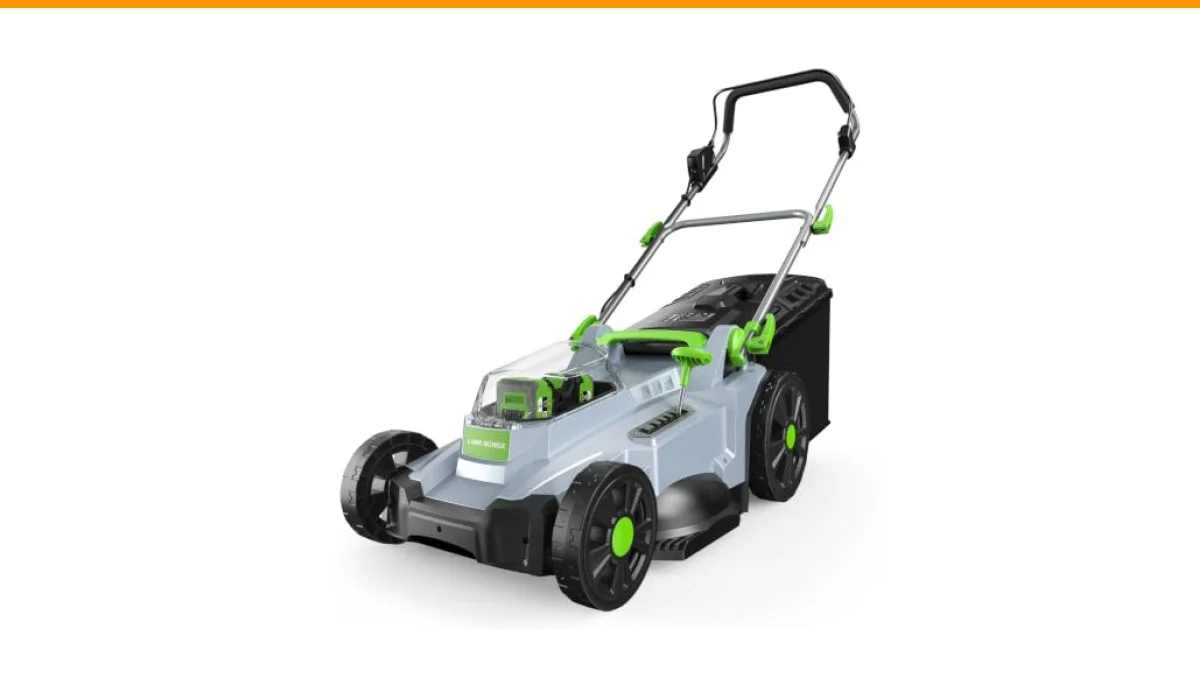
Casince 17-Inch Cordless Mower

Casince
Cordless Lawn Mower, 17 in Walk Behind Lawn Mower for Yard & Garden | 2×4.0Ah Batteries, Up to 40-Min Runtime, 6-Position Height, 50L Grass Bag, 1200W Max Brushless Power
- WIDER MORE EVEN CUTTING: The 17-inch cutting deck and 6 height settings from 1 to 3 inches (25–75 mm) help this cordless lawn mowe…
- DUAL BATTERY EXTENDED RUNTIME: Powered by two 20V 4.0Ah batteries, this walk behind lawn mower runs for up to 40 minutes and cover…
- LARGE CAPACITY GRASS COLLECTION: The 50L collection bag holds more clippings between emptying cycles, while regular cleaning aroun…
The one you buy for quiet mornings and quick setups.
This Casince model is a walk-behind push mower built for small and medium lawns, making it a practical partner for overseeding prep in tighter spaces. Its 17-inch deck is wide enough to cover ground efficiently, yet the 14 kg (about 31 lbs) body stays light enough to lift over edging or navigate around freshly laid seed areas.
The dual 20V 4.0Ah batteries deliver up to 40 minutes of runtime, covering roughly 5,380 square feet per charge. That is usually enough for a full low cut and bagging session on a quarter-acre lot. The brushless motor spins at 3,000 RPM, which helps maintain blade speed through thicker grass, reducing the chance of shredding the turf you want to keep. Six height settings drop down to 1 inch, giving you the low-scalp cut overseeding requires without bottoming out on uneven ground.
There are some trade-offs. The 50L collection bag is generous, but it fills fast when you are bagging damp clippings, and you will need to empty it frequently. Also, the runtime shrinks noticeably if the grass is wet or dense. It is not self-propelled, so you are doing the pushing, which gets tiring on slopes.
- 17-inch deck with six height positions from 1 to 3 inches
- Dual 20V 4.0Ah batteries for up to 40 minutes of run time
- 50L rear bag for grass collection during overseed prep
- Brushless motor producing up to 1,200W max output
- One-button start and lightweight 14 kg frame
Best for: Homeowners with small to medium lawns who want a cordless machine for low-scalp cuts and quiet operation.
Best Yard on the Block Book

The one you read before you touch the mower.
This is not a mower, but it might be the most valuable tool on this list for your overseeding project. The book lays out four cool-season lawn care plans, breaking the year into just three steps per season. It focuses on timing, which is critical when you are trying to get seed down before the fall rains or spring warm-up.
What stands out is the simplicity. Instead of a wall of generic advice, it gives you a structured schedule that tells you when to cut low, when to aerate, and when to spread seed. For someone who has failed at overseeding before because they mowed too late or bagged too early, this removes the guesswork.
The limitation is obvious: it does not cut a blade of grass. If you already have a solid mowing routine and just need equipment, skip this. But if your lawn care knowledge has gaps, this book pays for itself by preventing costly mistakes like mowing new seedlings too soon.
- Four season-specific lawn care plans
- Breaks tasks down to three steps per year
- Focuses on cool-season grass types
- Practical scheduling for mowing and seeding
- Paperback guide, no batteries required
Best for: Beginners and DIY homeowners who want a proven schedule to coordinate mowing, seeding, and lawn renovation.
Greenworks 40V 16-Inch Mower
Greenworks
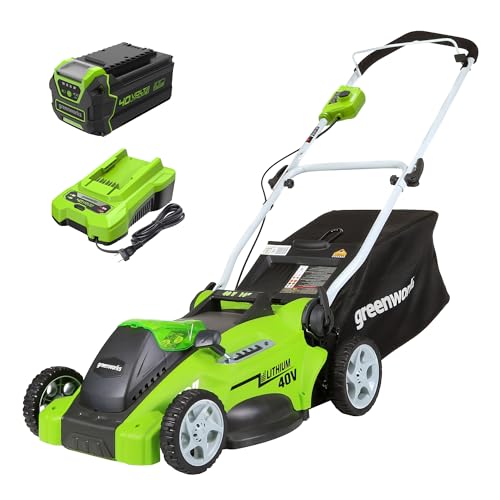
Greenworks 40V 16in Push Lawn Mower, 4.0 Ah Battery and Charger | Quiet walk-behind mower with push-button start; gas-free operation eliminates fumes and pull starts
- [16" LAWN MOWER] - This 40V lawn mower cuts up to 1/3 acre with fully charged 4.0Ah battery (varies based on grass condition and o…
- [ULTRA LIGHTWEIGHT] - 35% lighter than steel deck mowers
- [SINGLE LEVER HEIGHT ADJUST] - 5 position height adjustment
The one you grab for light handling and easy storage.
Greenworks built this 16-inch push mower for yards up to a third of an acre, and it handles overseeding prep well because it is 35% lighter than steel deck alternatives. That weight difference matters when you are making multiple passes to scalp the lawn low. You will feel less fatigue in your shoulders and wrists after a full session.
The 40V 4.0Ah battery provides solid runtime, though real-world conditions like thick grass or damp soil will cut into it. A single-lever height adjustment lets you switch between five positions quickly, which is useful when you drop the deck to 1 inch for seeding. The 2-in-1 system offers mulching and rear bagging, so you can chop up leaves in the fall or collect clippings when preparing for seed.
It is not perfect. The 16-inch deck is narrower than some competitors, meaning more passes on larger lawns. The rear bag is also on the smaller side, so expect frequent stops to empty it during heavy bagging.
- 16-inch cutting deck for maneuverability
- 40V 4.0Ah battery for up to 1/3 acre per charge
- Ultra-lightweight build, 35% lighter than steel
- Single-lever, 5-position height adjustment
- Mulch and rear bagging capabilities
Best for: Owners of smaller properties who want an easy-to-push mower for low cuts and regular maintenance.
Worx 40V 17-Inch Mower

WORX
Worx Cordless Lawn Mower, 40V 17" 2-in-1 Grass Mower for 1/4 Acre, WG745 | Brushless Power, Mulching & Bagging, 2 x 4.0Ah Batteries & 4.0A Charger Included, PowerShare
- POWER TO TACKLE SMALL TO MIDSIZE YARDS: Equipped with two 20V 4.0Ah batteries, the WORX 17" 40V electric mower cuts yard up to 1/4…
- EFFORTLESS CUTTING PERFORMANCE: Featuring a powerful brushless motor 2.0, experience 40% higher cutting power, 10% longer run time…
- 2-IN-1 MULCHING & BAGGING: Maintain a healthier greener lawn by mulching or switch to rear-bag discharge for grass collection.
The one with smart tech for variable grass conditions.
Worx brings a 17-inch deck and a brushless motor 2.0 that delivers 40% higher cutting power than earlier generations. For overseeding, this means it chews through thicker, established grass without bogging down when you drop the deck low. The dual 20V 4.0Ah batteries (running at 40V) handle up to a quarter acre, which suits most suburban lots.
The standout feature is Intellicut technology. The mower automatically adjusts blade speed based on grass density. When you hit a patch of lush growth near the fence, it spins faster to keep the cut clean. On thinner areas, it slows down to save battery. This is genuinely useful during overseed prep when the lawn condition varies across the yard.
Weighing only 40 lbs fully assembled, it is easy to push and turn. But the compact design means the grass bag is not huge, and the runtime on the quarter-acre claim assumes ideal conditions. Wet grass or a low battery will reduce that coverage.
- 17-inch deck with 2-in-1 mulching and rear bagging
- Dual 20V 4.0Ah batteries for up to 1/4 acre
- Intellicut adjusts power to grass conditions
- Brushless motor 2.0 with longer lifespan
- Lightweight 40 lb assembly for easy maneuverability
Best for: Homeowners who want a smart, efficient cordless mower that adapts power to the job at hand.
LawnMaster MEB1114K Corded Mower

LawnMaster
LawnMaster MEB1114K Electric Corded Lawn Mower 15-Inch 11AMP
- POWERFUL PERFORMANCE: Tackle your yard with 3,300 RPM of power and a 14-inch cutting width
- ENVIRONMENTALLY FRIENDLY: No gas or batteries needed to power the mower
- CUSTOMIZE YOUR CUT: Effortlessly change the height of your cut with 5 cutting positions varying between 1.4-inches and 3-inches
The one you choose when you never want to wait for a charge.
LawnMaster’s corded electric mower is the workhorse for consistent power. The 11-amp motor spins the blade at 3,300 RPM, which is higher than several cordless rivals. That speed translates to a cleaner cut on the low settings needed for overseeding. Since it plugs into an outlet, you never worry about battery dying halfway through the prep work.
The 14-inch cutting width is narrower than others here, but that is a trade-off for the maneuverability. The 7.75-inch rear wheels roll smoothly over uneven ground, helping you keep a consistent scalp height. Five height positions range from 1.4 inches to 3 inches, giving you the low cut required without scalping the soil bare.
The main drawback is the cord. Managing 100 feet of extension cable around trees and garden beds is annoying, and you are limited to the length of your lead. The 7-gallon collection bag is smaller than the Casince’s, so you will empty it more often during a full overseed job.
- 11-amp motor with 3,300 RPM blade speed
- 14-inch cutting width for tight spaces
- 5 height positions from 1.4 to 3 inches
- Large 7.75-inch rear wheels for stability
- 7-gallon collection bag for clippings
Best for: Smaller lawns near outlets where consistent power beats the convenience of batteries.
How We Chose These Products
I evaluated these mowers based on their ability to perform a low-scalp cut without tearing the grass. That requires sharp blades, a low minimum cutting height, and a deck design that lifts grass before slicing it. I also considered bagging efficiency, since collecting clippings is essential for seed-to-soil contact.
Runtime and power source played a big role. Cordless models needed proven battery capacity for a full yard, while corded options had to offer enough torque to avoid stalling. I filtered out machines with high minimum heights or poor mulching reviews, and included a planning guide because overseeding success depends on timing as much as equipment.
Buying Guide: What Really Matters
Matching the mower to your grass type matters. Cool-season grasses like fescue and ryegrass tolerate scalping down to 1 inch. Warm-season varieties like Bermuda should be cut to 1.5 to 2 inches. Check the mower’s lowest height setting against your grass species before buying.
Look for a mower with a sharp blade and a deck that creates suction. A dull blade tears grass, leaving ragged edges that invite disease. A deck with a deep profile lifts the grass upright for a cleaner cut, which is vital when you are trying to drop the height for seeding.
Consider the discharge system. Rear bagging is best for overseeding because it collects clippings without leaving windrows. Side discharge can dump clippings onto areas you have not seeded yet, blocking the new seed. Mulching is fine if you are not overseeding, but for this job, you want to remove the debris.
The Pre-Mow Protocol: A 3-Day Preparation Plan
Your overseeding project starts three days before you even start the mower. Day one, water the lawn deeply. Moist soil makes it easier to cut low and reduces stress on the existing turf. Day two, dethatch the lawn if the thatch layer is thicker than half an inch. Rent a dethatcher or use a rake to pull up debris.
Day three is the low mow. Set your mower to the lowest height setting that matches your grass type. Bag the clippings—do not mulch them. You want the soil surface visible and clear. After mowing, rake up any remaining debris to ensure the seed drops directly onto soil.
This timing prevents you from cutting too low on stressed, dry grass. It also gives the lawn a day to recover before you slice into it again. For a deeper dive into preparing different lawn types, check out this guide on new sod.
Post-Overseeding Care: When to Mow Again
After you spread the seed, resist the urge to mow. Wait until the new grass reaches about 3 inches in height. This usually takes two to three weeks, depending on soil temperature and moisture. Mowing earlier risks pulling up the young seedlings by their shallow roots.
When you do mow, raise the deck to the highest setting. Do not bag the first cut. Let the clippings fall back onto the lawn to protect the soil and retain moisture. Keep the blade sharp to avoid tugging on the delicate new growth.
For the next few weeks, mow frequently but never remove more than a third of the blade height. This encourages the new grass to tiller and thicken. If you used a self-propelled mower, avoid using the drive on wet soil to prevent rutting.
Maintenance Tips: Keeping Your Mower Sharp for Seedlings
A sharp blade is non-negotiable for overseeding. Dull steel tears the existing grass and rips out new seedlings. Sharpen your blade at the start of the season and again halfway through. You can use a bench grinder or a file, but remove the blade from the mower first.
Clean the underside of the deck after every use. Wet grass clippings build up and reduce airflow, which impacts the deck’s ability to lift grass for a clean cut. A putty knife or a pressure washer works well.
Check the blade balance after sharpening. An unbalanced blade causes vibration that damages the mower’s spindle and leaves a scalloped cut. If you are not comfortable doing this yourself, most hardware stores offer sharpening services for a few dollars.
Frequently Asked Questions
Can I use a mulching mower for overseeding? Yes, but only if you do not actually mulch. For overseeding, you must bag the clippings. Mulching leaves a layer of cut grass on the soil that blocks the seed from making contact. Switch your mower to bagging mode to keep the surface clear.
How low should I cut the grass before overseeding? Cool-season grasses should be cut to about 1 inch. Warm-season grasses can go slightly higher, around 1.5 inches. Do not scalp the lawn so low that you expose bare dirt, as this stresses the existing roots.
Should I water before or after mowing for overseed prep? Water deeply two days before you mow. This hydrates the grass and softens the soil. Do not water on the day of mowing, as wet grass clumps and clogs the bagger.
How soon after overseeding can I walk on the lawn? You can walk on it lightly to water, but avoid heavy foot traffic for at least three weeks. The new seedlings have shallow roots and compress easily. If you need to cross the lawn, use a board to distribute your weight.
Final Verdict
For most homeowners, the Casince 17-Inch Cordless Mower is the best overall pick for overseeding. It offers a low 1-inch cutting height, a wide deck, and enough battery runtime to finish a small to medium yard in one session. The lightweight frame makes the multiple passes required for a low scalp less exhausting.
If you have a larger yard and want consistent power without battery anxiety, the LawnMaster corded model is a strong budget alternative. For those who prefer a battery mower for small lawns, the Greenworks is a reliable, lighter option. Pair any of these with the right mowing strategy and a good seed, and you will see thicker grass by the next season.


