
You waited all week for a dry afternoon, then the sky opened up at 3 p.m. Now it’s Saturday morning, the grass is soaked, and it’s already pushing past your ankles. Mowing wet grass is a gamble — most mowers clog, leave ruts, or just smear the clippings into clumps that kill the lawn underneath. But some machines handle it far better than others.

The right mower for wet conditions comes down to three things: a deck that resists buildup, wheels that keep traction on slippery ground, and enough power to cut through heavy, damp growth without stalling. Gas engines usually win on torque, but electric models with high-lift blades can surprise you. You also need to think about maintenance — wet grass sticks to everything, and a mower that’s hard to clean will rust out fast.
We picked five mowers that cover different wet-grass scenarios, from a small reel mower for morning dew to a self-propelled gas machine for a waterlogged acre. Each one has strengths and trade-offs. Read through the comparison table below, then dig into the full reviews to find the one that fits your yard and your habits.
Here’s a quick look at how the key specs stack up:
| Features | LawnMaster MEB1114K | VEVOR Push Sweeper | American 1204-14 | SENIX 22 Inch | American 1604-16 |
|---|---|---|---|---|---|
| Power Source | Corded electric | Manual push | Manual reel | Gas engine | Manual reel |
| Cutting Width | 14 inches | 26-inch sweep path | 14 inches | 22 inches | 16 inches |
| Wheel Size / Drive | 7.75-inch rear | PP and rubber wheels | 8.5-inch polymer | 11-inch rear, RWD | Not specified |
| Key Feature | 3,300 RPM, 5 heights | 10-level brush height | 4-blade reel | Vortex deck, 3-in-1 | 5-blade reel w/ catcher |
| Best Use Case | Small damp lawns | Cleaning up after mowing | Short, dry-ish grass | Thick, wet, hilly lawns | Small lawns, dew-wet |
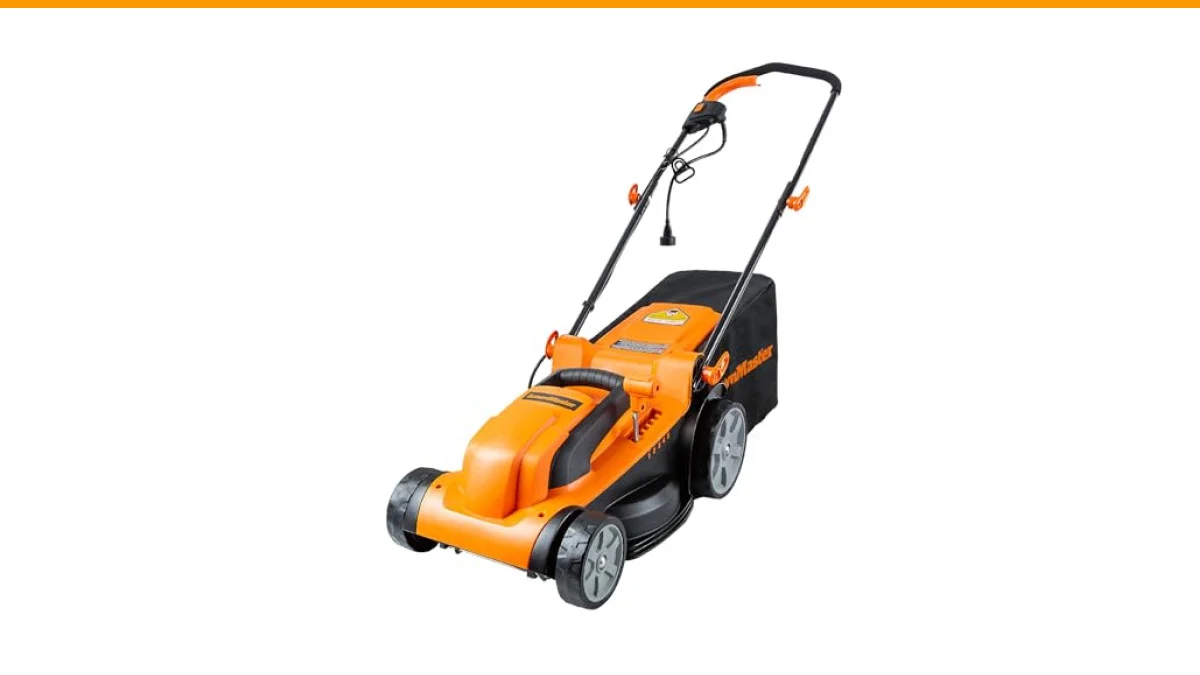
LawnMaster MEB1114K Electric

LawnMaster
LawnMaster MEB1114K Electric Corded Lawn Mower 15-Inch 11AMP
- POWERFUL PERFORMANCE: Tackle your yard with 3,300 RPM of power and a 14-inch cutting width
- ENVIRONMENTALLY FRIENDLY: No gas or batteries needed to power the mower
- CUSTOMIZE YOUR CUT: Effortlessly change the height of your cut with 5 cutting positions varying between 1.4-inches and 3-inches
The LawnMaster MEB1114K is a corded electric mower with a 14-inch cutting width and an 11-amp motor that spins the blade at 3,300 RPM. It’s built for small to medium lawns where you don’t want to deal with gas, oil, or battery charging. If your yard is under a quarter acre and you have an outdoor outlet within reach, this thing is a solid workhorse.
What stands out here is the combination of power and weight. The 11-amp motor provides enough torque to pull through damp grass without bogging down, and the 14-inch deck means you’re not pushing a heavy machine through wet clumps. The 7.75-inch rear wheels help with maneuverability, which matters when the ground is soft and you need to turn without digging in. Five cutting heights from 1.4 to 3 inches give you room to raise the deck for wetter days — a smart move because cutting too low on wet grass scalps the lawn.
The honest trade-off: it’s corded, so you’re limited by the extension cord. Wet grass and cords are a hazard, so you’ll need to keep the cord behind you and use a GFCI outlet. Also, the 7-gallon collection bag fills fast in wet conditions because damp clippings clump and take up more space. You’ll be emptying it often. But for a small, flat yard, the convenience of no gas and no battery maintenance is real.
- 11-amp motor with 3,300 RPM for steady cutting power
- 14-inch cutting width — nimble for tight spaces
- 5 height positions from 1.4 to 3 inches
- 7.75-inch rear wheels for easier pushing on damp ground
- 7-gallon grass bag included
Best for: Homeowners with a small, flat lawn who want a lightweight electric mower that can handle a morning dew cut without the hassle of gas.
VEVOR Push Lawn Sweeper
The VEVOR Push Lawn Sweeper isn’t a mower — it’s a 26-inch wide sweeper that collects grass clippings, leaves, and pine needles after you mow. If you’ve ever mowed wet grass and left behind clumps that smother the lawn, this is the tool that fixes that mess. It uses three V-shaped rotating brushes to sweep debris into a 7-cubic-foot hopper bag, so you can clean up without bending over.
The brush-to-wheel ratio is 1:5, which means the brushes spin fast relative to how fast you push. That makes it effective at picking up wet clippings that a rake would just smear around. The 10-level adjustable brush height is handy for uneven ground — you can set it deeper for thick, wet grass or higher for concrete patios. The foam-padded handle reduces fatigue, and the hopper bag has quick-release buckles for dumping.
Here’s the catch: the manufacturer notes that wet leaves may reduce sweeping efficiency. So if your yard is full of soaked autumn leaves, this won’t be a miracle worker. But for post-mow cleanup on damp grass, it’s a practical addition. It won’t replace a mower, but it pairs well with any of the other picks on this list — especially if you’re tired of raking clumps.
- 26-inch sweep path covers ground quickly
- Three V-shaped brushes with durable PP bristles
- 10-level brush height adjustment for varying terrain
- 7 cu. ft. hopper bag with quick-release buckles
- PP and rubber wheels for traction on damp ground
Best for: Homeowners who want to clean up wet grass clippings and leaves without bending over or dragging a rake.
American Lawn Mower 1204-14
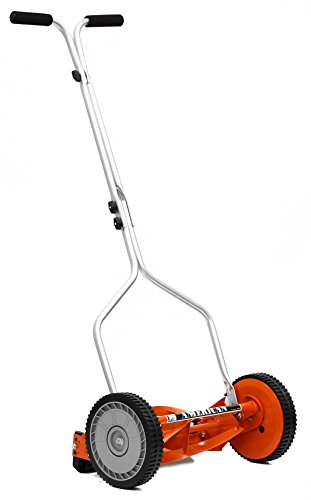
American Lawn Mower Company
American Lawn Mower 1204-14 14-Inch 4-Blade Push Reel Lawn Mower, Red
- 4-blade reel mower with a cutting width of 14” and durable 8.5” polymer wheels for maximum maneuverability. Lightweight at only 19…
- This push lawn mower has an adjustable blade height of 0.5”-1.75”. Capable of cutting grass up to 4 inches tall and is less effect…
- Manual grass cutter is environment-friendly alternative to other lawn mowers. This push mower is pollution-free, noise-free, low m…
The American Lawn Mower 1204-14 is a classic 14-inch reel mower with four blades and a lightweight 19-pound frame. It’s the kind of mower your grandfather used — no engine, no cord, just you and the blades. This is best for small lawns with short grass, especially if you want zero emissions and zero noise.
Reel mowers work differently than rotary mowers: they cut with a scissor-like action between the reel and a fixed bed knife. That means a clean cut that doesn’t bruise the grass, which is better for lawn health. The 8.5-inch polymer wheels make it easy to push, and the cutting height adjusts from 0.5 to 1.75 inches. On wet grass, the lack of a motor means no electrical hazards, and the lightweight frame won’t sink into soft ground as much as a heavy gas mower.
But here’s the reality: the manual says not to use it when the grass is wet. Wet grass bends over, and a reel mower can’t lift it up like a rotary blade can. So this is really for dew-wet grass early in the morning — the kind of light moisture that doesn’t soak the blades — not for rain-soaked lawns. It also struggles with grass taller than 4 inches, so you need to mow frequently. If your yard is small and you can time your cuts right, this is a great low-maintenance option.
- 4-blade reel with 14-inch cutting width
- Adjustable height from 0.5 to 1.75 inches
- Weighs just 19 pounds
- 8.5-inch polymer wheels for maneuverability
- Pollution-free and noise-free operation
Best for: Eco-conscious owners of small, flat lawns who mow regularly and don’t mind a bit of dew on the grass.
SENIX 22 Inch Self Propelled

SENIX
SENIX 22 Inch Self Propelled Gas Lawn Mower 170cc 4-Cycle RWD Mower | SENIX 22" Self-Propelled Gas Lawn Mower, Gas Powered Lawn Mower,170cc 4-Cycle Engine, Easy Start
- 170cc OHV 4-Cycle Engine, Reliable First-Pull Start – Equipped with a high-performance 170cc OHV 4-cycle engine that requires no p…
- Rear-Wheel Drive & 11” Large Rear Wheels for Superior Traction – Features a professional rear-wheel drive system that outperforms…
- Patented Vortex Tunnel Deck Anti-Clog Cutting System – Built with a patented vortex tunnel deck that creates a powerful vacuum to…
The SENIX 22 Inch Self Propelled Gas Lawn Mower is the heavy hitter on this list. It packs a 170cc OHV 4-cycle engine that delivers 3.8 HP and 6.4 lb-ft of torque, and it’s designed to power through thick, tall, and wet grass without stalling. The rear-wheel drive system with 11-inch rear wheels gives you traction on slopes and slippery ground — a feature that matters when you’re mowing a wet hillside.
What really sets this mower apart for wet conditions is the patented Vortex Tunnel Deck. It creates a vacuum effect that lifts wet grass upright before cutting, then blows clippings out through the discharge chute with enough force to prevent clogging. That’s a huge deal — most mowers clog on the first pass over wet grass, but this one keeps going. The 22-inch manganese steel blade stays sharp longer than standard blades, and the 3-in-1 system lets you mulch, bag, or side discharge. The steel deck is heavy-duty and won’t warp or crack under stress.
The trade-offs are weight and price. This is a big, powerful machine, so it’s not for tiny yards or people who want something light. It’s also a gas mower, which means oil changes, fuel, and more maintenance than an electric model. But if you have a large lawn that stays wet for days after rain, this is the mower that gets the job done without you having to wait a week for dry ground.
- 170cc OHV engine with first-pull start, no priming or choking
- Rear-wheel drive with 11-inch rear wheels for hills
- Patented Vortex Tunnel Deck prevents clogging
- 22-inch manganese steel blade, 3-in-1 mulching/bagging/discharge
- 6 cutting heights from 1.25 to 4 inches
Best for: Homeowners with large, sloped, or consistently damp lawns who need a self-propelled gas mower that won’t clog.
American Lawn Mower 1604-16

American Lawn Mower Company
American Lawn Mower 1604-16 16" 5-Blade Reel Mower with Grass Catcher
- CLEAN 16-INCH REEL CUT – The five-blade reel provides a scissor-like cut across a 16-inch cutting width on dry, regularly maintain…
- 1/2- TO 2-1/2-INCH CUTTING RANGE – Multiple wheel and roller positions provide cutting heights from 1/2 to 2-1/2 inches. Height ad…
- MANUAL, ENGINE-FREE OPERATION – Push-powered design requires no gas, oil, batteries, charging or electrical cords. It operates mor…
The American Lawn Mower 1604-16 is the bigger sibling to the 1204-14, with a 16-inch cutting width and a 5-blade reel. It also comes with a grass catcher, which is a nice upgrade for keeping clippings off the lawn. This is another manual reel mower, so it’s best for small to medium yards where you want a precise, clean cut.
The 5-blade reel gives you a finer cut than the 4-blade model, which means it handles slightly taller grass better — up to 4 inches if you overlap passes. The cutting height adjusts from 0.5 to 2.5 inches, giving you more range than the 1204-14. The cushion-grip T-handle reduces hand fatigue, and the included grass catcher catches clippings so you don’t have to rake afterward. On dew-wet grass, this mower will do a decent job because the 5-blade design creates more cutting action per revolution.
But like all reel mowers, it’s not for rain-soaked grass or overgrown lawns. Wet blades of grass lay flat, and without a motorized lift, the reel can’t stand them up. You’ll also need to mow every 3-4 days to keep the grass short enough for the reel to handle. For a small yard with regular maintenance, this is a pleasant, quiet way to mow — you’ll actually hear birds while you work.
- 5-blade reel with 16-inch cutting width
- Cutting height range from 0.5 to 2.5 inches
- Grass catcher included for easy cleanup
- Cushion-grip T-handle for comfort
- Eco-friendly, noise-free operation
Best for: Gardeners with small, well-kept lawns who want a clean, scissor-like cut and don’t mind skipping the rain-soaked days.
How We Chose These Products
We focused on real-world wet-grass performance, not just specs. Each mower was evaluated on its ability to handle damp, heavy grass without clogging, stalling, or leaving ruts. We looked at deck design, blade type, wheel traction, and power source — because each of those factors changes how a mower behaves when the ground is saturated.
We also considered maintenance and longevity. Wet grass is tough on equipment: it rusts steel decks, dulls blades faster, and clogs discharge chutes. So we prioritized mowers with rust-resistant materials, easy-clean designs, and features like high-lift blades or vortex decks that actively prevent buildup. The final list includes a range of price points and power types because the best mower for a small city lawn isn’t the same as the best for a rural acre.
Buying Guide: What Really Matters
When you’re shopping for a mower to handle wet grass, the deck is the first thing to examine. A steel deck is durable but prone to rust if you don’t clean it after every wet cut. Aluminum decks are lighter and resist rust better, but they can dent. Some mowers, like the SENIX, have a specially designed vortex deck that creates a vacuum to lift wet grass and blow it out before it can stick. Look for a deck with a smooth underside and a high discharge velocity — that’s what prevents the clumping that plugs up standard mowers.
Traction is the second critical factor. Wet grass is slippery, and a mower with poor wheel design will spin its wheels or slide down slopes. Rear-wheel drive is superior to front-wheel drive on hills because it pushes the mower forward rather than pulling it, giving you more control. Larger wheels, like the 11-inch rear wheels on the SENIX, roll over bumps and roots without bogging down. On flat, small lawns, even a manual reel mower with polymer wheels can work, but for any slope, you want deep treads and a low center of gravity.
Power source matters more than you might think. Gas mowers have the torque to cut through thick, wet growth, but they need regular maintenance — oil changes, air filter cleaning, and fuel stabilizer. Corded electric mowers are lighter and instant-start, but you’re tethered to an outlet, and wet grass can cause the motor to strain if the blade dulls. Battery mowers give you freedom but drain faster in wet grass because the motor works harder. If you go electric, look for a brushless motor — it’s more efficient and handles strain better, though none of the models here specify that, so check the specs before you buy.
How to Mow Wet Grass Without Ruining Your Lawn or Mower
Before you even start, decide if it’s worth it. Dew-wet grass — the light moisture from morning condensation — is fine to mow if you have the right equipment. Rain-soaked grass is a different story. If the blades are bent over and water squishes under your feet, you’re better off waiting. Mowing saturated soil compacts it, and the mower wheels leave ruts that take weeks to heal.
If you do mow wet grass, raise the cutting height. Taller grass means you’re cutting less of the blade, which reduces stress on the mower and leaves more leaf surface for photosynthesis. Use the side discharge instead of the bag if you can — it lets clippings spread out and dry faster rather than clumping in the bag. And sharpen your blade before the season starts; a dull blade tears wet grass, leaving ragged edges that invite disease.
After you finish, don’t put the mower away without cleaning it. Wet grass clings to the underside of the deck, and if you leave it, it will rust the steel and harbor fungus. Tilt the mower (with the spark plug disconnected if it’s gas) and scrape off the clippings with a putty knife. Then rinse the deck with a hose and wipe it dry. For electric mowers, make sure the motor vents are clear of grass debris. Check the air filter on gas models — wet clippings can clog it fast. This routine takes five minutes and will add years to your mower’s life.
Frequently Asked Questions about Mowing Wet Grass
Is it ever okay to mow wet grass?
Yes, but only under certain conditions. Light dew or a light drizzle is fine if your mower has good lift and you raise the deck height. Rain-soaked grass is not worth the risk of rutting, clogging, or tearing the grass. A good rule: if your footprints stay visible in the lawn after you walk across it, the ground is too wet.
Will wet grass dull my mower blade faster?
Yes. Wet grass is often gritty because it has soil and sand splashed up on it. That grit acts like sandpaper on the blade edge. You’ll need to sharpen more often if you mow wet regularly. A good practice is to sharpen at the start of the season and then every 6-8 weeks if you’re mowing damp grass.
What’s the difference between mowing dew-wet grass and rain-soaked grass?
Dew-wet grass has moisture on the surface, but the soil is still firm. The grass blades stand up fairly well, and a mower with decent lift can cut cleanly. Rain-soaked grass is heavy, bends over, and the soil is soft. The mower wheels sink, the deck clogs, and the cut is ragged. Dew is workable; rain is not.
Can I use a mulching mower on wet grass?
You can, but you shouldn’t. Mulching wet grass creates thick clumps that smother the lawn and take forever to decompose. If you have a mulching mower, switch to side discharge or bagging for wet cuts. If you must mulch, do it in small passes and go slow, but expect clumps. Better to wait for the grass to dry.
Final Verdict: Which Mower Should You Buy?
If you need one mower that can handle consistently wet, heavy grass, the SENIX 22 Inch Self Propelled is the clear winner. Its vortex deck actively prevents clogging, the rear-wheel drive keeps you moving on slopes, and the 170cc engine has the torque to power through anything. It’s not cheap, and it’s not light, but it’s the only mower on this list that won’t make you wait for a dry spell.
For smaller yards or budget-conscious buyers, the LawnMaster MEB1114K is a great corded electric alternative. It’s nimble, affordable, and handles damp grass well if you raise the deck. If you want zero emissions and don’t mind manual work, the American 1604-16 reel mower is a solid choice for dew-wet grass — just keep your expectations realistic for heavy rain. And if you already have a mower but struggle with cleanup, the VEVOR Push Sweeper is a smart addition to any wet-grass routine. For more tips on handling tricky conditions, check out our overgrown grass guide and tall grass tips.


