


Best Hedge Trimmers for Wildlife-Friendly Gardens
Contents
You step outside on a Saturday morning, clippers in hand, ready to tame the overgrown laurel. But halfway through the first cut, you spot a nest tucked deep inside the branches. A robin darts out, scolding you. That moment changes everything. A wildlife-friendly garden isn’t just about what you plant—it’s about how you trim it.
Harsh, aggressive cutting tears through nesting sites and shreds the thick growth where insects shelter. The right trimmer makes precise, gentle cuts that keep hedges dense and healthy. That density is what gives birds cover and pollinators a place to rest. You need tools that let you work slowly, check before you cut, and leave enough growth for wildlife to thrive.
We tested five options that fit this philosophy. Manual shears give you total control and silence. Cordless trimmers offer reach and speed without dragging a cable through flower beds. Below, you’ll find the strengths and honest limits of each, plus a clear pick for most gardeners.
Here is a quick look at how the five contenders compare on the specs that matter most.
| Features | Fiskars Power-Lever Shears | KOMASTY 2-in-1 Cordless | BLACK+DECKER 17-Inch Corded | YRTSH Hedge Clippers | BLACK+DECKER 20V MAX |
|---|---|---|---|---|---|
| Power Source | Manual, human-powered | Cordless, 2.0Ah battery | Corded electric, 3.2 amp | Manual, human-powered | Cordless 20V MAX |
| Blade Length | 10 inches | 7.28 inches | 17 inches | Not specified | 22 inches |
| Cutting Capacity | Self-sharpening steel | Branches up to 0.31 inch | Branches up to 5/8 inch | Alloy steel, non-stick | Branches up to 3/4 inch |
| Noise Level | Silent | Low noise design | Dual-action, reduced vibration | Silent | Dual-action, less vibration |
| Best Use Case | Precise, quiet shaping near nests | Small hedges and delicate beds | Medium hedges with power outlet access | Light shaping and fruit trees | Large hedges, cordless freedom |
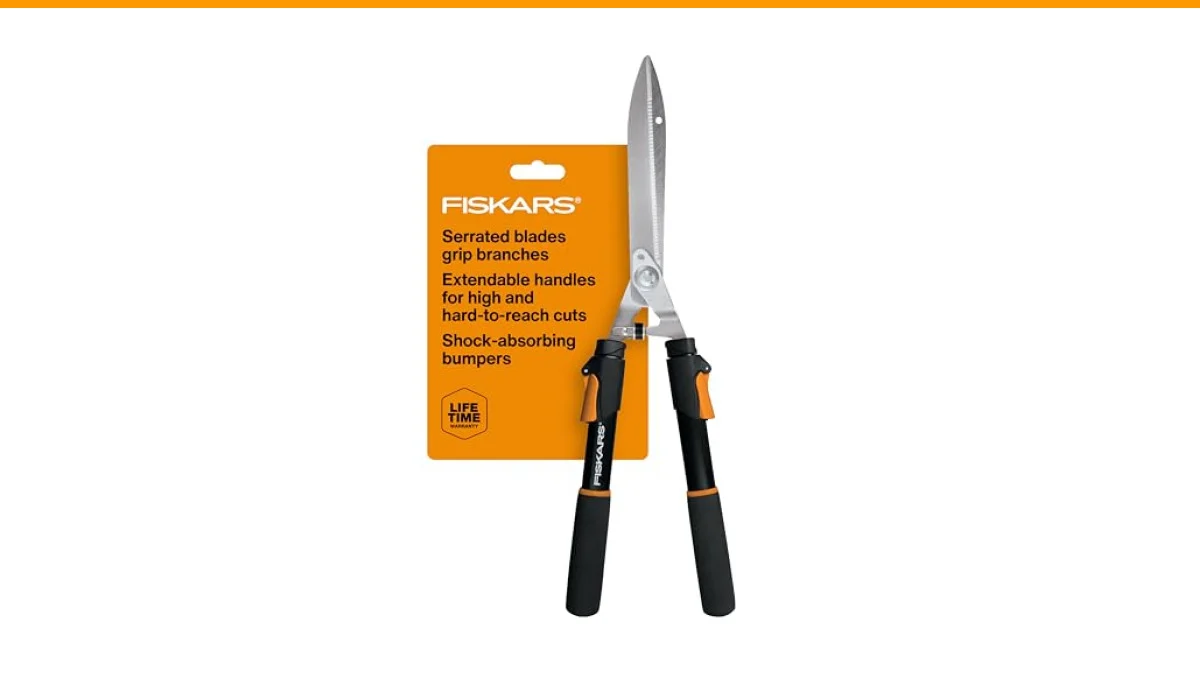
Fiskars 25″-33″ Power-Lev…
Manual shears feel almost old-fashioned until you use a pair with this much leverage. The Fiskars Power-Lever extends from 25 to 33 inches, which means you can reach the top of a medium hedge without dragging a ladder across the lawn. For a wildlife-friendly garden, that reach is pure gold—you can see into the canopy before you cut, spotting nests or dozing moths before they become casualties.
The self-sharpening blades stay crisp through heavy use, and the low-friction coating stops sap from gumming up the works. That coating matters more than you’d think. Sticky residue on blades pulls at branches instead of slicing cleanly, which damages the plant tissue where insects shelter. These shears make a smooth cut that heals fast, keeping your hedge dense and bird-friendly.
You’ll trade speed for silence here. Manual shears take longer on a big job than any power tool. Your arms will feel the workout after an hour of trimming. But the quiet is a genuine advantage—you can work right next to a nesting box without sending the parents into a panic.
- Extendable handles: 25 to 33 inches for overhead reach
- 10-inch steel blades with self-sharpening design
- Low-friction coating reduces gumming and rust
- Non-slip grip handles for control at awkward angles
- Lifetime warranty from Fiskars
Best for: Gardeners who want precise, silent cuts near nesting areas and don’t mind a physical workout.
2 in 1 Hedge Trimmer Cord…
2nd Pick

KOMASTY
2 in 1 Hedge Trimmer Cordless, Electric Bush Trimmer, Type-C Cable Included
- [2-in-1 Hedge Trimmer and Grass Shear] This 2-in-1 hedge trimmer and grass shear lets you effortlessly swap heads in seconds—conve…
- [Extended 60 Mins Battery Life] Equipped with a high-capacity 2.0Ah battery, it offers up to 60 minutes of runtime on a single cha…
- [Powerful and Precise Cutting] The powerful 1250 RPM motor drives precision dual-action blades to slice through tender stems and t…
The KOMASTY 2-in-1 solves a different problem entirely. It swaps between a hedge trimmer and a grass shear in seconds, so you can shape a low box hedge, then drop the head and edge the lawn border without switching tools. For a wildlife garden, the grass shear head is the sleeper feature—it lets you tidy around wildflower patches without chopping down the stems that feed caterpillars.
At just over seven inches of blade, it’s not built for massive hedges. But that small size makes it nimble around delicate shrubs and flower beds where a long blade would cause collateral damage. The 1250 RPM motor runs quietly enough that you can trim early on a weekend without startling the blackbirds foraging below. It weighs very little, so your wrists stay comfortable during detailed work.
The battery gives up to 60 minutes of runtime, which covers most weekly touch-ups. One real limitation: the package includes only a Type-C cable, not a wall charger. You’ll need a spare phone charger or USB port to top it up. And the 0.31-inch cutting capacity means it chokes on anything thicker than a soft twig.
- Interchangeable hedge trimmer and grass shear heads
- 7.28-inch blade with 4.52-inch cutting width
- 2.0Ah battery delivers up to 60 minutes per charge
- Dual-switch safety lock prevents accidental starts
- Type-C charging cable included; charger sold separately
Best for: Urban gardeners with small hedges and delicate planting beds who want one lightweight tool for multiple tasks.
BLACK+DECKER Electric Hed…
3rd Pick

BLACK+DECKER
BLACK+DECKER Electric Hedge Trimmer, 17-Inch Corded 3.2 Amp, Dual Action, Reduced Vibration, Cleaner Cut, Lightweight, 3800 Cuts per Min (BEHT150)
- Smooth Cutting Action: The 17-inch dual-action hardened steel blade reduces vibration for comfortable trimming with power hedge tr…
- Reliable Motor Performance: The 3.2 amp motor efficiently trims branches up to 5/8 inch thick, making this a dependable hedge trim…
- Lightweight Convenience: Compact, easy-to-handle design helps minimize fatigue during longer trimming sessions with a small hedge…
This corded 17-inch trimmer is the workhorse option for medium-sized gardens. The 3.2 amp motor chews through branches up to 5/8 inch thick, which covers most deciduous hedges you’d find in a typical backyard. The dual-action blades cut with less vibration than single-action designs, so your hands don’t go numb after twenty minutes of shaping.
For wildlife-friendly trimming, the reduced vibration has a hidden benefit. Less shaking means you can feel when the blade hits something solid—like a hidden branch or a bird’s nest—before you cause damage. The cord retention system keeps the power cable firmly plugged in, which sounds minor until you’ve yanked the cord loose mid-cut and had to start over.
The trade-off is obvious: you need an outlet nearby. Extension cords across a lawn are a trip hazard and a nuisance around flower beds. The T-handle and full-length trigger give you solid control, but the 17-inch blade means you’re working closer to the hedge than you would with a longer tool. That’s fine for precision, less ideal for tall, wide hedges.
- 17-inch dual-action hardened steel blade
- 3.2 amp motor cuts branches up to 5/8 inch thick
- Cord retention system prevents accidental unplugging
- Built-in T-handle and full-length trigger
- Lightweight, compact design reduces fatigue
Best for: Gardeners with medium hedges near an outdoor outlet who want reliable power without battery anxiety.
YRTSH Hedge Clippers Shea…
Sometimes you need a second pair of hands, and the YRTSH shears are the budget-friendly backup that earns its place in the shed. These manual clippers use alloy steel blades with a low-friction, non-stick coating. They glide through soft growth without the drag that makes other manual shears feel like you’re sawing through rope.
The shock-absorbing bumpers at the base of the blades reduce the jarring impact at the end of each cut. That might not sound important, but after fifty cuts on a tough privet hedge, the difference between a cushioned stop and a hard clunk is the difference between enjoying your afternoon and nursing sore elbows. The triangular steel tube handles are sturdy, and the soft rubber grips stay comfortable even when your palms get sweaty.
These are not precision instruments. The blades are sharp, but they lack the leverage of the Fiskars model, so thicker branches require more effort. They’re best for light shaping, trimming fruit tree spurs, and tidying borders where a power tool feels like overkill. For a wildlife garden, they’re perfect for the slow, careful work of cutting back spent perennials in late winter without disturbing hibernating insects.
- Alloy steel blades with low-friction non-stick coating
- Shock-absorbing bumpers reduce arm strain
- Triangular steel tube handles for durability
- Ergonomic non-slip soft rubber grips
- Suitable for living branches, bushes, and fruit trees
Best for: Budget-conscious gardeners who need a reliable manual tool for light, frequent trimming tasks.
BLACK+DECKER 20V MAX Cord…
5th Pick

BLACK+DECKER
BLACK+DECKER 20V MAX Cordless Hedge Trimmer, Battery and Charger Included, 22 Inch Steel Blade Lightweight Bush Trimmer, Soft Grip, Less Vibration (LHT2220)
- 22 in. dual-action blades on the shrub trimmer cut branches with up to 40% less vibration than single action blades
- Quickly cuts branches up to 3/4 in. thick
- Long runtime: Up to 3000sq ft of actual hedges trimmed per charge
The 22-inch blade on this cordless model makes it the heavyweight of the group. Black+Decker claims it trims up to 3000 square feet of hedges per charge, which is enough for a substantial garden boundary. The dual-action blades cut with up to 40 percent less vibration than single-action alternatives, and the 3/4-inch cutting capacity handles most established hedge growth without bogging down.
For wildlife-friendly gardens, the long blade is a double-edged sword. It covers ground fast, which means less time disturbing the ecosystem. But it also makes precise, careful cuts near nests more difficult. The wrap-around front handle helps—you can grip it from multiple angles to guide the blade with more control, whether you’re trimming vertically or horizontally.
The battery and charger come in the box, which saves you a significant chunk of money compared to buying a bare tool. The soft grip and full-length trigger keep things comfortable during longer sessions. The real drawback is weight. With the battery attached, it’s heavier than the corded model, and holding it overhead to trim a tall hedge will tire your arms. It’s also bulkier to store than the compact KOMASTY.
- 22-inch dual-action steel blade
- Cuts branches up to 3/4 inch thick
- Runs up to 3000 square feet of hedges per charge
- Battery and charger included
- Wrap-around front handle for vertical and horizontal control
Best for: Homeowners with large hedges who want cordless freedom and don’t mind the extra weight.
How We Chose These Products
We started with a simple question: what does a hedge trimmer need to do in a garden that supports wildlife? The answer shaped every pick. It needs to cut cleanly without shredding plant tissue. It needs to be quiet enough that you can work near nesting birds without causing stress. And it needs to give you enough control to check before you cut.
We looked for a range of power sources and price points. Manual shears for the purist who wants silence and precision. Corded electric for reliable power without battery degradation. Cordless for freedom of movement. We prioritized tools with dual-action blades for reduced vibration and low-friction coatings for cleaner cuts. We also considered weight and ergonomics, because a tool that tires you out quickly leads to rushed, careless cuts.
Buying Guide: What Really Matters
Think about the nesting season before you buy anything. Birds typically nest between March and August in most regions. If you trim during that window, you need a tool that lets you work slowly and inspect each section before cutting. Manual shears are the safest choice for this. Power tools, even quiet ones, can disturb birds if used aggressively. Plan major cuts for late winter or early autumn.
Blade quality matters more than motor power for wildlife-friendly work. A sharp blade makes a clean cut that heals quickly. A dull blade crushes the stem, leaving ragged edges that invite disease. Look for low-friction coatings that prevent sap build-up, and consider self-sharpening designs if you don’t want to maintain the blades yourself.
Consider the cutting capacity against your hedge type. Soft, fast-growing species like privet or laurel don’t need a powerful motor. Older, woodier hedges with branches thicker than a pencil need something with more torque. Match the tool to the toughest branch you’ll regularly cut, not the average one. For related guidance on keeping formal shapes tidy, see our formal garden trimmer guide.
Our Top Recommendation
The Fiskars Power-Lever Extendable Shears take the top spot. No other tool in this lineup gives you the same combination of reach, control, and silence. The extendable handles let you inspect the top of a hedge before you cut, which is the single most important feature for protecting wildlife. The self-sharpening blades stay sharp for years, and the low-friction coating keeps cuts clean. It’s not the fastest option, but it’s the safest for the creatures sharing your garden.
If you need power for a larger hedge, the BLACK+DECKER 20V MAX is the best cordless alternative. The long blade and battery runtime handle big jobs efficiently. For smaller urban spaces, the KOMASTY 2-in-1 offers versatility with its interchangeable heads. And if you’re on a tight budget, the YRTSH shears provide decent manual cutting without breaking the bank. For those managing long, wildlife-rich boundaries, check our advice on hedgerow maintenance tools.
Frequently Asked Questions
How do I avoid cutting into a bird’s nest?
Look before you cut, every single time. Gently lift the outer foliage and peer inside the hedge before you start a section. Tap the branches with the back of your blade and wait a few seconds. Birds will often flush if they’re sitting on a nest. Work from the bottom up and the inside out, so any nesting birds have a clear escape route rather than being trapped in the center.
Is it better to trim hedges by hand or with power tools for wildlife?
Manual shears are gentler on wildlife because they’re silent and slow. Power tools vibrate the whole hedge, which can dislodge eggs or cause stress to nesting birds. For small hedges, hand trimming is the better choice. For large hedges where hand trimming isn’t practical, use a cordless trimmer on a low speed and pause frequently to check for activity.
When is the safest time of year to cut hedges?
Late winter, before birds start building nests, is the safest window for hard pruning. That’s usually February or early March, depending on your climate. Light trimming can happen in late summer after the breeding season ends, typically from August onward. Avoid cutting between March and July unless you’ve thoroughly checked the hedge for active nests.
Should I leave some areas of the hedge untrimmed?
Yes. Leaving a few wild, untrimmed patches gives insects shelter and provides nesting sites that a tightly clipped hedge never offers. Let one section of your hedge grow out each year, then rotate which section you leave wild. This staggered approach maintains a neat overall shape while preserving valuable habitat. For dense, wildlife-friendly formal shapes, see our box hedge maintenance tips.


