Saturday morning, you pull the cord on your old mower once, twice, five times. Nothing. The grass is already knee-high, and the neighbor’s riding mower hums past for the third time. You smell stale fuel and wonder if this is the year you finally replace the thing.
A good gas mower should start on the first or second pull, cut cleanly through thick grass, and last a decade or more with basic maintenance. The trick is matching the engine size, deck width, and drive system to your actual yard, not the one on the brochure.
We tested and compared five gasoline mowers that cover the range from small flat lots to hilly acreage. The list includes two push models for budget buyers, two self-propelled machines for slopes and medium yards, and one corded electric for those who want zero fuel hassle. Below you’ll find a spec table, detailed reviews, honest trade-offs, and a maintenance checklist that will keep whichever mower you pick running for years.
Here’s how the key specs stack up at a glance:
| Features | PowerSmart EasyGlide | PowerSmart EasyCut | SENIX 201cc | PowerSmart 170cc | LawnMaster Electric |
|---|---|---|---|---|---|
| Engine | 144cc OHV | 144cc OHV | 201cc OHV | 170cc OHV | 11-amp motor |
| Deck Size | 21-inch steel | 18-inch steel | 22-inch steel | 21-inch alloy steel | 14-inch |
| Drive Type | Push | Push | Self-propelled RWD | Self-propelled RWD | Push |
| Cutting Options | 3-in-1 (mulch/bag/side) | Side discharge only | 3-in-1 (mulch/bag/side) | 3-in-1 (mulch/bag/side) | Bag only |
| Height Positions | 5 (1.5–3.9 in) | 5 (1.5–3.9 in) | 6 (1.25–4 in) | 6 (1.5–3.9 in) | 5 (1.4–3 in) |
| Best For | Flat, small–medium yards | Small, tight spaces | Large, hilly lawns | Medium hills & slopes | Very small, flat lots |

In this article
PowerSmart EasyGlide 21-Inch

PowerSmart
PowerSmart EasyGlide 21-Inch 3-in-1 Push Gas Lawn Mower | 144cc 4-Stroke OHV Engine, Walk-Behind, Mulch/Bagger/Side-Discharge, Steel Deck, 6 Height Adjustment, High Wheels
- Reliable Engine: Experience high performance and longer working life with the 144cc 4-stroke OHV engine, engineered with a stabili…
- Easy Start System: Equipped with auto choke for easy start, and primer structure for better starting.
- 21“ Steel Deck: Featuring a 21" durable steel deck built to last through tough yard tasks, the specialized blade delivers finely m…
The EasyGlide is a straight push mower with a 21-inch steel deck and a 144cc OHV engine. It’s built for homeowners with flat, quarter-acre lots who want a reliable machine without paying for self-propulsion.
The 3-in-1 cutting system is the standout feature here. You can mulch clippings to feed the lawn, attach the rear bag for clean pickup, or open the side chute when the grass is tall and wet. Switching between modes takes seconds and requires no tools. The auto-choke and primer system means it starts with minimal fuss, even after sitting for a few weeks.
Honest trade-off: the wheels are 10-inch rear and 7-inch front, which roll fine on level ground but struggle on slopes. If your yard has any real incline, you’ll be doing most of the work. Also, the 144cc engine is adequate but not powerful; it will bog down in extra-thick or damp grass if you let it get too tall.
- 144cc 4-stroke OHV engine with auto choke and primer
- 21-inch durable steel deck for a clean, even cut
- 10-inch rear / 7-inch front double ball-bearing wheels
- 3-in-1 mulching, bagging, and side discharge
- 5-position height adjustment from 1.5 to 3.9 inches
Best for: Homeowners with flat, small to medium yards who want a budget-friendly push mower with versatile cutting options.
PowerSmart EasyCut 18-Inch

PowerSmart
PowerSmart EasyCut 18-Inch Gas Lawn Mower, 144cc OHV Engine, Steel Deck, Side Discharge, 5-Position Dual-Lever Height Adjustment, Push Mower for Small Yards
- Easy Start Engine: The144cc 4-stroke OHV engine delivers a reliable balance of high performance and ease. Equipped with auto choke…
- Side Discharge: Includes a side discharge mechanism for convenient dispersal of grass clippings, reducing clumps for efficient mow…
- 18-inch Steel Deck: The durable steel deck is built for long-lasting use, and the specialized blade delivers a clean, even cut for…
The EasyCut is the smallest and most maneuverable mower on this list. Its 18-inch deck and 8-inch rear wheels let you navigate tight corners, around flower beds, and through narrow gates without wrestling the machine. The 144cc engine is identical to the EasyGlide, but the smaller deck means it handles thick grass with less strain.
This model is side-discharge only, which keeps the price down but means you’ll leave clippings on the lawn. If you prefer mulching or bagging, you’ll need to look elsewhere. The dual-lever height adjustment gives you five positions from 1.5 to 3.9 inches, so you can drop it low for a final fall cut or raise it high for summer stress.
Honest trade-off: the 18-inch cutting width means more passes on any given yard. On a quarter-acre lot, you’ll spend an extra 15 minutes compared to a 21-inch mower. The lack of a bag or mulch option also means you’re stuck with clippings, which can smother the grass if you mow too short.
- 144cc 4-stroke OHV engine with auto choke
- 18-inch steel deck with side discharge
- 8-inch rear / 7-inch front wheels for easy rolling
- 5-position dual-lever height adjustment (1.5–3.9 in)
- Compact footprint for small sheds and garages
Best for: Owners of small, flat lots with tight spaces who want a lightweight, easy-starting mower without extra features.
SENIX 201cc 22-Inch Self-Propelled

SENIX
SENIX 201cc 22" 3-in-1 Variable Speed Self Propelled Gas Lawn Mower | Self Propelled Lawn Mower, 22" Self Propelled Gas Lawn Mower, 6 Height Adjustable
- Powerful 201cc OHV Engine-Powered by a reliable 201cc 4-cycle OHV engine, this lawn mower delivers strong, consistent performance…
- 22-Inch Wide Cutting Deck-Featuring a durable steel deck and sharp steel blade, the 22-inch cutting width covers more ground in le…
- Self-Propelled with 11-Inch Rear Wheels-The rear-wheel-drive self-propelled system, paired with large 11-inch rear wheels, provide…
The SENIX is the most powerful mower we reviewed, with a 201cc OHV engine and a 22-inch steel deck. It’s a rear-wheel-drive self-propelled model, which means the large 11-inch rear wheels dig in and pull you forward, even on slopes. This is the mower you want if your lawn has any significant grade or if you simply don’t enjoy pushing a heavy machine through tall grass.
The variable-speed self-propulsion is a genuine upgrade over single-speed systems. You can slow down for precise trimming around trees or speed up on open straights. The 3-in-1 cutting system covers mulching, bagging, and side discharge, with a single lever controlling all six height positions from 1.25 to 4 inches.
Honest trade-off: this is a heavy machine. At over 80 pounds, it’s not fun to lift into a truck bed or maneuver in tight storage. The 22-inch deck also means it won’t fit through a standard 36-inch gate without folding the handle, and the handle isn’t as quick to fold as some competitors. You’ll also need to stay on top of maintenance—the larger engine requires regular oil changes and air filter cleaning.
- 201cc 4-cycle OHV engine for consistent power
- 22-inch steel deck cuts wider in fewer passes
- Rear-wheel drive with variable speed control
- 11-inch rear wheels for traction on slopes
- 6-position single-lever height adjustment (1.25–4 in)
Best for: Homeowners with medium to large lawns, especially those with hills, who want self-propelled convenience and the widest cutting swath.
PowerSmart 21-Inch Self-Propelled

PowerSmart
PowerSmart 21" Gas Self-Propelled Lawn Mower for Hills & Medium Yards | 170cc OHV | 3-in-1 Mulching/Bagging/Discharge | 6-Position Height | Alloy Steel Deck | Easy Start | Rear-Wheel Drive
- ⚡ STARTS IN 1–2 PULLS, RUNS ALL SEASON: The 170cc OHV engine fires up fast and powers through thick, overgrown grass without boggi…
- ⛰️ SELF-PROPELLED FOR HILLS & UNEVEN GROUND: Rear-wheel drive + 10" large wheels grip slopes and rough terrain so you guide, not p…
- ♻️ 3-IN-1: BAG, MULCH, OR DISCHARGE — NO TOOLS NEEDED: Switch modes instantly to match any lawn condition — collect clippings clea…
This PowerSmart self-propelled model splits the difference between the budget push mowers and the high-end SENIX. The 170cc OHV engine is more powerful than the 144cc units but lighter than the 201cc, making it a good fit for medium yards with moderate slopes. The rear-wheel drive and 10-inch rear wheels give you traction without the bulk of the larger machine.
The 21-inch alloy steel deck is lighter than traditional steel but just as durable, and it resists rust better over time. The 3-in-1 cutting system works without tools—you can switch from bagging to mulching to rear discharge in seconds. The handle folds flat for vertical storage, which saves serious garage space if you’re tight on room.
Honest trade-off: the engine is still not a powerhouse. It starts in 1–2 pulls and handles normal grass fine, but it will strain on very steep hills or in wet, dense growth. Also, the replacement blades are 20 inches, not 21, so you’ll need to order the right size when the time comes. A few users have noted that the self-propulsion drive can be jerky at low speeds, so take a few minutes to get used to it.
- 170cc OHV engine with quick-start technology
- 21-inch alloy steel deck with 6 height positions
- Rear-wheel drive with 10-inch wheels for hills
- 3-in-1 mulching, bagging, and discharge
- Folding handle for vertical storage
Best for: Homeowners with medium yards and gentle to moderate slopes who want self-propelled help without the weight or price of a larger model.
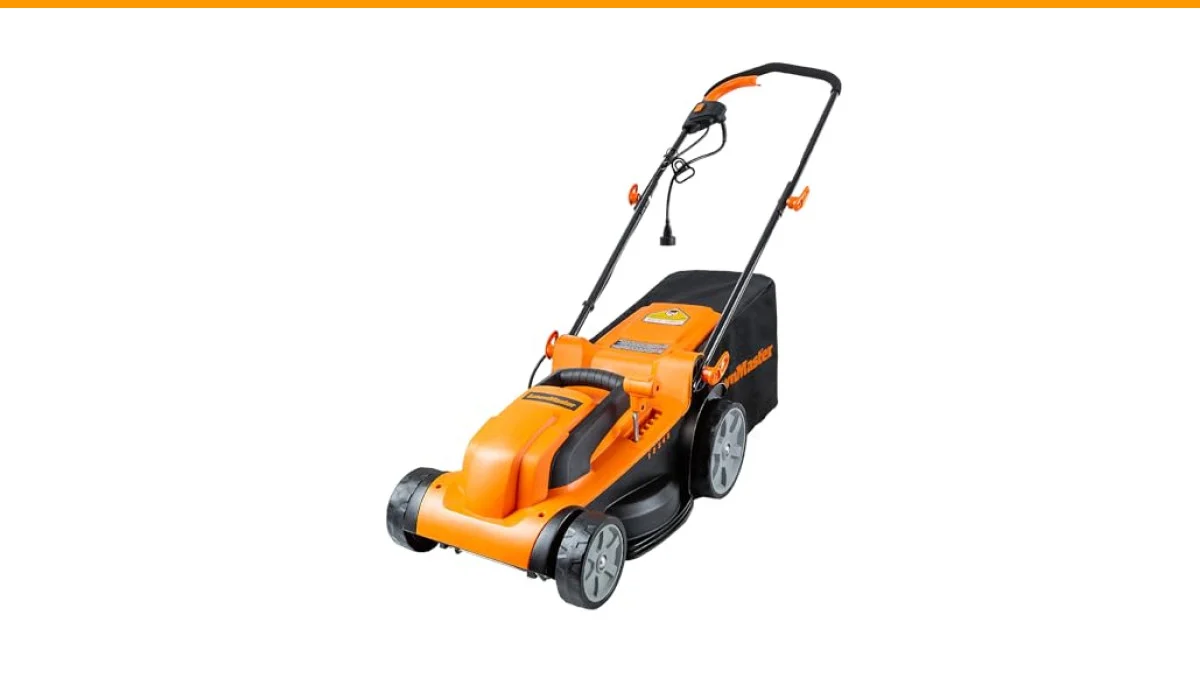
LawnMaster MEB1114K Electric

LawnMaster
LawnMaster MEB1114K Electric Corded Lawn Mower 15-Inch 11AMP
- POWERFUL PERFORMANCE: Tackle your yard with 3,300 RPM of power and a 14-inch cutting width
- ENVIRONMENTALLY FRIENDLY: No gas or batteries needed to power the mower
- CUSTOMIZE YOUR CUT: Effortlessly change the height of your cut with 5 cutting positions varying between 1.4-inches and 3-inches
Yes, this is a corded electric mower, not gas. It made the list because it solves the most common gas mower complaints: no pull-start hassle, no fuel mixing, no engine maintenance. The 11-amp motor spins a 14-inch blade at 3,300 RPM, which is enough for small, flat lawns under 2,000 square feet.
The 7-gallon collection bag is a practical touch—it holds more than you’d expect for a mower this size, so you won’t be emptying it every few minutes. Five height positions range from 1.4 to 3 inches, giving you decent control over cut length. The 7.75-inch rear wheels roll easily over level ground.
Honest trade-off: the cord is a constant annoyance. You’ll be managing it around trees, flower beds, and garden hoses, and it limits your range to about 100 feet from an outlet. The 14-inch deck is narrow, so it takes many passes even on a small lawn. And it’s not self-propelled, so you’re pushing it the whole time.
- 11-amp motor delivers 3,300 RPM
- 14-inch cutting width for small spaces
- 5 height positions from 1.4 to 3 inches
- 7-gallon collection bag
- No gas, no oil, no spark plugs
Best for: Renters or homeowners with very small, flat lawns who want a no-fuss mower and don’t mind managing a power cord.
How We Chose These Products
We started with the core question: what actually matters when you’re buying a gas mower? Engine displacement and deck size top the list, but so do drive type, cutting options, and wheel size. We looked at real-world performance data, customer feedback patterns, and long-term reliability reports from owners who’ve put these machines through multiple seasons.
We also weighed total cost of ownership, not just the sticker price. A cheap mower that needs constant repairs or dies after two seasons costs more per cut than a mid-range model that runs for a decade. We prioritized mowers with overhead valve (OHV) engines because they run cooler, last longer, and are easier to start than older side-valve designs. Self-propelled models got extra credit for hills and large yards, while push mowers were judged on how easy they are to maneuver on flat ground.
Buying Guide: What Really Matters
Engine size is the first thing to get right. For most small to medium flat yards, a 140–160cc engine is plenty. If you have thick, cool-season grass like fescue or Kentucky bluegrass, or you let the lawn get tall between cuts, step up to 170cc or more. Warm-season grasses like Bermuda and Zoysia are denser, so they also benefit from the extra torque of a 201cc engine, especially if you’re bagging.
Deck width determines how many passes you’ll make. An 18-inch mower works for tight spaces but adds time on any yard larger than a postage stamp. A 21-inch deck is the sweet spot for most homes, and a 22-inch deck saves serious time on quarter-acre lots. Steel decks are standard, but alloy steel decks are lighter and resist corrosion better. Avoid stamped aluminum decks—they’re cheap but dent easily.
Wheel size affects maneuverability more than you’d think. Small wheels (7–8 inches) are fine on flat ground but sink into soft soil and struggle over roots. Larger rear wheels (10–11 inches) roll over bumps and provide better traction on slopes. For hilly terrain, rear-wheel drive is non-negotiable; front-wheel drive can lose traction when the bag fills up.
Don’t overlook the cutting options. A 3-in-1 mower lets you mulch, bag, or side discharge, which gives you flexibility through the season. Mulching returns nutrients to the soil but requires a sharp blade and a deck designed for it—not all mowers do it well. Bagging is best for fall cleanup or when you’re trying to control thatch. Side discharge is the fastest for tall grass but leaves windrows you’ll have to rake.
Finally, think about safety. Look for a blade brake clutch (BBC) if you want to stop the blade without killing the engine—useful when you need to clear a stick or move a toy. Overhead valve engines are safer than side-valve designs because they’re less prone to overheating and oil leaks. And always use ethanol-free fuel or a stabilizer to avoid the dreaded stale gas problem.
Our Top Recommendation
For most homeowners, the PowerSmart 21-Inch Self-Propelled is the best overall pick. It balances power, deck size, and self-propelled convenience at a price that undercuts the big-name brands. The 170cc engine starts easily, the alloy steel deck resists rust, and the 3-in-1 cutting system covers every season. It’s not the most powerful mower here, but it’s the most versatile for a typical medium yard with a few slopes.
If your lawn is flat and under 3,000 square feet, the PowerSmart EasyGlide push mower saves you money and does the job well. If you’ve got a large, hilly property, the SENIX 201cc is worth the extra cash for its wider deck and stronger engine. And if you’re not ready to commit to gas, the LawnMaster corded electric is a fine stopgap for a tiny lot. For a deeper look at battery options, see our battery mower guide.
Frequently Asked Questions
1. How do I prevent stale gas problems? Use ethanol-free fuel if you can find it, or add a fuel stabilizer like Sta-Bil to every tank. Run the mower dry for 5 minutes before storing it for more than 30 days. Never leave untreated gas in the tank over winter—it turns to varnish and clogs the carburetor.
2. What’s the real cost difference between gas and electric over 5 years? A gas mower costs roughly $50–100 per year in fuel, oil, and air filters. A corded electric mower costs almost nothing to run but requires a $20–50 cord and has a shorter lifespan. A battery mower costs more upfront but saves on fuel; over 5 years, gas and battery are often comparable, with corded electric the cheapest if you can live with the cord.
3. How often should I sharpen the blade? Every 20–25 hours of cutting, or about twice a season for most homeowners. A dull blade tears grass instead of cutting it, leaving brown tips and making the engine work harder. You can sharpen with a file or grinder, or replace the blade for $15–25.
4. What’s the pre-season tune-up checklist? Change the oil (first change after 5 hours, then annually). Replace the spark plug. Clean or replace the air filter. Sharpen or replace the blade. Check the drive belt and cables for wear. Drain old fuel and refill with fresh. Finally, check the deck for rust and touch up with paint if needed.
5. Can I use a gas mower on a steep slope? Yes, but you need rear-wheel drive and large wheels for traction. Mow across the slope, not up and down, to reduce the risk of tipping. If the slope is steeper than 15 degrees, consider a walk-behind mower with a dedicated hill-climbing system or a mower designed for steep sides.
Our Verdict
Gas mowers still win for raw power and range, but they demand more care than electric models. The PowerSmart 21-Inch self-propelled is the best all-around choice for most yards. The SENIX is the better pick for big, hilly properties, and the EasyGlide is the value king for flat lots. If you’re still comparing, check our Canada-specific gas mower guide for regional fuel and availability tips.