A lawn edge that’s gone fuzzy ruins an otherwise tidy yard. Grass creeps over the sidewalk, the flower bed loses its line, and suddenly the whole property looks neglected. You can fix it with a string trimmer held sideways, but you’ll burn through line and still get a wavy border.
A dedicated edger cuts a clean trench instead. Manual models cost little and never need fuel. Electric models cut faster and hold a straighter line. The right pick depends on your yard size, your soil, and how often you want to do this job.
Below are five edgers that cover the full range: three manual tools and one corded electric trencher, plus a heavy-duty manual option for tough soil. Each pick includes the real trade-offs, plus a technique and maintenance section so you know what you’re getting into.
Here’s a quick spec comparison to see how these five stack up before you read the full reviews.
| Features | CKLT Edger 41in | Colwelt Saw-Tooth | Garden Weasel Chopper | WORX WG896 | Root Slayer 22611 |
|---|---|---|---|---|---|
| Power Type | Manual, step-press | Manual, step-press | Manual, step-press | Corded electric | Manual, step-press |
| Blade Style | Serrated spring steel | Saw-tooth steel | Tempered carbon steel | 7.5-inch rotary blade | Serrated half-moon, V-tip |
| Handle / Shaft | 41-inch long handle | 38-inch T-grip | 38-inch ergonomic T-handle | Adjustable shaft, D-grip | Fiberglass shaft |
| Depth Control | Fixed blade depth | Fixed blade depth | Fixed blade depth | 3 settings: 1 to 1.5 inches | Fixed blade depth |
| Best Use Case | Curves and trenching | Sidewalks and driveways | Heavy-duty bed prep | Long straight runs | Tough soil and roots |
CKLT Edger Lawn Tool 41in

CKLT
CKLT Edger Lawn Tool 41in Border Edger with Tempered Spring Steel Blade | Long Rubber Handle Wide Footplate Rustproof Manganese Steel Half Moon Edger for Garden Maintenance
- Tempered Spring Steel Blade for Precise Edging: The CKLT Edger Lawn Tool features a high-quality serrated spring steel blade, sett…
- Wide Footplate for Effortless Leverage: The garden edger features an 8-inch wide footplate that provides extra leverage, making it…
- Serrated Blade for Efficient Cutting: Featuring a high-quality serrated spring steel blade, this edging shovel offers superior cut…
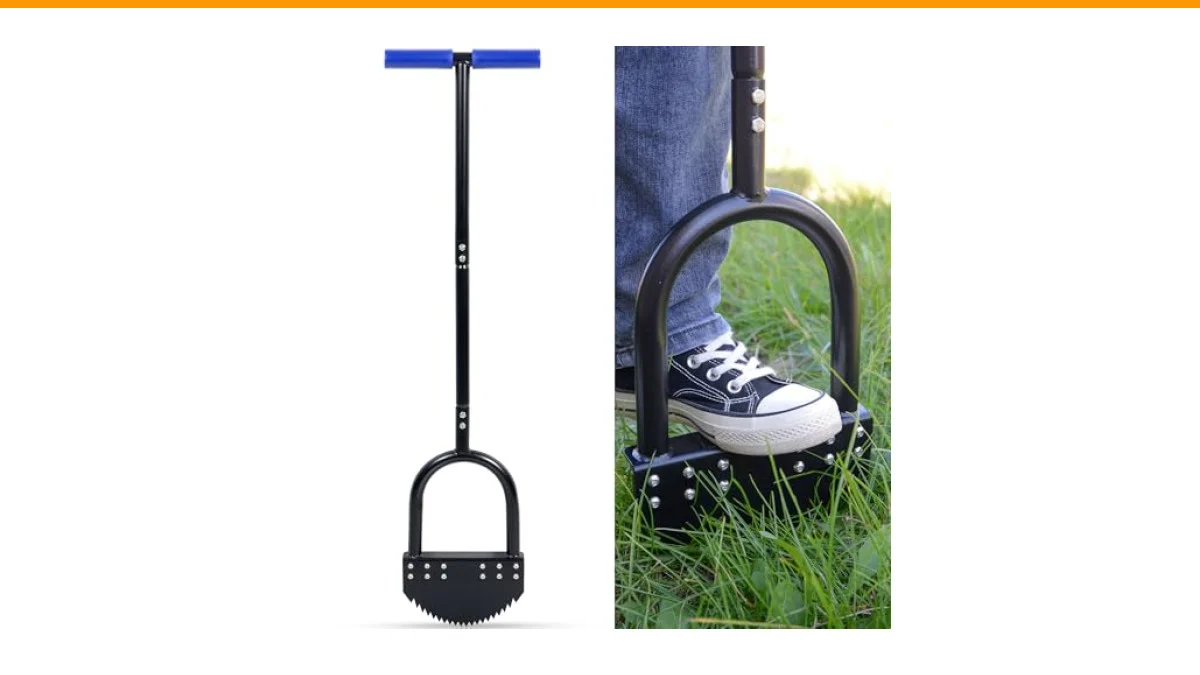
CKLT’s 41-inch edger is a manual step tool built around a serrated spring steel blade. It suits homeowners who want crisp borders along curved beds, not just straight sidewalk runs. The long handle means you edge standing up, which matters if you have a lot of border to cover.
Spring steel is the standout here. It flexes under load instead of chipping, so the serrated teeth stay sharp through rocky or compacted soil. The 8-inch footplate is wider than most competitors, which gives you a stable platform to push down on regardless of shoe size. That width also helps when you’re cutting a shallow trench for irrigation line or low-voltage lighting cable.
The trade-off is depth control. There’s no adjustment, so you get whatever depth the blade reaches with a full step. In soft loam that’s fine. In hard clay you may need two or three passes to hit the depth you want. It’s also heavier than a basic half-moon edger, so long sessions will tire your legs.
- Serrated spring steel blade resists chipping and stays sharp
- 8-inch footplate works with any shoe size
- 41-inch handle keeps you upright while edging
- Rust-resistant coating for easy cleanup
- Quiet operation with no fuel or cord
Best for: Homeowners with curved beds and mixed soil who want a durable manual edger they can use standing up.
Colwelt Saw-Tooth Edger L…

Colwelt
Colwelt Saw-Tooth Edger Lawn Tool, Half Moon Lawn Edger with T-Grip, Sidewalk Grass Long Handled Step Edger, 38-Inch
- IDEAL FOR EDGING WALKWAY AND GARDEN -- easy to use and make your yard lines Neat, Trim, and Tidy. Create deep, clean borders along…
- ARCHED BLADE WITH SAW TOOTH -- steel blade with saw-tooth slices through dense turf easily & cleanly. Powder coated durable steel…
- LARGE FOOT PLATFORM -- step edger with an extra-wide Foot Platform makes it easy to maximize force with your body weight, brings o…
Colwelt’s saw-tooth edger is a 38-inch manual tool with a powder-coated steel blade and a T-grip handle. It’s aimed at the classic job: keeping a clean line where grass meets sidewalk, driveway, or patio. The saw-tooth edge does the heavy lifting on dense turf.
The blade slices rather than chops, which means less bouncing when you hit thick Bermuda or fescue. The extra-wide foot platform lets you put your full body weight behind each step, and the powder coating holds up against rust better than bare steel. The T-handle has a soft cushion, so your grip doesn’t slip when your hands are sweaty.
Assembly is straightforward but the tool ships in pieces, so budget ten minutes before your first use. The blade is fixed-depth, same as the CKLT. And the saw-tooth profile leaves a slightly rougher cut than a smooth half-moon blade, which matters if you want a polished finish on ornamental beds.
- 38-inch shaft keeps you off your knees
- Saw-tooth steel blade cuts dense turf cleanly
- Extra-wide foot platform for full body weight
- Powder-coated finish resists rust
- Cushioned T-grip for better control
Best for: Anyone edging long sidewalk or driveway runs who wants a manual tool that powers through thick grass.
Garden Weasel Edger Chopp…
GARDEN WEASEL
Garden Weasel Edger Chopper Lawn Tool for Garden Beds Sidewalks Patios | Steel half-moon blade sod cutter with T-grip handle. Creates clean edges for garden beds, driveways, sidewalks & yards
- Crisp, Clean Edges - Create sharp defined borders along flower beds, driveways, and walkways using this manual lawn edger tool for…
- Heavy-Duty Blade - Tempered 8-inch carbon steel blade slices through sod, compacted soil, and small roots making this garden edger…
- Easy Assembly - Ships in multiple pieces for compact delivery and assembles quickly so you can skip the struggle and start using y…
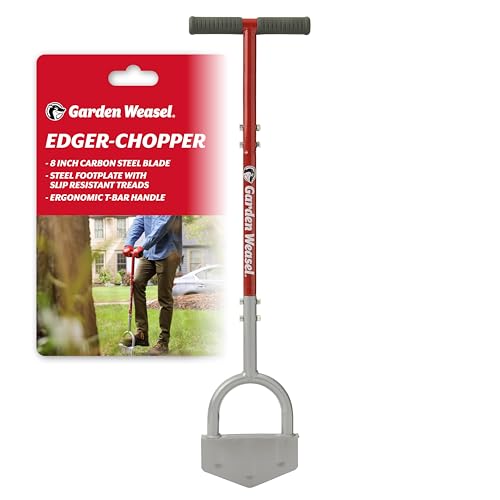
The Garden Weasel Edger Chopper is a 38-inch manual edger with a tempered 8-inch carbon steel blade and an ergonomic T-handle. It’s built for heavier garden prep: defining beds, cutting sod, and slicing through small roots that stop lighter tools.
Carbon steel holds an edge well, and the 8-inch blade gives you more cutting surface per step than most half-moon edgers. The footplate is slip-resistant and extra-wide, which adds stability when you’re pressing down on uneven ground. The frame is rust-resistant carbon steel, so it survives being left outside between uses.
It ships in multiple pieces and needs assembly, which is a small annoyance. The blade is aggressive, so on thin turf it can cut deeper than you intended. And like the other manual picks here, there’s no depth adjustment. You control depth with how hard you step.
- Tempered 8-inch carbon steel blade cuts sod and small roots
- Slip-resistant extra-wide footplate for leverage
- Rust-resistant carbon steel frame
- Ergonomic T-handle reduces strain
- Assembles in minutes from compact shipping pieces
Best for: Gardeners prepping new beds or cutting through compacted soil and roots, not just maintaining existing edges.
WORX Electric Lawn Edger,…
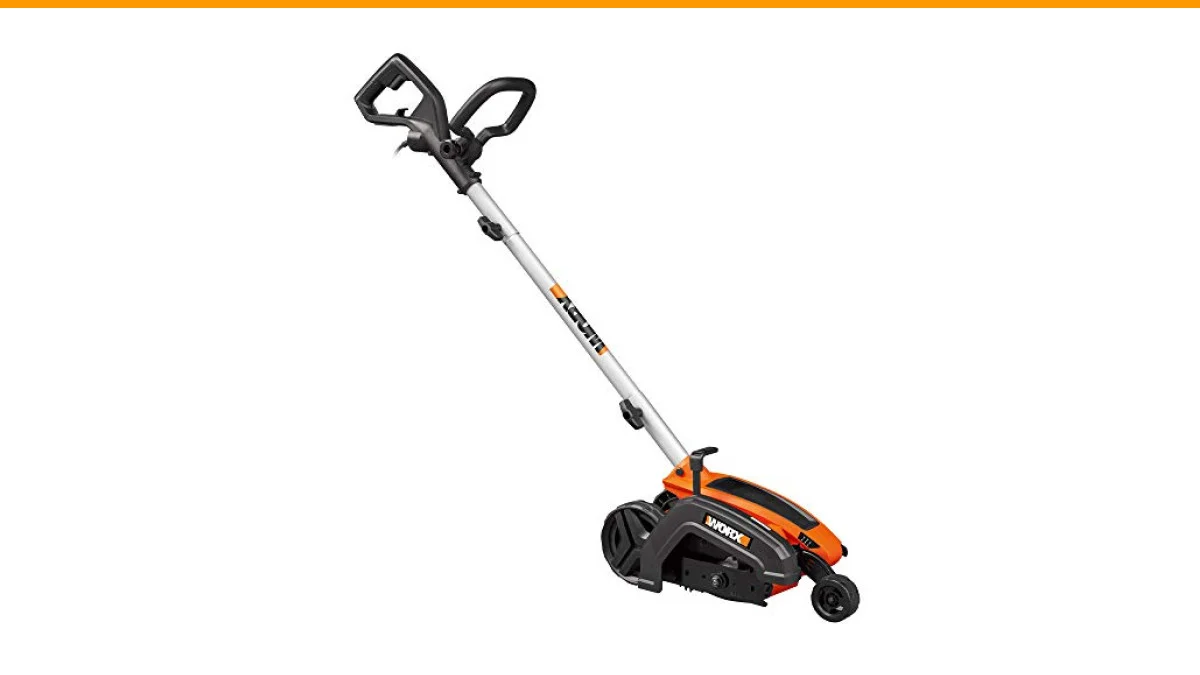
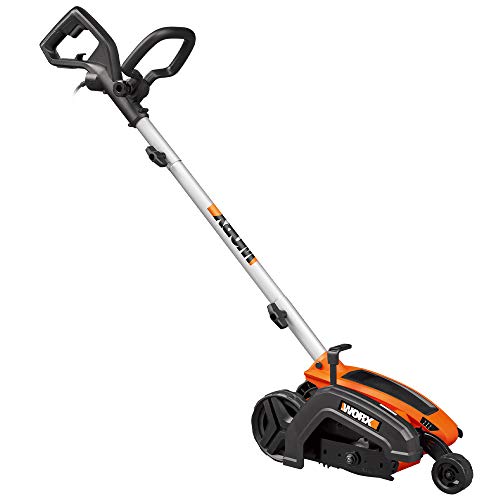
The WORX WG896 is the only powered pick in this roundup. It’s a 12-amp corded electric edger with a 7.5-inch blade that spins at 4,700 RPM. It’s the right call if you have long, straight runs and want them done in one pass without stepping on a blade.
Three depth settings (1 inch, 1-1/4 inch, and 1-1/2 inch) let you match the cut to the job. Shallow for maintenance, deeper for a fresh trench. The cutting line indicator is genuinely useful. It shows you where the blade will bite, so you can follow a sidewalk edge without drifting. The adjustable shaft and D-grip handle fit a wide range of heights.
Two real limitations. First, it’s corded. You’ll need an extension cord rated for outdoor use, and you’ll manage that cord the whole time. Second, it’s not the tool for tight curves. The rotary blade wants straight lines. For curved beds, a manual half-moon edger still wins.
- 12-amp motor spins the blade at 4,700 RPM
- Three depth settings from 1 to 1.5 inches
- Cutting line indicator keeps you on track
- Adjustable shaft fits different heights
- No fuel, no oil, no exhaust
Best for: Homeowners with long, straight driveway or sidewalk edges who want powered speed without gas maintenance.
Root Slayer 22611 Serrate…

Root Slayer
Root Slayer 22611 Serrated Garden Edger, Red
- Manual Lawn Edger for Clean Garden Borders: A quiet and environmentally friendly alternative to gas-powered edging tools. Ideal fo…
- Half-Moon Blade with Inverted V Cutting Tip: Designed with a sharpened V-shaped point and aggressive serrated teeth that help cut…
- Durable Carbon Steel Blade Construction: Built with a powder-coated carbon steel blade designed for long-lasting strength and corr…
Root Slayer’s 22611 is a manual edger with a half-moon blade and an inverted V cutting tip. It’s designed for the hardest job in edging: cutting through compact soil, tough turf, and shallow roots without stopping every few feet.
The V-shaped point concentrates force at the tip, so the blade bites into hard ground instead of glancing off. Serrated teeth along the edge saw through roots that would stall a smooth blade. The shaft is resin-encased steel with a non-latex grip, which gives you control when you’re pushing hard into clay or rocky soil.
The aggressive blade is the point, but it’s also the caveat. On soft, sandy soil it can dig deeper than you want, and the serrated edge leaves a rougher finish than a smooth blade. If you want a polished ornamental edge, this isn’t the tool. If you want to get through tough ground, it is.
- Half-moon blade with inverted V cutting tip
- Serrated teeth cut through shallow roots
- Powder-coated carbon steel resists corrosion
- Resin-encased steel shaft with non-latex grip
- Quiet, fuel-free operation
Best for: Gardeners with clay, rocky, or root-heavy soil who need a manual edger that can take punishment.
How We Chose These Products
We started with the jobs people actually need an edger for: maintaining a sidewalk line, cutting a fresh bed border, trenching for irrigation, and dealing with tough soil. Each pick had to solve at least one of those jobs well, not just look good on a spec sheet.
We weighed blade material and geometry, handle length and grip, footplate width, depth control, and power source. We also factored in cost of ownership. A manual edger needs almost nothing beyond occasional sharpening. A corded electric edger needs an outdoor extension cord. A gas edger needs fuel, oil, and seasonal maintenance, which is why none made this list.
Buying Guide: What Really Matters
Power type is the first decision. Manual edgers cost the least and never need fuel or a cord, but they take more physical effort. Corded electric edgers cut faster and hold a straighter line, but you’re tethered to an outlet. Cordless edgers free you from the cord, but battery runtime and platform lock-in matter. If you already own a battery platform, a bare tool in that system saves money long-term.
Blade depth and trenching matter more than most buyers realize. Fixed-depth manual edgers are fine for maintenance, but if you need to bury irrigation line or low-voltage cable, look for a model with adjustable depth or a blade that digs a consistent trench. The WORX WG896’s three depth settings give you that flexibility.
Match the tool to your soil and grass. Bermuda and fescue have dense root systems that dull smooth blades fast, so serrated or saw-tooth edges hold up better. Clay and rocky soil reward a V-tip or half-moon blade that concentrates force. Sandy soil is easier on blades but harder to control depth. For a deeper look at how different models perform across these conditions, Bob Vila’s tested lawn edger reviews are worth a read.
How to Edge a Lawn Correctly
Start by marking the line. A string pulled tight between two stakes gives you a straight reference. For curves, lay a garden hose along the shape you want and edge against it.
For manual edgers, place the blade on the line, step down firmly with your full weight, then rock the handle back to lever out the cut sod. Move forward in overlapping steps. Don’t try to cut the full depth in one pass on hard soil. Two shallower passes beat one forced one.
For the WORX electric edger, set your depth, align the cutting line indicator with the edge, and walk at a steady pace. Let the blade do the work. Pushing harder doesn’t cut deeper, it just wears the blade. Edge in spring and again in late summer for most lawns. In warm-season grass like Bermuda, you may need a third pass in midsummer.
Maintenance and Safety
Manual edgers need little upkeep. Rinse the blade after use, dry it, and wipe on a light coat of oil to slow rust. Sharpen the blade once or twice a season with a flat file. A dull blade bounces off turf instead of cutting it, which is harder on your body than a sharp one.
Electric edgers need the blade checked for nicks and replaced when it stops cutting cleanly. Store the tool indoors, and coil the cord loosely rather than wrapping it tight around the handle. Before winter, clean the blade, oil it, and store the tool somewhere dry.
Safety basics apply to every pick. Wear eye protection and closed-toe shoes. Keep the cord behind you when using a corded edger, not looped around your feet. Manual edgers can kick back if the blade hits a rock, so keep both hands on the handle and your body weight centered. If you have back or knee issues, the long-handle manual models and the adjustable-shaft electric model are easier on your body than a short-handled half-moon tool.
Frequently Asked Questions
How often should I edge my lawn?
Twice a year is the minimum for most lawns: once in spring and once in late summer. Warm-season grasses like Bermuda grow faster and may need edging every four to six weeks during peak season. Cool-season grasses like fescue hold their line longer.
Can a manual edger handle clay soil?
Yes, if the blade is designed for it. The Root Slayer 22611’s V-tip and serrated teeth are built for compact soil. The CKLT and Garden Weasel models also hold up, but you’ll likely need two or three passes instead of one. Water the ground the day before you edge to soften it.
Is a corded electric edger worth it over cordless?
Corded models run indefinitely and cost less upfront. Cordless models trade runtime for freedom from the cord. If your edging runs are under 100 feet and you have an outdoor outlet, corded is the better value. For larger properties or no nearby outlet, cordless makes more sense.
What’s the difference between a trencher and an edger?
An edger cuts a clean vertical line at the lawn’s border. A trencher cuts a deeper channel, usually for burying irrigation line, drainage pipe, or low-voltage lighting cable. Some tools, like the WORX WG896, do both with adjustable depth settings.
Our Top Recommendation
The CKLT Edger Lawn Tool 41in takes the top spot for most homeowners. The spring steel blade holds up in mixed soil, the wide footplate works with any shoe size, and the 41-inch handle keeps you upright. It handles curves and straight runs, and it can cut a shallow trench when you need one.
If your priority is speed on long, straight edges, the WORX WG896 is the better pick. It’s corded, so you’ll manage an extension cord, but it cuts faster and holds a straighter line than any manual tool here. For tough clay or root-heavy soil, the Root Slayer 22611 is the most capable manual option. And if you want the lowest-cost entry point, the Colwelt Saw-Tooth Edger covers the basics well.