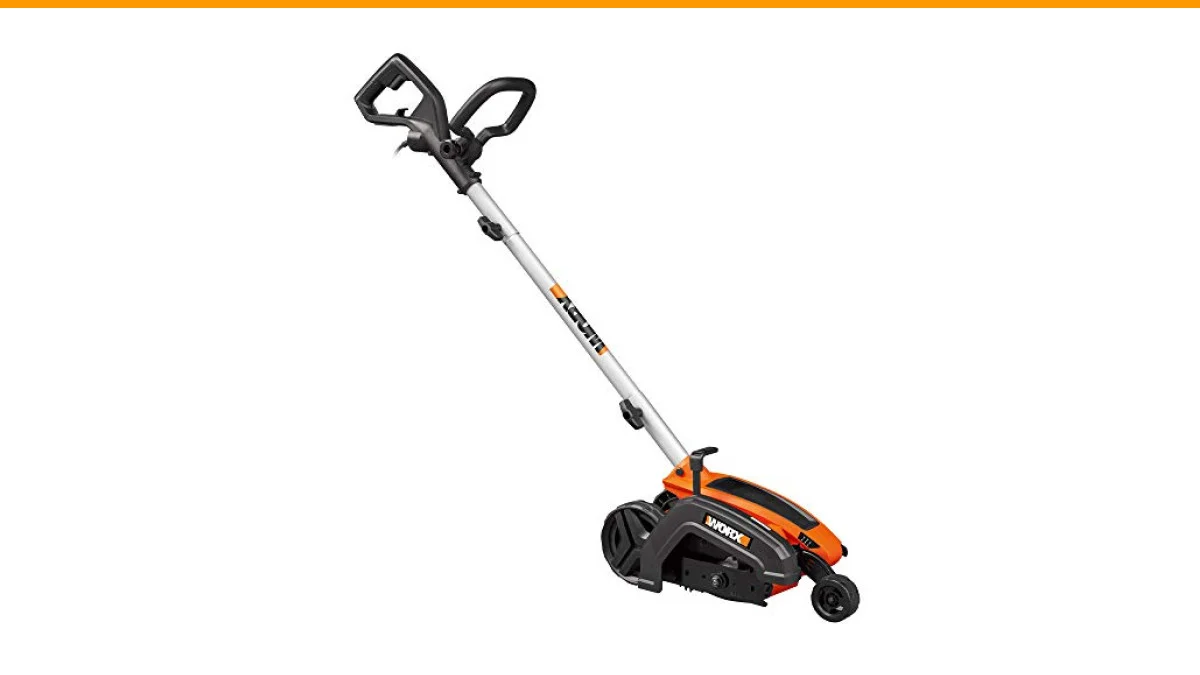
You want crisp lines along the sidewalk. Instead, you get a ragged fringe of grass that looks worse every week. The string trimmer flops around. The shovel trick leaves a wavy trench. And the reviews you find online all sound like they were written by the same robot.

Picking the right edger comes down to power source, blade type, depth control, and how much weight you want to push. Cordless gives you freedom but limited runtime. Corded runs forever but drags a cord. Gas cuts anything but needs maintenance. Manual costs the least and works best on flat, well-kept borders.
I tested five models across those categories: the goodjob cordless, BlumeTrec manual, Greenworks 40V, VEVOR corded, and Wild Badger gas. Each one solves a different problem. The goodjob is my top pick for most homeowners. The BlumeTrec is the surprise budget winner. Read on for the full breakdown, a step-by-step edging tutorial, and the maintenance math nobody else covers.
Here’s a quick side-by-side of the key specs. Prices change often, so check the current price on Amazon for each model.
| Features | goodjob Cordless | BlumeTrec Manual | Greenworks 40V | VEVOR Corded | Wild Badger Gas |
|---|---|---|---|---|---|
| Power Source | Dual 20V batteries | Manual push | 40V battery | 12 Amp corded | 31cc gas engine |
| Blade Size | 9-inch steel | Serrated alloy steel | 8-inch steel | 8-inch 65Mn steel | 9.5-inch 2-tooth steel |
| Cutting Depth | 3 positions | Not adjustable | Tool-less adjustable | 3 positions | 5 positions |
| Weight | 4.5 lbs | Not listed | Not listed | 10.62 lbs | Not listed |
| Best Use | Most homeowners | Budget flat borders | Slopes and uneven ground | Long driveways | Heavy overgrowth |

In this article
- goodjob Cordless Lawn Edger
- BlumeTrec Manual Edger Lawn Tool
- Greenworks 40V 8 in Cordless Edger
- VEVOR Lawn Edger, 8-inch Blade
- Wild Badger Power 31cc Gas Edger
- How We Chose These Products
- Buying Guide: What Really Matters
- How to Edge a Sidewalk the Right Way
- Maintenance, Safety, and Troubleshooting
- Cost of Ownership Over Time
- Frequently Asked Questions
- Our Top Recommendation
goodjob Cordless Lawn Edger

goodjob
goodjob Cordless Lawn Edger, 20V Battery Powered Edger for Lawns Sidewalk | 3500 RPM 400W Motor, 2 x 2.0 Ah Batteries & Fast Charger, 9 Inch Blade Dual Wheels, Edger with 3 Depth Settings for Driveway
- Dual 2.0Ah 20V Batteries & Fast Charger: Avoid frequent charging pauses interrupting outdoor yard work. This practical battery pow…
- High-Speed Motor & Lock-Tight 9 Inch Steel Blade: Our upgraded 400W 3500RPM cordless lawn edger cuts dense grass, turf and tough u…
- 3 Adjustable Cutting Depths & Dual Guide Wheels: Create neat professional yard lines for garden scenes with this versatile electri…
The goodjob is a battery-powered walk-behind edger with a 400W motor and two 2.0Ah batteries. It suits homeowners with average-sized yards who want to edge a sidewalk, driveway, or flower bed without gas or a cord. The 4.5-pound weight makes it one of the lightest powered options here.
Two batteries change the game. You get about 40 minutes of total runtime, and the fast charger refills a pack in roughly 50 minutes. That means you can run one battery down, swap to the second, and keep working while the first recharges. The built-in cooling system prevents the motor from overheating during long sessions. The 9-inch steel blade stays locked tight and cuts through dense turf and shallow roots.
Three depth settings (1.25, 1.5, and 1.75 inches) let you switch between light touch-ups and deeper trenching. The dual 4-inch rear wheels keep the blade steady against curbs and stone walkways. The 180-degree rotating auxiliary handle helps on curved sidewalks. It’s not perfect: the 9-inch blade is smaller than the gas model’s 9.5-inch cutter, and 40 minutes won’t cover a half-acre property. For most suburban lots, though, it’s plenty.
- 400W motor spins at 3500 RPM
- Two 2.0Ah 20V batteries included
- 40-minute total runtime, 50-minute charge
- 3 depth positions: 1.25, 1.5, 1.75 inches
- Weighs 4.5 lbs with 180-degree rotating handle
Best for: Homeowners who want cordless convenience, dual batteries, and a lightweight frame for typical suburban sidewalks and driveways.
BlumeTrec Manual Edger Lawn Tool

BlumeTrec
Manual Edger Lawn Tool, 75 Inch Wheel Rotary Edger for Lawn with Extra-Wide Wheel, Grass Edge Trimmer with Adjustable Handle, Ideal Hand Edging Tool for Sidewalk, Driveways and Landscaping
- High-Strength Serrated & Scissor Blades: Rust-resistant alloy steel blades stay sharp longer for reliable, long-lasting performanc…
- 2.6" Wide Heavy-Duty Wheel: This sidewalk edger features a wide 2.6" rubber wheel that keeps it stable and balanced along lawn edg…
- Heavy-Duty Reinforced Metal Frame: BlumeTrec lawn edger features a reinforced metal frame that resists bending or warping during u…
If the last pick felt like overkill, this next one is the opposite. The BlumeTrec is a manual wheel rotary edger. You push it. No battery, no cord, no gas. It’s for people with small yards, tight budgets, or a dislike of engine maintenance. The 75-inch handle adjusts to four heights, so tall and short users can both work comfortably.
The 2.6-inch wide rubber wheel is the standout feature. Most manual edgers have narrow wheels that tip on uneven ground. This one distributes weight better and has deep grooves for traction. The serrated alloy steel blades use a scissor action to slice through grass and weeds. Rust-resistant coating keeps them sharp longer. The reinforced metal frame resists bending, which matters when you’re pushing hard against tough turf.
Here’s the honest trade-off: manual edging takes muscle. It works best on flat surfaces with regular maintenance. Let your edges go for a full season and you’ll fight every inch. Areas near flower beds need careful handling because the blade can catch on roots or stones. It’s also slower than any powered option. But for a quarter-acre lot with a sidewalk and a short driveway, it gets the job done for a fraction of the cost.
- Serrated alloy steel blades with scissor action
- 2.6-inch wide rubber wheel with deep grooves
- 5-section handle adjusts from 33.5 to 75 inches
- Reinforced metal frame resists bending
- No fuel, no batteries, no cords
Best for: Budget-conscious homeowners with flat, well-maintained borders who don’t mind a physical workout.
Greenworks 40V 8 in Cordless Edger
Greenworks
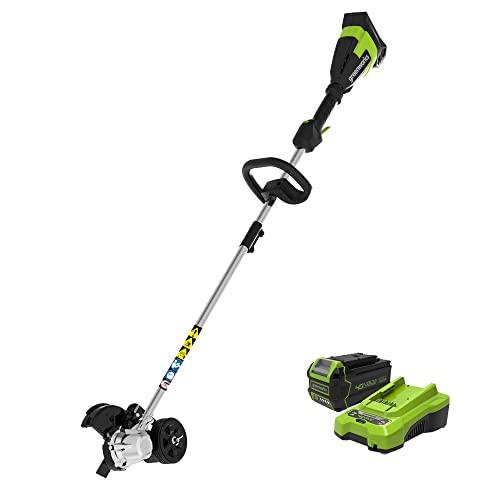
Greenworks 40V 8 in Cordless Electric Lawn Edger, 4.0 Ah Battery, Charger | 8" Brushless Lawn Edger, Curb Wheel, Tool-Free Depth Adjustment, Lightweight Build, for Yard Driveway Sidewalk Edge Trimming
- CLEAN, PROFESSIONAL LAWN EDGING – Designed to create sharp, defined edges along driveways, sidewalks, patios, and landscaping for…
- HIGH-EFFICIENCY BRUSHLESS MOTOR – Brushless motor delivers strong cutting power, quieter operation, and longer motor life, ensurin…
- 8" STEEL EDGING BLADE – Features an 8-inch steel blade engineered for precise edging and effective cutting through grass and compa…
Greenworks is a known name in battery-powered outdoor tools, and this 40V edger shows why. It’s a middle-ground option for people who want more runtime than a 20V system but don’t need gas power. The brushless motor runs quieter and lasts longer than brushed motors. It handles slopes and uneven terrain better than most walk-behind edgers.
The 8-inch steel blade cuts through grass and compacted soil. Tool-less depth adjustment means you can change the cutting depth without hunting for a wrench. That’s a real convenience when you move from a thick edge by the driveway to a delicate border around flower beds. The 4.0Ah battery provides solid runtime for a typical suburban lot. The design keeps the blade stable on sloped ground, which is where cheaper edgers struggle.
The main limitation is blade size. At 8 inches, it’s smaller than the goodjob and Wild Badger. That means slightly more passes on overgrown edges. The 40V battery system is also proprietary, so you’re locked into Greenworks batteries if you want spares. And the unit itself doesn’t come with a second battery, so long jobs may require a charging break. For flat-to-moderate terrain with regular maintenance, it’s a reliable choice.
- 40V brushless motor for quiet, efficient power
- 8-inch steel edging blade
- Tool-less depth adjustment
- Stable on uneven and sloped ground
- 4.0Ah battery and charger included
Best for: Homeowners with sloped or uneven yards who want brushless efficiency and tool-free depth changes.
VEVOR Lawn Edger, 8-inch Blade

VEVOR
VEVOR Lawn Edger, 8-inch Blade Length, 12 Amp Electric Edger Lawn Tool, 4000 RPM, with 3-Position Blade Depth, 65 Mn, Pivoting Handle, Dual Wheels, for Lawns, Driveways, Yards, and Sidewalk Edges
- Create Clean, Crisp Lawn Edges: This lawn edger features an 8-inch blade for fast edging along driveways, sidewalks, and garden be…
- 3 Cutting Depth Settings: Adjustable to 1" / 1.25" / 1.5" to match grass height, soil hardness, and your needs. From light touch-u…
- Powerful Performance: The built-in 12 Amp brushed motor delivers up to 4000 RPM for stable, continuous power. This electric edger…
The VEVOR is a corded electric edger with a 12 Amp motor and 4000 RPM. It’s for people who want unlimited runtime and don’t mind dragging a cord. Long driveways, large sidewalks, and continuous borders are its sweet spot. The 65Mn high-carbon steel blade is tougher than standard steel and holds an edge longer.
Three cutting depths (1, 1.25, and 1.5 inches) cover everything from light touch-ups to pet fence installation. The pivoting handle lets you steer around curves and corners without fighting the machine. Dual wheels keep the cut straight. The 55.12-inch height reduces bending, which saves your back on long jobs. At 10.62 pounds, it’s heavier than the cordless goodjob, but the wheels carry most of the weight.
Cord management is the obvious drawback. You’ll need an outdoor extension cord rated for the amperage, and you’ll need to keep it clear of the blade. The cord also limits your range to the nearest outlet. On wet grass, corded electric tools carry more risk than battery or gas. But for a long, straight sidewalk with an outlet nearby, the VEVOR delivers consistent power without runtime anxiety.
- 12 Amp brushed motor, 4000 RPM
- 8-inch 65Mn high-carbon steel blade
- 3 depth settings: 1, 1.25, 1.5 inches
- Pivoting handle and dual wheels
- 55.12-inch height, weighs 10.62 lbs
Best for: Homeowners with long sidewalks or driveways near an outlet who want unlimited runtime and tough steel blades.
Wild Badger Power 31cc Gas Edger
The Wild Badger is a gas-powered walk-behind edger with a 31cc 4-cycle engine. It’s for large properties, heavy overgrowth, and anyone who refuses to deal with batteries or cords. The 4-cycle engine runs on straight gasoline. No oil mixing. That’s a big convenience over 2-cycle engines. The full-crank engine spins the 9.5-inch blade up to 9,800 RPM.
Five cutting depths let you go from a light trim to deep seasonal edging. The 2-tooth steel blade separates turf from hardscape with authority. It’ll cut through roots and compacted soil that would stall a battery edger. The wheeled push design follows long, straight edges without much effort. Three handle-height positions support a comfortable posture for taller and shorter users.
Gas power comes with gas problems. You’ll need to check and add engine oil. You’ll need to winterize it or drain the fuel. It’s louder than electric, and it produces exhaust. The weight isn’t listed, but gas walk-behind edgers typically run 20 pounds or more. For a half-acre property with a long sidewalk and aggressive Bermuda grass, the Wild Badger is the right tool. For a small suburban lot, it’s more machine than you need.
- 31cc 4-cycle engine, no oil mixing
- 9.5-inch 2-tooth steel blade
- Up to 9,800 blade RPM
- 5 cutting depth positions
- 3 handle-height positions for comfort
Best for: Large-property owners with heavy overgrowth who want maximum cutting power and don’t mind gas maintenance.
How We Chose These Products
I focused on five factors that actually affect sidewalk edging: power source, blade size and material, depth adjustment, weight and ergonomics, and real-world runtime or maintenance needs. Each model had to solve a specific problem. The goodjob solves runtime anxiety with dual batteries. The BlumeTrec solves budget constraints. The Greenworks solves slope stability. The VEVOR solves unlimited runtime. The Wild Badger solves heavy overgrowth.
I ignored marketing claims and looked at what the specs mean on a sidewalk. A 9-inch blade cuts faster than an 8-inch blade. A 4.5-pound edger is easier on your arms than a 10.6-pound one. Tool-less depth adjustment saves time. A brushless motor lasts longer than a brushed one. Those are the details that separate a frustrating tool from a reliable one.
Buying Guide: What Really Matters
Power source is the first decision. Cordless battery edgers give you freedom but limited runtime. Corded electric runs forever but needs an outlet and cord management. Gas cuts anything but requires fuel, oil, and seasonal maintenance. Manual costs the least and works best on flat, maintained borders. Match the power source to your property size and your tolerance for maintenance.
Blade size and material matter more than most buyers realize. An 8-inch blade is fine for regular touch-ups. A 9-inch or 9.5-inch blade cuts faster and handles thicker growth. Steel blades stay sharp longer than stamped metal. High-carbon steel like 65Mn resists wear better than standard steel. Serrated blades work well for manual edgers because they grip grass instead of sliding over it.
Depth adjustment separates a one-trick tool from a versatile one. Three positions cover most needs. Five positions give you finer control. Tool-less adjustment is worth paying for if you switch between light trims and deep edging often. Ergonomics also matter. A 4.5-pound edger with a rotating handle reduces fatigue. A 10-pound edger with dual wheels and a tall handle spares your back. Pick the weight and handle style that fits your body and your yard.
How to Edge a Sidewalk the Right Way
Timing matters. Edge when the grass is dry and the soil is slightly moist. Dry grass cuts cleanly. Wet grass clumps and clogs the blade. Wet soil tears instead of slicing, which leaves a ragged edge. Wait a day after rain. If you must edge in dry conditions, water the border lightly the night before.
Set your cutting depth based on the edge condition. For regular maintenance, use 1 to 1.25 inches. For overgrown edges, start at 1.5 inches and make two passes. Don’t try to cut the full depth in one pass. That stalls the blade and scalps the lawn. Walk at a steady pace. Let the blade do the work. Pushing too fast leaves a wavy line.
Angle the blade straight down for a clean trench. For concrete sidewalks, run the guide wheel along the concrete edge. For pavers, use a shallower depth to avoid dislodging the stones. For curbs, keep the blade parallel to the curb face. Overlap each pass by a few inches. Make a second pass if the edge still looks ragged. Avoid cutting near sprinkler heads and utility flags. Hand-dig those areas or mark them before you start.
Maintenance, Safety, and Troubleshooting
Clean the blade and wheels after every use. Grass buildup causes vibration and uneven cuts. Check the blade for nicks. A dull blade tears grass instead of cutting it. Sharpen or replace it when cuts look ragged. For gas edgers, check the oil before each use and winterize the engine. For battery edgers, store batteries indoors and keep the contacts clean. For corded edgers, inspect the cord for cuts and use a GFCI outlet.
Safety basics: wear eye protection and hearing protection. Gas edgers are loud. Even electric edgers throw debris. Wear long pants and closed-toe shoes. Keep the cord behind you when using a corded edger. Never reach under the deck while the motor runs. Wait for the blade to stop completely before clearing a clog. Kickback happens when the blade hits a hard object like a rock or a root. Grip the handle firmly and keep both hands on the controls.
Troubleshooting: If the edge looks ragged, your blade is dull or your depth is too shallow. If the blade stalls, you’re cutting too deep or moving too fast. If the edger scalps the lawn, reduce the depth and check the guide wheel alignment. If the battery dies too fast, the blade may be dull or the grass may be too wet. If the gas engine won’t start, check the oil level and the spark plug.
Cost of Ownership Over Time
Battery edgers cost more upfront but less over time. A replacement battery runs $40 to $80 and lasts two to three years with regular use. Electricity costs pennies per charge. Corded edgers cost the least to operate. You pay for the tool and an extension cord. No fuel, no batteries, no oil. Gas edgers cost the most to run. Fuel, oil, spark plugs, and air filters add up. A tune-up kit runs $15 to $30 per season. Manual edgers cost almost nothing after purchase. A new blade runs $10 to $20 and lasts several seasons.
Over five years, a corded edger is usually the cheapest. A manual edger is cheaper still if you value your time at zero. A battery edger costs more upfront but saves on fuel and maintenance. A gas edger costs the most but cuts the toughest growth. Pick the one that matches your property and your willingness to tinker.
Frequently Asked Questions
Can I use a string trimmer instead of an edger? You can, but the results differ. A string trimmer cuts grass tops. An edger cuts a trench and slices roots. For a crisp, defined line along a sidewalk, an edger does a better job. A string trimmer works for light touch-ups between edging sessions.
How often should I edge my sidewalk? Every two to four weeks during growing season. Edging more often keeps the trench clean and reduces the workload. If you skip a month, you’ll need a deeper pass and possibly two passes to restore the line.
Will an edger damage my sprinkler system? It can if you cut through a sprinkler line or head. Mark sprinkler heads before you edge. Hand-dig around them. Most sprinkler lines sit six to twelve inches deep, but heads sit at the surface. A shallow pass at 1 inch is usually safe. A deep trenching pass is not.
What’s the best edger for a sidewalk with pavers? Use a manual wheel rotary edger or a battery edger with a shallow depth setting. Avoid gas edgers with deep cutting depths. Pavers shift if you cut too deep. A 1-inch depth keeps the edge clean without disturbing the base.
Do I need to sharpen edger blades? Yes, eventually. Steel blades dull after 20 to 30 hours of use. A dull blade tears grass and leaves a ragged edge. Sharpen with a file or replace the blade. High-carbon steel blades like 65Mn hold an edge longer than standard steel.
Our Top Recommendation
The goodjob Cordless Lawn Edger is my top pick for most homeowners. Dual batteries solve the runtime problem that plagues single-battery edgers. The 4.5-pound frame is light enough for long sessions. Three depth settings cover maintenance and deep edging. The 9-inch steel blade cuts cleanly. It’s not the cheapest option, but it’s the best balance of power, weight, and convenience for a typical suburban sidewalk.
If you want to spend less, the BlumeTrec manual edger is the budget winner. It works well on flat, maintained borders and costs a fraction of any powered model. If you have a long driveway and an outlet nearby, the VEVOR corded edger gives you unlimited runtime and a tough 65Mn blade. If your property is large and overgrown, the Wild Badger gas edger has the power to handle it. And if slopes are your problem, the Greenworks 40V brushless edger stays stable on uneven ground.
For more options and a second opinion on sidewalk edgers, see this sidewalk edger gear guide and this review roundup of edgers for sidewalks. Both cover models I didn’t test. Check the current price on Amazon before you buy. Prices change often.