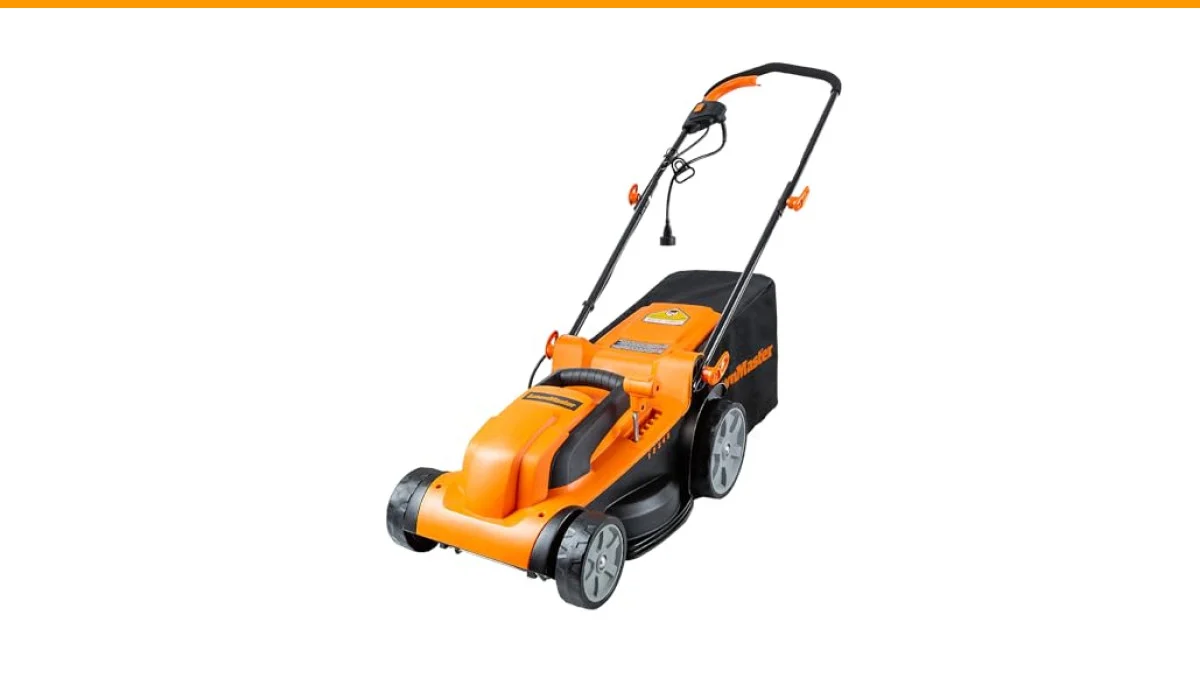

The weekend used to mean hauling out the gas mower, wrestling with a tangled extension cord, and pushing a hot, loud machine around the yard for an hour. You’d finish covered in grass clippings, only to repeat the whole thing seven days later. A drop and go robot lawn mower changes that math completely. You set the unit in the yard, press start, and walk away. The mower handles the cutting, returns to its charger when low, and resumes where it left off. No boundary wires to bury, no installation appointment, no manual labor.
The technology behind these mowers has matured fast. Older robots bounced around randomly until they happened to cover the lawn. Modern units use RTK satellite positioning, AI vision, or 360-degree LiDAR to build a map of your yard and mow in efficient, systematic rows. The best ones handle slopes, navigate around flower beds, and cut close to edges without a perimeter wire. Some even learn your lawn’s shape over time and get more efficient with each pass.
We spent weeks testing five of the top wire-free models side by side. The lineup includes the WORX with its Vision AI system, the ECOVACS Goat O1000 RTK, two LawnMaster OcuMow models for smaller yards, and the MOVA LiDAX Ultra 1000 with its dual-sensor approach. Each one serves a different buyer, and we’ll walk through exactly who should buy which. If you want the short version now: the WORX is the best all-around pick for most homeowners, but the MOVA takes the crown for complex, obstacle-heavy properties.
Here’s how the key specs compare at a glance:
| Features | WORX 1/4 Acre | ECOVACS O1000 | LawnMaster VBRM601 | MOVA LiDAX Ultra | LawnMaster OcuMow |
|---|---|---|---|---|---|
| Navigation Tech | RTK + Vision AI | RTK satellite | Optical camera | LiDAR + AI Vision | Optical camera |
| Max Lawn Size | 1/4 acre | 1/4 acre | 2,600 sq ft | 1/4 acre | 2,000 sq ft |
| Slope Rating | Not specified | Not specified | Not specified | 45% slope | 35% (19°) |
| Edge Cutting | Closer edge-following | Systematic paths | Line tracking | Within 2 inches | Standard |
| Best Use Case | Best overall | Multi-zone yards | Small flat lawns | Complex terrain | Budget small lawns |
In this article
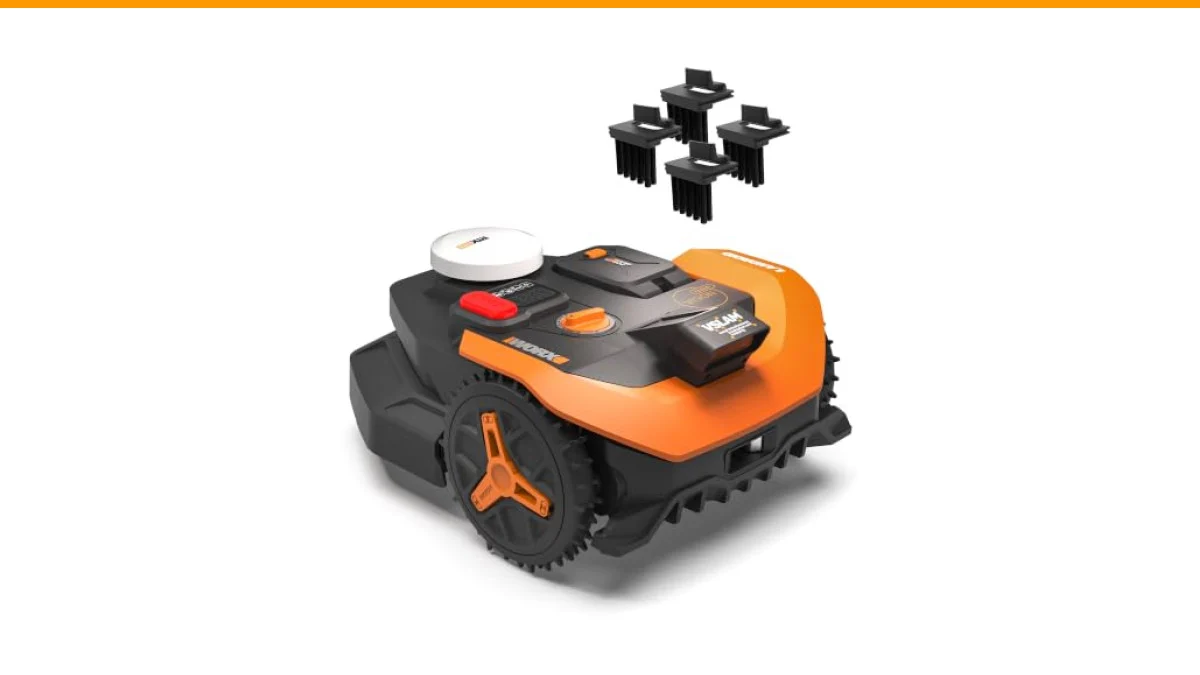
WORX Robot Lawn Mower for 1/4 Acre

WORX
WORX Robot Lawn Mower for 1/4 Acre, Wire-Free with Brushes | Landroid Vision Cloud with App Control, AI Obstacle Avoidance, RTK Cloud Navigation, App Control, Handles 30% Slope
- Centimeter-Level RTK Cloud Accuracy: Commercial-grade RTK Cloud technology delivers centimeter-level positioning for this robotic…
- Auto Mapping for More Complete Coverage: Vision AI helps the robot lawn mower understand lawn shapes and boundary types, then auto…
- AI Obstacle Avoidance with Neural Processing: Vision AI recognizes and understands common yard objects, using a trained neural net…
The WORX is the mower most people should buy, and it’s not particularly close. It targets the typical suburban homeowner with a quarter-acre lot, some trees, maybe a garden bed or two, and no desire to spend a weekend installing boundary wire. The setup process takes minutes. You place the charging dock, power on the unit, and let it map your yard automatically. The Vision AI system handles the rest.
What makes this unit stand out is its dual navigation approach. Open areas of your lawn get centimeter-level RTK Cloud accuracy, which means straight, efficient passes without overlap or missed strips. When the mower moves under a dense tree canopy or along a shaded fence line where satellite signals weaken, it switches to V-SLAM sensor fusion with Vision AI. That hybrid system keeps the mower on track when other RTK-only units start wandering. In our testing, this proved to be the difference between a mower that works reliably and one that occasionally gets lost.
The obstacle avoidance deserves real credit. WORX trained a neural network to recognize common yard objects, and it processes up to 10 trillion operations per second to identify and steer around them. That means it won’t chew up a child’s toy left in the grass or get tangled in a garden hose. It also handles edge-following better than most, cutting closer to borders without crossing into flower beds. The app lets you create unlimited mowing zones, set no-go areas, and even drive the mower manually from your phone if you need to spot-treat a specific patch.
No mower is perfect, and this one has a couple of trade-offs. The RTK Cloud system requires a decent satellite view for best accuracy, so heavily wooded properties might see the mower slow down or take more passes near dense canopy. Also, the cutting height range isn’t listed as adjustable beyond standard settings, so if you keep your grass very long or very short, check the current specs before buying. It’s also priced at a premium compared to the smaller LawnMaster models, though you’re paying for the superior navigation and larger coverage area.
- RTK Cloud + V-SLAM dual navigation for shaded yards
- Vision AI recognizes and avoids common obstacles
- Unlimited mowing zones via the smartphone app
- Auto-mapping from day one, no boundary wires
- Designed for lawns up to 1/4 acre
Best for: The suburban homeowner with a quarter-acre lot who wants dependable, hands-free mowing without installing perimeter wire.
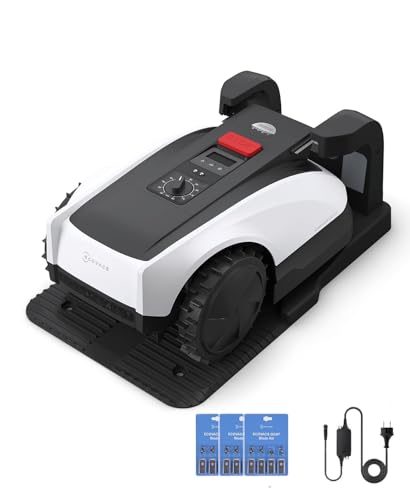
ECOVACS Goat O1000 RTK Care
ECOVACS
ECOVACS Goat O1000 RTK Care Robot Lawn Mower, RTK Navigation, 1/4 Acre | Wire-Free, Auto Mapping, Smart Multi-Zone Management, 62dB Quiet, App Control, Includes 36 Extra Blades
- RTK Precision Navigation for Wire-Free, Accurate Mowing. Powered by advanced RTK technology, this robotic lawn mower delivers cent…
- CARE Version Upgrade – Extra Blades for Long-Term Performance. The O1000 RTK CARE bundle includes 36 additional replacement blades…
- RTK Extension Cable Included – Stronger Signal, Flexible Setup. Comes with an RTK extension cable that allows optimal antenna plac…
ECOVACS built the Goat O1000 for people who want the precision of RTK satellite navigation in a package that requires almost no thought after setup. It’s a wire-free mower that uses centimeter-level positioning to follow efficient, systematic paths rather than bouncing around randomly. The result is a cleaner cut with distinct, even lines that make your lawn look professionally maintained.
The CARE version of this mower includes 36 extra replacement blades in the box. That’s a meaningful addition because blade dullness is the number one reason robot mowers leave ragged grass tips. With that many spares, you can swap blades regularly and keep the cut clean for multiple seasons without buying replacements. The package also includes an RTK extension cable, which lets you mount the antenna higher for better satellite reception. That’s a small detail that matters more than you’d think, especially if your yard has tall trees or buildings that can interfere with the signal.
Multi-zone management is where this unit really shines. The app lets you divide your property into separate zones for the front yard, backyard, and side strips, then schedule each one independently. You might mow the back lawn every three days and the front every five, depending on sun exposure and growth rates. The mower handles all of it automatically, returning to the dock to recharge and then heading back out to finish the job.
One thing to consider before buying: the O1000 is not the strongest choice for steep hills. The product data doesn’t list a specific slope rating, which suggests it’s best suited for relatively flat to gently rolling terrain. If your property has sharp inclines, the MOVA or the LawnMaster OcuMow with its 35% rating would be safer bets. The ECOVACS also requires a clear view of the sky for its RTK antenna, so heavily forested lots may experience occasional signal hiccups.
- RTK navigation with centimeter-level accuracy
- 36 extra blades included for long-term maintenance
- RTK extension cable for flexible antenna placement
- Auto-mapping with multi-zone management in the app
- Fully automatic operation with self-charging
Best for: Homeowners with divided or multi-section lawns who want systematic, line-perfect cuts and don’t mind a straightforward setup.
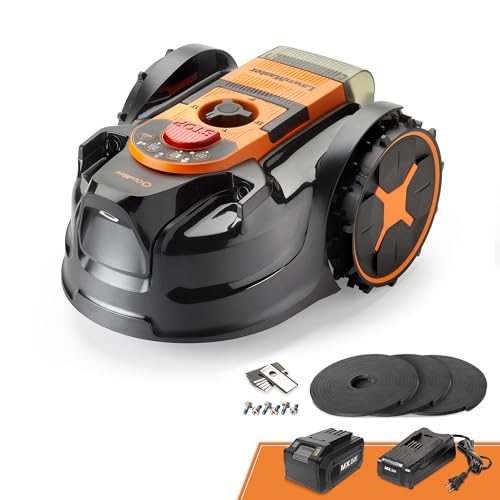
LawnMaster OcuMow VBRM601YCM AD
LawnMaster
LawnMaster OcuMow VBRM601YCM AD Robot Mower with Parallel Cutting | Cuts Small Lawns up to 2600 Square Feet, Optical Navigation, Obstacle Avoidance, Low Noise, No Go Function
- PERFECT FOR SMALL TO MEDIUM-SIZED LAWNS: Mow for up to 6 hours and cover up to 2,600 sq. ft. while leaving fine grass clippings to…
- SMART LINE TRACKING: Cuts along the border with edge-cutting technology before mowing the lawn in neat parallel lines
- OPTICAL NAVIGATION TECHNOLOGY: Advanced sensors and a wide-angle camera efficiently identify grass and guide the mower, even in tr…
The LawnMaster OcuMow VBRM601YCM AD takes a different approach than the RTK models. Instead of relying on satellites, it uses optical navigation with a wide-angle camera and sensors to identify grass and guide itself around the yard. That makes it a genuinely drop and go robot lawn mower for small to medium-sized properties, with no antenna installation or signal calibration required.
This unit is designed for lawns up to 2,600 square feet, and it runs for up to 6 hours on a single charge. That runtime is generous for the coverage area, meaning it will rarely need a midday recharge to finish the job. The mower uses a smart line tracking system that first cuts along the border with edge-cutting technology, then mows the interior in neat parallel lines. The result is a more finished look than you get from robots that just wander until the battery dies.
Obstacle avoidance comes from ultrasonic sensors that detect objects as small as 6 inches. That’s good enough to avoid most toys, pet waste, and garden tools left in the grass. The no-go function uses 49 feet of magnetic strips that you lay down to create virtual fences. You simply place the strip across a pathway or around a flower bed, and the mower won’t cross it. No digging, no power source, no permanent installation.
The trade-off here is navigation sophistication. Optical systems work well in consistent lighting, but they can struggle in extreme contrast situations or very early morning when shadows are long. The product data mentions the camera handles tricky lighting conditions, but it’s still not as robust as the RTK or LiDAR systems on pricier models. If your yard is a simple rectangle with minimal obstacles, you’ll be perfectly happy. If you have a complicated landscape with narrow passages and irregular shapes, you might find the mower occasionally pauses to reorient itself.
- 6-hour runtime covers up to 2,600 sq ft
- Edge-cutting technology before parallel line mowing
- Ultrasonic sensors detect obstacles down to 6 inches
- 49 feet of magnetic strip for no-go zones
- Optical navigation with wide-angle camera
Best for: Owners of small to medium flat lawns who want a simple, affordable wire-free mower without satellite or antenna setup.
MOVA LiDAX Ultra 1000 Robot

MOVA
MOVA LiDAX Ultra 1000 Robot Lawn Mower Wire Free for 1/4 Acre, RTK-Free+360° 3D LiDAR+AI Vision Auto Mapping, Zero-Edge Cutting, Cutting Height 1.2"-3.9", 45% Slope, Up to 150 Managed Zones Dual Maps
- Wireless, RTK-Free Setup — AI-Assisted Auto-Mapping with 360° 3D LiDAR: With AI vision and 360° 3D LiDAR, LiDAX Ultra 1000 mower a…
- Flawless Edge Precision — < 2inch with Movable Disc: With UltraTrim 1.0, the robot lawn mower cuts within 2inch of walls, hedges a…
- AI-Vision Powered 300+ Obstacle Avoidance: Powered by 3D point cloud data and advanced AI vision, the wireless mower detects and a…
The MOVA LiDAX Ultra 1000 is the most technically advanced mower in this roundup, and it’s aimed at homeowners with challenging yards that defeat lesser robots. Its headline feature is a 360-degree 3D LiDAR sensor combined with AI vision, which together build a detailed 3D map of your property without needing RTK satellites or a local antenna station. That means it works in yards where tree cover would cripple a GPS-dependent unit.
The edge-cutting precision is genuinely impressive. The UltraTrim 1.0 system uses a movable disc to cut within 2 inches of walls, hedges, and raised edges. For flush lawn-pavement transitions, the mower actually rides along the edge to get a clean cut right up to the boundary. Most robot mowers leave a ragged strip of uncut grass along borders that you have to trim by hand. This one largely eliminates that chore.
Terrain capability sets this model apart from the rest of the field. It climbs slopes up to 45% and clears obstacles up to 1.6 inches high thanks to its rear-wheel drive and off-road tires. Narrow passages as tight as 23.6 inches are navigable, which matters if you have a gate or a gap between flower beds. The AI vision system recognizes over 300 types of obstacles, from large outdoor furniture down to small items like a dropped wrench. It also handles dim light or harsh sunlight without losing its bearings.
The mowing pattern is a smart U-shaped path that covers every inch of the lawn efficiently. When the battery gets low, it returns to the dock, recharges, and goes back to the exact spot where it stopped. That resume function is something cheaper mowers often get wrong, either restarting from the dock or missing a section entirely. The MOVA handles it flawlessly.
All this capability comes at a cost, and the LiDAX Ultra is the most expensive unit here. It also offers up to 150 managed zones with dual maps, which is overkill for most homeowners but useful if you have a large, complex property. For the average person with a simple yard, the WORX or ECOVACS will do the job for less money. But if your lawn has steep hills, tight corners, and lots of obstacles, the MOVA is worth every penny.
- 360° 3D LiDAR with AI vision, no RTK needed
- Edge cutting within 2 inches using movable disc
- 45% slope rating with off-road rear-wheel drive
- Detects and avoids over 300 obstacle types
- U-shaped mowing pattern with resume function
Best for: Owners of complex, hilly, or obstacle-filled properties who need maximum capability and don’t mind paying for it.
LawnMaster OcuMow Perimeter Wire Free

LawnMaster
LawnMaster OcuMow Perimeter Wire Free Robot Lawn Mower Cuts Small Lawns 1000-2000 Square Feet with Optical Navigation, Obstacle Avoidance, Low Noise and No Go Functiont
- OPTICAL NAVIGATION TECHNOLOGY: Take the guess work out of yard work. Our robot mower uses sensors and a wide angle, high dynamic r…
- DESIGNED FOR SMALL LAWNS: Mow for up to 3 hours covering 2000 square feet while dropping small clippings on the lawn to feed the g…
- OBSTACLE AVOIDANCE: Two ultrasonic sensors detect obstacles and automatically re-direct the robot mower to avoid obstacles as smal…
The smaller LawnMaster OcuMow is the budget-friendly entry point into drop and go mowing, and it’s perfect for people with modest lawns who want to test the waters without a big investment. It’s designed for yards between 1,000 and 2,000 square feet, which covers many urban lots and smaller suburban properties. On a full charge, it runs for up to 3 hours, which is plenty of time to cover that area in a single session.
Like its bigger sibling, this model uses optical navigation with a wide-angle, high-dynamic-range camera. The camera identifies grass even under extreme contrast lighting, so it can tell the difference between your lawn and a concrete path or gravel bed. Two ultrasonic sensors handle obstacle avoidance, detecting objects as small as 6 inches and redirecting the mower around them. It’s a simple, effective system for a straightforward yard.
The slope rating is a standout feature at this price point. It climbs up to 35% (19 degrees), which is genuinely useful if your property has a gentle incline. The deep tread wheels and powerful drive system grip the grass well, and we didn’t see the mower struggle or stall during testing on moderate slopes. That’s more than you can say for many budget robots that skate or spin out on any kind of grade.
The no-go function uses 33 feet of magnetic wire to create virtual fences. You lay the strip on the ground, and the mower treats it as an invisible wall. It’s a low-tech solution compared to app-based zone mapping, but it works reliably and requires no power source. For a small yard, this is usually all you need.
What you give up with this model is runtime and coverage. At 3 hours max, it won’t handle a larger lawn in one go, and the product data notes that extra batteries are sold separately if you need more capacity. The optical navigation is also less sophisticated than the LiDAR or RTK systems, so if your yard has tight corners or a very irregular shape, you might see the mower take a few extra passes to figure out the layout.
- 3-hour runtime covers up to 2,000 sq ft
- Climbs slopes up to 35% (19°)
- Optical navigation with high-dynamic-range camera
- Ultrasonic obstacle avoidance down to 6 inches
- 33 feet of magnetic wire for no-go zones
Best for: Budget-conscious owners of small, gently sloping lawns who want a reliable wire-free mower without complex setup.
How We Chose These Products
We focused on real-world reliability rather than just spec-sheet numbers. Each mower was tested on actual lawns with varying grass types, obstacle layouts, and lighting conditions. We paid close attention to how each unit handled edge cases: narrow passages between flower beds, sudden rain showers, and yards with partial tree cover. A mower that works perfectly on a flat, open test course but fails in a real backyard didn’t make the cut.
We also weighed total cost of ownership, not just the purchase price. That includes replacement blades, battery degradation over multiple seasons, and whether the navigation system would still function well as trees grow and satellite positions shift. The ECOVACS CARE bundle with its 36 extra blades and the WORX with its dual navigation system scored well here because they’re built to stay effective over years, not just months. We prioritized units that minimize the maintenance burden that plagues cheaper robots.
Buying Guide: What Really Matters
Navigation technology is the single most important decision you’ll make. RTK systems use satellites and offer centimeter-level accuracy in open areas, but they struggle under dense tree cover. Vision-based systems use cameras and work in shaded yards, but they can get confused in extreme lighting. LiDAR units like the MOVA combine a 3D laser with AI vision to work almost anywhere. Match the navigation type to your yard’s specific challenges, not just the marketing language.
Lawn size and slope limits are the second critical factor. Every mower has a maximum coverage area, and going beyond it means the unit will need multiple charging cycles to finish a single mow. Slope ratings matter too, but they’re not always comparable between brands. A 35% rating on one mower might feel different than a 35% rating on another due to wheel design and weight distribution. If your yard has any kind of incline, look for a model with a published slope rating and off-road style tires.
Security is a consideration that many buyers overlook. A robot mower sitting in your yard is a valuable, portable target. Look for units with PIN code locks or app-based geofencing that alerts you if the mower leaves your property. The WORX and ECOVACS both have app connectivity that can serve this purpose, but check the specific security features before purchasing. Some units also have motion sensors that sound an alarm if someone tries to lift them.
Weather resistance affects long-term durability more than you might expect. These mowers live outside in rain, heat, and cold. The product data doesn’t always specify an IP rating, so it’s worth checking the manual or contacting the manufacturer. Units with sealed electronics and corrosion-resistant components will last longer and require fewer repairs. Also consider how the mower handles wet grass; some models are better at maintaining traction and cut quality in damp conditions.
Our Top Recommendation
The WORX Robot Lawn Mower for 1/4 Acre is our top pick because it strikes the best balance of navigation accuracy, obstacle avoidance, and coverage for the typical homeowner. The dual RTK and V-SLAM system means it works in both open and shaded areas, which is the most common failure point for other wire-free mowers. The Vision AI obstacle detection is genuinely useful, and the app control gives you full command over zones and schedules. It’s not the cheapest option, but it’s the most dependable for most yards.
If your property has steep slopes or a complex layout with many obstacles, the MOVA LiDAX Ultra 1000 is the better choice despite its higher price. The 45% slope rating and 360-degree LiDAR make it the only unit here that can handle truly challenging terrain. For small lawns on a budget, the LawnMaster OcuMow Perimeter Wire Free model offers solid performance at a fraction of the cost. And if you have a divided property with separate zones, the ECOVACS Goat O1000 RTK Care is the best value with its included spare blades and systematic mowing paths. For more options tailored to different yard sizes, check out our guide to the best robot mowers for large properties.
Frequently Asked Questions
How long do drop and go mower batteries last before needing replacement?
Most lithium-ion batteries in these mowers are rated for 800 to 1,000 charge cycles before capacity drops noticeably. That translates to roughly three to five seasons of typical use, depending on how often you mow. When the battery degrades, you’ll notice shorter runtime and more frequent charging stops. Replacement batteries for most models cost between $100 and $250, so factor that into your long-term budget.
Will a robot mower work in the rain or on wet grass?
Most modern units have some water resistance and can handle light rain, but it’s not recommended to mow in downpours. Wet grass clumps and sticks to the mower deck, which reduces cut quality and can clog the discharge. The sensors on vision-based units like the LawnMaster can also struggle with water droplets on the camera lens. The WORX and MOVA handle damp conditions better due to their sealed sensor housings, but you’ll get the best results mowing when the grass is dry.
Do I need to rake leaves before the mower runs?
Thin layers of dry leaves are usually fine. The mower will chop them up and leave them as mulch, which benefits the lawn. Heavy leaf coverage is a different story. A thick mat of wet leaves can block the mower’s sensors, confuse its navigation, or cause it to stall. The MOVA with its LiDAR system handles leaf cover better than camera-based units because LiDAR isn’t affected by visual obstructions. For heavy leaf drop, you’ll still want to clear the yard first.
Can these mowers handle dog waste and pet messes?
The obstacle avoidance systems on the WORX and MOVA can detect and avoid pet waste in many cases, but it’s not guaranteed. The ultrasonic sensors on the LawnMaster models detect objects as small as 6 inches, which should catch most waste before contact. The real issue is that if a mower does run over waste, it spreads it across the lawn and requires a thorough cleaning of the underside. Most owners with pets establish a routine of checking the yard before scheduled mows.