
Saturday morning. You walk outside, coffee in hand, and stare at a patch of grass that has officially entered its awkward teenage growth phase. You don’t own a mower. Maybe you just moved, or maybe you’ve been borrowing your neighbor’s gas guzzler that takes fifteen pulls to start. Either way, you need a machine that won’t fight you.
The market is split into three main camps: cordless battery mowers, corded electric mowers, and old-school reel mowers. Each one solves a different problem. Battery power offers freedom and quiet operation. A cord keeps things cheap and light. A reel mower gives you a workout and zero emissions. Your job is matching the tool to your specific lawn, not just grabbing the shiniest box on the shelf.
We tested and compared five of the best beginner lawn mower options available right now. They range from a dual-battery workhorse to a manual reel that never needs a charge. Below, you’ll find a spec comparison, honest trade-offs for each model, and a simple test you can run in your yard right now to make the final call.
Here is a quick look at how the key specs stack up:
| Features | Casince 17-Inch | MZK 13-Inch | BLACK+DECKER Combo | Greenworks 16-Inch | American Reel |
|---|---|---|---|---|---|
| Power Source | Dual 20V battery | Dual 20V battery | Corded electric | Single 40V battery | Manual push |
| Cutting Width | 17 inches | 13 inches | 12 inches | 16 inches | 14 inches |
| Runtime / Range | Up to 40 minutes | Up to 30 minutes | Continuous | Up to 1/3 acre | No limits |
| Height Settings | 6 positions | 4 positions | 1 setting | 5 positions | 4 positions |
| Best For | Medium flat yards | Small quick cuts | Tiny yards near outlets | Small sloped lawns | Eco-friendly flat lawns |
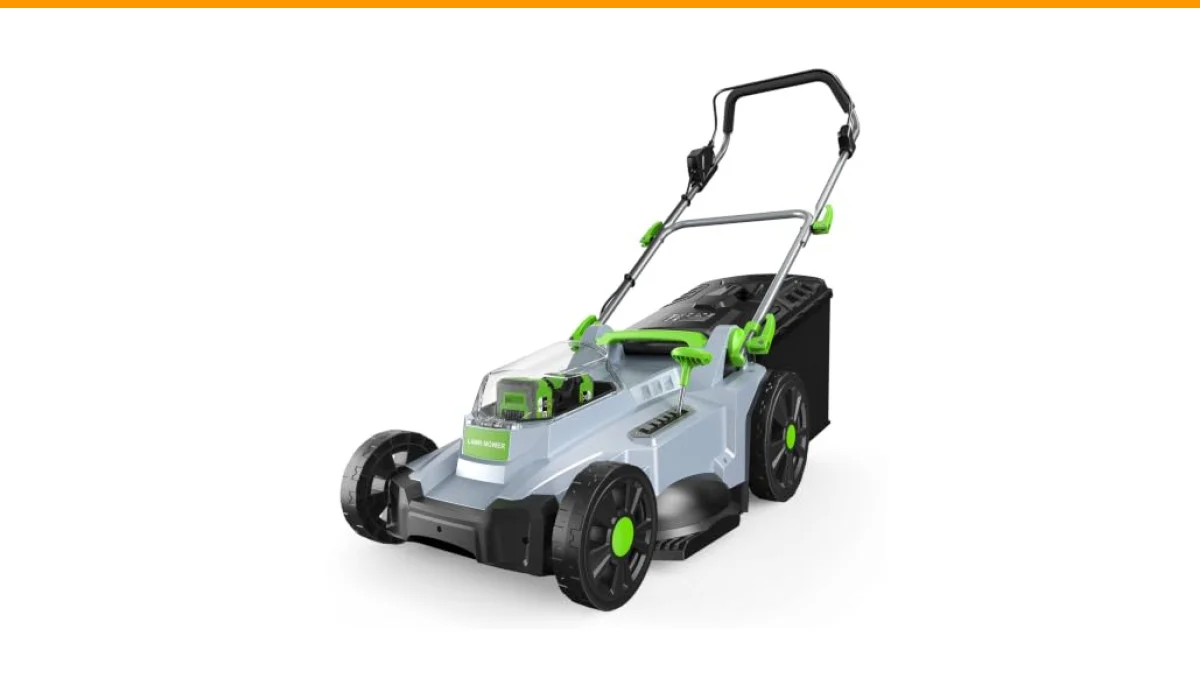
Casince 17-Inch Cordless

Casince
Cordless Lawn Mower, 17 in Walk Behind Lawn Mower for Yard & Garden
- WIDER MORE EVEN CUTTING: The 17-inch cutting deck and 6 height settings from 1 to 3 inches (25–75 mm) help this cordless lawn mowe…
- DUAL BATTERY EXTENDED RUNTIME: Powered by two 20V 4.0Ah batteries, this walk behind lawn mower runs for up to 40 minutes and cover…
- LARGE CAPACITY GRASS COLLECTION: The 50L collection bag holds more clippings between emptying cycles, while regular cleaning aroun…
This mower is the default answer for most new homeowners with a standard suburban lot. The 17-inch deck hits a sweet spot—it covers ground faster than the compact 13-inch models but still feels maneuverable around flower beds and fences. If your yard is a rectangle of grass with a few obstacles, this machine will make you look like you know what you’re doing.
The dual 20V battery system is the real story here. Two 4.0Ah batteries push runtime to about 40 minutes, which translates to roughly 5,380 square feet of cutting. That covers a quarter-acre lot with room to spare. The brushless motor spins at 3,000 RPM, and that steady blade speed matters when you hit thicker patches near the driveway. You won’t hear the motor bog down and stall like you would on cheaper corded units.
At 14 kg (about 31 pounds), it’s not the lightest option here, but the weight feels balanced. The 50L collection bag is genuinely large—you’ll finish most lawns before needing to empty it. One-button start means no pulling a cord, no priming, no swearing.
You’ll be fine with this mower unless your grass routinely gets away from you. It handles regular residential growth well, but if you let the lawn hit jungle status, the 17-inch deck can clog. You’ll need to empty the bag more frequently in wet conditions too. The six height settings range from 1 to 3 inches, which gives you solid flexibility for seasonal changes.
- 17-inch cutting deck with six height positions (1–3 inches)
- Dual 20V 4.0Ah batteries deliver up to 40 minutes of runtime
- Brushless motor provides 1,200W max output at 3,000 RPM
- 50L rear collection bag cuts down on emptying stops
- One-button start with a simple pull-bar safety mechanism
Best for: The new homeowner with a flat, medium-sized lawn who wants push-button simplicity and enough runtime to finish the job in one pass.
MZK 20V 13-Inch Mower

MZK
MZK 20V 13-Inch Electric Lawn Mower, Compact Brushless Mower, Red
- High-Performance Brushless Motor: The cordless lawn mower features a brushless motor that delivers 2800 RPM on Low and 3400 RPM on…
- 4-Position Cutting Height Adjustment: This battery lawn mower offers 4 cutting height settings from 1.3 inches to 2.6 inches to ma…
- Wide Cut and Bagging: The 13-inch deck helps you cover more ground with fewer passes, and the 30L removable rear bag makes cleanup…
The MZK is built for the person whose lawn is more of a formality than a lifestyle. If you’re mowing a postage-stamp yard in a new development or a narrow strip between sidewalks, this compact machine is your best beginner lawn mower. It’s small, it’s light, and it tucks into a garage corner without complaint.
What stands out here is the two-speed brushless motor. Low runs at 2,800 RPM for everyday cuts, and high kicks up to 3,400 RPM when the grass is thick or slightly damp. That kind of control is rare at this price point. The 13-inch deck means you’ll make more passes than you would with a wider mower, but on a small lawn, the extra two minutes of walking is a non-issue.
Safety is handled properly with a two-step start. You have to hold a lever and press a button simultaneously, which prevents accidental startups if a kid or pet bumps the handle. The 30L bag is removable and easy to dump, though you’ll be emptying it fairly often on a weekly cut.
The trade-off is runtime. Two 4.0Ah batteries give you about 30 minutes of cutting. That’s fine for a small yard, but if you’re pushing toward a quarter-acre, you’ll likely run out before the back lawn is done. The cutting height range of 1.3 to 2.6 inches is also narrower than competitors—you won’t be able to leave the grass long for summer heat stress relief.
- 13-inch deck with 4 cutting height positions (1.3–2.6 inches)
- Brushless motor with low (2,800 RPM) and high (3,400 RPM) speeds
- Dual 20V 4.0Ah batteries provide up to 30 minutes of run time
- Two-step safety start prevents accidental engagement
- Complete kit includes mower, two batteries, charger, and 30L bag
Best for: Apartment dwellers or townhome owners with a compact, straightforward lawn who want a lightweight mower that stores easily and starts every single time.
BLACK+DECKER 3-in-1 Combo

BLACK+DECKER
BLACK+DECKER Electric Lawn Mower, Weed Eater and Edger 3-in-1 Combo, Corded 12-Inch 6.5 Amp Electric Weed Wacker and Compact Push Mower (BESTA512CM)
- Multi-Function Convenience: Easily switch between mowing, trimming, and edging for three-in-one versatility with your string trimm…
- Powerful Cutting Performance: The 6.5 amp motor with POWERDRIVE Transmission delivers top results when tackling tough weeds and th…
- Continuous Operation: Automatic Feed Spool (AFS) system allows uninterrupted work without bumping or manual adjustments, keeping y…
This is the Swiss Army knife of the group. The BLACK+DECKER BESTA512CM combines a 12-inch mower with a string trimmer and edger in one system. You get the mower deck, a detachable power head, and the trimmer attachment. For a beginner with a tiny yard and a tight budget, this eliminates the need to buy two separate tools.
The 6.5 amp motor runs on a cord, which means unlimited runtime. No waiting for batteries, no planning your mow around charge cycles. The POWERDRIVE transmission delivers decent torque for a corded unit, and the trimmer spins up to 8,000 RPM for tackling weeds along fences and walkways. The Automatic Feed Spool system advances the trimmer line automatically, so you don’t have to stop and bump the head against the ground.
This setup works brilliantly for small lawns under 2,000 square feet. If your grass area is genuinely compact, the 12-inch cutting width is adequate. The machine is light enough to carry with one hand, and the adjustable handle helps shorter or taller users find a comfortable position.
Here’s the catch: you’re managing a cord. You’ll be mindful of where the outlet is, and you’ll spend time untangling the line from shrubs and corners. The cutting height is also fixed at 1.6 inches—there’s no adjustment. That’s fine for consistent weekly mowing, but problematic if you want to raise the deck during a dry summer. Also, this unit is currently in scarce supply on Amazon, so you may need to check availability regularly.
- 3-in-1 system: mower, string trimmer, and edger in one package
- 6.5 amp motor with POWERDRIVE transmission for consistent torque
- Automatic Feed Spool (AFS) eliminates manual line adjustments
- 12-inch cutting width with fixed 1.6-inch cutting height
- Lightweight construction with adjustable handle positions
Best for: Budget-conscious beginners with very small lawns who want a complete lawn care kit in one box and don’t mind plugging in.
Greenworks 40V 16-Inch Mower

Greenworks
Greenworks 40V 16in Push Lawn Mower, 4.0 Ah Battery and Charger
- [16" LAWN MOWER] - This 40V lawn mower cuts up to 1/3 acre with fully charged 4.0Ah battery (varies based on grass condition and o…
- [ULTRA LIGHTWEIGHT] - 35% lighter than steel deck mowers
- [SINGLE LEVER HEIGHT ADJUST] - 5 position height adjustment
Greenworks brings the most balanced package for the beginner who expects their lawn to grow over time. The 40V system is more powerful than the 20V dual-battery setups, and it’s part of a larger ecosystem. If you plan to buy a leaf blower or chainsaw later, this mower’s batteries work across the Greenworks 40V lineup of 75+ tools.
The 16-inch deck is a solid middle ground. It’s wider than the MZK and BLACK+DECKER options, so you’ll finish a small-to-medium lawn faster. The single 4.0Ah battery handles up to one-third of an acre on a full charge. The 2-in-1 system lets you switch between mulching and rear bagging, which is a genuine convenience for beginners who haven’t figured out their lawn’s nutrient needs yet.
Single-lever height adjustment is a standout feature. One lever moves all four wheels simultaneously, so you don’t have to crouch down and adjust each wheel individually. That’s a small thing that makes a big difference when you’re learning. The deck is 35% lighter than steel equivalents, making it easy to lift over curbs or into a shed.
The limitation here is runtime anxiety. A single 4.0Ah battery means you have no backup if the lawn takes longer than expected. If you mow a full third of an acre with thick grass, you’ll be cutting it close. You can buy a second battery, but that adds cost. The 40V system is also heavier than the 20V options, though the weight distribution makes it manageable.
- 16-inch cutting deck with 5-position single-lever height adjustment
- 40V 4.0Ah battery handles up to 1/3 acre per charge
- 2-in-1 system supports both mulching and rear bagging
- Ultra-lightweight deck—35% lighter than steel alternatives
- Compatible with 75+ Greenworks 40V tools for future expansion
Best for: The beginner who wants a roomy cutting deck, easy height changes, and a battery system that grows with their future tool collection.
American Lawn Mower Reel 1204-14
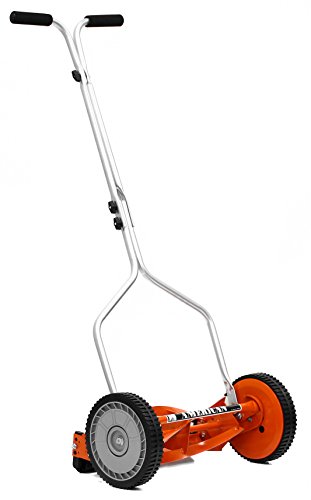
American Lawn Mower Company
American Lawn Mower 1204-14 14-Inch 4-Blade Push Reel Lawn Mower, Red
- 4-blade reel mower with a cutting width of 14” and durable 8.5” polymer wheels for maximum maneuverability. Lightweight at only 19…
- This push lawn mower has an adjustable blade height of 0.5”-1.75”. Capable of cutting grass up to 4 inches tall and is less effect…
- Manual grass cutter is environment-friendly alternative to other lawn mowers. This push mower is pollution-free, noise-free, low m…
Let’s be honest: a reel mower isn’t for everyone. But for the right person, it’s the best beginner lawn mower because it removes every mechanical failure point. No motor, no battery, no spark plug. Just a spinning reel of blades that cuts grass like a pair of scissors. The American Lawn Mower 1204-14 is the classic choice here.
This mower is ideal for the eco-conscious beginner with a small, flat, well-maintained lawn. It weighs just 19 pounds, so you can carry it with one finger. It’s completely silent, which means you can mow at 7 AM on a Sunday without waking the neighbors. There’s zero pollution, zero fuel cost, and virtually zero maintenance beyond occasional blade sharpening.
The 4-blade reel cuts at a 14-inch width, and the cutting action is cleaner than rotary mowers. Instead of tearing the grass, the reel slices it, which promotes healthier turf. The adjustable height range of 0.5 to 1.75 inches is perfect for fine fescue or Bermuda grass lawns kept short.
You’ll be frustrated with this mower unless your grass stays under 4 inches tall. The product itself states it’s less effective on taller grass. If you skip a week of mowing during spring growth spurts, this reel will struggle and may pull grass rather than cut it. It also requires more physical effort than any powered option. On a hot, humid day, pushing a reel mower over a 3,000-square-foot lawn is a legitimate workout.
- 14-inch cutting width with 4-blade reel design
- Adjustable cutting height from 0.5 to 1.75 inches
- Weighs only 19 pounds with durable 8.5-inch polymer wheels
- Quiet, pollution-free operation with no fuel or electricity
- Best results when mowing no more than 1/3 of the grass blade
Best for: The minimalist beginner with a small, perfectly flat lawn who values quiet mornings, zero emissions, and a light workout with every cut.
How We Chose These Products
We started with the assumption that a beginner needs three things: easy starting, forgiving operation, and low long-term complexity. Every product here had to pass a basic threshold on those criteria. We eliminated gas mowers entirely because they introduce fuel storage, oil changes, and pull-cord starting—all friction points for a new owner.
We then evaluated each model on real-world factors that don’t show up in Amazon bullet points. Runtime claims were weighed against actual yard sizes. Cutting deck width was considered in terms of how many passes you’d need to finish a typical lot. We looked at weight distribution and handle ergonomics, not just the listed pounds. Finally, we considered the ecosystem around each product—whether you could expand your toolset with the same batteries or if you’d be locked into a dead-end system.
The 3-Question Test: Find Your Perfect Beginner Mower in 60 Seconds
Before you buy anything, answer these three questions honestly. Your answers will eliminate half the market instantly.
Question 1: How big is your lawn? Measure the actual grass area, not the lot size. Under 2,000 square feet? A corded or reel mower works fine. Between 2,000 and 5,000 square feet? You need battery power with at least 30 minutes of runtime. Over 5,000 square feet? Look for a wide deck (16 inches or more) with dual batteries or a 40V+ system.
Question 2: Does your yard have slopes or uneven ground? Walk your yard and note any incline steeper than a driveway ramp. A reel mower becomes miserable on hills because you lose momentum. A lightweight corded mower can be awkward when the cord drags downhill. For slopes, you’ll want a battery mower with good torque and a low center of gravity. If you have steep sides, check out our guide on the best mower for steep small lawns for more targeted advice.
Question 3: When do you mow, and who can hear you? If you’re mowing early mornings or in a dense neighborhood, noise matters. Reel mowers are silent. Battery mowers are quiet—around 75 decibels, comparable to a vacuum. Corded mowers are similar. Gas mowers hit 95+ decibels, which requires hearing protection. If noise tolerance is zero, you’ve already picked your winner.
The Hidden Cost of Ownership: What You’ll Really Spend in 5 Years
Sticker price is only the beginning. Let’s talk about what each mower type actually costs you over five years of ownership.
Battery mowers (Casince, MZK, Greenworks): The batteries are the expensive part. Lithium-ion cells degrade over time, typically losing capacity after 300-500 charge cycles. For a weekly mow during a 6-month season, that’s roughly 26 charges per year. You’ll likely need a replacement battery around year three or four. A 4.0Ah battery costs anywhere from $60 to $120 depending on the brand. The mower itself requires blade sharpening annually (about $10-$15 if you have it done at a shop) and occasional cleaning of the undercarriage. Total 5-year cost: initial price plus roughly $150-$250 in battery and blade maintenance.
Corded mowers (BLACK+DECKER): The cheapest long-term option. No batteries to replace, no fuel to buy. Your only recurring costs are blade sharpening and potentially replacing the power cord if you run it over. The motor in a quality corded unit should last 10+ years. The downside is the cord itself—if you need a 100-foot extension cord rated for outdoor use, that’s a $40-$60 upfront cost. Total 5-year cost: initial price plus under $100 for maintenance.
Reel mowers (American Lawn Mower): The lowest cost of all. There’s no motor to fail. The blades need sharpening every 1-2 seasons depending on use. A sharpening kit costs around $25, or you can send the reel out for professional sharpening for about $30. The polymer wheels and bearings are durable but may need replacement grease. Total 5-year cost: initial price plus roughly $75 in sharpening supplies.
The math is clear: if you want the absolute cheapest ownership experience, buy a reel or corded mower. If convenience is worth $150 over five years, a battery mower is the better trade.
Buying Guide: What Really Matters for Beginners
Forget the marketing hype. Four specifications matter more than anything else when you’re starting out.
Cutting width vs. your yard size. A wider deck means fewer passes, but it also means a heavier, less maneuverable machine. For a beginner, we recommend matching the deck to your lawn, not oversizing. A 13-14 inch deck suits lawns up to 2,500 square feet. A 16-17 inch deck is better for 3,000-5,000 square feet. Anything wider than 20 inches starts to feel like piloting a boat around tight corners.
Height adjustment mechanism. You will change your cutting height at least four times a year—lower in spring, higher in summer heat, lower again in fall. If the mower requires you to manually move each wheel (like the MZK), budget an extra two minutes per adjustment. If it has a single lever (like the Greenworks), it takes five seconds. That difference compounds over a season. Beginners often forget this, but cutting too short in summer scalps your lawn and invites weeds. You want a mower that makes it easy to do the right thing.
Starting effort and safety. Look for a mower with a two-step start or a safety bar that must be held down. This prevents the blade from spinning if you’re not actively pushing. The Casince and MZK both have this feature. Reel mowers have no start mechanism at all—they only cut when you push them forward, which is inherently safe. Avoid any mower that requires a hard yank or a complicated choke sequence.
Storage footprint. Measure your garage or shed before buying. A 17-inch deck mower takes up roughly 3 feet by 2 feet of floor space, plus handlebar height. If you’re storing it vertically, check whether the mower has a folding handle. None of the models we reviewed fold completely flat, so plan for the footprint. Reel mowers are the easiest to hang on a wall hook.
Common Beginner Mistakes (And How to Avoid Them on Your First Mow)
Every new mower owner makes these errors. Here’s how to skip the learning curve.
Mowing wet grass. Wet grass clumps, clogs the bag, and leaves uneven patches. It also dulls your blade faster. Wait until the dew burns off, usually mid-morning. If you absolutely must mow after rain, use the mulching setting instead of the bag, and take narrower passes.
Cutting too short. The one-third rule applies to every mower type. Never remove more than one-third of the grass blade height at once. If your grass is 3 inches tall, only cut it down to 2 inches. Cutting shorter stresses the roots and lets sunlight hit the soil, which encourages weed seeds to germinate.
Ignoring blade sharpness. A dull blade tears grass instead of cutting it, leaving brown tips that look like a bad haircut. Beginners often don’t realize their blade is dull until the lawn looks ragged. Check your blade every 6-8 weeks during the season. Run your finger lightly along the edge—if it doesn’t feel sharp, it’s time to sharpen or replace.
Bagging everything. New owners often bag clippings because it looks tidy. But grass clippings are roughly 80% water and break down quickly, returning nitrogen to the soil. Mulching (letting the clippings fall back) reduces your fertilizer needs by up to 25%. If your mower has a mulching mode, use it for most cuts and save the bag for the first and last cut of the season.
Starting with a full bag. On battery mowers, a full collection bag restricts airflow and makes the motor work harder, draining the battery faster. Empty the bag when it’s about three-quarters full, even if you could squeeze in more. Your runtime will thank you.
Maintenance 101: Storing and Caring for Your Specific Mower Type
Proper storage doubles the life of any mower. Here’s what each type needs.
Battery mowers (Casince, MZK, Greenworks): Store batteries indoors at room temperature. Extreme cold or heat degrades lithium-ion cells. Remove the batteries from the mower during winter storage—don’t leave them connected. Charge them to about 50-60% before storing for more than a month. For the mower itself, scrape off any caked grass from the underdeck after each use. A putty knife works fine. Wipe the deck with a light coat of oil (even cooking spray works) to prevent rust. In winter, store the mower in a dry location, not against a damp concrete floor.
Corded mowers (BLACK+DECKER): The motor has brushes that wear down over time. You’ll hear a sparking sound when they’re worn—that’s your cue to replace them or take it to a shop. Coil the power cord loosely; don’t wrap it tight around the handle, as that stresses the internal wires. Check the plug and cord for nicks before each use, especially if you’ve run over the cord (it happens to everyone once).
Reel mowers (American Lawn Mower): These are the simplest to maintain. After each use, brush off grass clippings from the reel and bed knife. Every few uses, apply a drop of light oil to the wheel bearings and the reel axle. The blades will eventually dull—you can tell when the mower starts pulling grass instead of cutting it. Sharpen the reel with a lapping compound kit, which costs about $25 and takes 20 minutes. Store the mower indoors or under a cover; the blades will rust if left out in the rain.
Frequently Asked Questions
How often should I sharpen my mower blade?
For a beginner, aim for twice per season—once at the start and once mid-summer. If you mow over twigs, rocks, or hidden sprinkler heads, check the blade immediately after. A simple test: if the grass tips look frayed or whitish after mowing, the blade is dull. You can sharpen with a file or bench grinder, or take it to a local hardware store for about $10-15.
Can I use a battery mower on wet grass?
You can, but you shouldn’t. Wet grass clumps and sticks to the underdeck, reducing suction and leaving piles of clippings. More importantly, wet conditions increase the risk of slipping, and mowing on a slope when the ground is slick is dangerous. Wait for the grass to dry. If you’re in a rainy climate, consider a mower with a mulching mode—it handles damp grass better than bagging.
What’s the difference between mulching and bagging?
Mulching chops clippings into fine pieces and drops them back onto the lawn, returning nutrients to the soil. Bagging collects everything for disposal or composting. Mulching is better for your lawn’s health and saves time since you don’t have to empty a bag. The trade-off: mulching requires a sharper blade and works best when grass is dry and not too tall. If you have a thrift-store mentality about your lawn, mulching is the way to go. If you prefer a pristine, golf-course look, bag.
Is a reel mower really practical for a beginner?
It depends on your definition of practical. If you have a small, flat lawn under 2,000 square feet and you’re willing to mow weekly (even twice weekly during spring growth), a reel mower is fantastic. It’s quiet, cheap, and gives you a subtle workout. But if your lawn is uneven, has thick St. Augustine or Bermuda grass, or you travel often and can’t stick to a strict mowing schedule, a reel mower will frustrate you. It punishes laziness—skip a week, and you’ll be fighting the machine.
How do I know if my lawn needs a self-propelled mower?
Walk your yard and pay attention to how you feel. If you’re winded after pushing a manual mower up a slope, or if your yard is over 5,000 square feet, self-propulsion helps. Most beginner mowers are push models because they’re lighter and simpler. If you have a significant slope, look at our battery self-propelled mower guide for options that reduce effort without adding gas engine maintenance.
The Bottom Line: Which Mower Should You Buy Today?
For the majority of first-time buyers, the Casince 17-Inch Cordless is the best beginner lawn mower. It offers the widest cutting deck in this roundup, the longest runtime at 40 minutes, and a brushless motor that won’t quit mid-lawn. The 50L bag means fewer interruptions, and the six height settings give you room to learn without being locked into one cutting length. It’s not the lightest option, but it’s the most forgiving.
If your lawn is genuinely tiny (under 1,500 square feet) and you want to save money, grab the MZK 13-Inch. It’s cheaper, lighter, and perfectly adequate for a postage-stamp yard. Just don’t expect it to handle a big cut after a vacation.
For the eco-enthusiast with a flat, small yard, the American Lawn Mower Reel is a joy. Silent, clean, and maintenance-light, it turns mowing into a meditative ritual rather than a chore. You’ll need to commit to a weekly schedule, but the payoff is a beautiful, scissor-cut lawn and a clear conscience.
If you’re still torn, consider this: the Casince covers 90% of beginner scenarios. Start there. If you find you hate mowing, you’ve spent your money on a machine that makes the job as painless as possible. If you find you love it, you can graduate to a larger or more specialized unit later. For more context on how these compare to other small-lawn options, read our small lawn mower buying guide.