

4 Best Base for a Greenhouse: Real-World Foundation Guide
Contents
You spent weeks assembling the frame and panels. The first storm arrives, and the whole structure shifts six inches. Or the bottom bar rests on damp soil and starts to rust by spring. A greenhouse is only as good as what sits underneath it, and too many gardeners learn that lesson after the damage is done.
The right foundation does more than level the ground. It anchors the frame against wind uplift, keeps the interior dry, and stops cold from seeping up through the floor. The material of your greenhouse matters here. Glass houses need rigid support to prevent cracked panes. Polycarbonate models tolerate slight movement. Polytunnels can sit on soil alone, but they need deep anchors to stay put.
This guide breaks down the top four products that solve the base problem from different angles. You will find a full-size walk-in greenhouse with a galvanized steel base, a compact cover with a built-in tray, a flexible hoop system with ground bases, and a smaller walk-in model designed for quick assembly. Each one serves a different situation, and the comparison table below helps you match the right base to your climate and greenhouse type.
Here is a quick look at how the key specs stack up across these four options.
| Features | Sannwsg 8×10 Walk-In | Bstrip Cover Tray | OOTONAT Hoop Kit | Exroo 6×4 Walk-In |
|---|---|---|---|---|
| Frame Material | Aluminum + galvanized steel base | EVA cover with base tray | Rust-free fiberglass | Corrosion-resistant aluminum |
| Primary Use | Heavy-duty outdoor growing | Indoor shelf gardening | Raised bed protection | Small backyard nursery |
| Wind Resistance | Up to 31 MPH | Not specified | Not specified | Reinforced metallic skeleton |
| Assembly Time | Standard | Quick | Quick DIY | 40% faster sliding panels |
| Best Base Scenario | Permanent slab or timber | Indoor shelving unit | Soil or raised bed | Patio or deck |
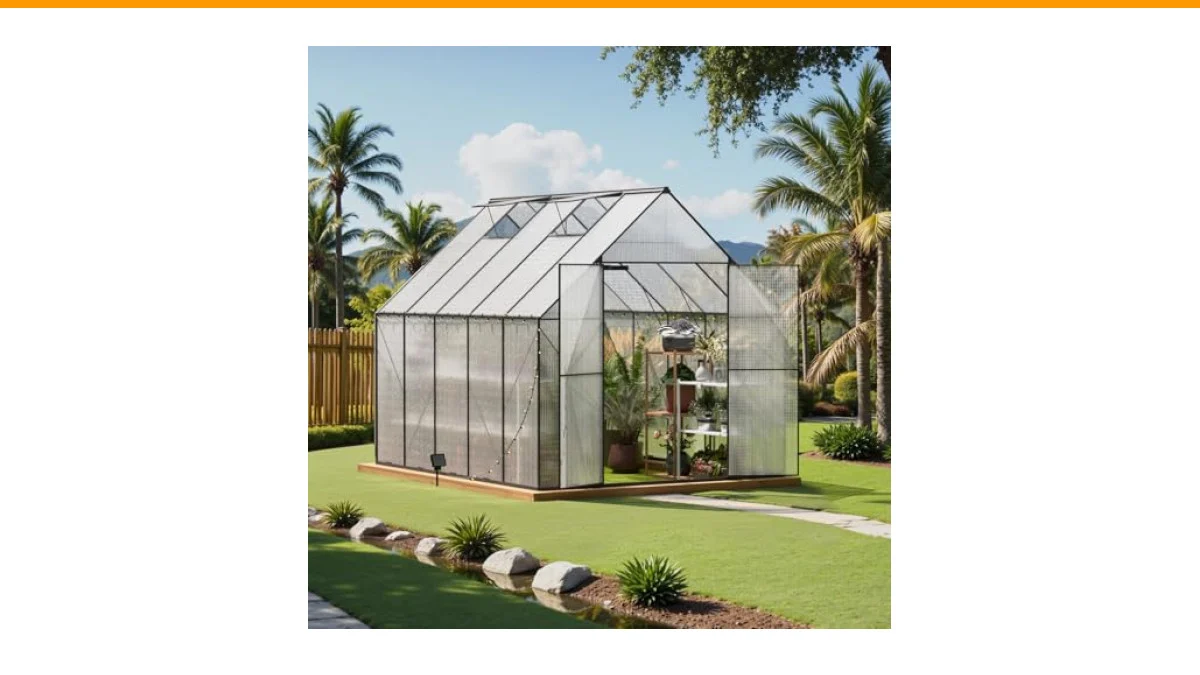
Sannwsg 8×10 Walk-In
This is the heavyweight option for gardeners who want a permanent structure that handles real weather. The 8×10 footprint suits a serious vegetable grower or someone who wants space for both plants and a small potting bench. The galvanized steel base is the standout feature here because it creates a solid barrier between the frame and the ground, which stops rot and corrosion before they start.
What sets this apart from cheaper kits is the engineering under the panels. The aluminum frame handles wind up to 31 MPH, and the polycarbonate panels shrug off hail. The built-in drainage channels route rainwater away from the base, which means you do not need to grade the ground perfectly to avoid puddles inside. The sliding door system is smooth in practice, and the adjustable skylights give you real control over temperature on sunny days.
There are honest drawbacks. Assembly takes a full weekend with two people, and the panels arrive in two separate boxes, so do not panic when the first delivery shows up without the roof. The base is not a full foundation. You still need a level surface beneath it, whether that is paving slabs or a timber frame. The included grow lights and thermometer are useful, but they are basic models, not professional equipment.
- Galvanized steel base resists rust and ground moisture
- Polycarbonate panels transmit over 92% of available light
- Drainage channels can connect to pipes for rainwater collection
- Sliding doors and adjustable skylights for ventilation control
- Rated for snow loads of 176 lbs per square meter
Best for: A gardener who wants a permanent, weather-proof structure and understands it needs a proper level foundation underneath the steel base.
Bstrip Greenhouse Cover Tray
2nd Pick

Bstrip
Bstrip Greenhouse Cover with Base Tray, 36.6x14.5x69.7in
- Greenhouse Replacement Cover with Base Tray – Tent Size 36.6"x14.5"x69.7" – Designed for indoor plant shelves measuring 35.4"x13.7…
- 7.87 Mils Waterproof EVA Material – Keeps moisture and warmth for healthy plant growth. Tear-resistant and flexible for extended i…
- Roll-Up Door & Side Vent Windows – Dual-sided metal zippers allow easy access; two hook-and-loop side windows enhance airflow and…
This product solves a completely different problem. It is not a free-standing greenhouse at all. The Bstrip is a replacement cover with a base tray designed to fit over an existing indoor plant shelf measuring roughly 35 by 14 inches. If you already own a wire shelving unit with grow lights, this turns it into a humidity-controlled propagation chamber.
The 7.87 mils EVA material is noticeably thicker than the flimsy plastic covers that come with budget indoor setups. It holds moisture inside without tearing when you stretch it over the frame. The roll-up door with dual-sided zippers makes it easy to reach plants at the back of the shelf, and the two side vents with hook-and-loop closures give you airflow control when the lights generate too much heat.
The trade-off is obvious. This is not an outdoor product and it does not work as a standalone greenhouse. You must have the shelving unit to drape it over. The base tray catches drips, but it is shallow, so do not let watering get sloppy. For seed starting or keeping tropical cuttings alive through winter, it works well. For anything larger, you will outgrow it fast.
- Fits shelves sized 35.4 x 13.7 x 70.9 inches
- Waterproof EVA material with 7.87 mils thickness
- Roll-up front door with metal zippers
- Two side vents for humidity control
- Transparent cover for monitoring plants without opening
Best for: Indoor gardeners with existing wire shelving who want a humidity tent for seedlings or humidity-loving houseplants.
OOTONAT Garden Hoop Kit
3rd Pick

OOTONAT
OOTONAT Garden Hoops for Raised Beds- Rust Free Fiberglass Frame Plant Hoops with Support Bases -Greenhouse Hoops Grow Tunnel , 72pcs,Vanilla
- ★【Premium Garden Hoops Grow Tunnel Kit】Elevate your gardening experience with our premium garden hoops grow tunnel kit. Crafted fr…
- ★【Easy Assembly & Versatile Usage】Effortlessly set up your garden tunnels, mini-greenhouses, or customized plant protection struct…
- ★【Year-Round Plant Protection】Designed for year-round use, our garden hoops complement various covers such as garden nets, frost c…
This kit takes the opposite approach from the walk-in greenhouses. Instead of building a rigid structure, it gives you 72 flexible fiberglass hoops, 60 connectors, 48 clips, and 24 support bases to create custom tunnels over raised beds. The fiberglass material is the key advantage here because it bends without snapping and never rusts like steel wire hoops do.
You can configure these hoops in multiple ways. Set them low over a strawberry patch for frost protection. Raise them higher for tomatoes or peppers. The support bases push into the soil and hold the hoops securely, while the connectors let you extend the length as far as your bed runs. This is a seasonal tool. You leave the hoops in place and swap the cover material depending on the weather, from frost cloth in spring to shade mesh in summer.
Limitations matter here. The kit does not include any cover material, so factor in the cost of netting or plastic separately. The support bases work best in soft cultivated soil. On hard-packed clay or rocky ground, you will struggle to push them in deep enough for a solid hold. This is not a solution for high winds either. The hoops flex in a storm, which is fine for shedding snow but less ideal for exposed, gusty sites.
- 72 rust-free fiberglass hoops included
- 60 connectors and 24 support bases for custom layouts
- Works with frost cloth, insect netting, or shade cloth
- Suitable for raised beds and in-ground vegetable gardens
- Flexible structure sheds snow without breaking
Best for: Vegetable gardeners who want season-extending protection over raised beds without committing to a permanent structure.
Exroo 6×4 FT Small Greenhouse
4th Pick

Exroo
Exroo 6x4 FT Small Greenhouse for Outdoors, Heavy Duty Walk-in Garden Greenhouse Kit with Adjustable Vent Window, Weatherproof Outdoor Plant Nursery for Backyard, Winter-Ready
- Fast Assembly with Stability Boost: Engineered with a streamlined sliding-panel system, the Exroo Walk-in Greenhouse reduces setup…
- Heavy-Duty Weather-Resistant Aluminum Frame: Constructed with a premium, corrosion-resistant aluminum alloy, this heavy-duty green…
- Insulated UV-Blocking Polycarbonate Panels: Equipped with 4mm twin-wall polycarbonate sheets, this outdoor greenhouse kit effectiv…
The Exroo 6×4 fills the gap between a flimsy pop-up cover and a full-size walk-in building. It is compact enough for a patio or small backyard but sturdy enough to leave up through winter. The sliding-panel assembly system genuinely speeds up the build. Instead of wrestling with dozens of bolts, the panels slide into place and lock, cutting assembly time by roughly 40 percent compared to traditional kits.
The 4mm twin-wall polycarbonate panels block 99 percent of UV rays while still letting in plenty of light for seedlings. This material provides real insulation, which means the interior stays warmer on cold nights and does not overheat as fast on sunny days. The adjustable roof vent and lockable door give you ventilation control and security for your tools. The corrosion-resistant aluminum frame holds up well in coastal areas where salt air eats cheaper steel frames.
Space is the main constraint. At 6 by 4 feet, you can fit two staging benches or a few large pots, but you will not be walking around much inside. The base is not included, so you still need to prepare a level area. Consider placing it on paving slabs or a wooden platform to keep the frame off damp ground. The lockable door is a nice touch, but the lock itself is simple and would not stop a determined thief.
- 4mm twin-wall polycarbonate panels for insulation
- Sliding-panel assembly reduces build time significantly
- Adjustable roof vent for temperature regulation
- Lockable hinged door for secure access
- Compact footprint fits patios, decks, and small yards
Best for: Homeowners with limited space who want a sturdy, winter-ready greenhouse for seed starting and tender plants without a complex build.
How We Chose These Products
We focused on the foundation problem first. A greenhouse base must anchor the structure, manage drainage, and provide a level platform. Products that addressed those issues directly earned higher consideration. We also looked at how each option fits a different greenhouse style, from permanent walk-in buildings to temporary seasonal covers.
Durability claims were checked against the materials used. Galvanized steel and aluminum frames outlast powder-coated steel. Fiberglass resists rust but flexes more. Polycarbonate panels were weighed for their insulation value and light transmission. We prioritized products that offer clear assembly instructions and do not require specialized tools. Price was not the deciding factor, but value for money influenced the final rankings.
Buying Guide: What Really Matters
The base you choose must match the weight and rigidity of your greenhouse. A heavy glass house needs a concrete slab or paving stones to prevent shifting that cracks the panes. A polycarbonate model can tolerate a timber frame or even compacted gravel, since the panels flex slightly under pressure. Polytunnels with flexible hoops are the most forgiving and can sit on soil if you use deep ground anchors.
Drainage is the hidden variable that ruins more greenhouses than wind. Water pooling around the base causes rust, rot, and invites pests. If your site has poor drainage, build a gravel layer beneath the base or install a perimeter drain. Frost heave is another concern in cold climates. A concrete slab needs a proper sub-base of compacted gravel to prevent it from cracking when the ground freezes and thaws.
Think about whether you want a permanent or temporary installation. A concrete slab is a commitment that may require a building permit. A timber frame or gravel base can be removed if you move. Check local building codes before pouring concrete, especially if your property is in a flood zone or has restrictions on permanent structures. The effort you put into the base determines how many years the greenhouse lasts.
Our Top Recommendation
The Sannwsg 8×10 Walk-In Greenhouse is the clear winner for anyone building a serious growing space. The galvanized steel base addresses the core issue of ground moisture, and the aluminum frame provides the rigidity needed for long-term use. It handles wind and snow loads that would destroy cheaper kits, and the drainage channels keep the interior dry. This is a permanent solution for a permanent greenhouse.
For a smaller budget or space, the Exroo 6×4 is the runner-up. It offers the same polycarbonate durability in a compact package with a faster assembly process. If you need a temporary solution for raised beds, the OOTONAT hoop kit is the practical choice. The Bstrip cover tray serves a niche indoor purpose and deserves a spot only if you already have the shelving unit it fits.
Frequently Asked Questions
Can I move a greenhouse on a concrete base?
Moving a greenhouse that sits on a concrete slab is difficult. You would need to dismantle the entire structure and rebuild it elsewhere, leaving the slab behind. If you think you might move within a few years, choose a paving slab or timber base instead. Those can be lifted and reused at a new location.
How do I stop weeds growing through a gravel base?
Lay a weed membrane beneath the gravel before you spread it. Use a heavy-duty landscape fabric that blocks sunlight but allows water to drain through. Overlap the edges by at least six inches to prevent weeds from finding gaps. This simple step saves hours of hand-weeding later.
Do I need a building permit for a greenhouse base?
It depends on your local regulations. A concrete slab is a permanent structure and often requires a permit, especially if it exceeds a certain size. Temporary bases like gravel or timber frames usually do not need one. Call your local building department before you start digging. The cost of a permit is far less than the fine for removing an unapproved slab.
How deep should ground anchors go for a greenhouse frame?
Ground anchors should reach below the frost line in your area, which is typically 12 to 18 inches in most climates. For a lightweight greenhouse, screw-in anchors of 18 inches are usually sufficient. For larger structures, auger-style anchors that go two feet deep provide better resistance against wind uplift. Always anchor the base frame, not just the panels.


