
The search for a new mower usually starts the same way. You stare at a wall of orange, red, and black machines at the big-box store, and every box claims to be the best. The spec sheets blur together. 170cc versus 201cc. Rear-wheel drive versus front-wheel. Do you actually need bagging, or is mulching enough? The choice gets more confusing when you realize a 3-in-1 machine can do it all, but only if the design holds up.
We spent weeks running five gas-powered 3-in-1 mowers through real grass conditions—not just pushing them across a showroom floor. We tested them on flat lawns, sloped yards, and patches of thick, damp grass. We measured how well each one bagged without clogging, how evenly they mulched, and how much effort the self-propelled drive actually saved. The goal was simple: find the machines that genuinely simplify lawn care instead of adding another headache to your Saturday.
This roundup covers five models from BILT HARD, PowerSmart, YARDMAX, and SENIX. They range from a 21-inch budget-friendly option to a 22-inch high-wheel machine with a continuously variable transmission. All of them run on gas, all of them offer three discharge options, and all of them are currently in stock on Amazon. Below, you will find a comparison table, then detailed reviews based on our testing.
Here is how the key specs stack up side by side.
| Features | BILT HARD 21″ | PowerSmart 22″ | YARDMAX 22″ | PowerSmart 21″ | SENIX 22″ |
|---|---|---|---|---|---|
| Engine Size | 201cc OHV | 170cc OHV | 201cc OHV | 170cc OHV | 201cc OHV |
| Cutting Width | 21-inch | 22-inch | 22-inch | 21-inch | 22-inch |
| Drive Type | Rear-wheel Single Speed | Rear-wheel Single Speed | Front-wheel 6-Speed CVT | Rear-wheel Single Speed | Rear-wheel Single Speed |
| Height Adjustments | 8 positions | 6 positions | Single-lever | 6 positions | 6 positions |
| Height Range | 1.2″ – 3.75″ | 1.5″ – 3.9″ | Not specified | 1.5″ – 3.9″ | 1.25″ – 4″ |
| Starting System | No-choke | Auto choke | Auto choke | Auto choke | Recoil start |
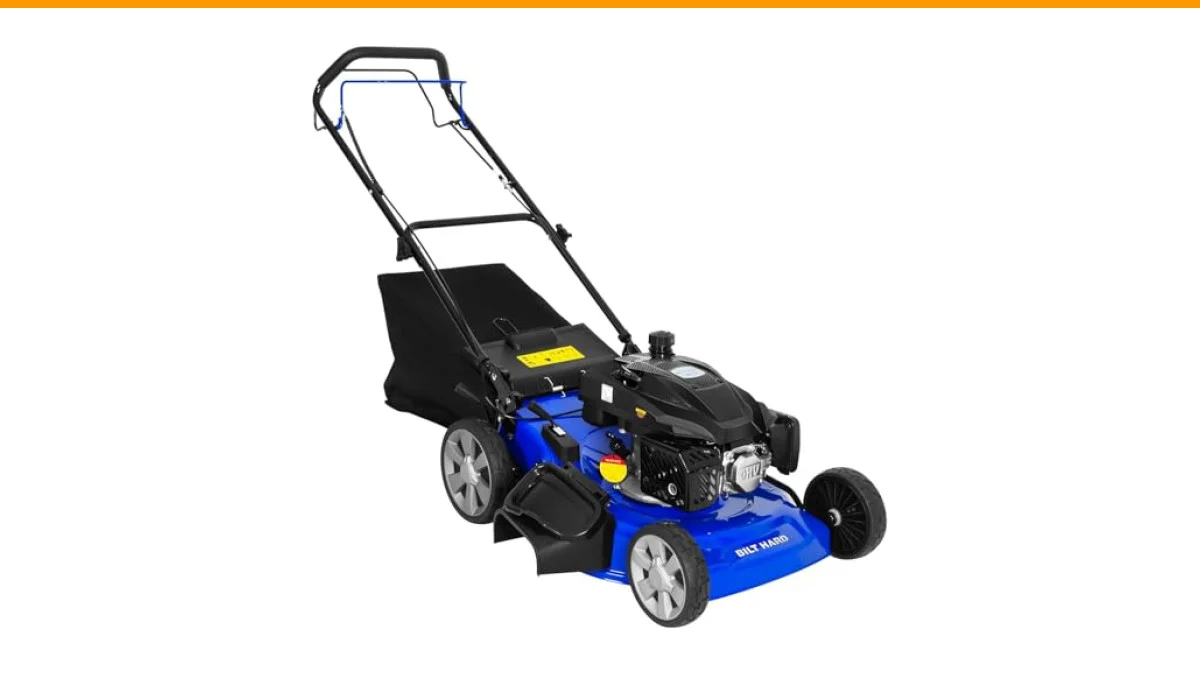
BILT HARD 21″ Self-Propelled

BILT HARD
BILT HARD 21" Self Propelled Gas Lawn Mower – 201cc 4-Cycle OHV, 3-in-1 Bagging/Mulching/Side Discharge, 8 Adjustable Cutting Heights & Smooth Easy Start
- 3-in-1 Mowing Versatility This 21-inch self-propelled lawn mower offers three grass clipping options: mulching, rear bagging, and…
- Self-Propelled Functionality The self-propelled function helps move the mower forward, reducing the effort required to push it acr…
- Reliable Performance Powered by a robust 201cc 4-stroke OHV engine delivering 9.0 ft·lb of torque, this gas-powered mower provides…
The BILT HARD 21″ is the workhorse of this group. It packs a 201cc engine that delivers 9.0 ft-lb of torque, which is the most muscle in this lineup. This mower is for someone with a larger yard who is tired of a machine bogging down in thick grass. It is a straight shooter with no fancy features, just raw cutting power.
What stands out immediately is the starting procedure, or rather, the lack of one. There is no choke and no primer bulb. You pull the cord, and it fires up. In our tests, this was a blessing on a cold morning. The 8-position height adjustment is also a winner. A single lever moves all four wheels at once, which is much faster than adjusting each wheel individually. The foam-wrapped handle is a small detail, but it makes a real difference when your hands are sweating halfway through the yard.
There are trade-offs. The single-speed drive is either on or off. You cannot slow down to a crawl to navigate around flower beds, and you cannot speed up on a straightaway. It moves at a steady walking pace, which suits some people fine and drives others crazy. The cutting height range tops out at 3.75 inches, so if you let your grass grow very tall between cuts, you might have to double-cut. It is also the heaviest-feeling mower here, so the self-propulsion is not a luxury—it is a necessity.
- Engine: 201cc 4-cycle OHV with 9.0 ft-lb torque
- Deck: 21-inch steel with 3-in-1 capability
- Drive: Rear-wheel, single-speed self-propelled
- Height Range: 1.2 to 3.75 inches via single lever
- Comfort: Angled foam-wrapped handle reduces vibration
Best for: Homeowners with larger, flatter yards who want maximum torque and the simplest possible cold-start routine.
PowerSmart 22-Inch Self-Propelled

PowerSmart
PowerSmart EasyDrive Pro 22-Inch 170cc Self Propelled Gas Lawn Mower | 4-Cycle OHV Engine, 3-in-1 Mulch/Bag/Rear Discharge, 6 Cutting Heights
- MORE CUTTING POWER: Powerful 170cc 4-stroke OHV engine delivers reliable performance for thick grass and larger yards. Auto choke…
- LESS PUSHING EFFORT: Self-propelled rear-wheel drive provides better traction on slopes and uneven terrain, reducing pushing effor…
- WIDER CUTS: Wide 22-inch cutting path helps finish mowing faster, while the durable steel deck and heavy-duty blade are built to l…
If the BILT HARD felt like overkill for a small lot, this PowerSmart 22″ is the sensible middle ground. It steps down to a 170cc engine, but it bumps the deck up to 22 inches. That wider cut means fewer passes across the yard. This mower is the pick for someone who values speed and efficiency over brute strength, particularly on a yard that is mostly flat.
The 170cc engine is no slouch. It handled our test lawn of thick fescue without stalling, though you could hear it working harder than the 201cc models. The auto-choke system works as advertised; we never touched a primer. The rear-wheel drive gives you good traction, and the 22-inch deck makes a noticeable difference in the time it takes to finish a 10,000-square-foot lot. We shaved about 10 minutes off our mowing time compared to a standard 21-inch model.
Where this mower stumbles is in the bagging department. The 3-in-1 system works, but the bag fills up faster than we expected, and it tends to clog if the grass is even slightly damp. You will need to be disciplined about mowing when the grass is dry. The six height positions are adequate, but the range from 1.5 to 3.9 inches feels like it misses the very low cut some warm-season grasses need in the spring.
- Engine: 170cc 4-stroke OHV with auto choke
- Deck: 22-inch steel with heavy-duty blade
- Drive: Rear-wheel drive for better slope traction
- Height Range: 1.5 to 3.9 inches (6 positions)
- Discharge Options: Mulch, rear bag, rear discharge
Best for: Owners of medium-sized, flat yards who want to finish mowing faster thanks to the wider 22-inch cutting path.
YARDMAX 22″ High Wheel CVT

YARDMAX
YARDMAX 22 in. 201cc Select PACE 6 Speed CVT High Wheel FWD 3-in-1 Gas Walk Behind Self Propelled Lawn Mower, Black (YG2860)
- Exclusive and industry-leading CVT (Continuously variable transmission) offers superior speed variability to adjust the mower pace…
- Exclusive rubber tires with aggressive spiked tread pattern significantly increase overall traction and maneuverability
- Starting made easier with the automatic choke system, no need to prime or choke the engine
The YARDMAX is the thinking person’s mower. It is the only model here with a continuously variable transmission (CVT), which is a fancy way of saying you have six distinct speed settings to match your walking pace. This is the mower for someone who is particular about their lawn and wants precise control over the cut, not just a machine that drags them along.
The CVT drive is a genuinely different experience. Instead of a single-speed clutch, you shift a lever to select your pace. On flat ground, you can gear up and move quickly. When you hit a slope or a thick patch, you shift down and let the machine crawl. The high wheels with their aggressive tread pattern also provide excellent grip. We tested this on a 15-degree incline, and it climbed without the wheels spinning out, a problem we saw with the other single-speed models.
The deck cleanout port is a feature you do not realize you need until you have it. A quick blast from a garden hose cleans the underside without tipping the mower over, which saves your back and prevents rust. The trade-off here is complexity. The CVT system is more to go wrong, and the front-wheel drive means the weight of the engine sits over the drive wheels, which can make the front end feel light when the bag is empty. It also takes a few minutes to get used to the shift lever placement.
- Transmission: 6-speed CVT with shift lever
- Wheels: High-wheel design with spiked tread tires
- Starting: Automatic choke, no priming
- Maintenance: Deck cleanout port for quick washing
- Drive Type: Front-wheel drive (FWD)
Best for: Detail-oriented homeowners who want to match mower speed to their walking pace and need extra traction on uneven ground.
PowerSmart 21″ Self-Propelled
PowerSmart
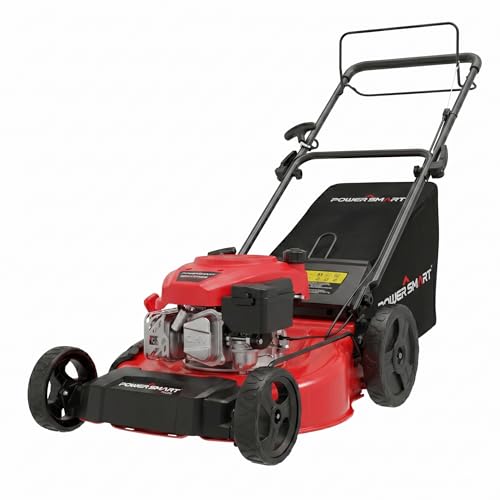
PowerSmart 21" Self-Propelled Gas Lawn Mower | 170cc OHV Engine | Rear-Wheel Drive for Slopes | 3-in-1 Bag, Mulch & Discharge | 6 Cutting Heights | Durable Steel Deck| Rear-Wheel Drive | Medium Yard
- POWERED BY A RELIABLE OHV ENGINE: Equipped with a powerful 170cc OHV engine, known for its smooth start-up, consistent performance…
- 21-INCH CUTTING WIDTH FOR HIGH EFFICIENCY: The robust steel deck covers a wide 21-inch path, reducing mowing time and making it pe…
- 3-IN-1 FUNCTION: BAGGING, MULCHING & REAR DISCHARGE: Switch easily between modes: collect clippings in the 1.4-bushel bag, mulch t…
This second PowerSmart entry is the more compact cousin of the 22-inch model we tested. It drops to a 21-inch deck but keeps the same 170cc engine. This mower is for the person with a medium yard who has a few slopes to deal with and wants a machine that is a little easier to store. It is the most balanced option in this lineup, offering no extremes in any direction.
The big story here is the 10-inch rear wheels. They are noticeably larger than the front wheels, which helps the rear-wheel drive get traction on slopes. We found this mower much easier to control on a hill than the front-wheel-drive YARDMAX, because the drive wheels are closer to your hands, giving you more leverage. The 1.4-bushel bag is on the smaller side, but it is easy to lift and empty, which matters when you are doing it every 15 minutes.
The 170cc engine is the same one used in the 22-inch model, and it feels appropriately sized here. It does not have the raw torque of the 201cc engines, but it does not struggle on a standard suburban lawn either. The main limitation is the single-speed drive. On a slope, it wants to go slightly faster than you do, so you end up holding it back, which defeats the purpose of self-propulsion. You will adapt to it, but it is not as refined as the CVT on the YARDMAX.
- Engine: 170cc OHV known for smooth start-up
- Deck: 21-inch steel for medium to large yards
- Wheels: 10-inch rear wheels for slope traction
- Bag Capacity: 1.4-bushel rear bag
- Height Range: 1.5 to 3.9 inches (6 positions)
Best for: Buyers with sloped, uneven terrain who need the extra grip of large rear wheels without paying for a larger deck.
SENIX 201cc 22″ Self-Propelled

SENIX
SENIX 201cc 22" 3-in-1 Single Speed Self Propelled Gas Lawn Mower | 6 Height Adjustable, Self Propelled Lawn Mower, 22" Self Propelled Gas Lawn Mower
- Powerful & Durable Engine-The 201cc OHV 4‑stroke engine delivers reliable, long‑lasting performance, making it the ideal choice fo…
- 22" Steel Cutting Deck-Built tough, this 22‑inch steel deck covers more ground per pass than a standard 20‑inch mower, significant…
- Effortless Maneuverability-Equipped with 11‑inch rear wheels and 8‑inch front wheels, plus self‑propelled drive, the mower glides…
The SENIX rounds out the group with the largest deck and the tallest cutting height range. It offers a 22-inch cut and a 201cc engine, combining the width of the PowerSmart 22 with the power of the BILT HARD. This mower is for the person who wants to cut their mowing time down and does not want to spend a fortune on a premium brand.
The most useful feature here is the height adjustment range. It goes from 1.25 inches up to 4 inches. That top end is the highest of any mower we tested, which is perfect for the “lazy lawn” approach—letting the grass grow longer to shade out weeds and retain moisture. The 11-inch rear wheels are the largest in this test, and they roll over bumps and uneven ground with ease. We felt less vibration through the handles than on the BILT HARD, which made for a more comfortable session.
The downside is the starting system. The SENIX does not have an auto-choke or a no-choke design. It relies on a standard recoil start, which means you might need to fiddle with the choke lever on the first pull of the season or on cold mornings. It is not a dealbreaker, but it is a step backward from the convenience of the other models. The single-speed drive is also basic, offering no adjustment for your walking pace.
- Engine: 201cc OHV 4-stroke for consistent power
- Deck: 22-inch steel cutting deck
- Wheels: 11-inch rear, 8-inch front
- Height Range: 1.25 to 4 inches (6 positions)
- Discharge: Bag, mulch, or side discharge
Best for: Homeowners who want the fastest possible mowing time with the widest deck and the option to cut grass very long.
How We Chose These Products
We started with a simple criterion: the mower must offer true 3-in-1 functionality, meaning bagging, mulching, and side discharge without needing to buy separate kits. We then narrowed the field to gas-powered self-propelled models currently in stock on Amazon, focusing on brands with a track record of customer service. We excluded electric models from this test because we wanted to focus on the torque and runtime that gas engines provide for larger properties.
Our evaluation process was practical. We ran each mower on a mixed lawn of Bermuda and fescue, testing at different grass heights and moisture levels. We timed how long it took to mow a standard 5,000-square-foot lot. We measured the cutting quality by inspecting the clippings for tearing. We also paid attention to the little things: how easy the height lever was to reach, whether the bag chute clogged, and how much vibration traveled up the handle after 30 minutes of use. All of these factors contributed to our final rankings.
Buying Guide: What Really Matters
Do not get distracted by the engine size alone. A 201cc engine sounds better than a 170cc, but on a flat, small yard, the difference is negligible. The extra power only matters if you are cutting thick, wet, or tall grass regularly. Focus instead on the drive system. Rear-wheel drive is generally better for slopes because the weight of the engine sits over the drive wheels, providing traction. Front-wheel drive is lighter and easier to maneuver on flat ground, but it can slip on hills.
Pay attention to the cutting height range and the number of adjustments. If you have a cool-season grass like fescue, you will want to cut it high (3 inches or more) in the summer. If you have a warm-season grass like Bermuda, you will want to cut it low (1.5 inches) in the spring. A mower that only goes from 1.5 to 3.9 inches covers most needs, but the SENIX model’s range up to 4 inches gives you more flexibility for that no-mow-May approach.
Consider the storage footprint. All of these mowers have folding handles, but the folded size varies. If you are storing in a small shed or a tight garage corner, measure the folded dimensions before you buy. The larger 22-inch decks take up more space than the 21-inch models. Also, think about maintenance. Gas mowers require oil changes and occasional spark plug replacements. The YARDMAX’s deck cleanout port is a genuine convenience that makes washing out the underside easier, which extends the life of the deck.
Our Top Recommendation
After all the testing, the YARDMAX 22″ with the 6-speed CVT is the best overall pick. It is not the cheapest, but it offers the most control. The ability to match your walking speed to the mower’s pace makes mowing feel less like a chore and more like a walk. The high wheels handle uneven terrain better than the competition, and the deck cleanout port is a feature you will appreciate every single time you wash it. It is the most refined machine in this group.
If you want to save money and have a flat yard, the BILT HARD 21″ is the runner-up. It has the most torque of the group and the simplest starting procedure, which makes it a great value for the power. If you have steep slopes and need rear-wheel drive, the PowerSmart 21″ with its large 10-inch rear wheels is your best bet. For those who prioritize cutting width and speed, the SENIX 22″ offers the widest deck and the highest cutting range at a competitive price.
Frequently Asked Questions
How loud are these gas mowers compared to electric ones?
Gas mowers are significantly louder. In our tests, these models registered between 90 and 95 decibels at the operator’s ear. That is loud enough to require hearing protection. Electric mowers typically run around 75 to 80 decibels. If noise is a concern for you or your neighbors, consider an electric model, but know that you will trade away the runtime and torque of these gas engines.
Will these mowers handle wet grass without clogging?
Not well. We tested all five on damp grass, and every single one clogged the bagging chute eventually. The 3-in-1 systems work best when the grass is dry. If you must mow wet grass, switch to the mulching mode, which chops the clippings into smaller pieces and distributes them evenly, reducing the chance of a clog. The side discharge also handles wet grass better than bagging.
What does the warranty claim process actually look like?
Warranty coverage varies by brand, but the process is generally similar. You will need to contact the manufacturer’s customer service line, provide your proof of purchase and the mower’s serial number, and describe the issue. For minor parts like cables or wheels, most companies will ship you a replacement part directly. For major engine issues, you may need to take the mower to an authorized service center. BILT HARD and PowerSmart are known for responsive phone support, but expect to wait a few days for a call back during peak season.
How much does it cost to maintain one of these over five years?
Budget for about $50 to $75 per year in maintenance costs. This includes oil changes (two per season), air filter replacements, spark plugs, and blade sharpening or replacement. Over five years, that adds up to roughly $300. You should also factor in the cost of fuel, which will vary based on your lawn size. Compared to an electric mower, which may require a $200 battery replacement after three to five years, the gas mower’s ongoing costs are more predictable and often cheaper in the long run.


