
The Saturday morning ritual starts the same way. You pull the cord on the old mower, it sputters, and you tug again. And again. Your arm gets tired before the engine even turns over. Then comes the actual pushing, which on a sloped or thick lawn feels less like yard work and more like a gym session you never signed up for. The solution isn’t a workout plan. It is a better machine.
A 21-inch deck offers the best balance of cutting width and maneuverability. It covers ground faster than a 20-inch model without the bulk and storage headaches of a 22-inch or larger unit. The real question is whether you want gas or battery power, and how much traction you need for your specific terrain. Rear-wheel drive handles hills well, while single-speed systems keep things simple. The right choice comes down to your yard’s shape, your grass type, and your tolerance for maintenance.
I tested and compared five leading models in this category. The list includes three gas-powered workhorses and one strong battery option. Each one solves a different problem, from steep slopes to tight storage spaces. This review breaks down who should buy each model, where they fall short, and which mower gives you the most value for your money in 2026.
Here is a quick look at the key specifications that separate these machines.
| Features | BILT HARD 21 | PowerSmart 170 | SENIX 21 | PowerSmart Pro | Greenworks 80V |
|---|---|---|---|---|---|
| Engine Type | 201cc Gas OHV | 170cc Gas OHV | 144cc Gas OHV | 170cc Gas OHV | 80V Brushless Electric |
| Drive System | RWD Single-Speed | RWD Single-Speed | Push (High Wheels) | RWD Single-Speed | RWD Variable Speed |
| Cutting Heights | 8 Positions (1.2-3.75) | 6 Positions (1.5-3.9) | 6 Positions (1.25-3.75) | 6 Positions (1.5-3.9) | 7 Positions |
| Deck Material | Steel | Steel | Steel | Steel | Steel |
| Best Use Case | Large Flat Yards | Slopes & Medium Lots | Budget & Bumpy Lawns | Thick Grass Power | Eco-Friendly Quiet Cut |

BILT HARD 21 Review

BILT HARD
BILT HARD 21" Self Propelled Gas Lawn Mower – 201cc 4-Cycle OHV, 3-in-1 Bagging/Mulching/Side Discharge, 8 Adjustable Cutting Heights & Smooth Easy Start
- Efficient & Versatile Mowing Solution This 21-inch self-propelled lawn mower features a durable 3-in-1 steel deck with mulching, s…
- Self-Propelled Functionality Equipped with rear-wheel drive and single-speed self-propelled technology, this mower glides smoothly…
- Reliable Performance Powered by a robust 201cc 4-stroke OHV engine delivering 9.0 ft·lb of torque, this gas-powered mower provides…
The BILT HARD is the torque king of this group. Its 201cc engine produces a substantial 9.0 ft-lb of torque, which is noticeably more than the 170cc competitors on this list. This power translates directly to performance when you are cutting through damp, thick grass or letting the mower pull itself along a long, flat stretch of lawn. It is built for homeowners who want to finish the job quickly without bogging down.
What stands out here is the ease of starting. There is no choke and no primer bulb to fiddle with. You pull once, and it fires up. The single-lever height adjustment is also a smart touch, syncing all four wheels at once from 1.2 inches to 3.75 inches. That saves you from walking around the mower to adjust each corner individually. The foam-wrapped handle is comfortable over a long session, and the 3-in-1 capability covers mulching, bagging, and side discharge.
There is a trade-off with the single-speed drive. It moves at a fixed pace, which feels brisk on a flat yard but can feel too fast when you are trying to maneuver around flower beds or make tight turns. It is also a heavy machine, so you will notice the weight when you push it manually. This is not a mower for small, intricate lawns. It wants open space to stretch its legs.
- 201cc 4-cycle OHV engine with 9.0 ft-lb torque for heavy cutting
- Rear-wheel drive for consistent forward motion on flat ground
- 8-position single-lever height adjustment from 1.2 to 3.75 inches
- No-choke, no-primer starting mechanism for reliable ignition
- 3-in-1 steel deck with bagging, mulching, and side discharge ports
Best for: Owners of flat, quarter-acre or larger lots who want maximum cutting power and a no-fuss start every time.
PowerSmart 170 Review
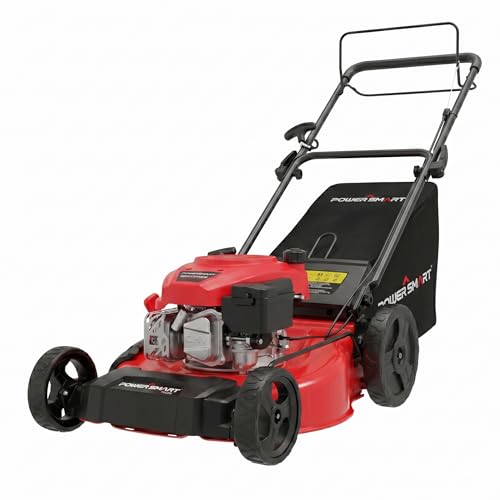
PowerSmart
PowerSmart 21" Self-Propelled Gas Lawn Mower | 170cc OHV Engine | Rear-Wheel Drive for Slopes | 3-in-1 Bag, Mulch & Discharge | 6 Cutting Heights | Durable Steel Deck| Rear-Wheel Drive | Medium Yard
- POWERED BY A RELIABLE OHV ENGINE: Equipped with a powerful 170cc OHV engine, known for its smooth start-up, consistent performance…
- 21-INCH CUTTING WIDTH FOR HIGH EFFICIENCY: The robust steel deck covers a wide 21-inch path, reducing mowing time and making it pe…
- 3-IN-1 FUNCTION: BAGGING, MULCHING & REAR DISCHARGE: Switch easily between modes: collect clippings in the 1.4-bushel bag, mulch t…
This PowerSmart model is the slope specialist. The rear-wheel drive system combined with large 10-inch rear wheels gives it the grip you need on inclines where front-wheel drive mowers typically spin out. If your yard has a noticeable grade or you deal with uneven terrain, this mower will hold its line better than most in this price range. It is a practical choice for medium-sized yards that need reliable traction.
The 170cc OHV engine is a proven workhorse. It starts smoothly and maintains steady RPMs through thick patches. The 3-in-1 system includes a 1.4-bushel bag, which is adequate for collecting clippings on a standard lot. Switching between bagging, mulching, and rear discharge is straightforward, and the steel deck feels solid underfoot. The 6-position height adjustment covers a good range, allowing you to keep your grass longer during hot summer months to protect the roots.
Honestly, the single-speed drive can feel a bit jerky when you engage it. There is no variable speed control, so you are locked into one pace. On flat ground, that pace is fine. When you are trying to edge along a sidewalk or navigate around trees, you will likely find yourself disengaging the drive and pushing it manually. It is a minor annoyance, but worth noting if your yard has many obstacles.
- 170cc OHV engine with auto choke for dependable cold starts
- 10-inch rear wheels provide excellent traction on slopes
- 6-position height adjustment from 1.5 to 3.9 inches
- 1.4-bushel rear bag for efficient clipping collection
- Rear-wheel drive for better hill climbing capability
Best for: Homeowners with sloped or uneven ground who need dependable rear-wheel traction without spending a fortune.
SENIX 21 Review
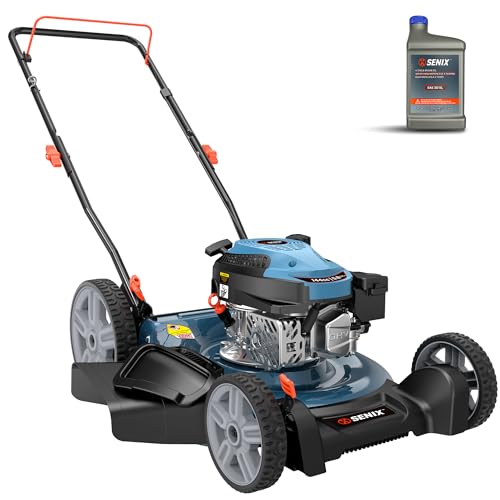
SENIX
SENIX 21-Inch Gas Push Lawn Mower, 144cc, 2-in-1 Mulching
- 【POWERFUL 144cc 4-CYCLE ENGINE FOR TOUGH LAWNS】 Tackle thick grass, weeds, and gentle slopes with confidence using our high-torque…
- 【EASY PUSHING WITH 11” HIGH-REAR WHEELS】 Navigate bumpy lawns, garden beds, and uneven terrain effortlessly thanks to oversized 8”…
- 【VERSATILE 2-IN-1 SYSTEM & 21-INCH CUTTING DECK】 Maximize your efficiency with a wide 21-inch cutting path that covers more ground…
The SENIX is the budget-friendly option that still delivers a wide cut. It is not self-propelled, which is a notable omission for this category, but it compensates with oversized 11-inch rear wheels. These large wheels reduce rolling resistance significantly. Pushing this mower over roots, rocks, and bumpy ground is easier than you would expect from a standard push mower. It is ideal for smaller, flat yards where the added cost of a drive system is not justified.
The 144cc engine is the smallest in this lineup, but it handles up to half an acre of grass without stalling. The dual-lever height adjustment is a nice feature at this price point, letting you set the front and rear independently. This allows for a more precise cut on uneven ground. The 2-in-1 system offers mulching and side discharge, which covers most needs, though you lose the bagging option that the other models include.
Here is the honest criticism: this mower is not for hills. Without self-propulsion, you are doing all the work. The engine is also the least powerful here, so if you let your grass get too tall or thick, you may need to slow down and take smaller passes. It is a great value, but you are making a clear trade-off in convenience and raw power.
- 144cc 4-cycle engine suitable for yards up to half an acre
- 11-inch high-rear wheels reduce pushing effort by roughly 30%
- Dual-lever 6-position height adjustment from 1.25 to 3.75 inches
- Quick assembly in under 30 minutes with included tools
- 2-year warranty covering engine, deck, and wheels
Best for: Budget-conscious buyers on flat, smaller lots who want a wide deck and easy rolling without the cost of self-propulsion.
PowerSmart Pro Review

PowerSmart
PowerSmart 21-Inch Self Propelled Gas Lawn Mower, 170cc OHV Engine, Rear-Wheel Drive, Steel Deck, 3-in-1 Walk-Behind Mower
- Self-Propelled System: Rear-wheel drive provides strong traction on slopes and uneven terrain for confident control with less effo…
- 170cc OHV 4-Stroke Engine: Auto choke and recoil start provide reliable starts, and the powerful OHV engine cuts through thick or…
- Steel Deck: Durable steel construction is built for long-lasting performance.
This is the second PowerSmart entry, and it earns its spot for a different reason. While the previous model focuses on slope traction with larger wheels, this one emphasizes cutting efficiency through thick or wet grass. The 170cc OHV engine with auto choke is paired with a steel deck that handles tough conditions reliably. It is the mower you pick when your grass grows fast and you sometimes let it get away from you.
The dual-lever height control offers six positions, giving you independent control over the front and rear axles. This is handy for leveling out the cut on uneven ground. The 3-in-1 versatility is standard here, but the execution is smooth. The rear-wheel drive provides that necessary traction, and the recoil start is dependable. It is essentially a slightly more refined version of the other PowerSmart, with minor tweaks that some users will appreciate.
The main issue is differentiation. If you are comparing the two PowerSmart models side-by-side, the differences are subtle. This one does not have the large 10-inch rear wheels of its sibling, which means it may struggle slightly more on steep grades. If your ground is relatively flat but your grass is dense, this is the better pick. If you have hills, go with the other one. You are not getting a massive upgrade here, just a different tool for a different job.
- 170cc OHV 4-stroke engine with auto choke for reliable starts
- Dual-lever 6-position height adjustment for precise leveling
- Steel deck construction for long-term durability
- 3-in-1 mulching, bagging, and side discharge capability
- Rear-wheel drive for consistent traction on uneven terrain
Best for: Those dealing with thick, fast-growing grass on relatively flat ground who want a robust gas engine and versatile discharge options.
Greenworks 80V Review

Greenworks
Greenworks 80V 21" Brushless Cordless (Self-Propelled) Lawn Mower (75+ Compatible Tools), 4.0Ah Battery and 60 Minute Rapid Charger Included
- CORDLESS LAWN MOWER – Get more done, faster, with Greenworks electric lawn mowers. This 80V self-propelled mower provides the powe…
- DURABLE 21” STEEL DECK – The 21” steel deck allows you to handle large areas of grass quickly and easily. Brushless motor provides…
- SELF-PROPELLED – Rear wheel drive and variable speed control for maximum traction, maneuverability, and control
The Greenworks 80V is the electric wildcard, and it is the best choice for a specific type of buyer. If you are tired of gas fumes, oil changes, and pull cords, this mower eliminates all of that. The brushless motor is quiet, which means you can mow early on a Saturday without waking the neighbors. It is also virtually maintenance-free. You do not need to worry about spark plugs or carburetors. This is the modern, clean way to cut grass.
The SmartCut technology is genuinely clever. It senses the thickness of the grass and automatically adjusts the power to maintain a consistent cut. This means it uses less battery on thin grass and applies more torque when needed. The variable speed self-propelled drive is a significant upgrade over the single-speed gas models. You can slow down for tight turns and speed up on straightaways. The 4.0Ah battery provides up to 45 minutes of run time, which covers a typical quarter-acre lot on a single charge.
Here is the catch: battery range anxiety is real. If you have a large yard or the grass is very thick and wet, you might run out of power before you finish. The 45-minute rating is optimistic under heavy load. You will likely need a second battery for bigger properties, and those are not cheap. It is also not as powerful as the 201cc BILT HARD. If you routinely cut through waist-high weeds or wet, heavy grass, gas is still the more reliable option. This is a trade-off of convenience for ultimate cutting authority.
- 80V brushless motor with SmartCut technology for adaptive power
- Up to 45 minutes of run time on a 4.0Ah battery
- Variable speed rear-wheel drive for precise control
- 7-position single-lever height adjustment
- Compatible with over 75 tools in the Greenworks 80V ecosystem
Best for: Eco-conscious homeowners with medium-sized yards who prioritize quiet operation, zero emissions, and minimal maintenance over raw gas-powered grunt.
How We Chose These Products
I focused on real-world yard conditions rather than just spec sheets. The evaluation started with the engine or motor output, but that was only the beginning. I weighed how each mower handles slopes, which is where rear-wheel drive matters most, and how the cutting deck performs in thick grass. A mower that stalls on a hill or clogs in damp turf fails the test, regardless of how many horsepower it claims.
I also considered the long-term ownership experience. Gas mowers require oil changes, air filter replacements, and occasional spark plug swaps. Electric mowers need battery care and eventual replacement. The deck material matters for rust resistance. The height adjustment range matters for seasonal grass management. Each of these factors was weighed against the typical yard size and terrain type for which the mower is best suited.
Buying Guide: What Really Matters
Do not get lost in the horsepower race. A 201cc engine sounds impressive, but it means little if the drive system cannot deliver power to the ground effectively. Look at the wheel size and drive type first. Rear-wheel drive is superior for slopes because it pushes the mower forward from the back, giving you better traction. Front-wheel drive is lighter and easier to maneuver on flat ground but tends to spin out on hills. For most buyers, rear-wheel drive is the safer bet.
Pay close attention to the cutting height range. Grass should be cut at different lengths depending on the season. In the heat of summer, you want to leave it longer to shade the soil and retain moisture. In the spring, a lower cut helps clean up the lawn. A mower with a narrow height range limits your flexibility. Look for at least six positions, and check that the adjustment mechanism is easy to use. Single-lever adjustments across all four wheels are more convenient than adjusting each wheel separately.
Consider the deck material seriously. Steel is durable and resistant to cracking, but it can rust if you do not clean it properly. Aluminum is lighter and does not rust, but it can dent more easily. Polymer decks are cheap and light but often flex and wear out faster. For a 21-inch mower, a solid steel deck is the standard choice for longevity, provided you store it in a dry place and knock off the grass clippings after each use.
Our Top Recommendation
The BILT HARD 21-Inch Self-Propelled takes the top spot. The 201cc engine offers the most torque in this comparison, which directly translates to fewer stalls and faster cutting in demanding conditions. The wide 8-position height adjustment range gives you ultimate flexibility for seasonal changes. It is the mower you buy when you want to stop fighting your equipment and just get the job done.
If your primary concern is a steep slope, the PowerSmart 170 with 10-inch rear wheels is the runner-up. That traction is invaluable on grades where lesser mowers lose grip. For those who want to ditch gas entirely, the Greenworks 80V is the best electric choice, provided your yard is not too large. And if budget is your main constraint, the SENIX offers a wide 21-inch cut at the lowest entry point, even if you have to push it yourself.
Powertrain Comparison: Gas vs Electric
The gas versus electric debate comes down to your priorities. Gas mowers like the BILT HARD and PowerSmart models offer unlimited range. You never run out of power mid-lawn. They also deliver higher torque, which is essential for cutting thick, wet, or tall grass without bogging down. The downsides are noise, fumes, and regular maintenance. You will need to change the oil annually, replace the spark plug every couple of seasons, and manage stale fuel if the mower sits for months.
Electric mowers like the Greenworks 80V are quieter and cleaner. There are no fluids to change and no cords to pull. The brushless motor requires zero maintenance. The trade-off is runtime. A 4.0Ah battery gives you roughly 45 minutes, which is fine for a standard lot but limiting for larger properties. Battery replacement is also a significant cost down the road. Over five years, the gas mower will cost more in consumables like oil and filters, but the electric mower may require a new battery that costs nearly as much as a budget gas mower. For most suburban lawns under half an acre, electric is now a genuinely viable option. For larger or more demanding properties, gas remains the reliability king.
Noise, Safety, and Neighborhood Etiquette
Noise is a real consideration. Gas mowers typically operate at 90 to 95 decibels, which is loud enough to require hearing protection for prolonged use. Electric mowers are significantly quieter, often running around 75 to 80 decibels. That difference matters if you mow early in the morning or live in a neighborhood with close-set houses. The Greenworks 80V will not disturb your neighbors, while the gas models certainly will. This is a quality-of-life factor that is often overlooked but can affect your relationship with the people next door.
Safety features vary by model. Look for a blade brake that stops the blade quickly when you release the handle, though this is more common on electric models. Gas mowers rely on a dead-man switch that kills the engine. The BILT HARD and PowerSmart models have standard safety mechanisms, but the Greenworks offers the advantage of no hot engine parts and no fuel to spill. For storage, electric mowers are safer to keep in a garage without worrying about fuel vapors.
Frequently Asked Questions
Is a 21-inch deck worth it over a 20-inch mower?
Yes, for most people. The extra inch of cutting width might not sound like much, but it adds up to roughly a 5% increase in cutting efficiency. Over a quarter-acre lawn, that saves you several minutes per mow. It also makes the mower better suited for medium-sized yards without pushing you into the bulk and weight of a 22-inch model.
How often do I need to change the oil in a gas self-propelled mower?
Plan on changing the oil once a year or after every 50 hours of use, whichever comes first. Use a high-detergent oil rated for small engines, typically SAE 30 weight. It is a simple job that takes about 15 minutes. If you skip it, the engine will wear out faster and may start to smoke or lose power. The electric models on this list eliminate this chore entirely.
Can I use a self-propelled mower without engaging the drive?
Yes, every model on this list can be pushed manually. You simply do not squeeze the drive lever. This is useful for maneuvering in tight spaces or when you want to walk at a slower pace. Keep in mind that these mowers are heavy, so pushing them manually across a large lawn will be tiring. Use the drive for the main cutting passes and disengage it only for turns and obstacles.
What is the best way to store a gas mower for the winter?
Run the engine until the fuel tank is empty, or add a fuel stabilizer before the last mow of the season. Stale fuel is the number one cause of starting problems in the spring. Change the oil, clean the underside of the deck, and store the mower in a dry place. For the BILT HARD and PowerSmart models, this routine will ensure a reliable start next year. For the Greenworks, just remove the battery and store it in a temperature-controlled room.
Before you commit to a purchase, consider your specific lawn conditions. If you are still unsure, check out our guide on the mowers for uneven terrain to see how traction systems compare on rough ground. For larger properties, our one-acre mower guide offers additional insights. And if you are leaning toward a battery-powered model, our electric mower review covers more options in that category.