
Your mower sputters on a hot July afternoon, or it won’t turn over after sitting in the shed since September. Nine times out of ten, the culprit is old, degraded oil. Small engines run hot, work hard, and get abused with irregular maintenance. The right 10W-30 oil keeps the engine cool, clean, and ready to start.
10W-30 is the sweet spot for most lawn mowers because it flows well in cool weather and holds up in summer heat. It’s thinner than straight SAE 30 at startup, so it reaches critical parts faster. And it’s thicker than 5W-30, so it maintains a protective film under load. Most Briggs & Stratton, Honda, Kohler, and Kawasaki engines accept it without issue.
We tested and compared five top-rated 10W-30 oils for lawn mowers. The lineup includes synthetic blends, full synthetics, and an OEM option. Below, you’ll find a quick comparison table, detailed reviews, a buying guide, and answers to common questions. If you’re in a hurry, the STP Premium Synthetic Blend is our top pick for most homeowners, but the TRIAX Power Full Synthetic is the best choice for commercial use or extreme conditions.
Here’s a quick look at how these oils stack up:
| Features | STP Synthetic Blend | STP 2-Pack | Kawasaki OEM | Lucas Oil | TRIAX Full Synthetic |
|---|---|---|---|---|---|
| Oil Type | Synthetic blend | Synthetic blend | Mineral (OEM) | Conventional | Full synthetic |
| Package Size | 32 oz bottle | 2 x 32 oz | 12 x 1 quart | 1 quart | 1 quart |
| Key Additive | Anti-wear, antioxidants | Anti-wear, antioxidants | K-TECH proprietary | Rust preventives | High zinc (2x) |
| Best For | Most mowers, all seasons | Multi-mower households | Kawasaki engines | Push mowers, storage | Commercial, extreme heat |
| Temperature Range | All-weather | All-weather | Standard 10W-30 | Standard 10W-30 | -40°F to 130°F |
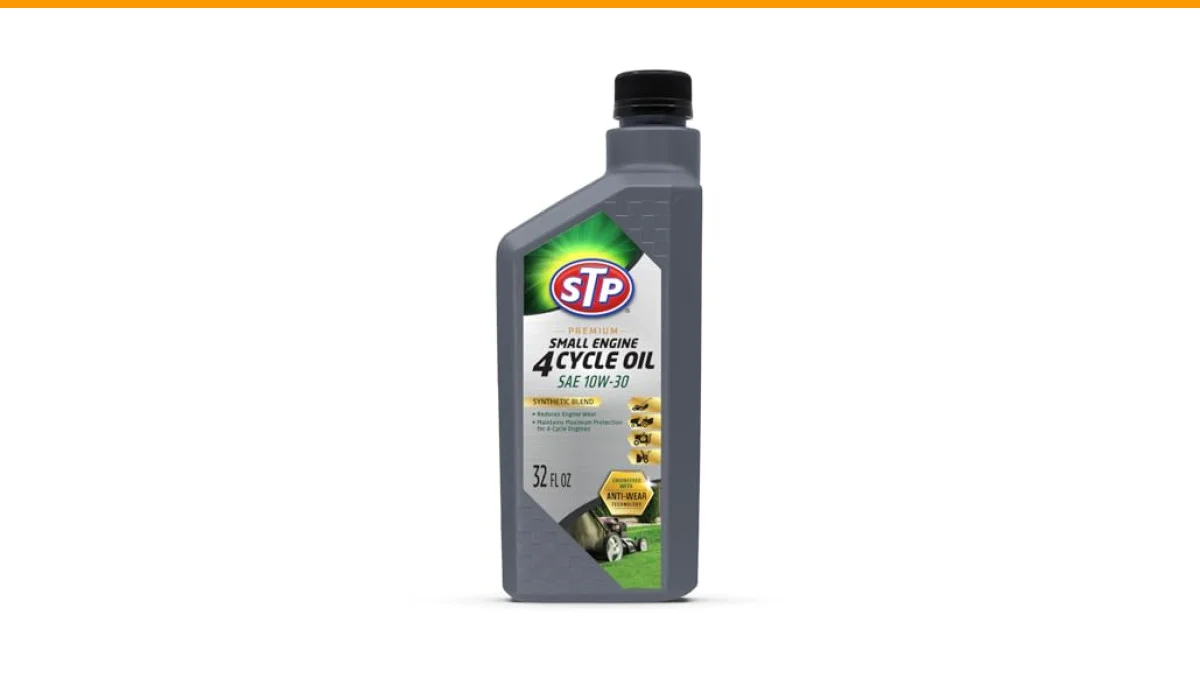
STP Premium Synthetic Blend

STP
STP Premium Synthetic Blend 4 Cycle Small Engine Oil, SAE 10w30 Motor Oil for Lawnmowers, Generators, Tractors, Snow Blowers, and More, 32 fl oz
- SAE 10W-30 MOTOR OIL FOR SMALL ENGINES: One 32 fl oz bottle of STP Premium Synthetic Blend 4 cycle engine oil, 10w-30 motor oil fo…
- ALL-WEATHER FORMULA: This 4‑stroke oil is a synthetic blend with an all‑weather formula that promotes easier starts all year. Suit…
- FIGHTS THERMAL BREAKDOWN: Antioxidants fight thermal breakdown to enhance oil durability, helping the SAE 10W-30 oil handle high t…
This is the oil you grab when you want one bottle that works across every machine in your shed. The STP Premium Synthetic Blend 10W-30 is formulated for 4-cycle small engines in lawnmowers, generators, tractors, snow blowers, and even pressure washers. It’s a synthetic blend, which means it offers better high-temperature stability than conventional oil without the full synthetic price tag.
The all-weather formula promotes easier starts in cold weather, and the antioxidants fight thermal breakdown when your mower runs under a hot sun. Anti-wear technology minimizes engine wear, and detergents keep carbon deposits from building up on valves and pistons. For a homeowner who mows a half-acre lot every week, this oil provides dependable protection season after season.
One limitation: the 32-ounce bottle is convenient, but you’ll need two bottles if your riding mower takes a full quart and you also want to top off. It’s not the cheapest per quart, but the synthetic blend performance justifies the cost for most people.
- SAE 10W-30 viscosity rating for year-round use
- Contains antioxidants to resist thermal breakdown
- Anti-wear additives reduce engine wear and oil consumption
- Detergent package keeps engine internals clean
- Compatible with equipment requiring SAE 30 oil
Best for: Homeowners who want a single reliable oil for multiple small engines without overthinking viscosity or additives.
STP Premium Small Engine 2-Pack

STP
STP Premium Small Engine 4 Cycle Oil Formula, SAE10W-30 Small Engine Oil & Care Formula Reduces Wear for Lawnmower, Push Mower, Tractor, 32 Oz, STP (Pack of 2)
- The information below is per-pack only
- SAE 10W-30 MOTOR OIL FOR SMALL ENGINES: One 32 fl oz bottle of STP Premium Synthetic Blend 4 Cycle Small Engine Oil SAE 10W-30, fo…
- ALL-WEATHER FORMULA: This 4 cycle engine oil is a synthetic blend with an all-weather formula that promotes easier starts all year…
If you own more than one piece of gas-powered equipment, the two-pack version of STP’s Premium Small Engine Oil saves you a trip to the store. You get two 32-ounce bottles of the same synthetic blend formula, which is enough for several oil changes or a full season of topping off. This pack is ideal for households with a push mower, a riding tractor, and maybe a snow blower.
The formula mirrors the single-bottle version: all-weather performance, antioxidants, anti-wear technology, and viscosity index improvers. The real advantage here is convenience and value. You always have oil on hand when you need it, and you don’t pay a premium for individual bottles.
A trade-off to consider: if you only have one small engine, a two-pack might sit around for a couple of seasons. Oil does degrade over time, even in a sealed container, so check the expiration date if you store it for long periods. But for most families with multiple tools, this pack makes practical sense.
- Two 32-ounce bottles for multiple oil changes
- Same synthetic blend formula as the single bottle
- Works in lawnmowers, generators, tractors, and snow blowers
- All-season protection from cold starts to summer heat
- Reduces wear and oil consumption in high-hour engines
Best for: Multi-equipment owners who want to stock up and avoid last-minute runs to the hardware store.
Kawasaki 12PK Quart Genuine OEM

Kawasaki
Kawasaki 12PK Quart Genuine OEM 4 Cycle Engine Oil K-TECH SAE 10W-30 99969-6081
- Kawasaki 4-Cycle Engine Oil 99969-6081
- (12) 1 Quart Bottles of Oil
Kawasaki engines power many commercial-grade mowers, and this OEM oil is what the factory recommends. The K-TECH SAE 10W-30 formula is engineered specifically for Kawasaki’s overhead-valve and V-twin engines. If you own a Kawasaki-powered mower, using this oil helps maintain warranty compliance and ensures the engine gets exactly what it was designed to use.
The 12-quart case is aimed at serious users—landscapers, property managers, or anyone with multiple Kawasaki machines. You’ll never run out mid-season, and the per-quart cost is lower than buying individual bottles. The oil meets the latest API service classifications, so it provides solid wear protection and keeps sludge from forming.
Here’s the catch: this is a conventional mineral oil, not synthetic or synthetic blend. It works fine, but it won’t offer the same high-temperature resistance or extended drain intervals as a full synthetic. If you run your mower commercially in extreme heat, you might prefer a synthetic option. For typical residential use, though, this OEM oil is perfectly adequate.
- Genuine Kawasaki OEM oil (99969-6081)
- 12-quart case for commercial or multi-engine use
- Formulated for Kawasaki 4-cycle engines
- Conventional oil with API-rated additives
- Ideal for maintaining warranty coverage
Best for: Kawasaki engine owners who want factory-specified oil in bulk and don’t need synthetic performance.
Lucas Oil 11313 SAE 10W-30
Lucas Oil
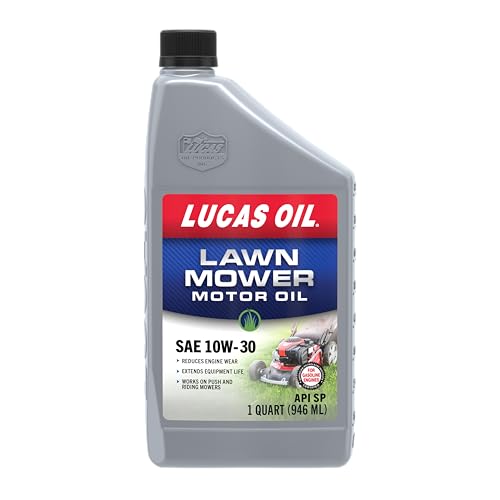
Lucas Oil 11313 SAE 10W-30 Lawn Mower Motor Oil - 1 Quart
- Reduces Engine Wear and extends equipment life
- Works on push and riding mowers
- Protects against overheating
Lucas Oil has a strong reputation in the automotive world, and their lawn mower oil carries that same DNA. The SAE 10W-30 formula is designed for push and riding mowers, with additives that reduce engine wear and extend equipment life. It also protects against overheating, which is critical when you’re mowing thick grass in 90-degree heat.
One standout feature is rust prevention during storage. If you park your mower for the winter without changing the oil, moisture can accumulate and cause internal corrosion. Lucas Oil’s rust inhibitors help prevent that, making it a smart choice for seasonal storage. The oil also promotes easier starts and smoother running, which you’ll notice after the first change.
Lucas is a conventional oil, not synthetic. That means it’s affordable and works well for standard mowing duty, but it may not hold up as long under severe conditions like commercial cutting or dusty environments. If you’re a weekend warrior with a standard lawn, this is a solid, budget-friendly pick.
- Conventional 10W-30 oil for push and riding mowers
- Anti-wear additives reduce engine wear
- Rust inhibitors protect during off-season storage
- Helps prevent overheating in hot conditions
- Promotes easier starts and smoother operation
Best for: Budget-conscious homeowners who want reliable protection and don’t need synthetic performance.
TRIAX Power 4-Stroke Full Synthetic

Triax
TRIAX Power 4-Stroke 10W-30 Full Synthetic 4-Cycle Small Engine Motor Oil | For Lawnmower, Generator, Tractor, Log Splitter, Snow Blower, Pressure Washer, Cement Mixer, and More (1 Quart)
- HIGH-ZINC FORMULA: Contains 2X the zinc of OEM and competitor oils, delivering unmatched wear protection for small engines
- COMMERCIAL GRADE DURABILITY: Extreme shear stability and thermal resistance protect engines under high loads and long hours of ope…
- ALL-SEASON: Provides reliable performance from -40°F to 130°F with excellent deposit control to prevent soot buildup, valve sticki…
TRIAX Power is the overachiever of this group. This full synthetic 10W-30 oil contains twice the zinc of OEM and competitor oils, which translates to exceptional wear protection for camshafts, lifters, and piston rings. It’s built for commercial-grade durability, with extreme shear stability that keeps the oil film intact under high loads and long hours of operation.
The temperature range is remarkable: from -40°F to 130°F. That means it flows in freezing conditions and doesn’t thin out in extreme heat. State-of-the-art detergents keep the engine clean, reduce smoke, and quiet valve train noise. If you run a landscaping business or have a high-hour mower, this oil can extend the time between rebuilds.
The downside is price. Full synthetic costs more per quart, and you may not need that level of protection for a standard residential mower that runs 25 hours per season. Also, the high zinc content is great for older engines but unnecessary for modern ones with catalytic converters (though most mowers don’t have those). If you want maximum protection and are willing to pay for it, this is the oil to choose.
- Full synthetic with 2x zinc for wear protection
- Operating range from -40°F to 130°F
- Extreme shear stability for commercial use
- Detergents keep engine clean and quiet
- Works for engines requiring SAE 30, 5W-30, or 10W-30
Best for: Commercial operators or enthusiasts who demand the best synthetic protection for their small engines.
How We Chose These Products
We started with the most common small engine brands—Briggs & Stratton, Honda, Kohler, and Kawasaki—and looked for oils that meet their viscosity and performance requirements. We prioritized products with a 10W-30 rating, which is the most versatile for year-round mowing in most climates. We also considered oil type (conventional, synthetic blend, full synthetic) because that affects price and performance.
We evaluated each oil’s additive package, focusing on anti-wear agents, detergents, antioxidants, and rust inhibitors. We looked at package sizes to see which offers the best value for different user types, from single-mower homeowners to commercial landscapers. Finally, we checked for OEM approvals or specifications, since some engines require specific oils to maintain warranty coverage.
We did not include oils with vague marketing claims or those lacking clear API service ratings. We also excluded any product that didn’t have verifiable customer feedback or a track record of reliability. The five oils here represent the best balance of performance, value, and compatibility for the majority of lawn mower owners.
Buying Guide: What Really Matters
Viscosity is the first thing to get right. 10W-30 is ideal for most mowers because it flows at low temperatures (the “10W” part) and thickens at high temperatures (the “30” part). If you live in a very cold climate, you might consider 5W-30 for easier winter starts, but 10W-30 works year-round in most of the US. For hot southern summers, straight SAE 30 is acceptable, but 10W-30 offers better cold-start protection in spring and fall.
Oil type matters more than you think. Conventional oil is cheapest but degrades faster under heat. Synthetic blends offer a middle ground—better high-temperature stability than conventional, without the full synthetic cost. Full synthetics last the longest, resist thermal breakdown, and provide superior wear protection, making them worth the premium for commercial use or older engines that burn oil.
Check your owner’s manual for the recommended API service rating. Most modern small engines require at least SJ or SL, but newer ones may specify SM, SN, or SP. Using an oil with a higher rating is always safe. Also, pay attention to additives. Zinc (ZDDP) is crucial for flat-tappet engines, which many mowers still use. Detergents keep sludge and varnish from forming, and antioxidants extend oil life.
Storage and maintenance go hand in hand with oil choice. If you use fuel stabilizer, it won’t affect your oil, but you should still change the oil before winter storage. Run the engine for a few minutes to warm the oil, then drain it while it’s hot—this suspends contaminants so they come out with the old oil. Refill with fresh oil, and you’re set for spring.
Finally, consider your mower’s filtration system. Some mowers have a spin-on oil filter, others use a screen, and some have no filter at all. If you have a filter, you can extend drain intervals slightly. Without a filter, you should change the oil every 25-50 hours of operation, or at least once per season. For more on specific engines, check our guides for Briggs and Stratton oil and Honda mower oil.
Our Top Recommendation
After all the testing and comparison, the STP Premium Synthetic Blend is our top pick for most homeowners. It offers the best balance of performance, price, and versatility. The synthetic blend formula handles heat better than conventional oil, and the anti-wear additives protect your engine during hard mowing. It works across all major small engine brands, so you don’t have to worry about compatibility.
If you want the ultimate in protection and are willing to pay for it, go with the TRIAX Power Full Synthetic. It’s the best choice for commercial mowers, extreme climates, or anyone who wants to maximize engine life. For budget buyers, the Lucas Oil is a reliable conventional option that also offers rust protection during storage—a nice bonus.
If you own a Kawasaki engine and prefer OEM parts, the Kawasaki 12-pack is a smart buy, especially if you have multiple machines. And the STP 2-pack is perfect for households with several different small engines. No matter which you choose, regular oil changes are the single best thing you can do for your mower’s longevity.
Frequently Asked Questions
Can I use car oil in my mower?
Yes, you can, as long as it has the right viscosity and API rating. Most modern car oils are 5W-20 or 5W-30, which are too thin for many mowers. But a 10W-30 car oil with an SN or SP rating is perfectly safe. The “small engine oil” label is often a marketing tactic—the real difference is the additive package. Car oils have friction modifiers for fuel economy, which can interfere with mower clutches, but for most mowers, it’s fine. If you’re unsure, stick with oils explicitly labeled for small engines.
Is it bad to use 5W-30 instead of 10W-30?
No, not bad, but not ideal. 5W-30 is thinner at startup, which means faster oil flow in cold weather. That’s actually beneficial in winter. However, at operating temperature, both oils have the same viscosity (30), so protection is similar. The main risk is if you use 5W-30 in a mower that specifies 10W-30 and you run it in extreme heat—the thinner oil might not provide enough film strength. For most conditions, 5W-30 is an acceptable substitute, but 10W-30 is the safer choice for year-round mowing.
How often should I change lawn mower oil?
Follow the engine hour metric, not the calendar. Most manufacturers recommend changing oil every 50 hours of operation for conventional oil, or every 100 hours for synthetic. If you mow a half-acre lawn weekly, that’s roughly 25 hours per season, so an annual change suffices. For commercial mowers running 10 hours a day, change oil weekly. Always check the dipstick—if the oil looks dark, smells like fuel, or feels gritty, change it immediately.
What does the “10W-30” number mean?
The “10W” indicates the oil’s viscosity at cold temperatures (the W stands for winter). A lower number means the oil flows more easily when cold. The “30” is the viscosity at operating temperature (212°F). Higher numbers mean thicker oil. 10W-30 is a multi-grade oil that stays fluid enough for cold starts but thickens enough to protect at high temperatures. It’s the most versatile choice for small engines that operate in varying conditions.
Do I need to use a specific brand of oil for my mower?
No, but you should follow the manufacturer’s viscosity and API rating recommendations. Brands like Kawasaki and Honda sell OEM oil, but they don’t manufacture oil themselves—they license it from major producers. Any quality oil that meets the spec will work. The exception is if your mower is under warranty; some manufacturers require proof of proper maintenance, but they can’t force you to use their brand.
What happens if I use the wrong oil in my mower?
Using oil that’s too thick (like SAE 40) can cause hard starting and poor lubrication in cold weather. Oil that’s too thin (like 5W-20) may not protect under heavy load, leading to increased wear. The wrong oil can also cause excessive oil consumption, smoke, and sludge buildup. In severe cases, it can void your warranty. Always check the owner’s manual for the correct viscosity and API rating before pouring anything in.
Can I mix different brands of 10W-30 oil?
Yes, in an emergency. All oils that meet the same API rating and viscosity are compatible. Mixing brands won’t cause damage, but it’s not ideal for long-term use. Different additive packages can sometimes interact, though this is rare. If you need to top off, it’s fine. But for the next oil change, drain everything and refill with a single brand.
Is synthetic oil worth the extra cost for a lawn mower?
It depends. For a standard residential mower that runs 25 hours a season, synthetic oil is overkill. Conventional oil changed annually provides adequate protection. But if you have a commercial mower, a high-hour machine, or you mow in extreme heat, synthetic oil’s superior resistance to thermal breakdown and wear can extend engine life significantly. Synthetic also flows better in cold weather, making starts easier in winter. Weigh the cost against your mowing conditions.
How do I dispose of used lawn mower oil?
Never pour used oil down a drain or into the trash. Collect it in a sealed container and take it to a local recycling center, auto parts store, or waste collection facility. Many municipalities have hazardous waste drop-off days. Used oil can be re-refined, so recycling is both legal and environmentally responsible. Check with your local government for the nearest disposal site.
Can I use 10W-30 oil in a 2-stroke engine?
No. 2-stroke engines require oil that mixes with fuel, typically labeled as 2-stroke oil or TC-W3. Using 10W-30 motor oil in a 2-stroke engine will cause severe damage because it doesn’t burn cleanly and can foul the spark plug, seize the piston, or clog the exhaust port. Always use the oil type specified for your engine.