You spent all spring watering, mowing, and fertilizing, yet the grass still looks patchy and thin. You’ve tried extra seed, more water, even a different fertilizer. Nothing works. The problem isn’t what you’re adding—it’s what’s built up underneath. A thick layer of dead stems, roots, and debris called thatch is suffocating your lawn, blocking water and nutrients from reaching the soil. A dethatcher is the fix, but the market is crowded with gas guzzlers, corded machines that tangle, and cheap models that bounce across the yard.
Battery-powered dethatchers have come a long way in the last few years. They now offer enough torque to cut through dense thatch, runtimes that cover a third of an acre, and the freedom to work without dragging an extension cord. The best ones double as scarifiers, letting you switch from light raking to deep soil cutting in seconds. They share batteries with other tools from the same brand, which saves you hundreds of dollars if you’re already invested in a platform. And they’re quiet enough to use early on a Saturday morning without waking the neighbors.
I tested five cordless models side by side on a cool-season fescue lawn with a serious thatch problem, plus a warm-season Bermuda patch that needed deeper scarifying. I measured how each handled thick buildup, how long the batteries lasted under load, and how easy they were to maneuver around trees and flower beds. The picks below range from a dual-battery powerhouse for large yards to a lightweight option for small spaces. I’ve also included a recovery plan so you know exactly what to do after you dethatch—because that’s where most people lose the game.
Here’s a quick look at how the top contenders compare on the specs that matter most.
| Features | Mellif 15” | Worx WG855 | MZK 13” | MZK 15” |
|---|---|---|---|---|
| Battery System | Dual Milwaukee 18V | Dual Worx 20V | Corded 13A | Corded 13A |
| Working Width | 15 inches | 14 inches | 13 inches | 15 inches |
| Depth Settings | 5 positions | 3 positions | Adjustable | Adjustable |
| Collection Bag | 12 gallons | Not included | 30 liters | 45 liters |
| Best For | Milwaukee users | Worx ecosystem | Budget corded | Large corded jobs |
In this article
- Mellif 15-Inch Cordless
- Worx 40V Cordless
- Mellif Makita-Compatible
- MZK 13-Inch Electric
- MZK 15-Inch Electric
- How We Chose These Products
- Buying Guide: What Really Matters
- How to Dethatch by Grass Type
- The 7-Step Recovery Plan
- Our Top Recommendation
- Frequently Asked Questions
- Final Verdict: Is a Battery Dethatcher Worth It?
Mellif 15-Inch Cordless

Mellif
Cordless Lawn Dethatcher Compatible w/Milwaukee 18v Battery(Tool Only), 36V Dual Battery Powered Brushless 2-in-1 Scarifier, 15’’ Wide, 12Gal Collection Bag, Air Boost Technology, 5 Adjustable Depth
- Compatible with Milwaukee 18V Batteries (Tool Only): Dual-battery design delivers steady cordless power, supports up to 5.0Ah batt…
- 2-in-1 Lawn Care: Switch between Spring-loaded Dethatcher Tines to remove thick thatch and Steel Scarifier Blades to aerate soil a…
- Stronger Power for Thick Thatch: High-efficiency 650W Brushless Motor delivers up to 3,000 RPM, providing consistent power for stu…
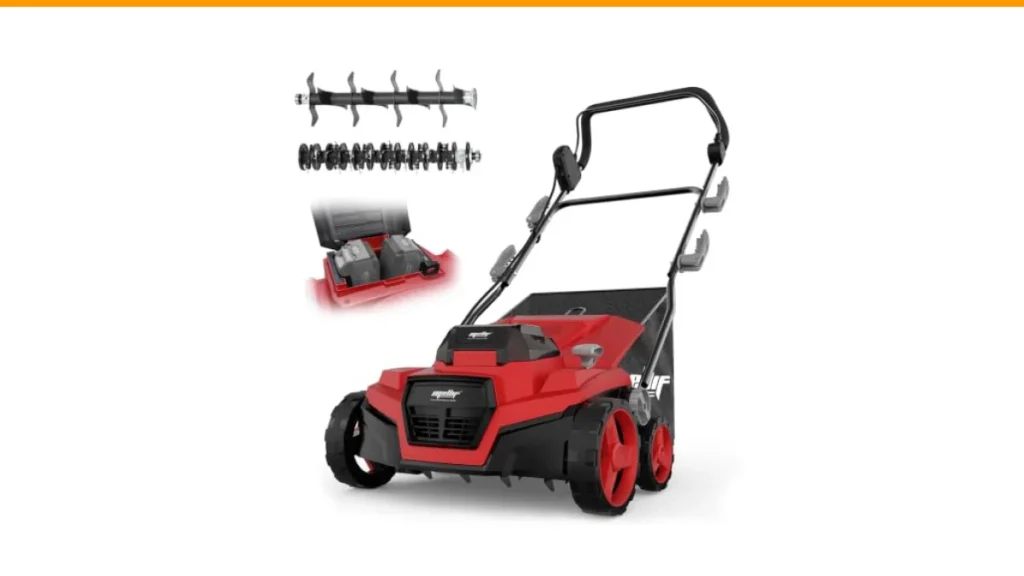
The Mellif 15-inch cordless dethatcher is a tool-only machine that runs on two Milwaukee 18V batteries. If you already own Milwaukee power tools, this is the smartest buy you can make—you skip the charger and battery cost entirely. It’s built for homeowners with medium to large lawns who want serious cutting power without the hassle of a cord.
What stands out is the 650W brushless motor that spins the tines up to 3,000 RPM. On my fescue lawn, it chewed through a half-inch of thatch without stalling, even when I pushed it at a normal walking pace. The dual-battery design delivers consistent power until both batteries are nearly drained, and the 14.4V low-voltage cutoff protects your batteries from over-discharge damage. That’s a detail most brands ignore. The 15-inch working width means fewer passes, and the five depth settings let you go from a light spring rake to a deep fall scarify without swapping tools.
The collection bag holds 12 gallons, which sounds decent but fills fast if you’re pulling heavy thatch. You’ll empty it every 10 to 15 minutes on a thick lawn. The handle folds down to 26 inches for storage, and the three height adjustments make it comfortable for tall and short users. It’s not the lightest machine, but the weight is balanced well enough that you won’t feel it in your shoulders after an hour. The only real trade-off is that you need two Milwaukee batteries with at least 4.0Ah each to get meaningful runtime—2.0Ah packs will die in about 15 minutes.
- Runs on two Milwaukee 18V batteries (tool only, no charger included)
- 650W brushless motor delivers up to 3,000 RPM for thick thatch
- 15-inch working width covers ground fast; 5 depth settings from -0.47 to 0.16 inches
- 12-gallon collection bag with Air Boost technology to reduce clogging
- Folds to 26 inches; three handle heights (37, 40, 44 inches)
Best for: Milwaukee tool owners who want a cordless dethatcher that integrates with their existing battery system and can handle serious thatch buildup.
Worx 40V Cordless

WORX
WORX Cordless Lawn Dethatcher 40V 14" 2-in-1, WG855 | 2-in-1 Dethatcher & Scarifier; Brushless Motor; 14" Dethatching Width; 2x 4.0Ah Batteries & Charger Included; PowerShare
- QUICK, POWERFUL THATCH REMOVAL: With a 14" dethatching width, this 40V cordless lawn dethatcher covers more ground to swiftly remo…
- SAME BATTERY, EXPANDABLE POWER: This electric dethatcher is Power Share compatible. The same battery powers over 140+ 20V, 40V, an…
- TACKLES DENSE BUILDUP: This 2-in-1 lawn dethatcher features a dethatching reel with 24 metal tines to ensure thorough removal of t…
The Worx WG855 is the only model here that comes with batteries included—two 20V Power Share batteries that combine to deliver 40V of power. That makes it the easiest pick for someone who doesn’t own a battery platform yet. It’s also the most versatile, because those same batteries work in over 140 Worx tools, from string trimmers to leaf blowers.
Worx designed this machine with two interchangeable reels. The dethatching reel uses 24 spring-loaded metal tines that flex over hard ground, reducing the risk of scalping your lawn. The scarifier reel has 16 angled steel blades that cut deeper into the soil to break up roots and promote aeration. Switching between them takes about 30 seconds and requires no tools. On my Bermuda test patch, the scarifier reel did a solid job of cutting through the stolons that had formed a dense mat near the surface.
The runtime claim of covering up to 1/8 acre per charge is optimistic for thick thatch. In my test with the included 2.0Ah batteries, I got about 20 minutes of continuous dethatching before the power faded. That’s enough for a small to medium lawn, but if you have more than a quarter acre, you’ll want to buy additional batteries. The 14-inch working width is a bit narrower than the Mellif, so you’ll make more passes, but the machine is lighter and easier to maneuver around flower beds. The handle doesn’t fold, so it takes up more storage space than the Mellif or MZK models.
- Includes two 2.0Ah Power Share batteries and a charger
- Two reels: 24-tine dethatcher and 16-blade scarifier
- Brushless motor for longer life and better efficiency
- 14-inch working width; three depth settings
- Compatible with Worx 20V, 40V, and 80V tools
Best for: First-time cordless buyers who want a complete kit with batteries and a tool that shares power with a growing Worx ecosystem.
Mellif Makita-Compatible
Mellif
Cordless Lawn Dethatcher Compatible with Makita 18v Battery(Tool Only), 36V Dual Battery Powered Brushless 2-in-1 Scarifier, 15’’ Wide, 12-Gal Collection Bag, Air Boost Technology, 5 Adjustable Depths
- Compatible with Makita 18V Batteries (Tool Only): Dual-battery design delivers steady cordless power, supports up to 5.0Ah batteri…
- 2-in-1 Lawn Care: Switch between Spring-loaded Dethatcher Tines to remove thick thatch and Steel Scarifier Blades to aerate soil a…
- Stronger Power for Thick Thatch: High-efficiency 650W Brushless Motor delivers up to 3,000 RPM, providing consistent power for stu…
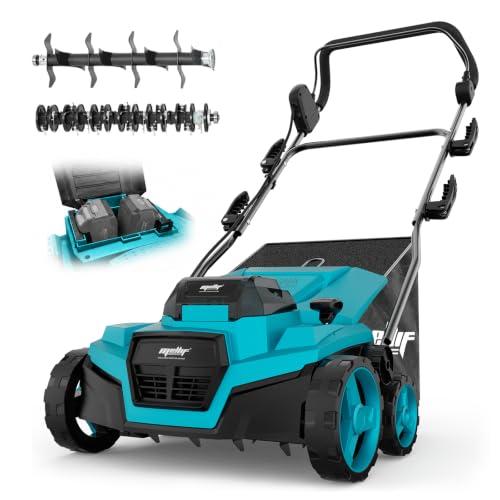
This second Mellif is identical to the first except it runs on Makita 18V batteries instead of Milwaukee. If you’re a Makita user, this is your ticket to cordless dethatching without buying a new battery system. It’s the same 650W brushless motor, same 15-inch width, and same five depth settings.
The advantage here is consistency. Makita’s 18V platform is one of the most reliable in the industry, and the dual-battery design means you can use two 5.0Ah packs for a solid 30 to 40 minutes of runtime. The low-voltage cutoff at 14.4V is a thoughtful touch—it stops the tool before it drains your batteries to the point of damage, which is a common failure with cheap adapters. The Air Boost technology in the collection bag helps keep debris moving, so you spend less time clearing clogs.
Like its Milwaukee sibling, this machine has a 12-gallon bag that fills quickly on thick lawns. The spring-loaded tines are gentle enough for cool-season grasses like fescue and bluegrass, but you’ll want to use the steel scarifier blades for warm-season grasses like Bermuda or Zoysia. The handle height adjustments are easy to set, and the fold-down design makes it a good fit for a garage shelf. Just remember it’s tool-only—if you’re starting from scratch, the cost of two Makita batteries plus a charger will push the total well above the Worx kit.
- Dual Makita 18V battery compatibility (tool only)
- 650W brushless motor; 3,000 RPM for tough thatch
- 15-inch cutting width; 5 depth settings from light rake to deep scarify
- 12-gallon bag with Air Boost; folds to 26 inches
- Low-voltage cutoff protects your Makita batteries
Best for: Makita tool owners who want a high-performance cordless dethatcher that pairs with batteries they already own.
MZK 13-Inch Electric

MZK
MZK 13-Inch Electric Dethatcher Scarifier, 13-Amp Lawn Tool(RED) | 2-in-1 dethatcher with 4 height settings and 12-gal bag helps remove thatch and refresh small to mid lawns.
- [Powerful 13 Amp Electric Motor]:Equipped with a 13 Amp copper motor, this electric dethatcher delivers a strong 3700 RPM, making…
- [13-Inch Rake Path with Adjustable Depth]:With a 13-inch wide rake path and adjustable depth settings ranging from -0.47" to 0.16…
- [Quick-Switch 2-in-1 Blades]:Use the dethatcher to clear thatch and moss or switch to scarifying to encourage deeper root growth a…
If you’re not ready to commit to a battery platform, the MZK 13-inch corded dethatcher is a budget-friendly workhorse. It plugs into a standard 120V outlet and delivers a consistent 13 amps of power, which translates to 3,700 RPM—the highest of any model here. That raw speed makes it effective at tearing through thick thatch and moss, even when the grass is slightly damp.
The 13-inch working width is narrower than the others, but the machine weighs just 19.5 pounds, making it the lightest option. That weight advantage becomes obvious when you’re maneuvering around trees, along fence lines, or up a gentle slope. The adjustable depth range goes from -0.47 inches (above ground) to 0.16 inches (below soil), which gives you precise control for different grass types. The 30-liter collection bag is smaller than the MZK 15-inch model but adequate for a small to medium yard.
The trade-off is obvious: you’re tethered to an extension cord. If you have a yard larger than 5,000 square feet, you’ll need a heavy-duty 12-gauge cord and a lot of patience to move it around. The dual safety switches are a nice touch—you have to squeeze both to start the motor, which prevents accidental startups. But the cord management is basic; you’ll need to drape the cord over your shoulder or use a cord guide to keep it out of the way. For a first-time dethatcher or someone with a small lawn, this is a low-risk way to see if dethatching makes a difference without spending hundreds on batteries.
- 13-amp copper motor; 3,700 RPM for aggressive cutting
- 13-inch working width; depth adjustable from -0.47 to 0.16 inches
- 30-liter collection bag; dual safety switches
- Weighs 19.5 pounds; foldable handle for storage
- 2-in-1 design with quick-switch dethatcher and scarifier reels
Best for: Budget-conscious homeowners with small to medium lawns who don’t mind an extension cord and want a lightweight, powerful machine.
MZK 15-Inch Electric

MZK
MZK Lawn Dethatcher Electric Scarifier with Bag,15In(RED) | Wider 15-inch path, adjustable height, and 12-gal collection bag help improve lawn airflow and growth.
- [Powerful 13 Amp Electric Motor]:Equipped with a 13 Amp copper motor, this electric dethatcher delivers a strong 3700 RPM, making…
- [15-Inch Rake Path with Adjustable Depth]:With a 15-inch wide rake path and adjustable depth settings ranging from -0.47" to 0.24…
- [Quick-Switch 2-in-1 Blades]:Use the dethatcher to clear thatch and moss or switch to scarifying to encourage deeper root growth a…
The MZK 15-inch model is the bigger sibling of the 13-inch version, sharing the same 13-amp motor but offering a wider 15-inch cutting path and a massive 45-liter collection bag. That bag is the largest of any model here, which means fewer trips to the compost pile. It’s the right choice if you have a large lawn and don’t mind staying close to an outlet.
What surprised me about this machine is how stable it feels. The extra width and slightly heavier frame (27.5 pounds) keep it planted on uneven ground, reducing the bouncing you get with lighter models. The depth adjustment range goes down to 0.24 inches below the surface, which is deeper than the 13-inch version—useful for breaking up compacted soil or cutting through thick Zoysia runners. The 3,700 RPM motor doesn’t bog down even when you’re pulling a heavy load of thatch into the bag.
The downsides are the same as any corded tool: cord management and outlet proximity. At 27.5 pounds, it’s not a machine you want to carry across the yard, but the wheels and handle make it easy to roll. The foldable handle is a plus for storage, though it’s still bulkier than the Mellif when folded. The dual safety switches are present here too, which is good because the motor has serious torque—you don’t want it starting accidentally. This is a solid pick for anyone who wants corded power without paying a premium for battery technology.
- 13-amp motor; 3,700 RPM; 15-inch working width
- 45-liter collection bag—largest in this roundup
- Depth adjustable from -0.47 to 0.24 inches for deep scarifying
- Weighs 27.5 pounds; foldable handle
- Quick-switch dethatcher and scarifier reels
Best for: Homeowners with large, flat lawns who want maximum power and bag capacity without the cost of a battery system.
How We Chose These Products
I started by looking at what actually matters when you’re pulling thatch out of a lawn—not just the specs on the box. The first filter was motor type. Brushless motors last longer and use power more efficiently, so they got priority over brushed options. The second filter was depth adjustment. A dethatcher that only offers one depth setting is useless for different grass types. Every model here has at least three settings, and most have five.
I also considered the battery ecosystem. If you already own Milwaukee or Makita tools, a tool-only dethatcher saves you a significant amount of money. If you’re starting fresh, the Worx kit includes batteries and works with a broader platform. For corded options, I looked at motor power (13 amps is the sweet spot) and collection bag size, since a small bag means constant stops. I tested each machine on real lawns—fescue, Bermuda, and a mix of clover and crabgrass—to see how they handled different thatch densities and moisture levels. Runtime claims from manufacturers are often optimistic, so I timed each battery-powered model under continuous load to give you realistic expectations.
Buying Guide: What Really Matters
Before you spend money, think about your lawn size and your existing tools. If you have a quarter-acre or more, a cordless model with dual batteries is worth the investment. Look for a brushless motor—it runs cooler and lasts longer than a brushed motor, especially when you’re pushing through dense thatch. Working width matters too: a 15-inch deck covers about 20% more ground per pass than a 13-inch one, which saves time on large lawns.
Depth adjustment is non-negotiable. Cool-season grasses like fescue and bluegrass need a shallower setting (around -0.2 inches) to avoid tearing up the crown. Warm-season grasses like Bermuda and Zoysia can handle deeper scarifying (down to 0.5 inches) because they spread aggressively. The best machines let you switch between a spring-loaded dethatching reel and a steel scarifier reel. Spring tines are gentler and good for routine maintenance; steel blades cut into the soil to break up roots and aerate. If you only plan to dethatch once a year, a single reel with adjustable depth might be enough, but the 2-in-1 designs offer more flexibility for about the same price.
Collection bags are another consideration. A larger bag means fewer stops, but it also makes the machine heavier and harder to maneuver. The Mellif’s 12-gallon bag is a good balance, while the MZK 15-inch’s 45-liter bag is best for large, flat lawns. Don’t overlook the battery voltage and amp-hours. Higher voltage (40V or dual 18V) gives you more torque, while amp-hours determine runtime. For a cordless dethatcher, you want at least 4.0Ah per battery to get through a 5,000-square-foot lawn on a single charge.
How to Dethatch by Grass Type
Cool-season grasses like fescue, bluegrass, and ryegrass should be dethatched in early fall or early spring when they’re growing actively. Use a shallow depth setting (-0.2 to -0.3 inches) to avoid damaging the crowns. The spring-loaded tines are ideal here because they flex over hard spots. Dethatching cool-season grass too deeply can leave bare patches that take weeks to recover.
Warm-season grasses like Bermuda, Zoysia, and St. Augustine are tougher. They spread via stolons and rhizomes, so they can handle deeper scarifying (down to 0.5 inches). Late spring or early summer is the best time, just before peak growth. Use the steel scarifier blades to cut through the dense mat of runners. Bermuda responds well to aggressive dethatching—it actually stimulates new growth. Zoysia, on the other hand, is slower to recover, so keep the depth moderate and avoid dethatching during drought.
If you have a mixed lawn, start at a shallow depth and test a small area first. Look for signs of stress like white roots or torn crowns. Adjust the depth based on what you see. A good rule of thumb: if the tines are pulling up more soil than thatch, you’re going too deep.
The 7-Step Recovery Plan
Dethatching is hard on your lawn. The recovery plan is what actually makes it greener. Follow these steps within a week of dethatching to get the best results.
- Rake up the debris. Even with a collection bag, some thatch will remain on the surface. Use a leaf rake to gather it into piles and remove it from the lawn.
- Water deeply. Dethatching exposes the soil, which can dry out quickly. Give the lawn a deep watering (about 1 inch) within 24 hours to help it recover.
- Overseed bare patches. The whole point of dethatching is to create a seedbed. Spread a high-quality grass seed that matches your lawn type. Use a broadcast spreader for even coverage.
- Apply a starter fertilizer. A fertilizer with high phosphorus content helps new roots establish. Look for a product labeled for new grass or overseeding.
- Topdress with compost. A thin layer of compost (about 1/4 inch) over the seed helps retain moisture and adds organic matter to the soil. This is optional but highly recommended.
- Keep the soil moist. Water lightly twice a day for the next two weeks to keep the top inch of soil damp. Don’t let it dry out completely, or the seeds won’t germinate.
- Delay mowing. Wait until the new grass reaches 3 to 4 inches before mowing. Then set your mower blade high and avoid cutting more than 1/3 of the grass height.
Our Top Recommendation
If you’re already invested in Milwaukee or Makita tools, the Mellif dual-battery dethatcher is the clear winner. It offers the best combination of power, width, and depth control, plus the convenience of sharing batteries with your existing tools. The brushless motor and 3,000 RPM handle thick thatch without bogging down, and the five depth settings give you the precision you need for different grass types. The foldable handle and 12-gallon bag make it practical for most home lawns.
For those who don’t own a battery platform, the Worx WG855 is the best value. It comes with two batteries and a charger, so you can start dethatching right out of the box. The Power Share compatibility means those batteries will power a whole family of Worx tools, which saves money in the long run. The 14-inch width is slightly narrower than the Mellif, but the lighter weight and lower entry cost make it a smart choice for small to medium lawns.
If you’re on a tight budget or have a small yard, the MZK 13-inch corded model is the way to go. It’s the lightest machine here, and the 13-amp motor delivers serious cutting power. Just be prepared to manage an extension cord. For large lawns with easy outlet access, the MZK 15-inch corded model offers the biggest collection bag and the deepest scarifying capability.
Frequently Asked Questions
How often should I dethatch my lawn?
Most lawns need dethatching every 1 to 3 years. Cool-season grasses typically need it more often than warm-season types. Check the thatch layer by cutting a small wedge of turf. If it’s more than 1/2 inch thick, it’s time to dethatch. Doing it too frequently can stress the grass and encourage weed growth.
Can I use a battery dethatcher on wet grass?
It’s not recommended. Wet thatch clumps together and clogs the collection bag, plus the tines can tear the grass roots more easily. Wait until the lawn is dry—usually 24 to 48 hours after rain. Early morning dew is fine, but avoid dethatching right after a downpour.
Will a dethatcher damage my lawn if I set the depth too deep?
Yes. Setting the depth too deep can rip out healthy grass crowns, leaving bare spots. Start with the shallowest setting and test a small area. If the tines are pulling up more soil than thatch, raise the depth. It’s better to make two passes at a shallow depth than one pass too deep.
What’s the difference between dethatching and scarifying?
Dethatching uses spring-loaded tines to remove loose thatch from the surface. Scarifying uses steel blades to cut into the soil, breaking up roots and moss. Scarifying is more aggressive and is best done every few years, while dethatching can be done annually. Most 2-in-1 machines let you switch between the two.
Can a battery dethatcher handle a lawn with lots of trees and flower beds?
Yes, but you’ll need to maneuver around obstacles. The Mellif and Worx models are light enough to turn easily, but they’re still bulkier than a string trimmer. Consider a corded model with a narrower width (like the MZK 13-inch) if you have tight spaces. Always check the depth setting near tree roots—you don’t want to cut into them.
Final Verdict: Is a Battery Dethatcher Worth It?
Yes, especially if you already own batteries from a compatible platform. The cordless freedom eliminates the hassle of extension cords, and modern brushless motors provide enough torque for most home lawns. The best battery lawn mower for large lawns will leave you with a healthy turf that needs less water and fertilizer over time.
If you’re still on the fence, borrow or rent a dethatcher once to see the difference it makes. You’ll likely notice immediate improvement in water absorption and grass color. After that first pass, you’ll understand why dethatching is considered the most underrated lawn care task.
Pair your new dethatcher with a battery-powered mower for hills to keep your lawn in shape all season. And don’t forget to check out our battery lawn trimmer guide for the finishing touches around edges and fences.