
You smell it every summer: the faint, sweet aroma of gas mixed with the frustration of a mower that won’t start. You pull the cord until your shoulder aches. You check the spark plug. You clean the air filter. Still nothing. The culprit is often the fuel sitting in your tank. That pump gas you used last month has already started to break down, leaving a sticky varnish in your carburetor that no amount of pulling will fix.
Ethanol-free fuel solves this problem at the source. Without the alcohol content found in standard pump gas, E0 fuel resists absorbing moisture from the air. That moisture is what causes phase separation, where water separates from the gasoline and sinks to the bottom of your tank. Once that happens, your engine gets a gulp of water and ethanol mix, and it simply refuses to run. The fix is either buying pre-mixed canned fuel or treating your own pump gas with a stabilizer that neutralizes the ethanol.
We looked at the top options on the market to save you the research. Below are five picks that range from ready-to-pour canned fuel to concentrated additives. We focused on what real owners need: easy starts, long shelf life, and protection against the corrosive effects of ethanol.
Here is a quick look at how the top contenders compare on the features that actually dictate how you use them.
| Features | TruFuel 4-Cycle | STA-BIL Small Engine Pro | Husqvarna XP+ 2-Cycle | STA-BIL Storage | Star Tron Enzyme |
|---|---|---|---|---|---|
| Best Use Case | Ready-to-use canned fuel | Treating pump gas | Pre-mixed 2-cycle fuel | Off-season storage | Ethanol problem fixer |
| Engine Type | 4-cycle only | All small engines | 2-cycle only | All small engines | All engines |
| Mix Ratio | Pre-mixed 50:1 | Add to gas | Pre-mixed 50:1 | Add to gas | Add to gas |
| Octane Rating | High octane | N/A | 95 octane | N/A | N/A |
| Primary Benefit | Consistent performance | Cleans & lubricates | Long storage life | Prevents gum build-up | Disperses water |
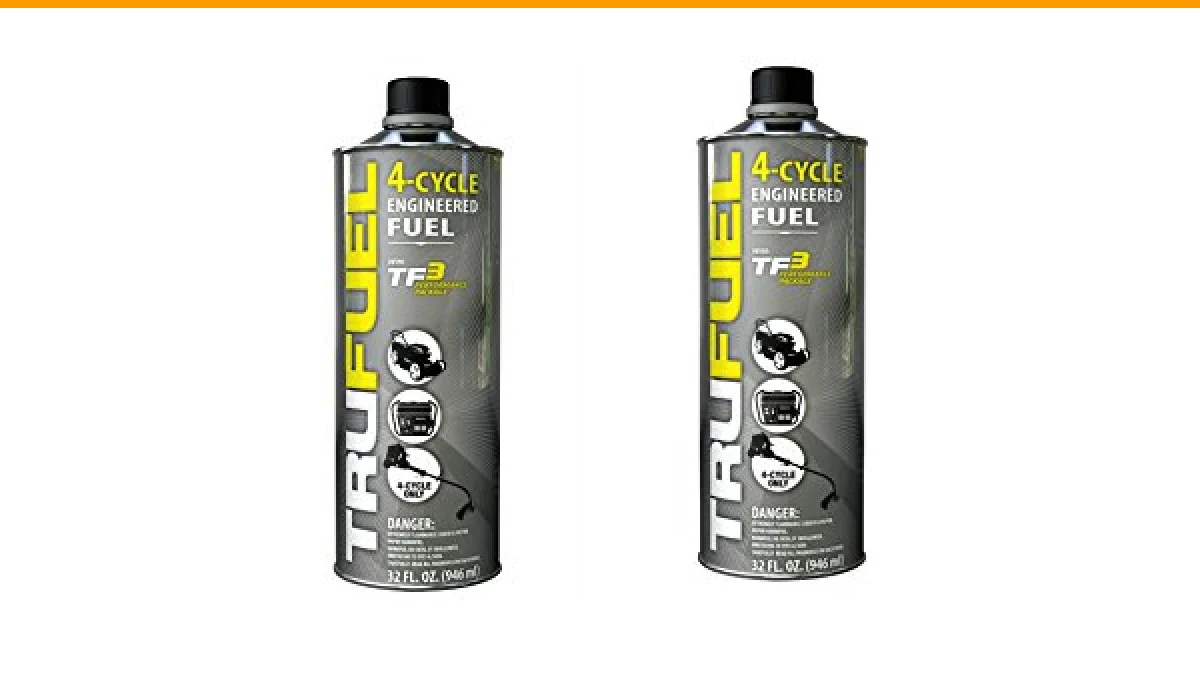
TruFuel 4-Cycle Canned Fuel
For the homeowner who just wants to mow without thinking about fuel chemistry, TruFuel is the answer. This is a pre-blended, ready-to-pour option designed for 4-cycle, air-cooled engines. You open the bottle, pour it in the tank, and go. No measuring, no mixing, no guessing. It is the closest thing to a set-and-forget fuel solution available.
The formula includes a full synthetic oil and a guaranteed correct mix ratio, which means your engine gets consistent lubrication with every drop. Owners report noticeably easier start-ups, smoother idling, and better throttle response compared to using stale pump gas. The reduced aromatics also mean less of that harsh gasoline smell when you are filling up. For new equipment, this fuel helps with proper break-in because the engine runs cleaner from the first pull.
The trade-off is cost. Canned fuel runs significantly more per gallon than pump gas. You are paying for convenience and peace of mind. If you have a large yard that burns through several gallons a week, the price difference adds up fast. This is a better fit for smaller lots or for owners who only mow every couple of weeks and want the fuel to stay fresh between uses.
- Pre-mixed 50:1 ratio for 4-cycle engines
- 32-ounce bottles, sold in a 2-pack
- Full synthetic oil included in the blend
- Designed for portable gas-powered equipment
- Reduced aromatics for a cleaner burn
Best for: The small-yard owner who mows infrequently and wants guaranteed starts without mixing fuel.
STA-BIL Small Engine Pro Additive
If you prefer to buy regular gas but want to protect your mower from ethanol damage, STA-BIL Small Engine Pro is your insurance policy. This additive treats the fuel you already have, cleaning out gum and varnish while adding corrosion inhibitors that fight the harmful effects of ethanol. It is a straightforward way to make pump gas safer for small engines.
What stands out here is the dual action. Most stabilizers just keep fuel fresh. This one also cleans the fuel system while the engine runs. That means it can restore lost power and quiet noisy engines by removing the deposits that cause rough operation. The lubrication package helps keep internal components moving freely, which extends the life of the engine. For a mower that has been running poorly, this additive often brings back performance without any mechanical work.
The limitation is that you still have to manage your own fuel. You need to remember to add it every time you fill a gas can. It also does not fix fuel that has already gone bad. If your mower is already full of varnish from old gas, you may need to drain the system and start fresh before the additive can do its job.
- 16-ounce bottle treats multiple tanks
- Cleans gum and varnish from the fuel system
- Adds corrosion inhibitors for ethanol protection
- Safe for mowers, trimmers, chainsaws, and generators
- Helps quiet noisy engines through better lubrication
Best for: The practical owner who wants to keep using pump gas but wants protection against ethanol-related breakdowns.
Husqvarna XP+ 2-Cycle Fuel

Husqvarna
Husqvarna 4 Pack of XP+ 110-fl oz 50:1 Ethanol Free Pre-blended 2-cycle Fuel - 596834101-4PK
- Genuine Husqvarna replacement part.
- Premium pre-mixed ethanol free gas means no more mixing oil and gas by hand.
- 50:1 fuel to oil ratio protects fuel systems and saves carburetors for easier and more dependable engine starts.
Husqvarna built this fuel for their professional-grade 2-cycle equipment, but it works in any 50:1 two-stroke engine. The four-pack of 110-ounce bottles gives you plenty of fuel for a season of trimming and edging. This is pre-mixed with a JASO-FD certified synthetic oil, so you never have to handle separate oil bottles again.
The 95 octane rating is higher than most pump gas, which helps prevent knocking and pre-ignition in high-compression engines. More importantly, the ethanol-free formula does not degrade the way pump gas does. Husqvarna states this mix stays fresh for years, which makes it ideal for occasional use equipment that might sit for months between jobs. The fuel protects carburetors from the gum and varnish that plague stored 2-cycle engines.
The catch is that this only works for 2-cycle engines. You cannot pour it into a standard 4-cycle lawn mower. The included oil would foul the spark plug and cause heavy smoke. Also, the 110-ounce bottle size is awkward for small jobs. You need to either use it quickly after opening or have a proper storage container to keep it sealed.
- Pre-mixed 50:1 ratio with premium synthetic oil
- 95 octane, ethanol-free gasoline
- JASO-FD certified oil for optimal 2-stroke performance
- Four 110-ounce bottles per pack
- Fuel stays fresh for years in storage
Best for: Owners of trimmers, chainsaws, and leaf blowers who want professional-grade fuel without mixing their own.
STA-BIL Storage Fuel Stabilizer

This is the classic solution for the end-of-season problem. STA-BIL Storage is designed to keep fuel fresh during long periods of inactivity. You add it to your gas can or directly into the mower tank before storage, and it prevents the fuel from oxidizing and forming gum deposits. This is the product that has been keeping small engines alive through winters for decades.
The real value here is prevention. A carburetor cleaned of varnish costs money. A new carburetor costs more. STA-BIL Storage costs a few dollars and takes thirty seconds to pour. For anyone who has ever dealt with a mower that will not start in the spring, this is the cheapest insurance you can buy. It works with both ethanol and ethanol-free fuels, so it is useful regardless of what you normally run.
One thing to note: this is purely a storage stabilizer. It does not clean an already dirty fuel system, and it does not offer the same ethanol corrosion protection as the Small Engine Pro formula. If your fuel is already contaminated, you need to drain the system first. This product is about preventing problems, not fixing them.
- 16-ounce bottle treats up to 80 gallons of fuel
- Prevents gum and varnish formation during storage
- Works with ethanol and ethanol-free gasoline
- Safe for all 2-cycle and 4-cycle engines
- Add before storage, not after problems appear
Best for: The seasonal owner who stores equipment for months and wants to avoid spring starting issues.
STAR BRITE Star Tron Enzyme Fuel Treatment

STAR BRITE
STAR BRITE Star Tron Enzyme Fuel Treatment - Concentrated Formula 32 Fl. Oz. – Treats up to 512 Gallons - Fuel Stabilizer & Treatment, Gasoline Stabilizer, Star Tron Marine Enzyme Fuel Treatment
- ENZYME TECHNOLOGY - Uses enzyme technology designed to help engines start more reliably and run cleaner, even after periods of ina…
- SAY GOODBYE TO ETHANOL-RELATED PROBLEMS - Prevents and cures most ethanol-related issues, including poor performance, rough idling…
- MAXIMIZE FUEL ECONOMY - By removing and preventing gum, carbon deposits, and varnish build-up, Star Tron keeps your fuel delivery…
Star Tron takes a different approach with enzyme technology. Instead of just stabilizing fuel, it actively breaks down the deposits that ethanol leaves behind. The enzymes work to keep the entire fuel system clean, from the tank to the carburetor jets. This makes it a solid choice for owners who bought used equipment or who have neglected their fuel maintenance.
The standout feature is water dispersion. Ethanol attracts moisture, and when enough water accumulates, phase separation occurs. Star Tron breaks that water into submicron-sized droplets that get burned off during normal engine operation. This prevents the water layer from sitting at the bottom of your tank and being sucked into the engine. For humid climates or equipment stored in damp sheds, this is a genuine advantage.
The concentrated formula treats up to 512 gallons, which makes it the most economical option per gallon treated. However, that concentration is also a drawback. It is easy to over-treat or under-treat if you are not careful with measurements. A small mower tank only needs a tiny amount, and the included measuring guide takes some attention to get right.
- 32-ounce bottle treats up to 512 gallons
- Enzyme technology cleans and prevents deposits
- Disperses water to prevent phase separation
- Works with all engine types and fuel blends
- Improves fuel economy by keeping the system clean
Best for: Owners dealing with existing ethanol problems or those in humid environments where water contamination is a risk.
How We Chose These Products
We started with the core problem: ethanol damages small engines. From there, we looked for products that either eliminate ethanol entirely or neutralize its effects. Canned fuels like TruFuel and Husqvarna take the first approach. Additives like STA-BIL and Star Tron take the second. Both approaches are valid, but they serve different owners.
Our selection criteria focused on real-world usability. We considered how often the average homeowner mows, how they store their equipment, and whether they are willing to mix their own fuel. We also weighed the cost per hour of operation. Canned fuel is expensive but foolproof. Treated pump gas is cheaper but requires discipline. The right choice depends on your habits, not just the product specs.
Buying Guide: What Really Matters
The first decision is whether to buy canned fuel or treat your own gas. Canned fuel wins on convenience and shelf life. You can store it for years without worrying about degradation. It is the best choice for equipment that sits idle for months, like snow blowers or backup generators. The downside is price, which can be three to four times the cost of pump gas per gallon.
Treated pump gas is the budget option. A bottle of stabilizer costs a fraction of what you would spend on canned fuel, and it treats many gallons. The catch is that treated gas still has a shelf life. Most stabilizers keep fuel fresh for up to two years, but only if the fuel was fresh when you treated it. You also need to remember to add the treatment every time you fill a can, which is easy to forget.
Pay attention to the difference between 2-cycle and 4-cycle engines. A 2-cycle engine needs oil mixed into the fuel for lubrication. A 4-cycle engine has a separate oil reservoir. Using the wrong fuel in either type causes serious damage. Always check your owner’s manual to confirm the correct fuel type and mix ratio before buying anything.
Storage habits matter too. If you drain your mower completely at the end of the season, you may not need a stabilizer at all. If you leave fuel in the tank, a stabilizer is essential. The best approach is to run the carburetor dry by disconnecting the fuel line and letting the engine run until it stalls. This removes fuel from the carburetor bowl, where most varnish problems start.
Our Top Recommendation
TruFuel 4-Cycle is our top pick for most homeowners. It removes all the variables. No mixing, no measuring, no worrying about ethanol content. You pour it in and your mower runs the way it should. The shelf life means you can stock up without concern, and the consistent performance justifies the higher price for anyone who values their time.
If you have multiple pieces of equipment or a larger yard, the STA-BIL Small Engine Pro additive is the smarter financial move. It protects everything you own for a fraction of the cost of canned fuel. Pair it with fresh pump gas and you get most of the benefits of ethanol-free fuel without the premium price.
For 2-cycle equipment owners, the Husqvarna XP+ fuel is the clear winner. Professional-grade components and a high octane rating make it the best choice for tools that need to perform under heavy use.
Frequently Asked Questions
Is premium gas ethanol-free?
Not necessarily. Premium gas has a higher octane rating, but that does not guarantee it is ethanol-free. Many stations sell premium gas with up to 10 percent ethanol. You need to check the pump label or use a fuel testing kit to know for sure. Some stations clearly mark their ethanol-free pumps, but it is not universal.
How long does ethanol-free gas last in a mower?
Ethanol-free gas lasts significantly longer than regular pump gas. In a sealed container, it can stay fresh for up to two years. In an open mower tank with exposure to air and temperature changes, expect around six months before it starts to degrade. Adding a stabilizer extends that window further.
Can I use 2-cycle fuel in a 4-cycle mower?
No. A 2-cycle fuel contains oil that is meant to be burned during combustion. In a 4-cycle engine, that oil will foul the spark plug, cause heavy smoke, and potentially damage the catalytic converter. Always use fuel designed for your specific engine type.
How do I find ethanol-free gas stations near me?
Several apps and websites track ethanol-free fuel locations. Pure-gas.org is a reliable directory that lists stations by state. Some gas station apps also let you filter for ethanol-free options. Call ahead to confirm, because station ownership changes and fuel blends can vary.