

Best Yard Sweeper with Dethatcher
Contents
Your lawn looks rough. Thatch has built up in patches, leaves are buried in the grass, and a plain mower bag just won’t cut it anymore. You could rake for hours, or you could pull a machine that does two jobs at once. A yard sweeper with a dethatcher removes the dead grass layer and collects the debris in the same pass. That combination saves real time, especially in the spring and fall when your lawn needs the most work.
A good combo unit isn’t just about picking up leaves. The dethatcher tines loosen the spongy layer of dead organic matter sitting at the base of your grass. The sweeper brushes then scoop up what the tines pull loose. You end up with a cleaner lawn, better airflow to the roots, and far less raking. The trick is matching the machine to your yard size, your mower or tractor, and the amount of thatch you actually have.
I’ve broken down five of the strongest options on the market. Three are tow-behind combo units that attach to a riding mower or garden tractor. One is a solid push sweeper for smaller yards. The lineup covers different widths, hopper sizes, and price ranges, so you can pick the one that fits your property without overbuying. We’ll dig into the details below.
Here’s how the five finalists compare at a glance:
| Features | Garvee 48-inch | Brinly 42-inch | Brinly 54-inch | VEVOR Push 26-inch | TrailBlaze 48-inch |
|---|---|---|---|---|---|
| Type | Tow-behind | Tow-behind | Tow-behind | Push | Tow-behind |
| Sweep Width | 42-inch | 42-inch | 54-inch | 26-inch | 44.5-inch |
| Hopper Capacity | 20 cu. ft. | Not specified | 30 cu. ft. | 7 cu. ft. | 25 cu. ft. |
| Dethatcher Tines | Two rows of 12 | Two rows of 12 | Two rows of 12 | None | Two rows of 12 |
| Height Positions | 10 | 10 | 10 | 10 | 10 |
| Best For | Mid-size yards | Compact tractors | Large acreage | Small flat lots | Mixed debris |
Garvee 48-Inch Tow-Behind Combo
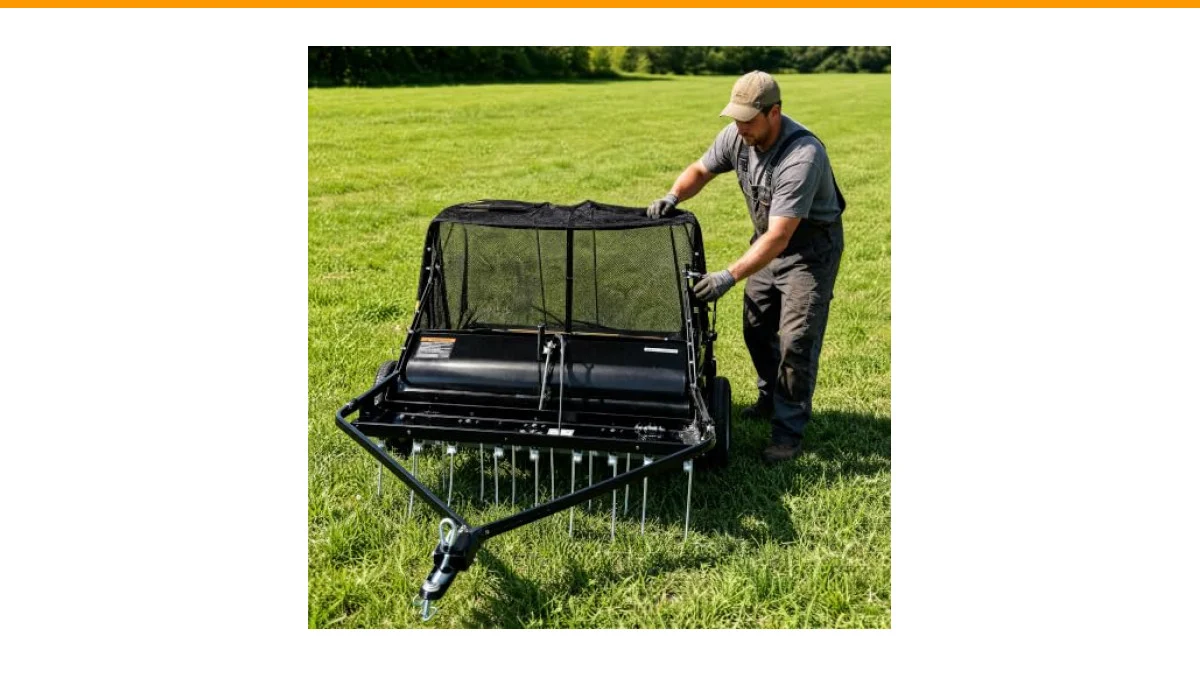
The Garvee 48-inch combo is a practical middle-ground pick. It’s a tow-behind unit that dethatches and sweeps at the same time, which makes it a strong fit for homeowners with roughly a quarter-acre to a full acre of grass. You don’t need a massive garden tractor to pull it, but it does require a riding mower with a hitch. If you’re currently making several passes with a lawn sweeper and then going over the lawn again with a dethatcher, this machine collapses that into one trip.
The standout feature here is the deck design. Two rows of 12 steel tines pull up thatch while six high-velocity brushes push everything into the 20-cubic-foot hamper. The wide 42-inch sweep path also means fewer overlaps compared to narrower tow-behind models. The magnetic hitch pin is more than a gimmick — it actually stays put without cotter pins, so you won’t be digging around in the grass for a lost pin after mowing. Another nice touch is the transport mode. Lock the tines rear-facing and you can cross pavement or a driveway without gouging the surface.
There’s no way around it: this is a fairly heavy attachment. The steel tines and frame add weight, which is fine once you’re moving but noticeable when you’re hitching and unhitching. The side-mounted height control with 10 positions gives you plenty of adjustment, but you’ll want to set it before each use based on how thick the thatch is. It also won’t do much for wet, matted leaves. Like most sweepers, this one works best when the debris is dry.
- Two rows of 12 steel dethatcher tines for aggressive thatch removal
- 20-cubic-foot easy-dump hamper with a 42-inch sweep path
- Magnetic hitch pin won’t fall out mid-use
- Transport mode locks tines up for safe pavement travel
- 10 locking height positions to fine-tune brush depth
Best for: Homeowners with a riding mower and a lawn that needs both dethatching and leaf cleanup every season.
Brinly 42-Inch Tow-Behind Combo
2nd Pick

Brinly
Brinly 42" Tow-Behind Combo Lawn Sweeper with Dethatcher and Hamper Windscreen
- Includes Quick-Connect Magnetic Hitch Pin: All-steel, durable magnetic hitch pin is strong enough to stay in place even without co…
- Cut Job Time in Half: High-performance 2-in-1 Sweeper/Dethatcher lets you dethatch and sweep simultaneously for maximum efficiency…
- Transport Mode: Lock tines in the rear-facing transport position to safely move across pavement, or to operate in sweeper-only mod…
Brinly is a well-known name in lawn attachments, and this 42-inch combo keeps things simple. It’s aimed at people who don’t need the biggest hopper on the market but still want a reliable 2-in-1 unit. It pairs naturally with compact utility tractors and standard riding mowers. If you have a smaller lawn where a 54-inch sweep would be overkill, this width is actually easier to maneuver around trees and flower beds.
What stands out is the build quality. The quick-connect magnetic hitch pin is the same design used on the larger Brinly models, and it makes attachment genuinely painless. The height adjustment sits on the side with 10 locking positions, so you can drop the brushes deep for matted grass or raise them for a light pass. The six high-velocity brushes spin at a 5:1 ratio to the wheels, which means the brushes turn fast enough to flick debris into the hopper rather than just pushing it along. That ratio makes a noticeable difference with pine needles and small twigs.
The trade-off is the hopper size. Brinly doesn’t list a cubic-foot capacity for this 42-inch version, and in practice it fills up faster than the wide-body models. You’ll be making more trips to the compost pile if you have a heavy leaf load. Also, availability can be spotty, so it’s worth checking stock before you plan your weekend project around it. That minor inconvenience aside, this is a straightforward, dependable unit for regular lawn maintenance.
- 42-inch sweep path suited to compact tractors and smaller yards
- Magnetic hitch pin with no cotter pins to lose
- Side-mounted control with 10 brush height positions
- Six brushes with 5:1 brush-to-ground ratio
- Transport mode for paved surfaces and sweeper-only operation
Best for: Owners of compact riding mowers who want a quality 42-inch combo without paying for extra capacity they won’t use.
Brinly 54-Inch Tow-Behind Combo
3rd Pick

Brinly
Brinly 54" Tow-Behind Combo Lawn Sweeper with Dethatcher and Hamper Windscreen
- Includes Quick-Connect Magnetic Hitch Pin: All-steel, durable magnetic hitch pin is strong enough to stay in place even without co…
- Transport Mode: Lock tines in the rear-facing transport position to safely move across pavement, or to operate in sweeper-only mod…
- Precision Height Adjustment: Side-mounted control features 10 locking positions to set the perfect brush depth for your lawn.
The Brinly 54-inch is the big sibling in the lineup. This one is built for larger properties — think one acre and up. The 30-cubic-foot hamper is the largest of the three tow-behind combos we tested, and the 54-inch sweep width cuts down the number of passes significantly. If you’re mowing with a 54-inch or 60-inch deck, this sweeper matches that pace better than a narrower model.
Performance is where this unit earns its keep. The dual rows of 12 steel tines pull up thatch without ripping up healthy grass, and the six high-velocity brushes deliver that same 5:1 brush-to-ground pickup ratio found on the 42-inch Brinly. Transport mode works the same way, too: lock the tines rearward and you can roll over pavement or switch to sweeper-only mode. The side-mounted 10-position height adjustment gives you fine control depending on whether you’re dealing with light spring debris or a thick fall leaf layer.
The big consideration is storage and weight. A 54-inch sweeper with a 30-cubic-foot hopper takes up real garage space, and the frame is heavy enough that you’ll want to leave it hitched or store it with the wheels blocked. It also pairs best with a tractor that has enough clearance and power. A small lawn tractor can pull it, but you’ll feel the drag on slopes. This is a machine for homeowners who treat lawn care as a serious seasonal job, not a quick weekend chore.
- 54-inch sweep width covers ground fast on large lawns
- 30-cubic-foot easy-dump hamper reduces emptying stops
- Six high-velocity brushes with 5:1 pickup ratio
- Two rows of 12 rust-resistant steel tines
- Quick-connect magnetic hitch pin included
Best for: Large-acreage owners who want the fewest passes and the biggest collection capacity in a tow-behind combo.
VEVOR Push Lawn Sweeper 26-Inch
4th Pick

VEVOR
VEVOR Push Lawn Sweeper 26 in Leaf & Grass Collector 7 cu. ft. Hopper Bag
- Effortless Lawn Cleanup: This lawn sweeper features a durable metal frame, 26 in sweep path, and a 1:5 brush-to-wheel ratio to col…
- High-Efficient V-Shaped Brush: This push lawn sweeper comes with three V-shaped rotating brushes that reach deep into grass while…
- 10-Level Brush Height: The leaf and grass collector features 10-setting adjustable brush height for short/tall grass, uneven groun…
The VEVOR push sweeper is a completely different animal. There’s no dethatcher built in, so it doesn’t fit the exact combo category in the same way the tow-behind units do. But for anyone with a small yard under 5,000 square feet, it’s often the smarter buy. You can use it with a separate dethatch rake, and it’ll handle leaves, grass clippings, and pine needles without needing a riding mower at all.
What makes this sweeper appealing is the engineering around the brushes. The three V-shaped brushes rotate at a 5:1 ratio to the wheels, which is the same aggressive pickup ratio found on the tow-behind models. The brushes are made from durable PP bristles that resist tangling with weeds and pine needles, so you won’t spend half your cleanup time picking wrapped grass out of the rollers. The 10-level adjustable brush height is genuinely useful; you can set it for short grass, tall grass, or a concrete driveway without any tools.
There are limits, though. The 7-cubic-foot hopper is small, and the 26-inch path means you’re making more trips across the yard. Wet leaves also reduce sweeping efficiency, as the product notes. The biggest drawback has nothing to do with the machine itself: it won’t dethatch. If your lawn has a serious thatch layer, you’ll need to pull a dethatcher over it first or use a dethatch rake. That’s extra work, but it’s manageable on a small property.
- 26-inch sweep path with 7-cubic-foot hopper bag
- Three V-shaped brushes with 5:1 brush-to-wheel ratio
- 10-level height adjustment for varied terrain
- PP and rubber wheels for slip-resistant movement
- Quick-release buckles for easy dumping
Best for: Small-lot owners who want a lightweight push sweeper and already own or are willing to buy a separate dethatch rake.
TrailBlaze 48-Inch Tow-Behind Sweeper
5th Pick
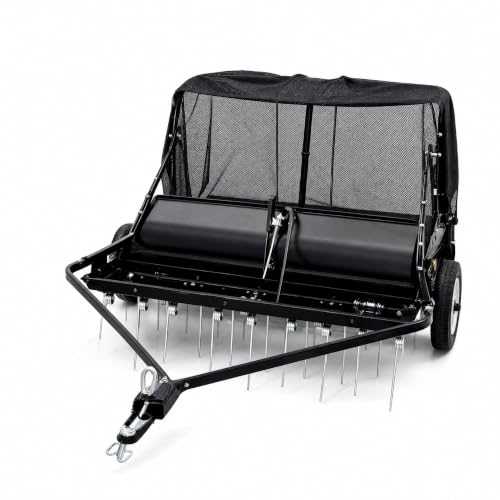
TrailBlaze
48" Tow-Behind Lawn Sweeper with Dethatcher & 25 Cu.Ft. Hamper for Grass and Leaf Cleanup – Black
- 2-in-1 Brusher & Dethatcher: Tackle thatch and debris in one pass with dual rows of 12 rust-resistant steel tines and six high-Spe…
- Quick-Connect Magnetic Hitch: All-steel magnetic pin ensures secure, rattle-free attachment to your tractor—no lost cotter pins or…
- Smart Transport Mode: Lock tines rearward to safely roll over driveways or sidewalks and switch instantly to sweeper-only mode wit…
The TrailBlaze 48-inch model sits between the Garvee and Brinly 54-inch in terms of capacity and width. It offers a 44.5-inch brush width and a 25-cubic-foot container, which gives you a bit more room than the Garvee without jumping all the way to the massive 30-cubic-foot Brinly. This makes it a nice fit for homeowners who want extra capacity but don’t want to wrestle with the largest frame.
The 2-in-1 design uses the same proven formula: two rows of 12 rust-resistant steel tines for dethatching and six high-speed brushes for pickup. The 5:1 brush-to-ground ratio matches the other tow-behind combos here, so pickup power isn’t sacrificed for the slightly larger container. The 25-cubic-foot hamper is made from durable non-woven material, which is lighter than a rigid hopper and easier to dump. The magnetic quick-connect hitch is included, and the 10-position tool-free height adjustment means you can adapt on the fly without carrying wrenches.
One thing to watch is the material of the container. Non-woven bags are convenient, but they can be harder to clean out completely than smooth plastic hampers. Fine dust and grass residue tend to cling to the fabric. The transport mode works well, though, and the ability to lock the tines rearward protects your driveway. If you’re choosing between this and the Garvee, the decision really comes down to capacity: 25 versus 20 cubic feet.
- 44.5-inch brush width with 25-cubic-foot container
- Two rows of 12 rust-resistant steel tines
- Six high-speed brushes with 5:1 pickup ratio
- Tool-free 10-position height adjustment
- Magnetic hitch pin for quick attachment
Best for: Buyers who want a tow-behind combo with extra hopper capacity but don’t need the sheer size of a 54-inch unit.
How We Chose These Products
I looked at the specs that actually change how a sweeper performs in real lawn conditions: sweep width, hopper capacity, brush-to-ground ratio, and whether the dethatcher tines are built in or sold separately. A machine can look great on paper but fail when the thatch is thick or the grass is damp, so the selection process weighed practical factors like transport mode and height adjustment options just as heavily.
I also compared combo units against separate sweeper and dethatcher setups. For small yards, a push sweeper paired with a dethatch rake is often more sensible than a tow-behind combo. For larger properties, the 2-in-1 design saves significant time. The five products here were chosen to cover those different scenarios without pushing everyone toward the same oversized machine.
Buying Guide: What Really Matters
The first decision is tow-behind versus push. Tow-behind models are faster and more powerful, but they require a riding mower or garden tractor with a hitch. Push sweepers make sense for flat yards under 5,000 square feet and for anyone who doesn’t own a tractor. Slopes are another factor; a heavy tow-behind sweeper can drag down a small lawn tractor on an incline, so if your property has serious hills, a lighter push unit or a smaller combo might handle better.
Hopper capacity and width go hand in hand. A wide sweep cuts down your passes, but a small hopper means you’ll be stopping to empty constantly, which eats up the time you just saved. For most quarter-acre to half-acre lots, a 20- to 25-cubic-foot hamper is plenty. For anything larger, step up to the 30-cubic-foot class. Pay attention to dump height as well — an easy-dump mechanism saves your back when the hopper is full of wet leaves.
Height adjustment and transport mode often get overlooked, but they matter more than you’d think. A 10-position control lets you match brush pressure to the condition of your lawn, whether that’s thin spring growth or thick fall thatch. Transport mode protects your driveway and lets you switch to sweeper-only on demand. Both features add real flexibility, and both are worth the slight increase in price.
Our Top Recommendation
The Garvee 48-inch tow-behind combo is the best balance of capability, capacity, and value for a typical suburban property. It dethatches and sweeps in one pass, offers a solid 20-cubic-foot hamper, and includes the magnetic hitch that makes setup genuinely painless. For most homeowners with a riding mower and a lawn between a quarter-acre and an acre, this is the machine that will get the job done without excessive stopping or oversized storage demands.
For larger properties, the Brinly 54-inch is the better investment if you regularly cover an acre or more and want the biggest hopper available. If you’re working with a compact tractor, the Brinly 42-inch gives you the same reliable performance in a more manageable size. The TrailBlaze 48-inch is a strong alternative if you prioritize extra capacity over weight. Small-yard owners should skip the tow-behind category entirely and get the VEVOR push sweeper, then pair it with a dethatch rake.
Frequently Asked Questions
Can I use a dethatcher with any lawn sweeper?
Not with every model. This is the biggest compatibility issue people run into. A sweeper without built-in tines — like the VEVOR push model — only collects what’s already loose on the surface. You can add a separate dethatching pass with a tow-behind dethatcher or a dethatch rake before sweeping, but that doubles your time. Combo units with integrated tines solve the problem in one step, but they also cost more and require a tractor. For a tow-behind setup, you also need to check that your mower’s hitch can handle the weight.
How often should I dethatch and sweep?
Once a year is enough for most lawns. Cool-season grasses usually benefit from dethatching in early fall, while warm-season grasses do better in late spring. If you have heavy foot traffic or clay soil, you might need a second pass. Dethatching more than twice a year can stress the lawn, especially if you’re using steel tines. On the other hand, sweeping alone can be done monthly during the fall leaf drop with no risk to the grass.
Will a lawn sweeper pick up dethatched thatch effectively?
Yes, but the debris has to be dry. That’s the catch. Dethatching pulls up a mix of dead grass and soil, and if that material is wet, it clumps and falls off the brushes before it reaches the hopper. Dry thatch moves easily, especially with the 5:1 brush-to-ground ratio found on the tow-behind models. Rake or mow the dethatched debris into loose piles if you’re using a separate sweeper, and you’ll pick up nearly all of it in a couple of passes.
Is it cheaper to buy a combo unit or a separate sweeper and dethatcher?
It depends on your existing setup. A separate dethatcher plus a basic lawn sweeper usually costs less upfront, and it gives you the flexibility to use each tool independently. But you’re also storing two machines and doing two passes over the lawn. A combo unit costs more, yet it saves time and takes up about the same storage space as a single sweeper. For smaller lawns where you only dethatch once a year, the separate route makes sense. For larger properties, the combo quickly pays for itself in saved hours.