
You carried that bag of potting soil up three flights of stairs, wrestled with a self-watering planter, and positioned everything to catch the afternoon sun. Then the wind snapped a basil stem in half, and the rosemary looked scorched by Thursday. Rooftop gardening is a different animal. The conditions are harsher—more wind, more reflected heat, faster drying—but the payoff is real: fresh herbs steps from your kitchen.
This guide focuses on the best herbs for rooftop garden setups. You’ll learn which varieties handle the unique stresses of an exposed rooftop, how to match each herb to the right container and exposure, and what to do when the weather turns against you. I’ve grown these on a seventh-floor terrace with no shade, so the advice comes from trial, error, and a few very crispy plants.

PLANTMEW
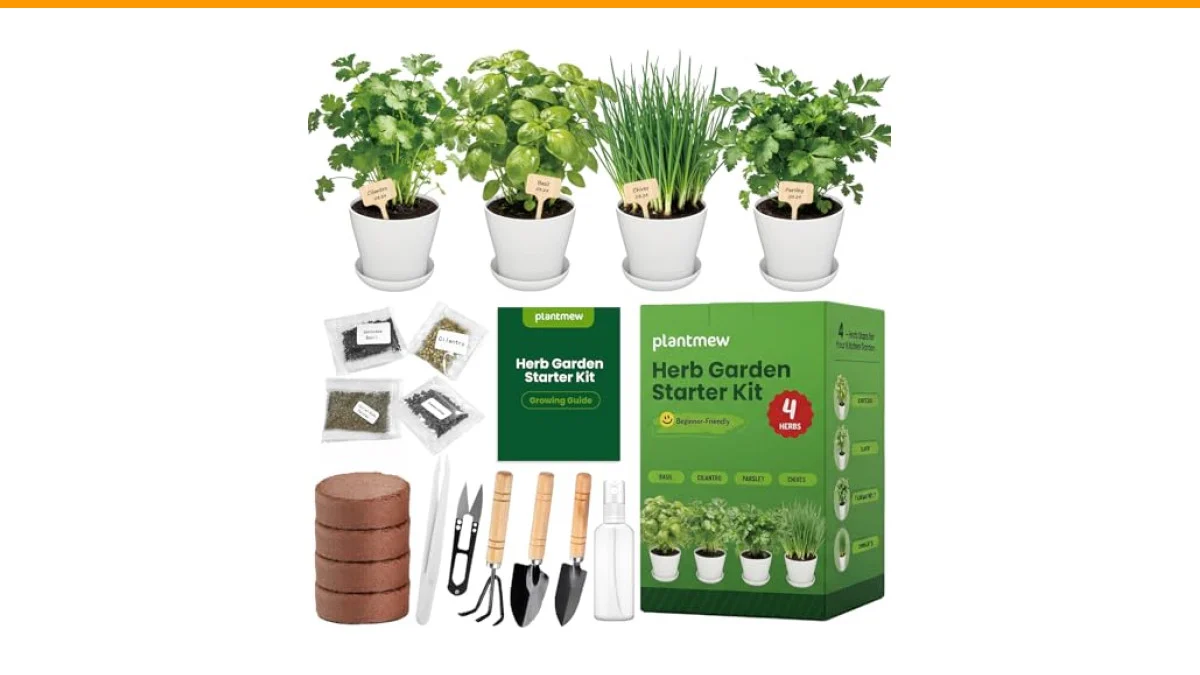
PLANTMEW Indoor Herb Garden Starter Kit - Mothers Day Gifts - 4 Non GMO, Heirloom Culinary Herb Seeds, Unique Gardening Gift for Women, Mom, Her, Birthday, Housewarming, Plant Lovers
- Complete All-In-One Kit - No need to buy separate supplies. This herb starter set comes with 4 plastic planter pots, 4 soil discs,…
- NON-GMO, Heirloom Varieties - Carefully selected culinary herb collection includes Cilantro, Genovese Basil, Common Chives, and It…
- Premium Quality - Each herb seed packet is sourced from the latest growing season to ensure maximum viability. Enjoy a bountiful h…
If you are starting from zero or want a foolproof way to get seedlings going indoors before they face the elements, a rooftop herb guide can point you to more species. For the actual growing, a kit like the PLANTMEW Indoor Herb Garden Starter Kit handles the early weeks. It comes with four non-GMO, heirloom seed packets—Cilantro, Genovese Basil, Common Chives, and Italian Giant Parsley—plus pots, soil discs, and markers. You start those on a windowsill, harden them off for a week, then move them to your rooftop containers once they have true leaves.
Why Rooftops Break Most Herbs (and What Survives)
Rooftops are not gardens. They are microclimates with three specific problems: wind, heat load, and rapid moisture loss. Wind tears leaves and dries soil faster than any ground-level bed. Heat radiates off concrete and tar, pushing temperatures 10–15 degrees higher than the air a block away. And because containers have limited soil volume, they swing from soaked to bone-dry in hours.
So the best herbs for rooftop garden life share a few traits. They have small, thick, or fuzzy leaves that resist wind damage. They tolerate dry spells without bolting to seed immediately. And they do not mind being cut back hard, because you will need to prune them often just to keep them from becoming wind-whipped sticks.
Mediterranean herbs are the obvious winners. Rosemary, thyme, oregano, and sage evolved in rocky, dry, windy hillsides. They laugh at heat and shrug off a missed watering. On the flip side, soft-leaved annuals like cilantro and dill bolt the moment the soil dries out twice. That does not mean you cannot grow them—you just need to plan around their weaknesses.
The Heavy Hitters: Perennials That Keep Coming Back
Start with perennials if you want the most return for your effort. These plants come back year after year, which means you invest in a container and soil once, then reap harvests for several seasons.
Rosemary is the undisputed rooftop champion. It handles wind because its needle-like leaves offer little resistance. It handles drought because it stores water in woody stems. It handles heat because it simply does not care. Give it a deep pot—at least 10 inches—with gritty, fast-draining soil. Water it only when the top inch feels dry. In most climates, rosemary wants full sun, but if your rooftop bakes above 95 degrees for weeks, afternoon shade helps prevent leaf tip burn.
Thyme is a low-growing creeper that works beautifully in shallow troughs or the edges of larger planters where other herbs struggle. It forms a mat that protects its own roots from sun. Lemon thyme adds a citrus note that pairs well with fish and chicken. Thyme is forgiving of neglect, but it will rot if the soil stays soggy. Use a pot with drainage holes and do not let it sit in a saucer of water after rain.
Oregano and marjoram are close cousins with different personalities. Oregano is more aggressive and more tolerant of poor conditions; marjoram is sweeter and slightly more delicate. Both prefer lean soil—skip the rich compost. In containers, they benefit from a yearly top-dress of fresh potting mix rather than heavy feeding. Pinch them back regularly to keep them bushy; if you let them flower, the leaves turn bitter.
Sage brings a velvety texture and a strong, earthy flavor. Common garden sage does fine, but purple sage and tri-color sage add visual interest to a rooftop that might otherwise look like a collection of green pots. Sage is another drought-tolerant plant that hates wet feet. It also needs airflow around its leaves, which makes it a natural fit for a breezy rooftop—just make sure the pot is heavy enough not to tip in a gust.
Annuals Worth the Effort: Basil, Cilantro, and Parsley
Perennials are the backbone, but no kitchen is complete without fresh basil or a handful of cilantro. These annuals need more attention on a rooftop, yet they reward you with the best flavor of any herb you can grow.
Basil is the trickiest of the recommended annuals because it is a tropical plant that hates both cold and drying wind. Genovese basil—the classic pesto variety—has large, tender leaves that tear easily. For rooftop conditions, consider bush basil or Greek basil, which have smaller, tougher leaves. If you insist on Genovese, grow it in a sheltered corner or behind a taller plant. Keep the soil consistently moist, which means checking daily in summer. A layer of mulch on top of the soil helps slow evaporation.
Cilantro is a race against time. It bolts—sends up a flower stalk and turns bitter—when soil temperatures exceed 75 degrees or when the roots dry out even once. On a hot rooftop, you get maybe three weeks of harvest before it goes to seed. The workaround is succession planting: sow a new batch every two weeks from early spring through late fall. Or grow it in a spot that gets morning sun and afternoon shade. The coriander seeds you get after bolting are a bonus, not a failure.
Parsley is the most forgiving annual on this list. Italian giant parsley has flat leaves that handle wind better than the curly type. It is a biennial, meaning it lives two years, but most people treat it as an annual and replant each spring. Parsley needs more water than the Mediterranean herbs but less than basil. It also tolerates partial shade, which makes it a good candidate for the less sunny corners of your rooftop. Cut outer stems first, and the plant keeps producing from the center.
For a reliable start with these annuals, the herbs suited to rooftop gardening list includes the same four varieties found in the PLANTMEW kit. Starting them indoors in early spring gives you a head start before rooftop temperatures spike.
Container Size, Soil, and Wind Protection That Make or Break the Harvest
People blame the wrong culprit when rooftop herbs fail. It is rarely the plant variety. It is almost always the container, the soil, or the exposure. Get these three things right, and even finicky herbs will survive.
Container size matters more than you think. A 6-inch pot dries out in hours on a rooftop. A 12-inch pot gives you a buffer. A 16-inch pot is the sweet spot for perennials like rosemary and sage. Smaller pots work for thyme and chives, but you will water them daily in July. Fabric pots breathe well and prevent root circling, but they dry out faster than plastic or ceramic. Choose glazed ceramic or thick plastic for the driest, windiest exposures.
Soil is not dirt. Use a high-quality potting mix, not garden soil. Garden soil compacts in containers and suffocates roots. Look for a mix with perlite or pumice for drainage and some compost for nutrients. Add a slow-release organic fertilizer at planting time. Rooftop herbs grow fast in the heat, and they deplete nutrients quickly. Replenish with a liquid seaweed or fish emulsion every three to four weeks during the growing season.
Wind is the silent killer. A 20 mph gust at ground level becomes a 40 mph gust on a tenth-floor rooftop. That wind tears leaves, snaps stems, and yanks moisture out of every pore. Build a simple windbreak: a lattice panel, a row of tall grasses in heavy pots, or even a piece of burlap stretched between two stakes. Position the most fragile herbs—basil and cilantro—behind the windbreak. Put the toughest ones—rosemary and thyme—on the windward side where they act as a shield.
One more thing: weight. A 16-inch pot filled with moist soil can weigh 50 pounds or more. Check your rooftop’s load rating before you build a herb garden empire. If weight is a concern, use a lightweight potting mix and smaller pots arranged in groups rather than one massive planter.
Comparing the Top Choices for Rooftop Conditions
| Herb | Type | Wind Tolerance | Heat Tolerance | Water Needs | Best Container | Harvest Time |
|---|---|---|---|---|---|---|
| Rosemary | Perennial | Excellent | Excellent | Low | Deep pot, 12+ inches | Year-round in mild climates |
| Thyme | Perennial | Excellent | Good | Low | Shallow trough, 6+ inches | Spring through fall |
| Oregano | Perennial | Excellent | Good | Low to medium | Standard pot, 8+ inches | Summer |
| Sage | Perennial | Good | Good | Low | Heavy pot, 10+ inches | Spring and fall |
| Basil (bush or Greek) | Annual | Fair | Good | High | Medium pot, 8+ inches | Summer |
| Cilantro | Annual | Poor | Poor | High | Medium pot, 8+ inches | Spring and fall only |
| Parsley | Biennial | Fair | Fair | Medium | Deep pot, 10+ inches | Spring through fall |
| Chives | Perennial | Good | Fair | Medium | Clump in any pot, 6+ inches | Spring and early summer |
Chives deserve a special mention even though they did not make the top four. They are cold-hardy, come back every year, and their purple flowers attract pollinators to your rooftop. They handle wind well because their hollow, tubular leaves bend rather than break. The downside is they go dormant in the heat of summer, so harvest them heavily in May and June, then let them rest.
Frequently Asked Questions About Rooftop Herb Gardens
How often should I water herbs on a rooftop?
Check every day during the growing season, especially in summer. Stick your finger an inch into the soil. If it feels dry, water thoroughly until it runs out the drainage holes. In peak heat, that might mean watering twice a day for small pots. Perennials like rosemary and sage can go two or three days without water, but annuals like basil and cilantro cannot.
Can I leave my herbs outside in winter on a rooftop?
That depends on your climate and the pot size. In USDA zones 8 and warmer, most perennial herbs survive outdoors with minimal protection. In colder zones, roots in above-ground containers freeze much faster than in-ground roots. Move pots against a south-facing wall, wrap them in burlap or bubble wrap, or group them together to insulate each other. Rosemary is especially vulnerable to cold, wet roots in winter.
Why do my herbs taste bitter on the rooftop?
Heat stress is the usual culprit. When temperatures stay above 85 degrees, many herbs—especially basil and cilantro—produce more essential oils that turn bitter. Also, if you let the soil dry out completely, the plant triggers a stress response. Harvest in the morning before the heat builds, and water consistently to keep flavors mild.
What is the easiest herb to grow for a beginner on a rooftop?
Thyme or chives. Both tolerate neglect, wind, and imperfect watering. Thyme grows slowly but steadily, and it does not need much feeding. Chives are nearly indestructible and regrow quickly after cutting. Rosemary is also easy once established, but it takes longer to get going from seed. Start with a small plant from a nursery if you want instant results.
Do I need to bring herbs indoors during a heatwave?
Not necessarily, but you should provide shade. A 40% shade cloth draped over a frame can drop temperatures by 10 degrees and reduce water loss dramatically. Move pots to the north side of the building if possible. If you have a windowsill with good light indoors, moving basil and cilantro inside for a few days is a practical option. The garden trowel guide on this site also covers transplanting tips if you need to move things around.
What I Would Plant Tomorrow (and What I Would Skip)
If you are planning a new rooftop garden or replacing a failed one, here is a practical checklist based on years of growing in exposed conditions.
- Start with rosemary, thyme, and oregano as your backbone. They tolerate the worst conditions and need the least attention.
- Add one or two sage plants for color and cold-weather harvests. Purple sage is worth seeking out for looks alone.
- Grow bush basil instead of the large-leaf Genovese type. You lose a little sweetness but gain wind resistance and a longer harvest.
- Treat cilantro as a cool-season crop. Sow it in early spring and again in late summer for fall harvests. Skip it entirely in July.
- Use deep pots—12 inches minimum—for anything you want to survive a heatwave. Shallow pots are a constant battle.
- Mulch the soil surface with straw or wood chips. This one step cuts watering frequency by about a third on hot days.
- Build a simple windbreak before you plant anything fragile. A few bamboo stakes and a sheet of shade cloth save more plants than any fertilizer.
The best herbs for rooftop garden spaces are not the ones that look prettiest in a seed catalog. They are the ones that match your specific conditions. A little planning about wind direction, sun exposure, and pot size goes further than any exotic variety. Start with the tough perennials, add a couple of annuals for variety, and adjust based on what your rooftop tells you. It will not be perfect the first season. Mine was not. But by the second year, you will have a system that works, and the fresh herbs will make every bit of the hauling and watering worth it.