
Your rooftop gets full sun, but there’s barely room to stand, let alone garden. You’ve tried a few pots near the door, but basil burned out by July and the mint took over everything. The dream of stepping out to snip fresh oregano for dinner feels further away every season.
Here’s the truth: a productive herb garden on a small rooftop isn’t about square footage. It’s about using vertical space, choosing the right containers, and being honest about wind and water. You can grow a serious amount of herbs in a 4×6 foot area if you plan it like a puzzle rather than a flower bed.
This guide walks through the exact layout decisions, container choices, and plant pairings that work on exposed rooftops. You’ll also get a comparison table of five common space-saving setups and answers to the questions that actually trip people up.
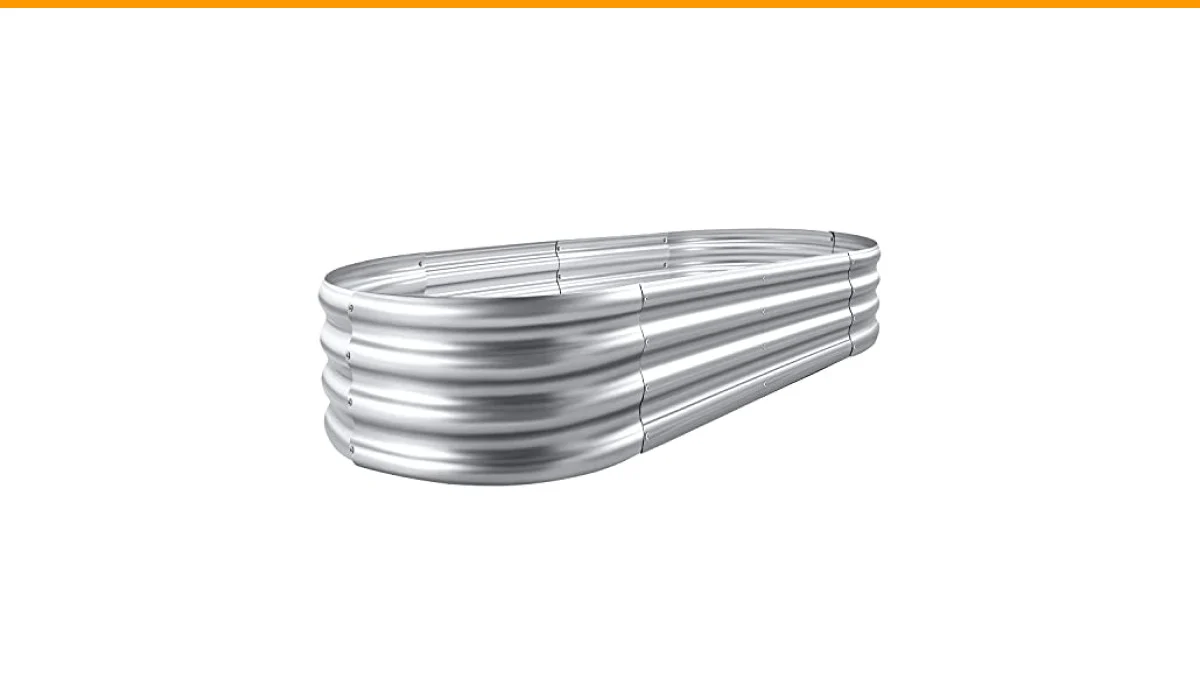
One piece of gear worth considering from the start is a Land Guard galvanized raised bed. Its oval shape fits into corners where rectangular planters won’t, and the double-thickness metal (0.78mm average) handles rooftop wind without flexing. The open base drains freely, which matters when a thunderstorm dumps two inches of rain in an hour.
Start With the Wind, Not the Plants
Most rooftop herb failures trace back to one thing: wind exposure. Even a 15 mph breeze dries soil twice as fast as ground level. Herbs like rosemary and thyme can handle it; basil and cilantro cannot.
Before buying anything, stand on your roof and note where wind hits hardest. The corner edges and any gap between buildings are almost always worse. You’ll need a windbreak — a trellis, a row of tall grasses in heavy pots, or even a bamboo screen attached to the railing.
Wind also dictates your container choice. Light plastic pots blow over. Heavy ceramic pots crack in freezing weather. Fabric grow bags dry out too fast on a roof.
Your best options are galvanized steel or thick-walled resin. The Land Guard raised bed mentioned earlier works because the metal is heavy enough to stay put, and the oval shape sheds wind better than a flat-sided rectangle. It’s not perfect — you’ll still want to stake tall plants — but it won’t launch itself across the roof in a gust.
Three Layouts That Maximize Every Square Foot
You have three proven ways to organize a small rooftop garden. Pick one, or combine two if your space allows.
1. The Perimeter Rail Garden
Use the railing itself. Mount long, narrow window boxes (36 to 48 inches) on the inside of the railing, not the outside. Outside mounting risks the boxes falling and creates a safety hazard. Inside mounting keeps the weight on your roof deck and makes harvesting easy.
Fill each box with a mix: trailing thyme and oregano spill over the edge, while upright basil and parsley fill the middle. A 48-inch box holds six to eight plants comfortably. Four boxes around a small roof gives you 24 to 32 plants — enough for weekly cooking.
2. The Vertical Tower Cluster
For the corner or wall area, use a tiered plant stand or a wall-mounted pocket system. A three-tier stand with 10-inch pots on each level holds nine plants in a two-foot square footprint.
Place sun-loving herbs like rosemary and sage on the top tier. They need the most light and tolerate the driest conditions. Put moisture-loving plants like mint and parsley on the bottom tier, where runoff from above keeps them hydrated.
Wall pockets work if you have a solid wall, not just a railing. Felt pockets hold soil but dry out fast; you’ll water them nearly every day in summer. Use them for hardy herbs like sage and thyme that forgive missed waterings.
3. The Central Island Bed
If you have a 4×4 foot open area, one raised bed serves as the anchor. The vertical herb garden approach works here too — place the bed against a wall and add a trellis behind it for climbing herbs like certain mints or trailing rosemary varieties.
A 4×2 foot bed holds about 12 herbs if you space them properly. Divide the bed into quadrants: one for perennial herbs (thyme, oregano, sage), one for annuals (basil, cilantro, dill), one for moisture lovers (parsley, mint in a buried pot), and one for sprawling herbs (marjoram, savory).
Container Depth: The Number That Determines Success
Container depth is non-negotiable. Herbs have different root needs, and guessing wrong leads to stunted growth or root rot.
| Herb Type | Minimum Soil Depth | Container Examples | Notes |
|---|---|---|---|
| Shallow-rooted (basil, cilantro, chives) | 6-8 inches | Window boxes, shallow troughs | Need consistent moisture; dry out fast in shallow pots |
| Medium-rooted (parsley, dill, marjoram) | 8-10 inches | Standard 10-inch pots, medium planters | Handle some drought but prefer even watering |
| Deep-rooted (rosemary, sage, thyme) | 10-12 inches | Raised beds, deep containers | Prefer drier soil; deep pots prevent root rot |
| Aggressive spreaders (mint, lemon balm) | 12+ inches or contained | Large pots, buried buckets | Always isolate in its own pot or it chokes neighbors |
That table reflects real failures I’ve seen. People plant rosemary in a 6-inch window box, then wonder why it turns brown. Rosemary wants to send roots down two feet in the ground; in a container, it needs at least 10 inches or it sulks.
Mint is the opposite problem. It grows anywhere, including through the bottom of a fabric bag. Put mint in its own solid pot, no exceptions.
Watering: The Rooftop Problem Nobody Mentions
Rooftop soil dries out 2-3 times faster than ground soil. The combination of wind, direct sun, and shallow containers means you’ll water daily in July, sometimes twice.
Drip irrigation is the answer, not a sprinkler. A simple kit with a timer and drip lines to each container uses up to 60% less water than hand watering. Set it to run early morning, and check soil moisture weekly to adjust.
For a rooftop irrigation system, you need a few specifics. Use pressure-compensating emitters (they deliver equal water regardless of hose length). Run 1/4-inch tubing to each pot, and place emitters at the base of each plant, not the edge of the pot.
If drip irrigation feels like overkill for five pots, use self-watering containers with a reservoir at the bottom. They won’t last a full week in summer heat, but they buy you an extra day or two when life gets busy.
One more watering note: water at the soil level, not over the leaves. Wet foliage on a rooftop promotes fungal diseases, and the sun scorches water droplets on leaves like magnifying glasses.
Choosing Herbs for Your Specific Rooftop
Not all herbs are equal on a rooftop. Match the plant to your sun exposure and wind tolerance.
Full sun (6+ hours), windy: Rosemary, thyme, sage, oregano. These Mediterranean herbs love dry, breezy conditions. They need less water and tolerate heat reflection from roof surfaces.
Full sun, sheltered: Basil, parsley, dill, cilantro. These need consistent moisture and protection from harsh wind. Place them near a wall or behind taller plants.
Partial shade (4-6 hours): Mint, chives, lemon balm, chervil. These tolerate less light and cooler conditions. They also handle the drier soil of a rooftop better than you’d expect.
Skip tarragon and lavender unless you have very specific conditions. Tarragon needs winter chill that may not happen in containers. Lavender needs excellent drainage and full sun — doable, but it often gets leggy in small pots.
For a deeper guide on matching plants to your specific setup, check this herb selection guide.
What About Winter?
Rooftop containers freeze harder than ground soil. The roots of perennial herbs like thyme and sage sit above the roofline, exposed to bitter wind and repeated freeze-thaw cycles.
Group containers together in a corner and wrap them with burlap or bubble wrap. Elevate pots on feet or bricks so water drains freely and doesn’t freeze around the base. Move the most tender herbs (basil, cilantro) indoors or accept they’ll die and replant next spring.
Rosemary often survives if the pot is large enough (10+ gallons) and you mulch the surface heavily. Even then, it’s a gamble in zones 6 and colder. Don’t beat yourself up if it doesn’t make it; buy a new plant in spring.
Five Questions People Actually Ask
How much weight can a rooftop hold for a garden?
Most residential roofs handle 20-40 pounds per square foot of live load. A 4×2 foot raised bed with wet soil weighs roughly 400-500 pounds, which spreads to about 50-60 pounds per square foot. That exceeds typical design limits. Place heavy beds over structural beams, not in the middle of a span. When in doubt, ask a structural engineer. It’s worth the consultation fee.
Do I need to worry about roof membrane damage?
Yes. Never place containers directly on the roof membrane. Use pot feet, deck tiles, or a protective mat underneath. Galvanized steel beds can scratch surfaces, so put a rubber mat or landscape fabric beneath them. Check underneath periodically for moisture buildup or rust transfer.
Can I use regular garden soil in containers?
No. Garden soil compacts in pots, suffocating roots and blocking drainage. Use a quality potting mix with perlite or vermiculite. For rooftop conditions, add extra perlite (up to 30%) to improve drainage and aeration. Mix in slow-release organic fertilizer at planting time.
How do I keep pests off a rooftop garden?
Rooftops have fewer pests than ground gardens, but aphids and spider mites still find you. Check leaf undersides weekly. Blast aphids off with water or use insecticidal soap. For spider mites, increase humidity by misting — they thrive in hot, dry rooftop conditions. Avoid broad-spectrum pesticides that kill beneficial insects.
What’s the easiest herb to grow for a beginner?
Chives. They tolerate neglect, partial shade, and cold. You can cut them back to the ground and they regrow. Thyme is a close second if you have full sun — it thrives on the kind of neglect that kills other herbs.
What to Do With Your Harvest
Growing herbs is only half the battle. You’ll hit a week in July where everything ripens at once and you have more basil than you can use.
Make pesto and freeze it in ice cube trays. Dry oregano and thyme by hanging small bundles in a paper bag. Infuse olive oil with rosemary or sage for cooking. Chop parsley and dill, mix with softened butter, roll into a log, and freeze for quick compound butter.
Don’t let herbs flower unless you want seeds. Pinch off flower buds to keep leaves producing. Once basil flowers, the leaves turn bitter.
If you want to extend your season, consider edible flowers for rooftop gardens. Nasturtiums and calendula add color, attract pollinators, and their peppery petals make a striking garnish.
Putting It All Together: Your First Weekend Plan
- Saturday morning: Measure your rooftop and note the wind patterns. Mark where sun hits for 6+ hours.
- Saturday afternoon: Buy containers based on the depth table above. Choose galvanized steel or heavy resin over plastic.
- Sunday: Assemble your space-saving layout. Start with one rail box and one vertical tier, not ten pots scattered around.
- Sunday afternoon: Fill with quality potting mix plus extra perlite. Plant herbs suited to your sun and wind conditions.
- First week: Water daily, then check soil moisture before each watering. Adjust based on weather and wind.
- First month: Pinch back growth to encourage bushiness. Harvest lightly, never taking more than one-third of a plant at once.
- Before frost: Group containers, wrap the most vulnerable, and move tender annuals indoors.
A space saving rooftop herb garden comes down to three decisions: matching plants to your wind and sun, using containers deep enough for each herb’s roots, and setting up watering you’ll actually maintain. Get those right, and you’ll have fresh herbs from May through October — even if your roof is barely bigger than a parking space.