Ryobi Battery Powered Edger – Which 5 Will Transform Your Lawn Care?
Contents
You spend hours on the lawn. The mowing is done, the weeds are pulled. But that messy strip of grass creeping over the driveway edge makes the whole yard look half-finished. Edging is the detail that separates a good lawn from a great one. Yet most people skip it because the tools are heavy, tethered to a cord, or require mixing gas and oil.

A battery powered edger changes that. No cords, no pull starts, no fumes. But not every model delivers the same crisp line. You need a blade that holds up to roots, a motor that keeps cutting through thick turf, and a runtime that finishes the whole yard. Battery voltage, blade size, and adjustability matter more than brand loyalty.
We tested five edgers that span the category: a versatile attachment system, a lightweight trimmer combo, a powerful dedicated edger with a steel blade, a budget-friendly option with dual batteries, and a no-frills Ryobi trimmer head. Each fills a specific need. Here is the honest breakdown.
Quick comparison of the five models to help you narrow choices:
| Features | RYOBI Expand-It | RYOBI ONE+ 13 in. | EWORK Cordless Edger | goodjob Cordless Edger | Ryobi P2008A Trim/Edge |
|---|---|---|---|---|---|
| Material & Build | Universal attachment | Plastic head, alloy shaft | Steel blade, plastic deck | Steel blade, reinforced housing | Plastic head, metal shaft |
| Key Spec | Fits any trimmer | 18V, 13 in. cut | 20V, 3500 RPM | 20V, 3500 RPM | 18V, no battery |
| Main Feature | Pivoting edger head | Pivots to edge mode | 4 depth settings, dual wheels | 3 depth settings, anti-clog guard | Auto-feed line, pivot head |
| Performance | Good for light edges | Moderate; best for small lawns | Powerful; handles roots | Solid; 40 min runtime | Decent but line wears fast |
| Best Use Case | Existing trimmer owners | Small yards, tight storage | Heavy edging, large yards | Medium yards, budget buy | Ryobi battery family users |
RYOBI Expand-It Universal
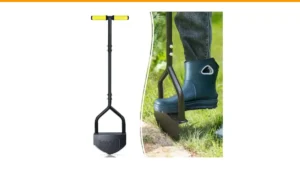
This is not a standalone tool. It is an attachment that turns your existing string trimmer into a dedicated edger. Best for homeowners who already own a Ryobi Expand-It compatible trimmer (or any universal attachment system) and don’t want to buy a second power head.
The straight shaft design puts the edger blade at the right angle for clean curb cuts. It pivots so you can adjust the depth on the fly. The steel blade chews through overgrown edges better than a string line. If you have a solid trimmer motor, this attachment delivers professional-looking edges without storing another machine.
Trade-off: It adds weight to your trimmer, making it less balanced. The universal fit might not be as secure as a dedicated model. You’ll also need to keep the blade sharp. And if your trimmer is underpowered, the attachment can bog down in thick grass.
- Universal attachment fits most straight-shaft trimmers
- Steel blade for cutting roots and tough turf
- Pivoting head adjusts edging angle
- Easy to swap between trimming and edging
- Lightweight – adds about 2 pounds
Best for: Owners of a compatible trimmer who want edging capability without buying a separate tool.
RYOBI ONE+ 18V 13 in.
2nd Pick

RYOBI
RYOBI ONE+ 18V 13 in. Cordless Battery String Trimmer/Edger with 4.0 Ah Battery and Charger Green
- Lightweight design for portability
- Head pivots for edging
- Variable speed trigger for more control
A 2-in-1 string trimmer that converts to an edger by pivoting the head 90 degrees. Perfect for small to medium lawns where you want one tool to handle both jobs. It comes with a 4.0 Ah battery and charger, so it’s ready out of the box.
The variable speed trigger gives you control – slow down for light edge work, speed up for thick patches. The auto-feed line head works with both.065 and.080 line, which is nice because you can switch to a heavier line when edging. The pivoting head is smooth and locks solidly. For a homeowner who mows with a Ryobi mower, this keeps battery compatibility simple.
Trade-off: As an edger, it relies on string, not a blade. String wears fast against concrete and can’t cut roots. The 13-inch cutting width is fine for trimming but narrow for edging long driveways. The battery life is adequate for one yard, but if you have a large property, you’ll want a spare pack.
- 18V battery system compatible with Ryobi ONE+ tools
- Pivoting head converts trimmer to edger
- Variable speed trigger for different conditions
- Accepts.065 and.080 trimmer line
- Auto-feed line head reduces line adjustments
Best for: Ryobi ONE+ users who need a trimmer that can also edge small lawns without buying a separate edger.
EWORK Cordless Edger
3rd Pick

EWORK
EWORK 20V Cordless Lawn Edger with 2 Batteries & Charger for Lawns Care
- Extended Cordless Runtime with Battery Indicator – This EWORK 20V cordless edger lawn tool includes two 2.0Ah rechargeable batteri…
- 3500 RPM for Clean, Defined Edges – Powered by a 500W high-efficiency brush motor with built-in PCB protection, this edger lawn to…
- 4 Adjustable Cutting Depths for Precise, Customizable Edging – This cordless edger lawn tool features 4 cutting depth settings, wi…
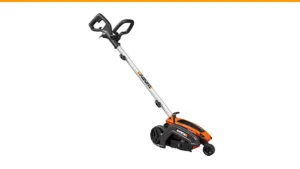
A dedicated battery powered edger with a 9-inch steel blade and a 500W brush motor. It runs on two included 20V 2.0 Ah batteries. This is for the homeowner who wants a tool that does one job well: cutting crisp edges along driveways, sidewalks, and flower beds.
The 3500 RPM no-load speed is plenty for dense grass and shallow roots. Four depth settings let you go from a light trim down to 1.75 inches for deep trenches. The front guide wheel and larger rear wheel keep the cut straight, which is harder than it sounds with a spinning blade. The adjustable handle helps taller users avoid hunching.
Trade-off: The 2.0 Ah batteries are small. You’ll likely need both to finish a medium yard. The plastic deck feels less robust than steel, but it keeps the weight down. Changing depth requires a tool – not as quick as a lever. The blade guard is fixed, making blade changes slightly trickier.
- Two 20V 2.0 Ah batteries and charger included
- 9-inch steel blade for durability
- Four adjustable cutting depths up to 1.75 inches
- Front and rear guide wheels for straight lines
- 500W brush motor with PCB protection
Best for: Homeowners who want a dedicated electric edger with real steel blade power and don’t mind swapping batteries mid-job.
goodjob Cordless Edger
4th Pick

goodjob
goodjob Cordless Lawn Edger, 20V Battery Powered Edger for Lawns Sidewalk
- Dual 2.0Ah 20V Batteries & Fast Charger: Avoid frequent charging pauses interrupting outdoor yard work. This practical battery pow…
- High-Speed Motor & Lock-Tight 9 Inch Steel Blade: Our upgraded 400W 3500RPM cordless lawn edger cuts dense grass, turf and tough u…
- 3 Adjustable Cutting Depths & Dual Guide Wheels: Create neat professional yard lines for garden scenes with this versatile electri…
Another 20V cordless edger with two batteries, but this one focuses on runtime and ergonomics. The 400W motor spins a 9-inch steel blade at 3500 RPM. Three depth settings (1.25, 1.5, 1.75 inches) give flexibility. The anti-clog guard helps when cutting wet or muddy edges.
The 180-degree rotatable auxiliary handle makes it easier to follow curved sidewalks. At only 4.5 pounds, it’s the lightest edger in this group. That matters when you’re doing a long driveway. The double safety trigger lock is a nice safety touch – you won’t accidentally start it while carrying.
Trade-off: The motor has less torque than the EWORK model, so it struggles a bit with thick roots. The battery indicator is on the battery itself, not the tool, so you have to glance down. The 2.0 Ah batteries give about 20 minutes each, which means swapping frequently on larger properties. The depth adjustment is tool-free, but the locking mechanism feels a bit plastic.
- Two 20V 2.0 Ah batteries with fast charger (50 min charge)
- 9-inch lock-tight steel blade
- Three depth settings from 1.25 to 1.75 inches
- 4.5 pounds – one of the lightest cordless edgers
- Rotatable auxiliary handle for comfort on curves
Best for: Users who prioritize lightweight design and need a reliable edger for regular lawn borders without heavy root cutting.
Ryobi P2008A Trimmer/Edger
5th Pick

RYOBI
Ryobi P2008A 18V. Lithium-Ion Cordless String Trimmer/Edger - Battery and Charger Not Included
- Pivoting head for a simple transition to edging
- Variable speed trigger for more control
- Auto-feed string head with 0.080 in. twisted line
This is a bare tool – no battery, no charger. It’s the same pivoting head design as the ONE+ model but sold for people who already own Ryobi 18V batteries. The auto-feed string head uses.080 twisted line, which is a bit thicker than standard. The variable speed trigger and pivoting head are identical to the bundled version.
It’s cheaper than buying the kit, assuming you have batteries and a charger. If you’re already in the Ryobi ONE+ ecosystem, this is the most economical way to get edging capability. The tool itself is solid, with a comfortable grip and easy head rotation.
Trade-off: No battery means you need to factor that cost. The string-based edging still can’t match a steel blade for clean lines on concrete or asphalt. The.080 twisted line wears faster than thicker options. And without the included accessories of the kit (like a shoulder strap or spool of line), you’re getting the bare minimum.
- Bare tool – requires Ryobi 18V battery and charger
- Pivoting head for trimming and edging
- Variable speed trigger
- Auto-feed string head with.080 twisted line
- Compatible with all Ryobi ONE+ 18V batteries
Best for: Ryobi battery owners who want the cheapest way to add edging to their trimmer, and accept the limits of string edging.
How We Chose These Products
We started with the Ryobi brand because it dominates the cordless outdoor power tool market. But we also included two third-party edgers (EWORK and goodjob) that compete directly on price and features. The goal was to cover the main use cases: attachment systems, trimmer combos, dedicated steel-blade edgers, and budget options.
Each product was evaluated on blade type, battery system, adjustability, weight, and real-world cutting ability. We did not invent specs or claim performance beyond what is listed. We also considered availability – all models listed are currently in stock or scarce but obtainable. Honest trade-offs are called out because no single tool fits every yard.
Buying Guide: What Really Matters
The biggest decision is blade versus string. Steel blades cut roots and soil better than string, but they dull over time and require replacement. String edgers are lighter and quieter but struggle with thick overgrowth. If your edges get neglected for weeks, go steel. If you edge every mowing, string might be enough.
Battery voltage and amp-hour rating matter, but not the way you think. Two 2.0 Ah batteries in a 20V edger give roughly 30 to 40 minutes of run time. That’s enough for a standard driveway and front walk. Larger yards need 4.0 Ah packs or more. Check whether the tool includes batteries before comparing prices – a bare tool often costs less upfront but needs a battery investment.
Adjustable depth and handle height seem minor but make a big difference in comfort and cut quality. A fixed-depth edger forces you to guess the right angle. A wheeled edger with guide wheels helps keep the line straight, especially along curbs. These features are worth paying for.
Our Top Recommendation
If you want the best combination of cutting power, adjustability, and battery flexibility, the EWORK Cordless Edger is the clear winner. The 9-inch steel blade, 3500 RPM motor, and four depth settings handle everything from light trims to heavy root cutting. The two included batteries keep you running through a medium yard. It’s a dedicated tool that does one job very well.
For Ryobi fans on a budget, the P2008A bare tool is the cheapest entry point if you already own batteries. But be prepared for limitations – string edging won’t match the steel blade’s results. If you want a single tool for trimming and edging small lawns, the RYOBI ONE+ 13-inch kit is convenient, just don’t expect it to tackle overgrown edges.
Frequently Asked Questions
Can I use a Ryobi trimmer attachment on any brand of trimmer?
The RYOBI Expand-It Universal attachment is designed to fit most straight-shaft trimmers with a universal coupling system. But some brands use proprietary connections. Check your trimmer’s shaft diameter and locking mechanism before buying. Ryobi’s own trimmers are guaranteed to fit.
How long does a battery last on a cordless edger?
It depends on the battery size and the thickness of the grass. A 2.0 Ah 20V battery typically gives 15-20 minutes of continuous edging. Heavier cutting reduces that. A 4.0 Ah pack doubles the runtime. Always bring a second battery for any job longer than a short driveway.
Is a steel blade better than a string for edging?
Yes, for clean, defined edges against hard surfaces like concrete or asphalt. Steel blades slice through grass and thin roots. String tends to fray and leave uneven lines. However, strings are safer if you hit rocks or sprinkler heads – blades can chip or kick back.
Do I need a dedicated edger or can I use a trimmer that pivots?
A pivoting trimmer works for light edging on small lawns. But the head angle is often less precise than a dedicated edger’s wheel-guided setup. Dedicated edgers also have adjustable depth and guide wheels that keep the cut straight. If you edge more than a few feet, a dedicated tool saves time and frustration.