
Understanding Lawn Mower Depreciation Rates: A Comprehensive Guide
Contents
Many homeowners face the reality of maintaining their lawns, often investing in quality lawn mowers. Over time, it’s crucial to understand how much value your mower loses. This understanding not only helps in budgeting for future purchases but also when considering the sale of your current mower. Knowing how lawn mower depreciation works can save you money and help make informed decisions about upgrades or replacements.
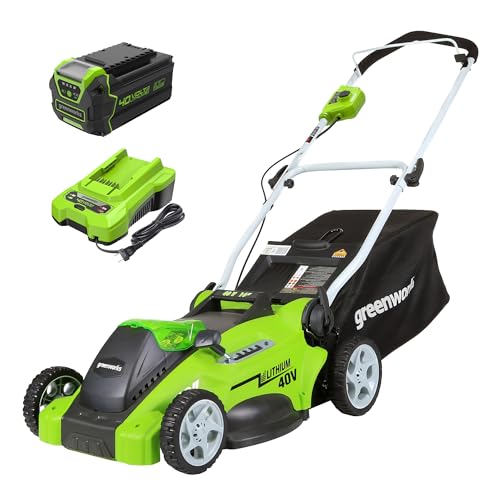
In this article, you will learn about the factors influencing lawn mower depreciation rates, how to calculate depreciation, and the average lifespan of different mower types. Additionally, we’ll discuss how products like the Greenworks 40V 16in Push Lawn Mower can impact your mowing experience while providing value over time.
Greenworks
Greenworks 40V 16in Push Lawn Mower, 4.0 Ah Battery and Charger
- [16" LAWN MOWER] - This 40V lawn mower cuts up to 1/3 acre with fully charged 4.0Ah battery (varies based on grass condition and o…
- [ULTRA LIGHTWEIGHT] - 35% lighter than steel deck mowers
- [SINGLE LEVER HEIGHT ADJUST] - 5 position height adjustment
Factors Influencing Lawn Mower Depreciation
Lawn mower depreciation is influenced by several key factors:
- Type of Mower: Push mowers, riding mowers, and robotic mowers all depreciate at different rates. For example, riding mowers typically lose value more slowly than push mowers.
- Brand and Quality: Premium brands often retain value better than budget options. Investing in quality can lead to lower depreciation.
- Usage: How frequently and intensely you use the mower affects its condition and longevity. Heavy usage can lead to faster depreciation.
- Maintenance: Regular maintenance can significantly prolong a mower’s life and reduce depreciation. A well-cared-for mower will generally fetch a higher resale price.
- Market Demand: Trends in lawn care can influence the resale value. Popular models may depreciate slower due to high demand.
Calculating Lawn Mower Depreciation
To calculate depreciation, you can use several methods, including the straight-line method and the diminishing balance method. The straight-line method is the simplest:
- Determine the initial purchase price of the mower.
- Estimate the expected lifespan. Most mowers last between 7 to 15 years, depending on the type and maintenance.
- Divide the purchase price by the number of years to find the annual depreciation.
For example, if you bought a mower for $400 with a lifespan of 10 years, the annual depreciation would be $40. After five years, the mower’s value would be approximately $200.
For more precise calculations, you can use online tools, such as the Riding Mower Depreciation Calculator.
Average Lifespan of Different Mower Types
The lifespan of a lawn mower varies significantly based on its type:
- Push Mowers: Generally last around 7-10 years.
- Self-Propelled Mowers: Can last between 10-15 years, depending on usage and maintenance.
- Riding Mowers: Often last 15 years or longer with proper care.
- Robotic Mowers: Typically have a lifespan of 5-10 years, depending on the quality and technology.
Understanding these lifespans can help you plan for replacements and upgrades.
Comparison of Lawn Mower Depreciation Rates
| Type of Mower | Typical Lifespan (Years) | Average Depreciation Rate (%) |
|---|---|---|
| Push Mower | 7-10 | 20-25 |
| Self-Propelled Mower | 10-15 | 15-20 |
| Riding Mower | 15+ | 10-15 |
| Robotic Mower | 5-10 | 25-30 |
Frequently Asked Questions
1. What is the average depreciation rate for lawn mowers?
The average depreciation rate for lawn mowers typically ranges from 10% to 30% per year, depending on the type and condition.
2. How can I maximize the resale value of my lawn mower?
Maintain your mower regularly, keep it clean, and store it in a dry place. Keeping all original documentation can also help increase resale value.
3. Does the brand affect depreciation rates?
Yes, higher quality brands usually depreciate slower than lower-quality ones. Investing in a recognized brand can lead to better long-term value.
4. What factors contribute to faster depreciation?
Heavy usage, lack of maintenance, and market demand primarily contribute to faster depreciation rates. Additionally, if newer models with better technology are released, older models can lose value more quickly.
5. How often should I service my lawn mower?
It’s recommended to service your mower at least once a year. Regular maintenance, such as changing oil, sharpening blades, and cleaning filters, can significantly extend its lifespan.
Final Thoughts on Lawn Mower Depreciation
- Understand the type of mower you own and its average lifespan.
- Keep up with regular maintenance to slow depreciation.
- Consider market trends to get the best resale value.
- Track your mower’s condition and usage to anticipate depreciation.
- Invest in quality brands for better long-term value.
With this knowledge, you’ll be better equipped to manage your mower’s value and make smarter purchasing decisions in the future.