
You’ve probably seen the videos: a tank of fish swimming beneath a lush bed of lettuce, the water somehow keeping both alive. It looks almost magical. But it’s not magic—it’s a closed-loop ecosystem that mimics how rivers and wetlands work. If you’ve ever tried keeping a potted plant alive or managed a fish tank, you already know half the story. Aquaponics just connects those two halves into one productive system.
By the end of this guide, you’ll understand the exact biological processes at work, what equipment you actually need, and how to troubleshoot the most common failures. I’ll walk through the nitrogen cycle step by step, compare aquaponics to plain hydroponics, and answer the questions people ask most when they’re getting started.

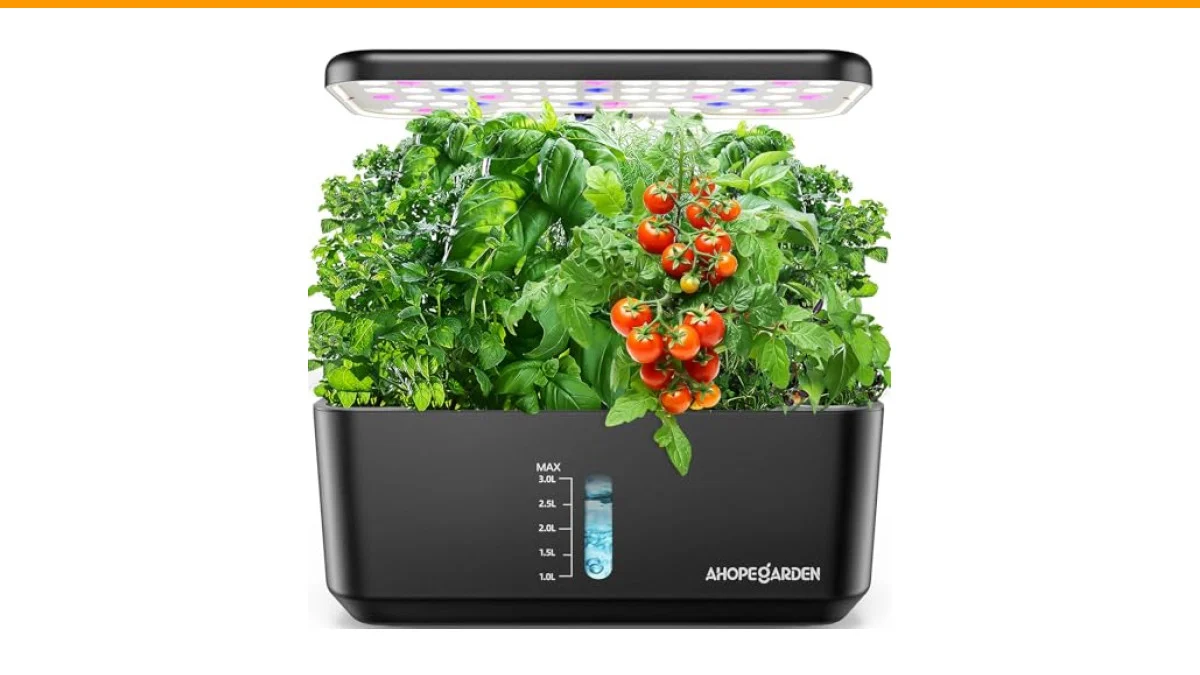
Ahopegarden
Ahopegarden Indoor Garden Hydroponics Growing System: 10 Pods Kit with LED
- High planting efficiency: Start an indoor herb garden with the Ahopegarden hydroponic growing system, which includes a water reser…
- 10 Pods & Water Level Window Included: This indoor grow kit with light offers 10 growing stations, The reservoir of our hydroponic…
- 2 Growing Modes for Veggies, Fruits & Flowers: The grow light of our indoor veggie growing system features full-spectrum lamps tha…
What Is Aquaponics and Why It Works
Aquaponics combines aquaculture (raising fish) with hydroponics (growing plants in water). The fish produce waste, bacteria convert that waste into plant food, and the plants clean the water for the fish. Everyone gets something, and the only real inputs are fish food and electricity.
The key insight is that fish waste is mostly ammonia, which is toxic to fish at even low concentrations. In a closed tank, ammonia builds up and kills the fish. In nature, bacteria in the water column and gravel break that ammonia down. Aquaponics just speeds up that natural process in a controlled environment.
The Nitrogen Cycle: The Engine of the System
This is the part most beginners get wrong. They think the plants eat fish poop directly—they don’t. The process happens in three stages:
- Fish produce ammonia through their gills and urine. A 100-gallon tank with 10 adult tilapia produces roughly 5–10 grams of ammonia per day, depending on feeding rates.
- Nitrosomonas bacteria oxidize ammonia into nitrite (NO2). Nitrite is still toxic to fish, so this stage alone isn’t enough.
- Nitrobacter and Nitrospira bacteria convert nitrite into nitrate (NO3). Nitrate is relatively harmless to fish at normal levels and is exactly what leafy greens and fruiting plants need to grow.
This entire chain takes 4 to 6 weeks to establish in a new system. During that time, you’ll see ammonia spike, then nitrite spike, then nitrate climb. If you add fish all at once instead of gradually, the bacteria colony can’t keep up and your fish will suffer.
Pro tip: Test your water every other day during cycling. You want ammonia below 1 ppm and nitrite below 0.5 ppm before adding more fish. Patience here saves you from dead fish later.
Core Components of a Working System
You don’t need a huge backyard setup to understand aquaponics. But you do need four things working together:
- Fish tank: Holds the fish and their waste. Bigger is easier to stabilize—a 50-gallon tank swings less in temperature and pH than a 10-gallon tank.
- Mechanical filter: Removes solid waste before it breaks down into ammonia too fast. A simple swirl separator or settling tank works for most home systems.
- Biofilter: A high-surface-area media (like plastic bio-balls or lava rock) where the nitrifying bacteria live. This is where the nitrogen cycle actually happens.
- Grow bed or raft: Where plants sit. In media beds, the gravel itself doubles as the biofilter. In raft systems, plants float on Styrofoam with roots dangling in the water.
The water flows from the fish tank to the filter, then to the grow bed, then back to the fish tank. A simple pump on a timer keeps the water moving. Most home systems run the pump 15 minutes on, 45 minutes off so the grow bed doesn’t stay waterlogged.
One thing that surprises people: the plants don’t need soil at all. They need the nutrients dissolved in the water, plus oxygen at the roots. That’s why media beds use coarse gravel or clay pebbles—they drain quickly and let roots breathe.
Aquaponics vs. Hydroponics: What’s the Real Difference?
This matters because many people start with a hydroponics kit, then wonder if they can just add fish. You can, but the systems are built differently. Hydroponics uses synthetic nutrient solutions mixed from salts. Aquaponics uses fish waste plus bacteria to create those same nutrients naturally.
Here’s the trade-off: hydroponics gives you faster growth and easier pH control. Aquaponics gives you two products (fish and plants) and requires far less purchased fertilizer. But aquaponics is harder to tune—you’re managing a living ecosystem, not a sterile chemical bath.
If you’re exploring indoor growing for the first time, a quality hydroponic system is often the smarter entry point. Something like the Ahopegarden hydroponics system gives you a controlled environment with an LED grow light and a water circulation pump, so you can learn how plants respond to water-based growing before adding fish to the equation. It’s a 10-pod countertop unit with a water level window and adjustable light height—good for herbs and leafy greens. You can check the current price and availability on Amazon if you want to see it.
| Factor | Aquaponics | Hydroponics |
|---|---|---|
| Nutrient source | Fish waste converted by bacteria | Synthetic chemical salts |
| pH range | 6.8–7.0 (fish need neutral) | 5.5–6.5 (plants prefer acidic) |
| System complexity | High—two living organisms to manage | Moderate—only plants |
| Daily maintenance | Feed fish, monitor water quality | Check nutrient levels, adjust pH |
| Setup cost | Higher (tank, fish, biofilter) | Lower (reservoir, pump, net pots) |
| Yield per square foot | Good, but slightly slower growth | Excellent, fastest growth rates |
| Ongoing costs | Fish food only | Nutrient solutions (recurring) |
Neither system is categorically better. If you want fresh fish as well as vegetables, aquaponics wins. If you want the simplest path to fresh basil in January, hydroponics gets you there with less risk.
Setting Up Your First System: Step by Step
Let’s assume you’re building a small media-bed system indoors—about 20 gallons of water total. This is the most forgiving design for beginners.
- Place the fish tank and grow bed. The grow bed needs to sit above the fish tank so water can drain back by gravity. A 2-foot height difference gives you enough head pressure.
- Add the grow media. Rinse clay pebbles or gravel thoroughly before adding them. Dust from the media will cloud your water for days if you skip this.
- Install the pump and plumbing. Pump water up to the grow bed. Use a bell siphon if you want the bed to flood and drain automatically—this pulls air into the roots on every cycle.
- Cycle the system without fish. Add a pinch of pure ammonia or a small piece of fish food to start the bacteria colony. Run the pump 24/7. Test ammonia, nitrite, and nitrate every few days.
- Add fish gradually. Once nitrates appear and ammonia stays near zero, add 2–3 small fish. Wait two weeks, then add more. Goldfish are hardy for indoor systems; tilapia are better if you want to eat the fish.
- Plant seedlings in the grow bed. Start with fast-growing leafy greens like lettuce, kale, or Swiss chard. They tolerate the slightly higher pH better than fruiting plants.
- Feed fish once daily. Only give what they’ll eat in 2 minutes. Overfeeding is the number one cause of ammonia spikes in established systems.
Expect the first harvest in 5 to 7 weeks for lettuce. The fish will take 6 to 9 months to reach harvest size, depending on species and water temperature.
Pro tip: Keep a simple log. Write down your pH, ammonia, nitrite, and nitrate readings every time you test. After a month, you’ll spot patterns that tell you when to feed more or change water.
Common Mistakes and How to Avoid Them
Three failures wreck more beginner systems than anything else. Learn these and you’ll save yourself weeks of frustration.
Mistake 1: Overstocking fish. New growers add a dozen fish to a 20-gallon tank because it looks empty. The bacteria colony can’t handle the ammonia load, and the fish die within a week. Start with 1 inch of fish per 5 gallons of water. Add more only after nitrate readings stay stable.
Mistake 2: Ignoring pH drift. The bacteria that convert ammonia prefer a pH around 7.5, but plants prefer 6.0. In aquaponics, you’re stuck compromising at 6.8–7.0. If pH swings below 6.5, nitrification slows dramatically. Test weekly and add potassium carbonate or calcium hydroxide to raise it slowly.
Mistake 3: Letting solids build up. Fish poop that isn’t removed turns into ammonia faster than the bacteria can process it. A simple mechanical filter—even a mesh bag around the pump intake—catches most solids. Clean it every three days. This one habit prevents more water quality crashes than any other maintenance step.
If you’re growing on a rooftop or in a very warm climate, water temperature becomes another factor. Fish like tilapia thrive at 75–85°F, but trout need cooler water around 60°F. Match your fish to your environment or invest in a heater/chiller. For more on managing temperature in exposed growing spaces, check out this guide on protecting rooftop plants from extreme temperatures—many of the same shading and insulation tricks apply to fish tanks.
Five Questions People Actually Ask
Do I need to change the water in an aquaponics system?
No, not routinely. The plants take up nitrate and other nutrients, which cleans the water for the fish. You only add water to replace what’s lost to evaporation and plant transpiration—usually 1–2% of total volume per day. If nitrate climbs above 80 ppm, harvest more plants or add a fast-growing plant like duckweed to pull it down.
Can I use tap water for my fish tank?
Yes, but you must dechlorinate it first. Chlorine and chloramine kill the nitrifying bacteria you’ve worked to establish. Let tap water sit in an open bucket for 24 hours to off-gas chlorine. For chloramine, which doesn’t evaporate, use a water conditioner sold at pet stores. Test your source water’s pH too—if it’s above 8.0, you’ll struggle to keep it in the safe range.
What fish are best for a small indoor system?
Goldfish are the most forgiving choice for beginners. They tolerate cooler water and lower oxygen levels than tropical fish. If you want edible fish, tilapia are the standard—they grow fast and handle poor water quality better than trout or bass. For a countertop system, you’re better off with just a single betta or a few guppies for ornamental purposes, since they produce very little waste.
How much does it cost to run an aquaponics system?
The pump and grow light are the main electricity draws. A small 20-gallon system with an air pump uses about 50–75 watts total, which runs roughly $5–10 per month in electricity. Fish food costs a few dollars a month. The initial setup—tank, media, pump, plumbing—runs $150–400 if you buy new equipment. Building with repurposed containers cuts that in half.
Can aquaponics work without grow lights?
Yes, if you have a sunny window or a greenhouse. Plants need 6–8 hours of direct sunlight for leafy greens, more for fruiting plants. Indoors, most rooms don’t get enough light in winter, so a full-spectrum LED grow light makes the difference between spindly seedlings and healthy harvests. If you’re starting with a hydroponic system indoors, look for one with an adjustable light arm so you can raise it as plants grow—like the Ahopegarden indoor garden kit does with its 14.5-inch post.
What to Do With This Information
- Start small—a 20-gallon system teaches you more than a 100-gallon system ever will, at a fraction of the cost.
- Cycle your system without fish for at least 3 weeks before adding any livestock. Test water every other day during this phase.
- Choose leafy greens before fruiting plants. Lettuce, kale, and herbs tolerate the pH range that keeps fish healthy.
- Test pH and ammonia twice a week for the first two months. After that, weekly testing is enough for a stable system.
- Clean your mechanical filter every three days. This prevents the most common water quality crashes.
- Keep a written log of water tests—you’ll spot problems before they kill fish.
- If you’re not ready for fish, start with a hydroponic kit to learn the plant side first. You can always add fish later once you understand water chemistry basics.
Aquaponics rewards patience. The first month feels like nothing is happening, then suddenly your bacteria colony matures and everything clicks. Stick with it through that initial lag, and you’ll have a system that produces fresh food for years—with fish that are genuinely happy to see you at feeding time.