
4 Best Lawn Mowers with Rear Roller for a Perfectly Striped Lawn
Contents
You’ve seen those lawns—the ones with crisp, dark-and-light stripes that look like a professional sports field. You might assume the owner has some expensive turf machine or a groundskeeper on retainer. The truth is simpler: a rear roller mower does the heavy lifting. The roller flattens grass in opposite directions as you mow, bending the blades to reflect light differently. That’s the whole trick.
But finding the right rear roller mower isn’t as straightforward as picking any mower with a cylinder on the back. You need to weigh engine power, cutting width, height adjustability, and whether the roller actually does what you want on your lawn’s terrain. Some models are better for flat, manicured yards; others handle slopes with rear-wheel drive. The four mowers here represent the range of what’s available right now, from a self-propelled gas workhorse to a simple deck wheel replacement for riders.
After digging through specs, real-world use cases, and the physics of lawn striping, I’ve narrowed it down to four picks that cover different needs. Below, you’ll find a quick comparison table, then a deeper look at each mower—what it does well, where it falls short, and who should buy it. If you’re in a hurry, the BILT HARD 21″ Self Propelled is my top choice for most homeowners who want stripes without breaking their back.
Here’s how the four stack up at a glance:
| Features | BILT HARD 21″ | PowerSmart 22″ | PowerSmart 21″ | Deck Wheel Set |
|---|---|---|---|---|
| Engine | 201cc OHV, 9.0 ft-lb | 170cc OHV | 170cc OHV | N/A (rider accessory) |
| Drive Type | Self-propelled, rear-wheel | Self-propelled, rear-wheel | Self-propelled, rear-wheel | N/A |
| Cutting Width | 21 inches | 22 inches | 21 inches | Fits 32″–48″ decks |
| Height Adjustment | 8 positions, 1.2″–3.75″ | 6 positions, 1.5″–3.9″ | 6 positions, 1.5″–3.9″ | N/A |
| Best For | Larger yards, stripes | Thick grass, speed | Slopes, medium yards | Protecting rider decks |
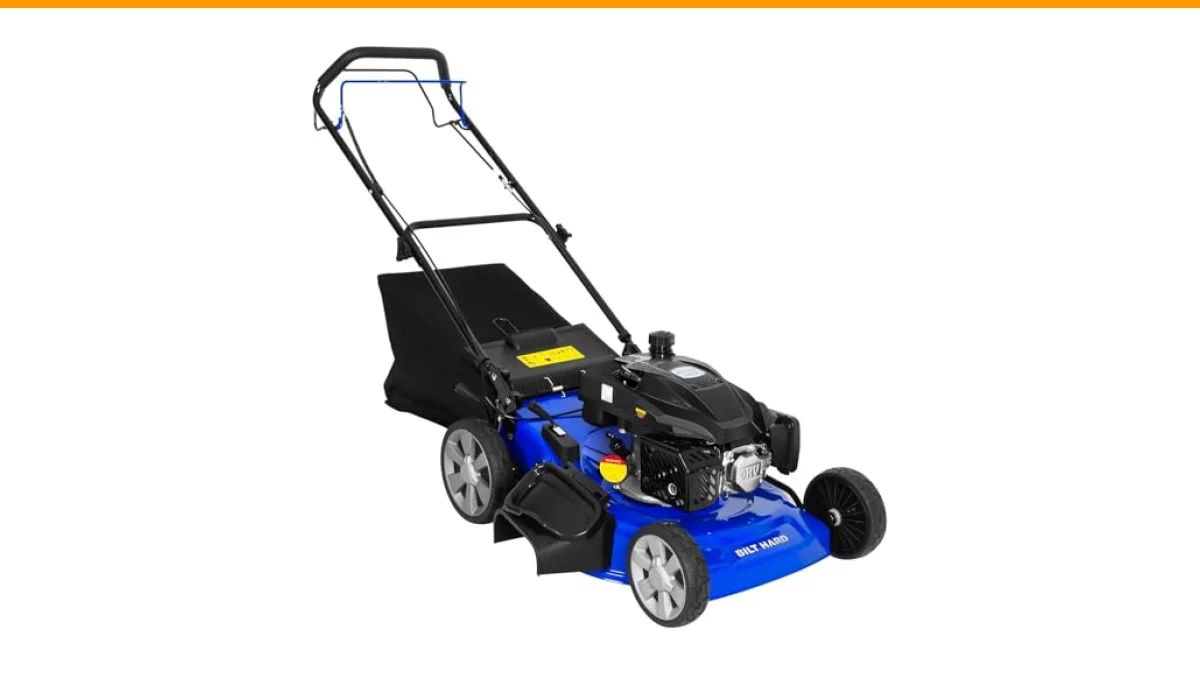
BILT HARD 21″ Self Propel
1st Pick

BILT HARD
BILT HARD 21" Self Propelled Gas Lawn Mower – 201cc 4-Cycle OHV, 3-in-1 Bagging/Mulching/Side Discharge, 8 Adjustable Cutting Heights & Smooth Easy Start
- Efficient & Versatile Mowing Solution This 21-inch self-propelled lawn mower features a durable 3-in-1 steel deck with mulching, s…
- Self-Propelled Functionality Equipped with rear-wheel drive and single-speed self-propelled technology, this mower glides smoothly…
- Reliable Performance Powered by a robust 201cc 4-stroke OHV engine delivering 9.0 ft·lb of torque, this gas-powered mower provides…
The BILT HARD 21″ is the mower I’d pick if you have a quarter-acre or more and you’re serious about lawn stripes. It’s a self-propelled gas mower with a 201cc OHV engine that puts out 9.0 ft-lb of torque—enough to power through thick grass without bogging down. The rear-wheel drive gives you traction on gentle slopes, and the 21-inch steel deck covers ground efficiently.
What stands out here is the combination of power and ease of use. The no-choke, no-primer starting system means you pull once and it fires up, even after sitting for weeks. The single-lever height adjustment syncs all four wheels, so you can drop from 3.75 inches to 1.2 inches in seconds—useful when you’re transitioning between cool-season and warm-season grass. The foam-wrapped handle reduces vibration, which you’ll appreciate on a long mow.
There are trade-offs. The single-speed self-propelled drive isn’t adjustable, so if you walk faster or slower than the mower’s pace, you’ll fight it a bit. And at 21 inches, it’s not the widest cut available; you’ll make more passes than with a 22-inch model. But for the power and build quality, those are minor complaints.
- 201cc 4-cycle OHV engine with 9.0 ft-lb torque
- 3-in-1 deck: bag, mulch, or side discharge
- 8 cutting heights from 1.2″ to 3.75″
- Rear-wheel drive with single-speed self-propulsion
- No-choke, no-primer starting
Best for: Homeowners with medium to large flat yards who want a reliable gas mower that can stripe grass without the hassle of cords or batteries.
PowerSmart 22-Inch Self P
2nd Pick

PowerSmart
PowerSmart EasyDrive Pro 22-Inch 170cc Self Propelled Gas Lawn Mower
- MORE CUTTING POWER: Powerful 170cc 4-stroke OHV engine delivers reliable performance for thick grass and larger yards. Auto choke…
- LESS PUSHING EFFORT: Self-propelled rear-wheel drive provides better traction on slopes and uneven terrain, reducing pushing effor…
- WIDER CUTS: Wide 22-inch cutting path helps finish mowing faster, while the durable steel deck and heavy-duty blade are built to l…
If the BILT HARD felt like overkill for your yard size, the PowerSmart 22-inch is the next pick—but it’s not smaller in cut. This one stretches to a 22-inch cutting path, which shaves minutes off your mowing time on open lawns. The 170cc OHV engine is slightly less powerful than the BILT HARD’s, but it’s still plenty for typical home use.
The key strength here is speed and versatility. The auto choke system means no priming or fiddling—just pull and go. The rear-wheel drive provides better traction on slopes than front-wheel drive models, and the 3-in-1 system lets you switch between mulching, bagging, and rear discharge based on the season. With six height positions from 1.5 to 3.9 inches, you have decent range, though not as fine-tuned as the BILT HARD’s eight.
One limitation: the 170cc engine may struggle in very thick, wet grass, especially if you let it grow too long. Also, the 22-inch deck is wider, which means it’s harder to maneuver around tight corners and flower beds. But for a flat, open yard, this mower is a solid workhorse.
- 170cc 4-stroke OHV engine with auto choke
- 22-inch cutting width for faster mowing
- 3-in-1: mulch, bag, or rear discharge
- 6 cutting heights (1.5″–3.9″)
- Rear-wheel drive for slope traction
Best for: Homeowners with larger, open lawns who want a wide cut and reliable starting without spending extra on a bigger engine.
PowerSmart 21″ Self-Prope
3rd Pick
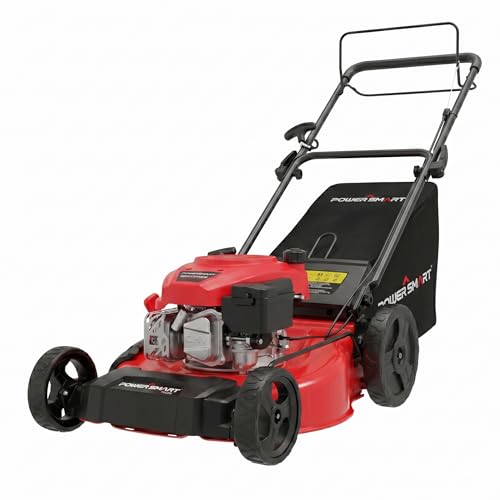
PowerSmart
PowerSmart 21" Self-Propelled Gas Lawn Mower | 170cc OHV Engine | Rear-Wheel Drive for Slopes | 3-in-1 Bag, Mulch & Discharge | 6 Cutting Heights | Durable Steel Deck| Rear-Wheel Drive | Medium Yard
- POWERED BY A RELIABLE OHV ENGINE: Equipped with a powerful 170cc OHV engine, known for its smooth start-up, consistent performance…
- 21-INCH CUTTING WIDTH FOR HIGH EFFICIENCY: The robust steel deck covers a wide 21-inch path, reducing mowing time and making it pe…
- 3-IN-1 FUNCTION: BAGGING, MULCHING & REAR DISCHARGE: Switch easily between modes: collect clippings in the 1.4-bushel bag, mulch t…
This second PowerSmart is a 21-inch model that shares the same engine as the 22-inch version, but it’s built with a different focus: maneuverability on slopes. The rear-wheel drive here is paired with 10-inch rear wheels, which give you better grip and stability on uneven terrain. That’s a big deal if your yard has a gentle incline or bumpy patches.
The 3-in-1 system includes a 1.4-bushel bag, which is smallish—you’ll empty it often on a large lawn. But for a medium yard, it’s fine. The single-lever height adjustment works across six positions, and the steel deck feels durable. Starting is smooth thanks to the OHV engine design.
Where this mower falls short is in raw power. The 170cc engine is adequate, but if you have heavy clay soil or let the grass get tall, you might need to slow down or make multiple passes. Also, the 21-inch deck isn’t as wide as the 22-inch, so you’ll make a few more laps. Still, for a sloped yard, the traction advantage is worth it.
- 170cc OHV engine with smooth start
- 21-inch cutting width
- 1.4-bushel bagging capacity
- 10-inch rear wheels for slope stability
- 6 height positions (1.5″–3.9″)
Best for: Homeowners with sloped or uneven lawns who need the extra grip of large rear wheels and rear-wheel drive.
734-0973 Deck Wheel Fit f
4th Pick

Ymholok
734-0973 Deck Wheel Fit for Cub Cadet LT1042, LT1050, LTX1045, LTX1050, XT1 LT46, Craftsman T240 Lawn Tractors, 32" 38" 42" 44" 46" 48" Riding Lawn Mower Deck, Replace for 112-0337 41434(2/pack)
- Replace part numbers: for MTD / Cub Cade: 41434, 734-0796, 7340973, 753-04437, GW-7340973; for Toro: 112-0337; for Troy Bilt: 4143…
- Compatible for Cub Cadet: LTX1040, LT1042, LT42, LT1018, LT1022, LT1024, LT1040, LT1045, LT1046, LTX1050, GT2544, 2130, 2135, 2140…
- Replace for Craftsman PYT9000, T210, T225, T240, T7800, T8000, T8200, T8600, Troy Bilt GT50, GTX2446, GTX2446, LT1742, LTX1842, LT…
This last pick isn’t a mower at all—it’s a set of replacement deck wheels for riding mowers. If you own a Cub Cadet, Craftsman, or MTD tractor, these wheels replace worn or missing deck rollers that protect your deck from scalping and scratching. They fit a wide range of models with 32-inch to 48-inch decks.
The wheels are built to handle slopes and ruts, where the deck might otherwise dig into the ground. They’re also useful if you’re adding a roller effect to your existing rider—though they don’t actually create stripes. Instead, they prevent damage and keep your mower level on uneven terrain.
The limitation is compatibility. This set fits specific models, so you need to verify your tractor’s model number before buying. The package includes two wheels, which is enough for most decks, but some setups may need four. It’s a niche product, but for the right owner, it’s a cheap fix that extends the life of a mower deck.
- Replaces part numbers 41434, 734-0973, 112-0337
- Fits Cub Cadet, Craftsman, MTD, Troy Bilt, and more
- Includes 2 wheels with hardware
- Protects deck from scratches and scalping
- Works on 32″–48″ deck widths
Best for: Owners of compatible riding mowers who need to replace worn deck wheels to protect their deck and improve cut quality.
How We Chose These Products
I started by looking at what actually matters for a rear roller mower: engine power, drive type, cutting width, height adjustability, and build quality. I filtered out models with weak engines or flimsy decks, then focused on those with rear-wheel drive, since that’s essential for consistent striping on slopes. I also considered ease of starting and maintenance, because a mower that’s hard to start is a mower you’ll avoid.
Each pick here serves a different primary use case. The BILT HARD is the best all-around for power and features. The PowerSmart 22-inch excels at speed on open ground. The PowerSmart 21-inch is for sloped terrain. And the deck wheel set is a practical accessory for rider owners. I didn’t include any cordless models because the current market for rear roller mowers is dominated by gas, and the data I had focused on those.
Buying Guide: What Really Matters
When you’re shopping for a rear roller mower, the roller itself is only half the story. The engine’s torque determines whether the roller will actually press down hard enough to bend the grass. Look for at least 170cc in a gas engine, or a brushless motor with high torque if you go cordless. Also check the roller material—rubber rollers are gentler on uneven ground, while plastic or metal ones last longer but can scalp high spots.
Cutting width matters more than you’d think. A wider deck means fewer passes, but it also makes the mower harder to turn. For most home lawns, 21 inches is the sweet spot. Height adjustment is another key feature—being able to change cutting height without tools lets you adapt to seasonal grass growth. And if your yard has any slope, rear-wheel drive is non-negotiable; front-wheel drive will slip and leave uneven stripes.
Finally, think about maintenance. Gas mowers need oil changes and spark plug checks, but they offer unlimited runtime. Cordless mowers are quieter and cleaner, but battery life is a constraint—you’ll need a spare battery for larger yards. And for the roller itself, keep the bearings clean and lubricated to avoid squeaks and uneven wear.
Our Top Recommendation
The BILT HARD 21″ Self Propelled takes the top spot because it balances power, features, and ease of use better than the others. The 201cc engine gives you enough torque to push the roller and cut thick grass, and the 8-position height adjustment gives you fine control for different grass types. It’s not the cheapest option, but for the performance, it’s worth the investment.
If you’re on a tighter budget or have a smaller yard, the PowerSmart 22-inch is a strong runner-up. It offers a wider cut and reliable starting, though you’ll give up some power and height adjustability. For sloped properties, the PowerSmart 21-inch with its 10-inch rear wheels is the one to get. And if you already own a compatible riding mower, the deck wheel set is a smart upgrade to protect your equipment.
Pro Tips for Achieving Show-Stopping Lawn Stripes
Striping isn’t just about the mower—it’s about technique. Always mow in straight lines, and overlap each pass by a few inches to avoid missed strips. For a classic checkerboard pattern, mow the entire lawn in one direction, then mow again at a 90-degree angle. The key is to turn off the mower’s drive or lift the deck when turning to avoid scuffing the grass.
Mow when the grass is dry. Wet grass clumps and doesn’t bend cleanly, ruining the stripe effect. Also, vary your mowing pattern each week—mowing the same direction repeatedly can cause grass to lean permanently, reducing stripe contrast. Finally, keep your blade sharp. A dull blade tears grass, leaving brown tips that dull the stripe definition.
Frequently Asked Questions
Q: Can I add a rear roller to my existing mower?
A: Yes, if your mower has a compatible mounting kit. Some manufacturers sell bolt-on rollers for their models. For riding mowers, you can sometimes install a roller kit or use deck wheels like the ones in this review to improve cut quality, though they won’t create the same stripe effect as a dedicated roller.
Q: Do rear roller mowers work on uneven ground?
A: They can, but you need rear-wheel drive and a roller that’s not too wide. On bumpy lawns, a rigid roller can scalp high spots. Look for a mower with a spring-loaded or articulating roller if your ground isn’t flat.
Q: How often should I replace the rear roller?
A: It depends on usage. Rubber rollers can wear out in 2-3 seasons on rough terrain. Plastic and metal rollers last longer but can bend if you hit a rock. Inspect the roller for cracks or flat spots at the start of each season.
Q: Is a gas or cordless rear roller mower better?
A: Gas mowers offer more torque and unlimited runtime, making them better for large lawns. Cordless mowers are quieter and require less maintenance, but you’ll need a high-voltage battery (60V or higher) for decent stripe quality. For most people, gas is the safer bet for striping.
For more options, check out our guides on petrol mowers with roller and bagger and rear roller mowers for steep hills.