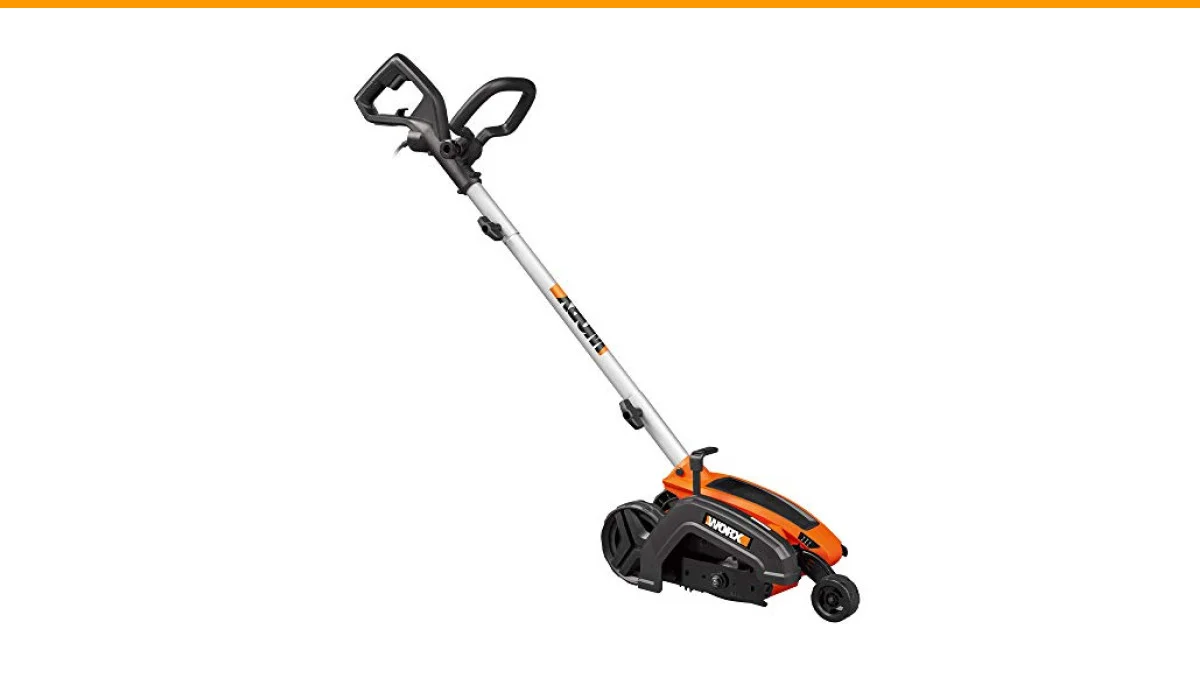
A tidy lawn edge takes a weekend to create and about three weeks to disappear. Grass creeps into the flower bed, mulch spills onto the sidewalk, and suddenly the border you dug by hand looks like a suggestion rather than a line. That’s the moment most homeowners start hunting for a real grass barrier.
Good grass barrier edging does three jobs at once. It blocks rhizomes and runners from crossing into beds, it holds soil and mulch on the correct side of the line, and it survives string trimmers, frost heave, and summer sun without cracking or bending. Material matters less than depth and anchoring. A 4-inch strip of plastic will pop out of the ground after one freeze, while a 10-inch barrier buried six inches deep stays put for years.
This roundup covers five options that solve different problems. VEVOR’s 150-foot coil wins for sheer coverage and root blocking. LAVEVE and Land Guard bring the corrugated metal look. EasyFlex is the fastest install for a small bed. Stirlingear splits the difference with hammer-in steel panels. Each section below explains who it actually suits and where it falls short.
Here’s a quick side-by-side of the specs that matter most when you’re choosing between these five.
| Features | VEVOR Edging | LAVEVE Metal Edging | EasyFlex Pound-In | Stirlingear Steel | Land Guard Edging |
|---|---|---|---|---|---|
| Material & Build | Recycled HDPE, 0.1 inch thick | Galvanized steel, corrugated | Recycled plastic, straight-top | Galvanized steel, powder-coated black | Galvanized steel, 3D ripple |
| Size & Coverage | 10 in. tall, 150 ft. total | 6 in. tall, 40 ft. total | 4.5 in. tall, 20 ft. total | 5 in. tall, 33 ft. in 10 panels | 6 in. tall, 50 ft. total |
| Install Method | Trench and backfill | Bend and anchor in soil | Pound in with mallet | Hammer-in stakes | Trench or push into soft soil |
| Standout Feature | 200 lb. puncture resistance | Rolled U-shaped safe edges | 6 bonus anchoring stakes | 11 stakes, 3 in. underground | CNC-cut precision ripples |
| Best Use Case | Long property lines, root blocking | Curved modern beds | Small garden beds, renters | Pathways and flower beds | Large curved lawn borders |
In this article
VEVOR Landscape Edging, 1…

VEVOR
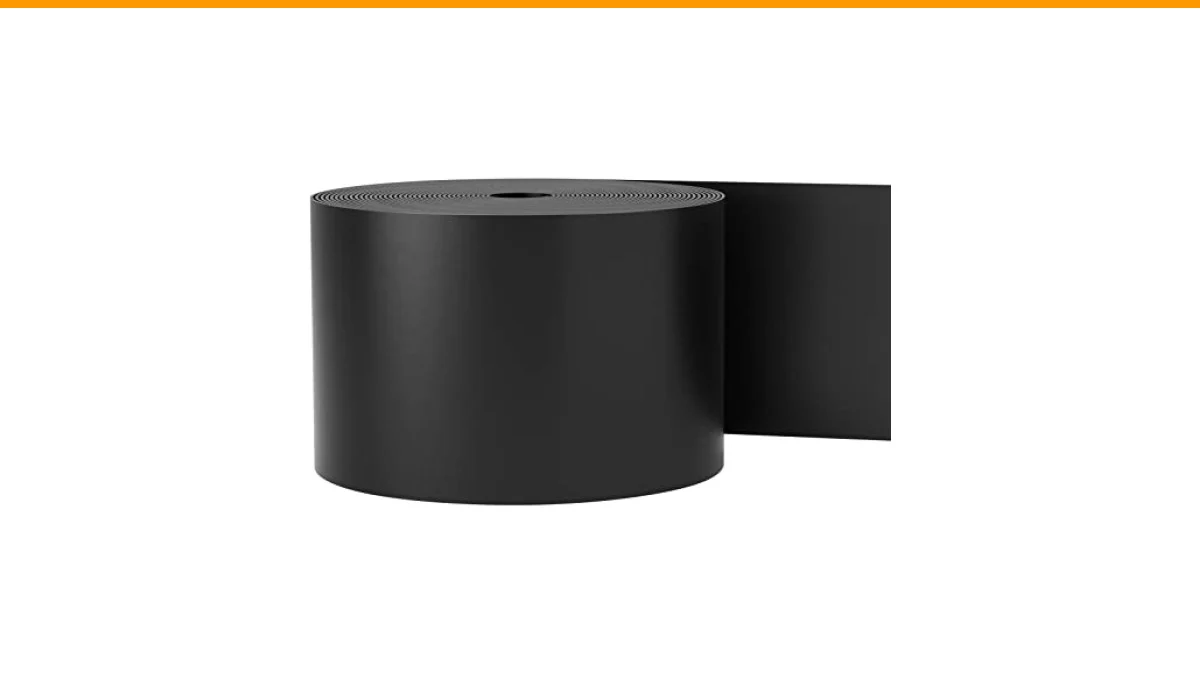
VEVOR Landscape Edging, 10 inch Depth 150 ft Total Length, Recycled HDPE Coiled Terrace Board, Flexible Bender Border for Landscaping, Lawn, Garden, Yard, Against Invading Weeds, Black
- 150' x 10" Landscape Edging: Our landscape edging is long enough to cover 150' in total. The 0.1" thickness can provide 200 pounds…
- Designed for Durability: The HDPE (high-density polyethylene) terrace board is sturdy for long-lasting use in harsh weather condit…
- Flexible & Adaptable: If you want a shorter length, simply measure out the size you need and cut the landscape border with garden…
VEVOR sells this as a 150-foot coil of recycled HDPE terrace board, and the numbers tell the story. Ten inches of height means you can bury six and still leave four above grade, which is more than most grass runners will climb. The 0.1-inch wall thickness carries a 200-pound puncture resistance rating, so a shovel edge or a stray root won’t slice through it.
What makes this pick stand out is the combination of length and depth. Most competitors ship 20 to 40 feet at 4 to 6 inches tall. If you’re edging a long driveway or separating a vegetable plot from a lawn, buying four separate kits gets expensive and leaves seams. One 150-foot roll covers a typical suburban property line in a single pass, and you can cut it with garden shears wherever you want to stop. The HDPE won’t rust, which matters if you live somewhere with road salt or heavy rain.
The honest downside: installation is real work. You dig a trench, seat the board, and backfill. There’s no hammer-in shortcut here, and the coil has memory, so it wants to curl until you’ve packed soil against both sides. On tight curves the material fights back more than thin plastic edging does. It’s also plain black with no decorative profile, so it disappears into the soil rather than adding a design element.
- 150 feet of continuous edging from one roll, no seams to line up
- 10-inch height blocks shallow roots and creeping grass rhizomes
- HDPE resists rust, fading, and cracking in freezing temperatures
- Cuts to length with standard garden shears
- Requires a dug trench, not a hammer-in install
Best for: Homeowners with long property lines or large beds who want one durable roll instead of stitching together short kits.
LAVEVE Corrugated Metal G…

LAVEVE
LAVEVE Corrugated Metal Garden Edging 6" x 40Ft, Landscape Edging Border | Galvanized Steel Garden Border for Lawn, Yard Pathway, Flower Bed, Garden Fence, Paver Edging (Black)
- 【HEAVY-DUTY GALVANIZED STEEL】Say goodbye to flimsy aluminum. LAVEVE Garden Edging is built with a reinforced, thickened galvanized…
- 【ALL-WEATHER PROTECTION】Designed for year-round outdoor use, this metal garden edging features a weather-resistant coating that wi…
- 【3D CORRUGATED STRENGTH】Engineered with a unique roll-forming process, the 3D wavy texture enhances structural strength and impact…
LAVEVE’s corrugated edging is the pick for anyone who wants the border to be part of the design, not just a hidden wall. The 6-inch height and 40-foot length suit curved flower beds, gravel paths, and raised planting areas where the metal edge stays visible. Galvanized steel with a reinforced core gives it more rigidity than aluminum strips, and the wavy 3D profile adds stiffness without extra weight.
Two details deserve attention. First, the roll-forming process creates a texture that grips soil, so the panel resists sagging once it’s seated. Second, both the top and bottom edges are rolled into U-shaped hems. That’s a small manufacturing choice with a real payoff: no sharp burrs to catch a shin or a dog’s paw. The weather-resistant coating handles sun and rain without the chalky oxidation you see on cheap untreated metal. Bending it into an S-curve around a tree takes some muscle, but the steel holds whatever shape you work it into.
Forty feet sounds generous until you measure your beds. A typical front foundation planting runs 30 to 50 feet, so one roll may not finish the job. The 6-inch height also means less underground anchor than the VEVOR option, which could matter in sandy soil where frost pushes things upward. And the price per foot runs higher than plastic, which is fair for metal but worth knowing before you commit to a large project.
- Galvanized steel core with a weather-resistant finish
- Rolled U-shaped hems on top and bottom edges for safety
- Corrugated profile boosts rigidity and soil grip
- Available in heights from 3 to 12 inches and multiple lengths
- Bends into curves but takes effort on tight radii
Best for: Gardeners who want a visible, modern metal border around curved beds and are willing to pay more per foot.
EasyFlex Pound-In Lands…
EasyFlex
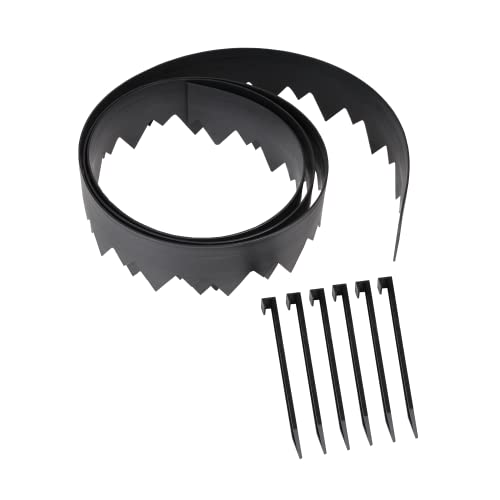
EasyFlex Pound‑In Landscape Edging with Bonus Anchoring Stakes – 20‑Foot Plastic Garden Border, 4.5 in. Straight‑Top Lawn Edging, Black
- Pound‑In Lawn Edging – Create clean, defined garden borders without hiring a professional; installs with minimal ground preparatio…
- Simple DIY Installation – Score the soil and gently pound edging into place with a rubber mallet for a secure, long‑lasting border…
- Durable & Flexible Plastic – Made from sturdy recycled plastic that installs in straight lines or tight curves around plants and t…
EasyFlex takes the opposite approach from the trench-and-backfill crowd. You score the soil with a spade, then pound the edging into place with a rubber mallet. No digging, no backfilling, no afternoon lost to a trench. The 20-foot coil of recycled plastic bends around trees and plant clusters, and the straight-top profile gives a clean, low line once it’s seated.
The kit includes six anchoring stakes, which is triple what most 20-foot edging packages ship with. That matters more than it sounds. Pound-in edging fails when the top edge lifts after a freeze-thaw cycle, and extra stakes hold the run flat. The plastic is formulated to take string trimmer hits without shattering, and it flexes with seasonal ground movement instead of cracking. For a rental property or a bed you might redesign next year, that low-commitment install is a genuine advantage.
Here’s the catch. Pound-in edging only works as well as the soil underneath it. Rocky ground or compacted clay will stop the mallet cold, and you’ll end up digging anyway. The 4.5-inch height also gives you less underground depth than taller options, so aggressive grass like Bermuda or running bamboo can eventually push past it. This is a barrier for normal lawn grass, not a fortress.
- 20-foot coil installs with a rubber mallet, no trench needed
- Six anchoring stakes included, three times the standard count
- Recycled plastic flexes around curves and trees
- Withstands string trimmers and temperature swings
- Shallow profile limits it against aggressive running grasses
Best for: Renters and casual gardeners who want a quick, low-cost border around a small bed without digging.
33ft. Galvanized Steel La…

STIRLINGEAR
33ft. Galvanized Steel Landscape Edging (10-Pack) – 40" Metal Edging for Landscaping with 11 Stakes, Hammer-in Metal Landscaping Edging for Yard Pathway & Flower Beds – Lawn Edge for Garden Design
- 𝐅𝐥𝐞𝐱𝐢𝐛𝐥𝐞 & 𝐄𝐚𝐬𝐲 𝐭𝐨 𝐈𝐧𝐬𝐭𝐚𝐥𝐥: Each panel measures 40" (L) × 5" (H), including 3" underground stakes for strong anchoring, leaving 2"…
- 𝐃𝐮𝐫𝐚𝐛𝐥𝐞 𝐆𝐚𝐥𝐯𝐚𝐧𝐢𝐳𝐞𝐝 𝐒𝐭𝐞𝐞𝐥 𝐂𝐨𝐧𝐬𝐭𝐫𝐮𝐜𝐭𝐢𝐨𝐧: Made from high-quality galvanized steel, this 33ft landscape edging (10-pack) is built to w…
- 𝐒𝐞𝐜𝐮𝐫𝐞 & 𝐒𝐭𝐚𝐛𝐥𝐞 𝐃𝐞𝐬𝐢𝐠𝐧: Comes with 11 stakes, ensuring strong anchoring in soil and stability against shifting over time. Ideal fo…
Stirlingear ships ten 40-inch panels that link into 33 feet of edging, each with a 3-inch stake built into the bottom. You hammer them in, and 2 inches stay visible above ground. That low profile suits pathways, driveway borders, and flower beds where you want a crisp line without a tall wall interrupting the view. The powder-coated black finish reads as modern and blends with most landscape styles.
Panel-based edging solves a problem coils can’t. Straight runs stay perfectly straight because each section is rigid, and you get a consistent height the whole way down. The galvanized steel resists rust, and the included 11 stakes add anchoring beyond what the built-in stakes provide. If your border runs along a walkway where foot traffic and lawn mower wheels push against it, the rigid panels hold their line better than flexible plastic.
Curves are where this system shows its limits. You can bend the panels, but sharp radii create kinks rather than smooth arcs. The 2-inch above-ground height also looks minimal next to a 6-inch corrugated border, so it won’t hold back much mulch or soil on a sloped bed. And 33 feet goes fast once you account for corners and gaps between panels.
- Ten rigid panels totaling 33 feet, with 11 stakes included
- 3-inch built-in stakes leave a clean 2-inch visible edge
- Powder-coated black galvanized steel resists rust
- Hammer-in install skips the trench entirely
- Sharp curves produce kinks instead of smooth bends
Best for: Anyone edging a straight pathway or driveway who wants a rigid, low-profile steel border that installs in under an hour.
Land Guard Corrugated Gar…

Land Guard
Land Guard Corrugated Garden Edging Border, 6"×50' Landscape Paver Edging, Tall Landscape Edging, Fence for Garden, Flower Bed, Lawn and Landscape Edging (Black)
- Quality Metal Material: Our galvanized garden edge is processed using high-precision CNC technology, ensuring accuracy down to eve…
- Weather Resistance: Made of quality material, it undergoes special anti-corrosion treatment and is combined with advanced coating…
- Stylish Corrugated Design: Corrugated Metal Landscape Edging strengthens a contemporary flair to your garden or lawn, enhancing it…
Land Guard’s 6-inch by 50-foot roll sits between the LAVEVE and VEVOR options in both coverage and price. The galvanized steel gets a 3D ripple pattern cut with CNC equipment, which the brand says holds tolerances down to a millimeter. In practice, that means consistent corrugation depth along the whole roll, so the border looks uniform instead of wavy in the sloppy sense.
Fifty feet covers more ground than most metal rolls, and the anti-corrosion treatment plus coating should keep it looking new through several seasons. Installation is flexible: push it into soaked soft soil, or dig a shallow trench for firm ground and backfill. That dual approach makes it forgiving for beginners who aren’t sure what their soil will allow. The corrugated texture adds structural strength, so the panel resists denting from a stray mower wheel better than flat metal.
Two things to weigh. The ripple design is a look, and not everyone wants a textured border. It also collects dirt in the grooves over time, which means occasional scrubbing if appearance matters to you. And while 50 feet is generous, the roll still ships as one piece, so you’ll need to cut it for shorter runs and may end up with leftover coil that’s awkward to store.
- 50-foot roll of galvanized steel with 3D ripple texture
- CNC-cut corrugation for consistent depth and appearance
- Anti-corrosion coating for year-round outdoor exposure
- Installs by pushing into soft soil or trenching firm ground
- Grooved surface traps dirt and needs occasional cleaning
Best for: DIYers edging a large curved lawn border who want metal durability with a decorative texture and don’t mind a bit of upkeep.
How We Chose These Products
We started with the core job of grass barrier edging: stopping grass from crossing a line. That filtered out decorative borders too short or too shallow to block rhizomes. From there, we weighed material durability, total coverage, install method, and how each product handles real conditions like frost, string trimmers, and foot traffic. Products with vague specs or missing dimensions didn’t make the cut.
We also looked at who each product actually serves. A 150-foot roll solves a different problem than a 20-foot pound-in kit, and both deserve a spot if they do their job well. Ranking came down to how much value you get for the effort and cost, plus whether the product’s limitations are honest trade-offs rather than design flaws.
Buying Guide: What Really Matters
Depth beats height. A 10-inch board buried six inches deep blocks roots that a 4-inch pound-in edge can’t touch. If you’re fighting Bermuda grass, bamboo, or ivy, go tall and bury most of it. For a simple lawn-to-mulch line, a 4 to 6-inch edge is plenty.
Match the install method to your soil and your patience. Pound-in edging is fast but fails in rocky or compacted ground. Trench-and-backfill takes an afternoon but holds up better over years. Hammer-in steel panels split the difference and work best on straight runs.
Think about total length before you buy. Measure the full border, add 10 percent for curves and mistakes, then check whether one roll or kit covers it. Buying two short kits often costs more than one long roll and leaves visible seams. Material matters too: HDPE won’t rust and flexes with frost, while galvanized steel looks sharper but dents and costs more per foot.
Our Top Recommendation
VEVOR’s 150-foot HDPE roll takes the top spot because it solves the biggest problem in this category: coverage with real depth. Ten inches of height, 200-pound puncture resistance, and enough length to edge an entire property line in one go. It’s not the easiest install, and it won’t win beauty contests, but it does the job of a grass barrier better than anything else here.
If you want metal looks, LAVEVE is the runner-up for curved beds and Land Guard covers more ground at a similar price. On a tight budget or in a rental, EasyFlex gets you a clean edge in an afternoon for very little money. Stirlingear suits straight pathways where rigid panels beat flexible coils.
Frequently Asked Questions
How deep should I bury grass barrier edging?
Bury at least 4 inches for normal lawn grass and 6 inches or more for aggressive runners like Bermuda or bamboo. Leave 2 to 4 inches above the soil line to hold mulch and create a visible edge.
Will plastic edging crack in freezing winters?
HDPE and recycled plastic flex with ground movement instead of cracking, which is why they outperform rigid materials in cold climates. The bigger risk is frost heave pushing shallow pound-in edging upward, so deeper burial and extra stakes help.
Can I cut metal edging to fit a short border?
Yes. Galvanized steel edging cuts with tin snips or an angle grinder, and the cut edge can be filed smooth. Wear gloves, because the fresh cut is sharp until you deburr it.
Does grass barrier edging stop weeds too?
It blocks grass rhizomes and roots from crossing the line, which stops the worst spread. Weed seeds still blow in and germinate on top of mulch, so edging reduces the problem rather than eliminating it.