Wet leaves matted three inches deep across a half-acre lot will laugh at a cordless blower. That’s the reality many homeowners discover after their first autumn with a battery unit. Gas power still exists for a reason — it moves serious air volume without a charging break.
A great gas leaf blower balances three things: raw clearing force, weight distribution, and how easy it is to start on a cold morning. CFM (cubic feet per minute) moves the pile. MPH (miles per hour) breaks the grip wet leaves have on pavement. Engine displacement (cc) tells you how much muscle sits behind both numbers.
This guide covers five machines that span handheld convenience to commercial-grade backpack power. The Husqvarna 150BT takes our top spot for most homeowners, while the PROYAMA 72CC wins for sheer brute force and the Husqvarna 125B suits smaller properties. Every pick below includes honest trade-offs, so you can match the tool to your actual yard instead of a spec sheet fantasy.
Here’s a quick side-by-side look at the numbers that matter most.
| Features | Husqvarna 150BT | Husqvarna 125B | PROYAMA 72CC | HASANEN 63CC | HTK 63CC |
|---|---|---|---|---|---|
| Engine Size | 51cc, 2.16 HP | 28cc, 1.1 HP | 72cc, 3.7 HP | 63cc, 4.3 HP | 63cc, 2-stroke |
| Air Volume | 765 CFM | 470 CFM | 880 CFM | 850 CFM | 665 CFM |
| Air Speed | 270 MPH | 170 MPH | 275 MPH | Not listed | 205 MPH |
| Style | Backpack | Handheld | Backpack | Backpack | Backpack |
| Best Use Case | All-around residential | Small yards | Heavy commercial work | Large property, snow | Quiet neighborhoods |
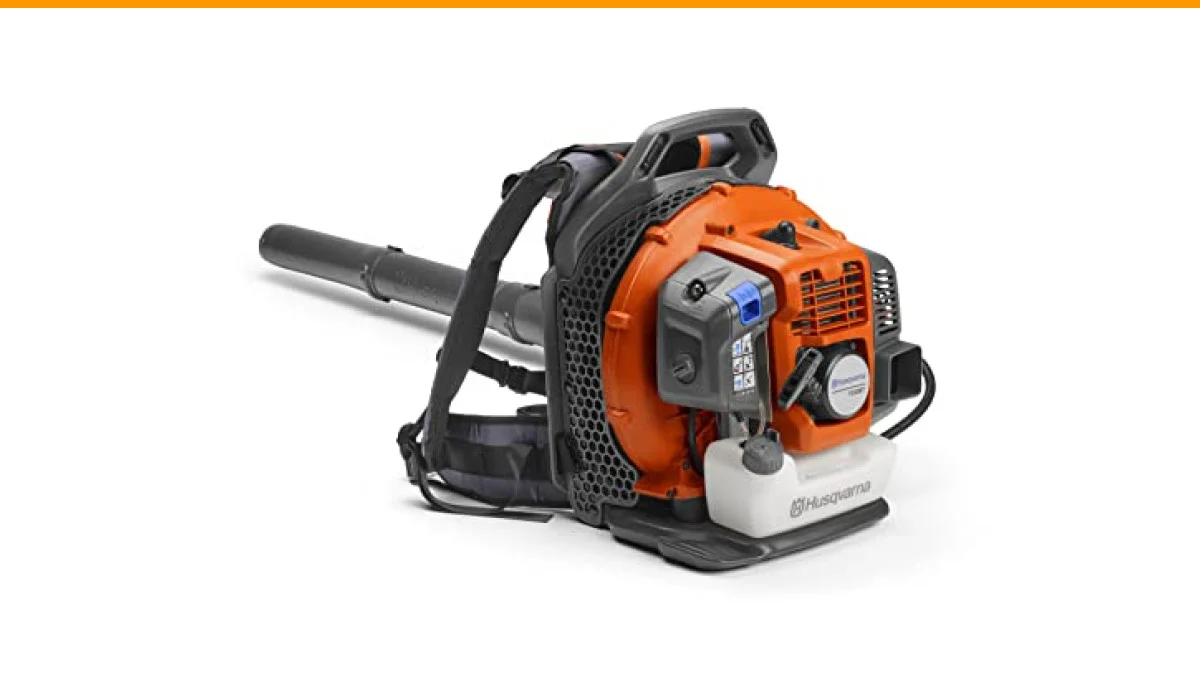
Husqvarna 150BT Gas Backpack Leaf Blower

Husqvarna
Husqvarna 150BT Gas Backpack Leaf Blower, 51-cc 2.16-HP 2-Cycle | Leafblower for leaf removal featuring back pack blower, 2-Cycle, 270-MPH and ergonomic harness, Model 970466901
- Husqvarna 150BT Backpack Leaf Blower Gas Powered combines a high powered gas leaf blower with state-of-the-art ergonomic design
- Powerful Clearing Performance: The 2-cycle, 51-cc, 2.16-HP engine within these backpack leaf blowers has a powerful blowing force…
- Ergonomic Harness System: This leaf blower backpack features a padded harness, hip belt and weight-leveling load management system…
The 150BT fits the homeowner who mows a quarter to half acre and wants one machine to handle fall cleanup without a professional price tag. It’s also a smart step up for anyone tired of dragging a handheld blower across a long driveway. Husqvarna built this around their X-TORQUE engine, which holds power at low RPM instead of forcing you to run wide open all afternoon.
What separates this blower from cheaper backpack units is the harness. Padded shoulder straps, a hip belt, and a load-leveling system spread 20-plus pounds of machine across your whole torso rather than your shoulders alone. The air purge system pushes fuel into the carburetor before you pull the cord, which cuts cold-start frustration considerably. A variable speed throttle with cruise control lets you lock in a setting for long sweeping passes across a lawn.
Here’s the honest part. At 51cc and 765 CFM, this isn’t the strongest blower on this list. If you’re clearing wet oak leaves off an acre or doing commercial work, the PROYAMA or HASANEN will outrun it. The 150BT also runs a 50:1 fuel mix, so you’ll need to keep premix or measuring supplies on hand. For a typical suburban lot, though, the balance of power, weight, and comfort is hard to beat. Check the current price on Amazon before committing, since Husqvarna pricing shifts with the season.
- X-TORQUE engine delivers strong low-RPM torque for stubborn debris
- Padded harness with hip belt and load-leveling system
- Air purge and cruise control simplify starting and extended use
- 270 MPH air speed handles wet leaves and light gravel
- Runs on 50:1 gas-oil mix, no separate oil reservoir
Best for: Suburban homeowners with a quarter to half acre who want backpack comfort without commercial bulk.
Husqvarna 125B Gas Leaf Blower

Husqvarna
Husqvarna 125B Gas Leaf Blower, Handheld Leaf Blowers for Lawn Care | Gas powered leaf blower, 28-cc 2-cycle engine, 470 CFM, 170 MPH, 12.5-N powerful clearing performance, and ergonomic design
- Husqvarna 125B Gas Powered Leaf Blower combines high power with state-of-the-art ergonomic design as a useful addition to your law…
- Powerful Clearing Performance: A hand held leaf blower with a 2-cycle, 28-cc, 1.1-HP engine that delivers 470 CFM, 170 MPH, 12.5 N…
- Ergonomic Balanced Design: Blower tube is engineered in harmony with the adjustable, soft-grip handle to reduce strain and optimiz…
Some yards simply don’t need a backpack. The 125B targets the person with a small lot, a townhome patio, or a garage they sweep weekly. At 28cc and roughly 10 pounds, it’s the kind of tool you grab one-handed and fire up for a five-minute job without strapping into a harness. That convenience matters more than raw power when your total cleanup area is under a quarter acre.
Husqvarna engineered the blower tube and soft-grip handle as a matched pair, which keeps the balance point close to your hand and reduces wrist strain on long passes. The auto-return stop switch resets itself after shutdown, so the next start doesn’t require remembering to flip anything back. Air purge appears here too, and it makes a genuine difference on a 28cc two-stroke that might sit for weeks between uses. Cruise control is a nice touch on a handheld, letting you hold a steady throttle without squeezing constantly.
Realistically, 470 CFM and 170 MPH will struggle with heavy, soaked leaf mats. You’ll be making multiple passes where a backpack blower clears in one. The 125B is also louder per unit of work than larger engines running at lower RPM, so it’s not the friendliest choice for tight neighborhoods with noise rules. Treat it as a precision tool for light debris, not a fall cleanup workhorse.
- Lightweight handheld design at 28cc and 1.1 HP
- 470 CFM and 170 MPH for light leaves and grass clippings
- Auto-return stop switch resets for easier restarts
- Balanced tube and soft-grip handle reduce fatigue
- Cruise control available for steady sweeping
Best for: Small-yard owners and patio keepers who want grab-and-go gas power without a backpack.
PROYAMA 72CC Gas Backpack Blower

PROYAMA
PROYAMA 72CC Gas Backpack Leaf Blower, Garden Yard Cleaning, Snow Removal | 880CFM 275MPH 2 in 1 Nozzle Low Vibration and Ergonomic Harness Design with Cruise Control for Commercial Lawn Care
- Powerful Gas Engine: Powered by an 72CC 2 - cycle engine, this commercial-grade blower delivers 3.7HP power, making it capable of…
- High-Performance Airflow: Dual-tube design (flat + round nozzle) adapts to tight spaces or wide-open terrain. The air volume and…
- Ergonomic Backpack Design: Features shock-absorbing straps and balanced weight distribution for comfortable. The thickened b…
Landscapers and rural property owners are the natural audience for the PROYAMA 72CC. This is a commercial-grade machine with a 3.7 HP engine that produces 880 CFM and 275 MPH. Those numbers put it at the top of this group for raw clearing force. If you’ve ever watched a professional crew clear a parking lot in twenty minutes, this is the class of tool they’re running.
The dual-tube design stands out. A flat nozzle handles wide-open terrain like lawns and driveways, while a round nozzle concentrates airflow for tight spots between shrubs or along fence lines. You get both in the box, which saves buying an accessory later. The backpack frame uses shock-absorbing straps and a thickened backrest that insulates your back from engine heat. A self-throttle lock holds RPM steady, so your hand isn’t clamped on the trigger for an hour straight. The high-efficiency air filter traps dust before it reaches the engine, which extends service intervals on dirty jobs.
Weight is the trade-off. A 72cc engine with a full fuel tank gets heavy after an hour, and the fuel consumption reflects the displacement. You’ll refill more often than with a 51cc unit. The engine also demands a proper 50:1 mix and benefits from quality two-stroke oil. Skip that and you’ll shorten its life fast. For anyone clearing large properties or running a landscaping business, the power justifies the fuss. For a small suburban lot, it’s overkill.
- 72cc engine producing 3.7 HP
- 880 CFM and 275 MPH for heavy commercial clearing
- Dual-tube design includes flat and round nozzles
- Shock-absorbing straps and heat-isolating backrest
- Self-throttle lock maintains consistent RPM
Best for: Professional landscapers and large-property owners who need maximum airflow per pass.
HASANEN 63CC Backpack Leaf Blower

HASANEN
Backpack Gas Powered Leaf Blower, Commercial 2.7kW 850CFM 63CC 4.3HP 2-Stroke Powerful Lightweight Gasoline Grass Lawn Blower w/Harness Air-Cooled & 1.8L Fuel Tank for Yard Lawn Care, Snow Removal
- Impressive Efficiency & Large Fuel Tank: Its large displacement of 63CC provides a high speed of 6800r/min. Its powerful two-strok…
- Widespread Blowing&Thoughtful Design: The long flame-retardant air outlet supports up and down 120° adjustment, and left and right…
- Easy to Use: Its switch and accelerator are designed on the same control handle, allowing you to control them with one hand. Besid…
The HASANEN 63CC targets buyers who want commercial-level output plus a few thoughtful extras. Its 2.7kW two-stroke engine runs at 6800 RPM and pushes 850 CFM, which sits just under the PROYAMA in airflow but above everything else here. The standout feature is the articulating air outlet. It adjusts 120 degrees up and down and 135 degrees left and right, so you can direct airflow without repositioning your whole body. A flexible hose at the interface adds more reach.
Fuel capacity is the other headline. The 0.47-gallon tank lets you work longer between refills, and the visible fuel delivery line plus primer bulb make the refueling routine easier to manage. The backpack harness is adjustable and breathable, with a thickened backrest that keeps engine heat off your spine. Controls sit on a single handle so one hand manages both the switch and throttle. A constant-speed switch locks any setting, removing the need to hold the trigger down.
Two things to note. The listing doesn’t quote an MPH figure, so airflow is the only performance number you can compare directly. The 19.7-pound dry weight is lighter than some competitors, but a full tank adds noticeable heft. The air-cooled design and multiple heat dissipation holes help with safety, and there’s no battery to worry about storing. This machine suits long sessions on big properties, including light snow removal in winter.
- 63cc two-stroke engine at 2.7kW and 6800 RPM
- 850 CFM airflow for heavy debris and light snow
- Articulating outlet adjusts 120 degrees vertical, 135 degrees horizontal
- 0.47-gallon tank with visible fuel line and primer bulb
- Single-handle controls with constant speed switch
Best for: Large-property owners who want adjustable airflow direction and longer run times between refuels.
HTK Gas Backpack Leaf Blower
HTK
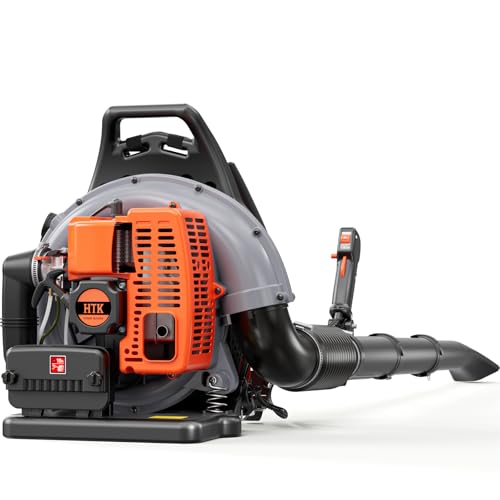
HTK Gas Backpack Leaf Blower, 63CC 2-Stroke, 665 CFM, Max 205 MPH, Orange | 63cc Commercial-Grade Output, Air-Purge Start, Padded Harness, Cruise Control, 1.7 L Tank, 71 Db, Tube And Manual Included
- Commercial-Grade Output For Demanding Cleanup: Put 63CC 2-stroke power, 665 CFM air volume, and air speed up to 205 MPH behind wet…
- Easier Starts, Clearer Control: The air-purge system is designed to simplify startup, while intuitive oversized controls help you…
- Carry The Power With Less Strain: A fully padded ergonomic backpack harness helps distribute the load across your back and shoulde…
Noise-sensitive neighborhoods create a real problem for gas blower buyers. The HTK 63CC addresses that directly with a stated 71 dB sound level, which is notably quieter than most two-stroke backpack units. If you live somewhere with HOA rules or a neighbor who works night shifts, this is the pick worth a closer look. It still delivers 665 CFM and 205 MPH, which covers wet leaves and grass clippings without straining.
HTK has been building outdoor power equipment for over 20 years, and that experience shows in the operator-focused details. Oversized controls are easy to find with gloves on. The air-purge system simplifies cold starts. A fully padded harness distributes weight across back and shoulders, and low-vibration technology reduces arm fatigue during longer sessions. The 1.7-liter fuel tank is sized for demanding cleanup on large properties. Variable-speed throttle and cruise control let you match output to the task and hold it.
Where does it fall short? The 205 MPH air speed is the lowest among the backpack models here, so caked-on debris might need a second pass. It also sits between the Husqvarna and the bigger commercial units on raw power. For a quiet, comfortable machine that handles routine yard work without drawing complaints, those trade-offs are reasonable. Check the current price on Amazon to see how it stacks up against the competition.
- 63cc two-stroke engine with 665 CFM and 205 MPH
- Stated 71 dB sound level for quieter operation
- Air-purge system and oversized controls for easy starts
- Padded harness with low-vibration technology
- 1.7-liter fuel tank for extended cleanup sessions
Best for: Homeowners in noise-restricted areas who need backpack power without the racket.
How We Chose These Products
We started with the specs that actually affect performance: CFM, MPH, engine displacement, and weight. A blower with high CFM but low MPH moves volume without force, while high MPH with low CFM concentrates air but covers less ground. The best machines balance both. We also weighed ergonomics heavily, because a backpack blower you dread wearing won’t get used, no matter how strong it is.
Beyond the numbers, we looked at starting systems, fuel capacity, and control layout. Air purge, cruise control, and single-handle operation separate tools that work all day from ones that fight you. We favored machines with clear parts availability and brand track records. Husqvarna and HTK have established service networks; PROYAMA and HASANEN compete on features and price. You can see more options in this gas leaf blower roundup if none of these five quite fit.
Buying Guide: What Really Matters
CFM and MPH work together, and neither one alone tells the full story. CFM measures how much air moves per minute. MPH measures how fast it travels. For dry leaves on grass, high CFM matters more. For wet leaves stuck to concrete, you need MPH to break the surface tension. A blower with 700 CFM and 200 MPH will outperform one with 500 CFM and 250 MPH on most real jobs.
Engine type affects weight, maintenance, and fuel handling. Two-stroke engines are lighter and produce more power per cc, but they require mixing oil with gas. Four-stroke engines run on straight gasoline and burn cleaner, though they’re heavier and typically cost more. Every blower on this list is a two-stroke, which is standard for backpack and handheld gas units. If mixing fuel sounds like a hassle, consider a battery blower for thick branches instead.
Weight distribution matters as much as total weight. A 20-pound backpack with a proper hip belt feels lighter than a 12-pound handheld held at arm’s length. Look for padded straps, a waist belt, and a backrest that vents heat. Cruise control is another feature worth seeking, since holding a trigger for an hour gets old fast. For large properties, fuel tank size determines how often you stop, and a bigger tank means fewer interruptions.
Noise, Emissions, and Legal Restrictions
Gas leaf blowers draw regulatory attention in many regions. California’s AB 1346 phases out the sale of new small off-road engines, including gas blowers, and several cities restrict their use during certain hours or seasons. HOAs frequently ban gas equipment outright. Before buying, check your local ordinances. A machine rated at 71 dB, like the HTK, causes fewer complaints than a 75-plus dB unit running wide open.
Emissions compliance varies by state. CARB-certified engines meet California standards, and many manufacturers note this on the product page. If you live in a state with strict small-engine rules, verify certification before purchase. Some buyers in regulated areas find that a quieter gas model or a high-output electric unit fits their situation better. This thick leaf cleanup guide covers options for both power sources.
Cost of Ownership Over 5 Years
The purchase price is only part of the story. A 50:1 two-stroke mix costs roughly the same as straight gasoline plus a small amount of oil. A typical backpack blower burns about half a gallon per hour under load. Over five years of seasonal use, fuel and oil might run $150 to $300 depending on how often you work. Add spark plugs, air filters, and occasional carburetor service, and you’re looking at another $50 to $100.
Electric blowers trade higher upfront cost for lower operating expenses. No fuel, no oil, no carburetor rebuilds. But batteries degrade, and replacements aren’t cheap. For a large property with heavy fall cleanup, gas often wins on total cost. For a small yard used a few times a year, electric usually comes out ahead. Match the tool to your workload, not the sticker price alone.
Maintenance and Fuel Mixing Tips
Two-stroke engines live or die by their fuel mix. Use fresh gasoline and a quality two-stroke oil at the ratio your manual specifies, usually 50:1. Ethanol-heavy fuel attracts water and degrades carburetor parts, so consider ethanol-free gas if it’s available. Mix only what you’ll use within a month or two.
Before storing the blower for the season, run the carburetor dry or add fuel stabilizer. A blower that sits with old gas in the bowl often won’t start next spring without a carburetor cleaning. Check the air filter every few uses, especially on dusty jobs, and replace the spark plug annually. These small habits add years to the machine’s life. For more buying context, this large yard blower guide digs into property-size matching.
Frequently Asked Questions
Can I use regular gasoline in a two-stroke leaf blower? No. Two-stroke engines need oil mixed into the fuel to lubricate internal parts. Running straight gas will seize the engine within minutes. Always mix at the ratio in your manual, typically 50:1.
How loud is too loud for a residential area? Many local ordinances cap gas equipment at 65 to 75 dB at a set distance. If your blower runs above that, you risk fines or neighbor complaints. A model rated at 71 dB, like the HTK, sits in a safer range for most rules.
What’s the difference between CFM and MPH, and which matters more? CFM measures air volume, MPH measures air speed. Volume moves piles; speed breaks debris loose from surfaces. For most yard work, CFM matters more, but wet or stuck debris needs decent MPH too.
How long can I run a gas blower before refueling? It depends on tank size and engine displacement. A 1.7-liter tank on a 63cc engine might last 45 to 60 minutes under load. A 0.47-gallon tank on a similar engine runs longer. Bigger engines burn more fuel per hour, so plan refills accordingly.
Are gas leaf blowers being banned? Some states and cities restrict or phase out gas-powered small engines. California’s AB 1346 is the most prominent example. Check your local regulations before buying, and look for CARB-certified models if you live in a regulated area.
Our Top Recommendation
The Husqvarna 150BT wins for most homeowners. It hits the sweet spot between power, comfort, and price. The 51cc engine delivers enough force for wet leaves and gravel, and the harness system makes long sessions tolerable. It’s not the strongest or the quietest, but it’s the most balanced machine here for typical suburban use.
If raw power is your priority, the PROYAMA 72CC or HASANEN 63CC will clear more ground per pass. Both suit large properties and professional work. For small yards, the Husqvarna 125B offers grab-and-go convenience at a lower weight. And if noise rules are a concern, the HTK 63CC runs quieter than the rest without giving up too much performance. Pick the one that matches your property size and local rules, and you’ll get years of reliable service.