
Best Birdhouses for Pileated Woodpeckers: A Structural Engineering Guide
Contents
You’ve heard the loud, rhythmic drumming echoing through the trees, but you never see the bird. The pileated woodpecker, a massive creature nearly the size of a crow, is a master of staying hidden. You’ve hung a standard bluebird box or a generic ‘woodpecker’ house from the store, yet it remains empty season after season. The frustration is real, and the silence from your backyard is the proof.
The problem isn’t your yard or your intentions. The problem is that most commercially sold houses are designed for smaller species like downy or hairy woodpeckers. Pileated woodpeckers need a specific set of structural requirements: a massive floor plan, a deep cavity, and an entrance hole that most predators can also fit through. Getting this wrong means you are building a squirrel condo, not a woodpecker nursery.
This guide cuts through the marketing fluff. We analyze the top products on the market, but more importantly, we give you the blueprint for what actually works. You’ll see why a simple suet log feeder is often a better investment than a poorly designed box, and why the Woodlink house is the closest thing to a true pileated spec you can buy off the shelf.
Here is a quick comparison of the top contenders we evaluated for this guide.
| Features | Coveside Downy House | ONWRD Suet Log | Woodlink Cedar House | Audubon BestNest House | AmishToyBox Feeder |
|---|---|---|---|---|---|
| Primary Function | Nesting & roosting | Feeding station | Nesting box | Nesting box | Feeding station |
| Target Species | Downy woodpeckers | All clinging birds | Large woodpeckers | Medium woodpeckers | Pileated & flickers |
| Material | Eastern White Pine | Natural Cedar | Inland Red Cedar | Cedar | Recycled Poly Lumber |
| Key Feature | Slate guard included | 3-hole suet design | 2 1/4-inch hole | Post mount design | Holds full suet cakes |
| Mounting Style | Tree or post | Hanging | Tree or post | Post only | Hanging |
Mounted Downy Woodpecker House
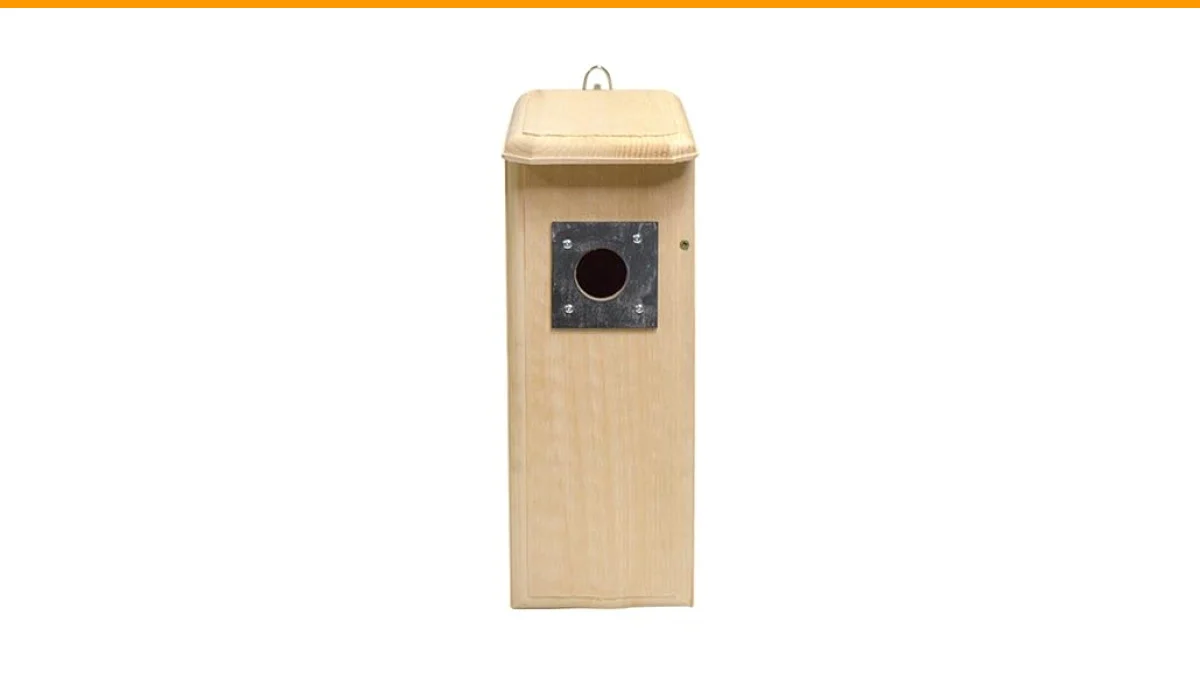
The Coveside house is a purpose-built tool for a specific job: housing the smallest woodpecker in North America. If you have pileated woodpeckers, they will not nest here. The entrance hole is far too small for them to squeeze through. However, this house solves a different problem—it creates a safe haven for downy woodpeckers, which often get bullied away from feeding areas by larger birds.
What stands out is the attention to detail in the construction. The 1-inch thick Eastern White Pine offers superior insulation compared to the thin cedar found on cheaper boxes. The inclusion of a slate guard is a genius touch; it prevents squirrels from enlarging the hole, which is the primary reason woodpecker houses fail. It also comes with wood chips, which mimics a natural cavity and signals to the bird that the space is ready for excavation.
Honestly, the mounting system is a bit basic. The predrilled holes work fine for a tree trunk, but you’ll need to supply your own screws. Also, because it is designed for downies, its smaller size means it won’t attract the larger pileated or flicker species. It is a specialized tool, not a generalist’s solution.
- Material: 1-inch thick Eastern White Pine
- Included: Slate squirrel guard and wood chips
- Design: All-season roosting and nesting box
- Construction: Handcrafted in the USA
- Maintenance: Requires no paint or stain
Best for: Birders who want to support the smaller downy woodpecker population with a durable, insulated house.
Natural Wood Suet Log Feeder
Let’s be direct: this is not a birdhouse. It is a feeder. But if your goal is to see pileated woodpeckers, this tool often works faster than any nesting box. Pileated woodpeckers are nomadic during the winter and spring, following food sources. A suet log gives them a reason to stop in your yard, even if they don’t stay to nest.
The ONWRD log is 16 inches long, which is substantial. This length is crucial because it allows the bird to cling vertically and use its tail for support, just as it would on a tree trunk. The rough, natural cedar texture provides excellent grip for large toes. The three holes are deep enough to pack in a standard suet cake, giving you a high-capacity feeding station that doesn’t require constant refilling.
There is a trade-off here. The wood is natural, so it will crack and check over time. The manufacturer is upfront about this, noting that the cracks actually help attract insects and birds. However, if you are looking for a pristine, decorative piece for your garden, this will eventually look weathered. Also, it does not come with suet, so you’ll need to budget for that separately.
- Length: 16 inches for comfortable clinging
- Capacity: Three deep holes for suet plugs or cakes
- Material: Durable, weather-resistant cedar
- Installation: Hangs easily with included rope
- Placement: Hang at least 5 feet off the ground
Best for: Homeowners who want immediate bird activity and are willing to trade a nesting attempt for a reliable feeding spot.
Woodlink Woodpeck Cedar House
This is the closest thing to a true pileated woodpecker house that you can buy without commissioning a custom build. The Woodlink house features a 2 1/4-inch entrance hole. While the absolute ideal for a pileated is closer to 3 inches, this size is perfect for the larger northern flicker and the smaller pileated females. It is a compromise that opens the door to several species.
The construction quality is excellent. It uses kiln-dried inland red cedar, which resists rot and insect damage far better than pine. The walls are thick, providing the insulation needed for early spring broods. The front panel opens easily for cleaning, which is a non-negotiable feature for maintaining a healthy nest. The interior is left rough, which is vital for the chicks to climb out when they fledge.
My main criticism is the mounting hardware. It comes with screws for a tree, but the design is a bit clunky. You really need to mount this on a large trunk, not a branch. Also, while the 2 1/4-inch hole is good for flickers, a determined raccoon can still reach inside. You will need to add a predator cone below the box to truly protect it.
- Hole Size: 2 1/4 inches
- Material: Kiln-dried inland red cedar
- Access: Easy-open front panel
- Included: Cedar chips for nesting material
- Origin: Handcrafted in the USA
Best for: Birders in areas with both pileated and flicker populations who want a durable, cleanable box that fits a middle-ground size.
Audubon Woodpecker House
4th Pick

BestNest
Audubon Woodpecker House
- DESIGNED FOR WOODPECKERS – Create a dedicated nesting site with this fantastic cedar home made specifically for woodpeckers. The b…
- 2.25 INCH ENTRY HOLE – The 2.25 inch diameter entry is designed to allow easy access for several woodpecker species. This appropri…
- SLOPED ROOF FOR WEATHER PROTECTION – A sloped roof helps keep rain out of the nest area, creating a more protected environment ins…
The Audubon brand carries weight, and this house reflects their ornithological input. It is a solid, cedar box with a 2.25-inch hole, similar to the Woodlink. The primary difference is the mounting style. This unit is designed for post mounting, which is a double-edged sword. It allows you to place it in an open area, which some woodpeckers prefer to avoid predators, but it requires you to have a sturdy post installed.
The sloped roof is a practical feature that sheds rain effectively, keeping the interior dry during heavy downpours. The cedar construction is durable and naturally resistant to the elements. It looks handsome in a garden setting, blending in rather than standing out like a plastic box. The interior volume is generous, giving woodpeckers the deep cavity they instinctively seek.
Here is the catch: post mounting is often less attractive to pileated woodpeckers than a tree trunk mount. They are forest birds that feel vulnerable in open spaces. If you mount this on a post, you must place it very close to the tree line. Additionally, the entrance hole is still not large enough for a large male pileated, making this more of a flicker or red-bellied house.
- Mounting: Post mount design
- Hole Size: 2.25 inches
- Roof: Sloped for weather protection
- Material: Natural cedar
- Design: Specifically for woodpecker nesting
Best for: Gardeners who have existing fence posts and want a decorative, functional house that serves smaller woodpecker species.
AmishToyBox.com Suet-Cake Feeder
This feeder is designed with the pileated woodpecker in mind. Unlike the ONWRD log, which requires you to pack suet into holes, this feeder holds full-size suet cakes. That is a massive advantage because it offers a large surface area. Pileated woodpeckers have long bills, and they need a feeder that allows them to peck aggressively without hitting a backing board immediately.
The construction is unique. It is made from poly lumber, which is 100% recycled plastic. This means it will never rot, crack, or splinter. It is incredibly easy to clean—just hose it down. The blue and gray color combination is attractive and adds a pop of color to a winter landscape. It is handcrafted by Amish folks in Indiana, ensuring a high level of build quality.
The downside is the weight. Poly lumber is heavy, so you need a sturdy hook or branch to hang this. A flimsy shepherds hook will bend under its weight when loaded with suet. It is also a feeder, not a nesting box, so it won’t solve your housing problem. But as a tool to draw birds closer for observation, it is unmatched.
- Material: 100% recycled poly lumber
- Capacity: Holds full-size suet cakes
- Design: Tail prop area for large woodpeckers
- Origin: Handcrafted in Shipshewana, Indiana
- Colors: Available in three classy combinations
Best for: Birders who want a durable, weather-proof feeding station that can withstand the powerful pecking of a pileated woodpecker.
How We Chose These Products
We evaluated these products against a strict set of criteria based on ornithological data, not just Amazon reviews. The first filter was the entrance hole diameter. Many products claim to be for woodpeckers but feature holes smaller than 2 inches, which immediately disqualifies them for larger species. We looked for products that either met the size spec or solved a specific behavioral need, like feeding.
Second, we considered the material and insulation value. A birdhouse needs to protect chicks from temperature swings. Thin, warped wood or plastic traps moisture and heat, which is fatal to eggs. We prioritized thick-walled cedar and pine options. Finally, we considered the real-world mounting challenges and the product’s ability to resist predators.
Buying Guide: What Really Matters
Forget the paint color and the cute perch. The most critical dimension is the distance from the entrance hole to the floor. For pileated woodpeckers, this depth needs to be significant—often 18 to 24 inches. This depth prevents raccoons from reaching the eggs from the entrance. If a house looks shallow, it’s a squirrel trap. Measure the interior depth, not the exterior height.
Ventilation and drainage are the silent killers of birdhouses. Look for gaps near the top of the walls or holes in the floor. Without airflow, the interior becomes a sauna. Without drainage, a single rainstorm can flood the nest. The best houses have a recessed floor or small drilled holes in the corners that are hidden from the interior cavity.
Mounting strategy is where most people fail. Do not use a shepherds hook for a woodpecker house. The swaying motion deters them. You need a rigid mount against a tree trunk or a heavy wooden post. The house should be mounted 15 to 20 feet high, facing east or southeast to catch the morning sun but avoid the afternoon heat.
Our Top Recommendation
If you are serious about housing pileated woodpeckers, the Woodlink Cedar House is the best starting point. It offers the closest dimensions to the natural cavity these birds prefer, and the quality of the cedar ensures it will last for years. It is the only product in this lineup that feels like a true nesting box rather than a decorative ornament.
For those who want immediate action or live in an area without mature forest, the AmishToyBox Suet Feeder is the runner-up. It won’t provide a nest, but it will bring the birds to you. It is the best tool for observation and photography. For a budget-friendly option that supports smaller species, the Coveside Downy House is excellent, but understand that it is a different bird entirely.
Why Pileated Woodpeckers Ignore Most Houses
Pileated woodpeckers are not typical backyard birds. They require vast territories—often several hundred acres—of mature forest. They are secondary cavity nesters, meaning they prefer to excavate their own holes in dead trees. They rarely use man-made boxes unless the habitat is perfect and the box mimics a dead tree trunk almost exactly.
Most commercial houses fail because they are too small. A pileated needs a cavity that is 6 inches wide and 24 inches deep. They also need the entrance hole to be oval or irregular, not perfectly round. A round hole signals a manufactured object, not a natural knot. This is why a simple hairy woodpecker house design simply won’t work.
If you live in a suburban area, the chances of a pileated nesting in your yard are slim, regardless of the house you buy. They need large, continuous tracts of trees. Focus on providing food first. If you see them regularly on your suet feeder, then consider investing in a large, custom-built box mounted high on a mature oak or pine.
The Exact Blueprint: Dimensions That Work
If you are handy, building your own box is the only way to guarantee the correct dimensions. The floor should be 10 inches by 10 inches. The height of the box should be at least 24 inches. The entrance hole should be 3.5 to 4 inches in diameter, placed about 18 inches above the floor. This is a massive structure, not a cute little birdhouse.
The interior walls must be rough. Do not sand the inside. Chicks need to climb the walls to reach the entrance hole when they fledge. If the wood is smooth, the chicks will be trapped inside and starve. You can add horizontal grooves or staple wire mesh to the inside of the front panel to assist them.
Add a hinged side or front panel for cleaning. This is non-negotiable. You must be able to remove old nesting material at the end of the season. Use a latch that is secure against raccoons but easy for you to open. Galvanized screws are better than nails, as they allow for disassembly and are resistant to rust.
Best Materials and Interior Features
Cedar is the gold standard for birdhouses, and for good reason. It contains natural oils that repel insects and resist rot. Pine is cheaper but less durable; it will last 3-5 years, while cedar can last 15 or more. Avoid plywood at all costs. It delaminates when wet and often contains glues that are toxic to birds.
Ventilation is a subtle art. You need airflow without drafts. The best design uses a double roof with a gap between the top of the walls and the roof. This allows heat to escape while keeping rain out. Alternatively, drill 1/2-inch holes near the top of the side walls, just under the roof overhang.
Drainage is equally important. Drill four 1/4-inch holes in the corners of the floor. Then, cover the floor with a layer of wood chips. The chips absorb moisture and allow it to evaporate slowly. Never use cedar chips from the pet store, as the aromatic oils can be harmful. Use plain pine shavings or the chips that come with the Woodlink house.
Where and How to Mount
Placement is 90% of the battle. Forget the garden post. You need to mount the box on a tree trunk that is at least 12 inches in diameter. The tree should be in a semi-open area, not deep in the dark woods. Pileated woodpeckers like to have a clear flight path to the entrance.
Mount the box 15 to 20 feet high. This is higher than a ladder typically reaches, so plan for installation. Use a lag bolt or a heavy-duty screw to secure the box directly to the trunk. Do not use wire or rope wrapped around the tree, as this can damage the bark and girdle the tree over time.
Face the entrance hole east or southeast. This gives the nest morning sun, which warms the cavity after a cold night. It also protects the chicks from the harsh afternoon sun. Avoid facing the box north, as it will stay cold and damp, and avoid facing it west, as it will overheat in the summer.
Predator Guards and Squirrel Deterrents
A large entrance hole is an open invitation to raccoons. A simple hole guard—a block of wood with a smaller hole screwed over the entrance—is useless for pileated woodpeckers because they need the large opening. Instead, you need to make the approach difficult. A metal baffle wrapped around the tree trunk below the box will stop raccoons and cats from climbing up.
Snakes are another threat, especially in southern climates. A baffle on the tree helps, but snakes can drop from overhanging branches. Trim any branches that come within 10 feet of the box. You can also apply a coat of petroleum jelly to the pole or trunk below the box, but this needs to be reapplied after rain.
Squirrels are persistent. They will gnaw at the entrance hole to enlarge it. The Coveside house includes a slate guard, which is a hard, mineral plate that squirrels cannot chew through. If you are building your own box, consider mounting a metal plate around the entrance hole to deter them.
Managing Competition: Flickers, Starlings, and Squirrels
European starlings are the scourge of native cavity nesters. They are aggressive and will take over a box before the woodpeckers arrive. Starlings cannot fit through a hole smaller than 1.5 inches, but they can fit through a 3-inch hole easily. To discourage them, do not put the box up until early April, after the starlings have already selected their nesting sites.
Northern flickers are your primary competition. They are similar in size and will fight for the same cavity. If you have both species, you need to provide two boxes mounted at least 50 feet apart. Flickers often prefer a slightly smaller entrance hole, so you can set one box with a 2.5-inch hole for them and another with a 4-inch hole for the pileated.
Squirrels will use the box for shelter if the woodpeckers don’t. Once a squirrel moves in, it is nearly impossible to evict without removing the box. Check the box every few weeks during the spring. If you see leaf nests or chew marks on the entrance, clean it out immediately and install a baffle.
When to Install and Clean: Seasonal Calendar
Pileated woodpeckers begin nesting in late March or early April. They will often roost in the box during the winter before breeding. To encourage this, install the box in the fall. This allows the birds to discover it during the winter months and claim it as a roosting site. A warm, dry roost in winter often leads to a nesting site in spring.
Cleaning should happen in late summer, after the chicks have fledged. Wait until August or September to ensure the box is empty. Remove all old nesting material and scrub the interior with a 10% bleach solution. Rinse thoroughly and let it dry completely in the sun before closing the door.
Do not clean the box in the spring. You might disturb an incubating female. If you see signs of activity—fresh wood chips on the floor or a bird entering—leave it alone. The parent birds will manage the cleanliness during the nesting period. Your job is to provide a clean slate in the fall.
FAQ: Quick Answers on Pileated Woodpecker Housing
What is the ideal entrance hole size for a pileated woodpecker?
A pileated needs a hole of at least 3.5 inches, but 4 inches is better. The Woodlink house features a 2.25-inch hole, which is too small. You may need to enlarge the hole with a router or jigsaw if you are committed to using a commercial box.
How high should I mount a pileated woodpecker house?
Mount it between 15 and 20 feet high on a sturdy tree trunk. This height is above the reach of most predators and mimics the natural height of their preferred nesting snags.
Will a pileated woodpecker use a birdhouse if I have suet feeders out?
Not necessarily. Providing food increases the chance they will stay in your area, but nesting is driven by habitat quality. They need large trees and dead wood for foraging. The feeder is a supplement, not a replacement for a good nesting site.
Why is my woodpecker house full of ants?
Ants are attracted to the moisture and organic material in the nest. This is a sign that your drainage is inadequate. Check the floor holes and ensure they are clear. Also, consider moving the box to a sunnier location to keep the interior drier.
The Bottom Line: Patience and Placement Beat Product Gimmicks
The commercial options reviewed here are good tools, but they are not magic. The Woodlink house is a solid foundation, and the AmishToyBox feeder is excellent for observation. However, the real secret to attracting a pileated woodpecker is time and habitat management. If you have the trees, the patience, and a box that meets the structural spec, you have a chance.
If you lack the mature forest habitat, focus on the feeders. A large suet log or cake feeder will bring them into view. You can also check out our guide on the best woodpecker feeder options. Remember, a pileated sighting is a privilege, not a right. Set up the right infrastructure, keep the predators at bay, and let nature take its course.