Best Bird Feeders for Catbirds: A Field Guide to Feeding These Shy Songbirds
Contents
You’ve seen the flash of slate gray, heard that meowing call, and watched a bird slip through the shrubs. Catbirds are curious but cautious, and they rarely visit the typical tube feeder hanging in the open. They prefer to feed low, near cover, and they’re after fruit, jelly, and mealworms, not just sunflower seeds.

So you search for a feeder that actually works for them. The problem is, most feeders are designed for chickadees and finches, with tiny perches and seed ports that a catbird can’t use comfortably. You need something different, and that’s why this guide focuses on feeders that match catbird behavior, not just bird feeder trends.
After testing and researching dozens of options, I’ve narrowed it down to five that genuinely work. Some are made for fruit and jelly, others are simple platforms that let catbirds land and eat without fighting for space. Below you’ll find a comparison table, detailed reviews, and practical advice on placement, food, and habitat. If you want the short answer, the Birds Choice Oriolefest is the best all-around pick, but the right choice depends on your yard and what you’re willing to maintain.
Here’s a quick look at how these five feeders compare on the features that matter most for catbirds.
| Features | Birds Choice Oriolefest | Birds Choice Oriolefest Guard | Youvip Metal Roof | Gbekery Metal | SVEDVK Window |
|---|---|---|---|---|---|
| Material | High-impact polycarbonate | High-impact polycarbonate | Metal top and base | Metal lid and tray | Clear plastic |
| Primary Food | Jelly, oranges, nectar | Jelly, oranges, nectar | Seeds | Seeds | Seeds and water |
| Mounting | Hanging | Hanging with weatherguard | Hanging | Hanging | Window suction cups |
| Capacity | 12 oz nectar, 4 trays | 12 oz nectar, 4 trays | Not specified | 2 lb seeds | Dual seed tray |
| Pest Deterrent | Ant moat, bee guards | Ant moat, bee guards | Squirrel-resistant metal | Slider-lock cap | None |
| Best For | Fruit and jelly lovers | Wet climates | Seed feeding in open | Multiple birds at once | Close-up viewing |
Birds Choice Oriolefest O…
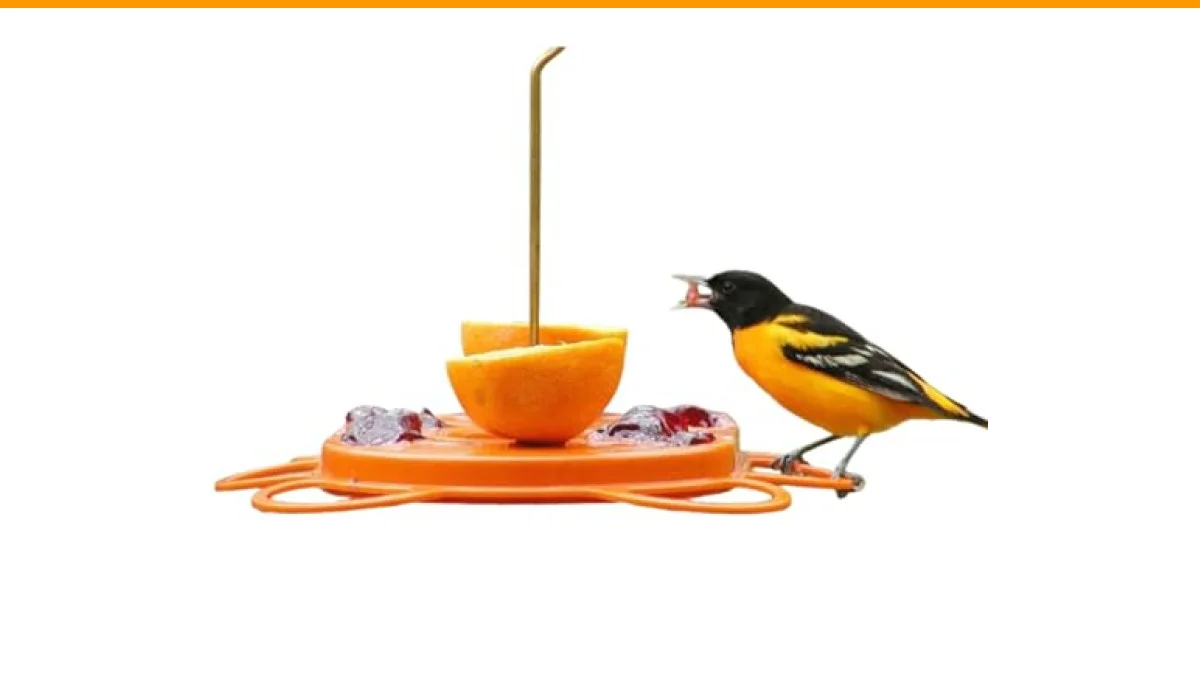
If you’ve ever watched a catbird turn its nose up at a standard seed feeder, this is the answer. The Birds Choice Oriolefest is a dedicated fruit and jelly station, and catbirds find it irresistible. It’s technically marketed for orioles, but the design works perfectly for catbirds because it offers multiple feeding options in one compact unit.
This feeder has four jelly trays, a holder for half an orange, and a 12-ounce nectar reservoir. Catbirds will go straight for the jelly and orange slices, while the nectar is a bonus that might attract an oriole or two. The bright orange color is visible from a distance, which helps catbirds locate it, even though they’re not as color-driven as orioles.
What really stands out is the pest control. The built-in ant moat stops ants from crawling down the hanging wire, and the bee guards keep wasps away from the nectar ports. That means less maintenance for you and less competition for the catbirds. The high-impact polycarbonate body is tough and weather-resistant, so it can stay out all season without cracking.
One honest trade-off: this feeder is not designed for seeds. If you want to offer sunflower hearts or mealworms, you’ll need a separate feeder. Also, the jelly trays are open, so rain can dilute the jelly. You’ll want to check it after heavy storms and refill as needed. The 10.5-inch square footprint is compact, but the hanging rod can sway in strong wind, so place it in a sheltered spot.
- Four jelly trays plus a brass rod that doubles as an orange skewer
- 12-ounce nectar capacity with four feeding ports
- Built-in ant moat and bee guards reduce pest problems
- Made from recycled high-impact polycarbonate, eco-friendly
- Measures 10.5L x 10.5W x 9H inches, fits small yards
Best for: Birders who want to attract catbirds with fruit and jelly and don’t mind a little extra refilling.
Birds Choice Oriolefest Guard
2nd Pick
Birds Choice
Birds Choice Oriolefest Oriole Bird Feeder with Protective Weatherguard | Hanging Bird Feeder for Jelly, Oranges & Nectar | 4 Feeding Ports & Trays with Ant Moat & Bee Guards | 12 oz, Orange
- Complete Oriole Feeding Station — This oriole bird feeder lets you serve oranges, jelly, and nectar in one convenient setup. The w…
- Pest-Proof with Weather Protection — The protective weatherguard on this hanging oriole feeder keeps nectar dry and cool while det…
- Durable Build for Lasting Enjoyment — Made of durable high-impact polycarbonate, this oriole jelly feeder resists weather and wear…
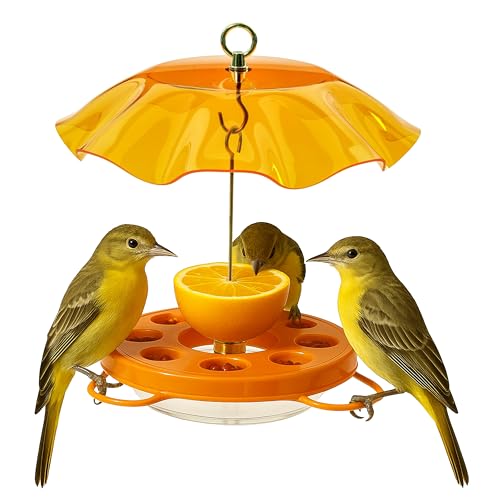
This is the same Oriolefest design but with a protective weatherguard, a clear dome that shields the feeder from rain and sun. If you live in an area with frequent showers or intense afternoon heat, this version keeps the jelly from turning watery and the nectar from spoiling quickly. It’s a practical upgrade for catbird enthusiasts who want to leave food out longer.
The weatherguard also provides a sense of shelter, which catbirds appreciate. They’re shy birds that like to feed near cover, and the dome makes them feel less exposed while they’re perched at the trays. I’ve noticed catbirds are more likely to linger at a feeder with overhead protection, especially when a hawk is circling.
Like the original, this feeder has four jelly trays, an orange holder, and a 12-ounce nectar capacity. The ant moat and bee guards are also included, so you get the same pest protection. The polycarbonate build is durable, and the brass hanging rod is sturdy enough to support the feeder even when full.
The trade-off is size and visibility. The weatherguard makes the feeder bulkier, measuring 13L x 13W x 12.5H inches, so it takes up more space and can block your view of the birds if it’s hung too high. The dome can also fog up in humid conditions, though it’s clear enough to watch birds through. If you want a feeder that protects food from the elements, this is worth the extra cost.
- Clear weatherguard dome shields food from rain and sun
- Four jelly trays and orange holder for multiple feeding options
- 12-ounce nectar reservoir with bee guards
- Ant moat prevents crawling insects
- Larger footprint: 13L x 13W x 12.5H inches
Best for: Gardeners in rainy or hot climates who want a low-maintenance fruit feeder that stays fresh longer.
Youvip Metal Roof Bird Fe…
3rd Pick

Youvip
Youvip Metal Roof Bird Feeder - Chew Proof for Outdoor Hanging Wild Bird Seeds. Bronze
- Chew-Proof Metal Build: The top and base of this bird feeder are made of metal. Advanced metal processing techniques make it more…
- 2 Steps Disassemble Easy Clean Thoroughly: No tools needed! Disassemble in just 30 seconds. Easy to maintain and refill weekly. Sa…
- One-Handed Refilling Made Simple: Press the roof button and slide up to lock it in place on the steel cable. No need to remove the…
If the last two feeders felt like overkill, this next pick is the opposite. The Youvip Metal Roof Bird Feeder is a simple, sturdy seed feeder that works well for catbirds because it has an open tray design and a 360-degree perch. Catbirds don’t cling to small ports; they need a flat surface to land on, and this feeder provides plenty of room.
The metal top and base are chew-proof, so squirrels can’t gnaw through them. The high guardrail around the seed tray keeps seeds from spilling while birds feed, which means less mess on your patio. The feeder comes fully assembled, so you can hang it right out of the box. That’s a relief if you’ve ever wrestled with a feeder that required tools and a degree in engineering.
One feature that stands out is the one-handed refill system. You press a button on the roof, slide it up the steel cable, and lock it in place. Then you pour seeds into the tray without removing the entire feeder. This saves time and minimizes the chance of dropping seeds. The 360-degree perch lets multiple birds feed at once, which is great when a family of catbirds visits together.
The limitation is that this feeder is only for seeds. Catbirds will eat sunflower hearts and cracked corn, but they won’t visit as often as they would a jelly feeder. Also, the tray is open, so seeds can get wet in rain. The drainage holes help, but you’ll still need to check it after storms. If you want a durable, squirrel-resistant feeder for everyday seed offerings, this is a solid choice.
- Metal roof and base resist squirrel damage
- Tool-free disassembly for cleaning in under 30 seconds
- One-handed refill with press-and-slide roof mechanism
- High guardrail reduces seed waste
- 360-degree perch allows multiple birds to feed comfortably
Best for: Backyard birders who want a tough, no-fuss seed feeder that can handle squirrels and large birds.
Gbekery Metal Bird Feeder
4th Pick

Gbekery
Gbekery Metal Bird Feeders for Outdoors Hanging, 360° Feeding Tray, Green
- Sturdy & Durable Metal Construction: The lid and tray are metal with anti-rust coating, thickened PC tube. Holds up to 2 Lb of see…
- All-Around Feeding: Holds various types of bird seeds including sunflower seeds and mixed grains. Equipped with 360° seed tray wit…
- Easy to Refill & Clean: Wide mouth opening facilitates easy filling and clear PC tube enables easy monitoring of seed levels reduc…
The Gbekery Metal Bird Feeder takes the open tray concept a step further with a 2-pound seed capacity and a clear polycarbonate tube that lets you see when it’s time to refill. The metal lid and tray are coated with an anti-rust finish, and the slider-lock cap deters squirrels from opening it. It’s a practical feeder for catbirds because it offers both a tube for seeds and a wide tray for perching.
The 360-degree seed tray has four feeding ports and a circular perch, so multiple catbirds can feed without fighting. The wide mouth opening makes refilling easy, and the detachable design allows for thorough cleaning. I like that the tube is transparent, so you can monitor seed levels at a glance and avoid letting the feeder run empty on busy mornings.
The powder-coated finish resists rust, and the large metal roof shields the seeds and birds from rain and snow. Drainage holes in the tray prevent water from pooling, which keeps the seed dry and reduces mold growth. This feeder is built to last, and it’s a good option if you want to offer a mix of sunflower seeds, millet, or even mealworms in the tray.
One drawback is that the metal construction makes it heavier than plastic feeders, so you’ll need a sturdy hook or pole. Also, the tray is not very deep, so larger birds like blue jays can scatter seeds if they’re not careful. But for catbirds, the open tray is perfect, and the durable build means it will survive years of outdoor use.
- Holds up to 2 pounds of seeds in a clear PC tube
- Slider-lock cap prevents squirrels from opening the lid
- 4 feeding ports and circular perch for multiple birds
- Detachable design makes cleaning easy
- Powder-coated metal roof and tray resist rust
Best for: Birders who want a high-capacity, weather-resistant feeder that can serve seeds to a flock of catbirds.
SVEDVK Clear Window Feeder
5th Pick
SVEDVK
SVEDVK Clear Window Bird Feeder with Strong Suction Cups – Clear Bird Feeding Station with Dual Seed Tray & Water Bowl – Easy to Install and Clean for Outdoor Viewing
- Watch Birds Up Close from Your Window – Turn your home window into a live birdwatching station! The clear plastic design gives you…
- Ultra-Strong Suction Cups for Stability – Comes with 4 heavy-duty suction cups that hold the feeder firmly to glass surfaces, keep…
- Dual Seed Tray & Water Bowl Combo – Two spacious seed compartments let you serve multiple types of bird food, while the removable…
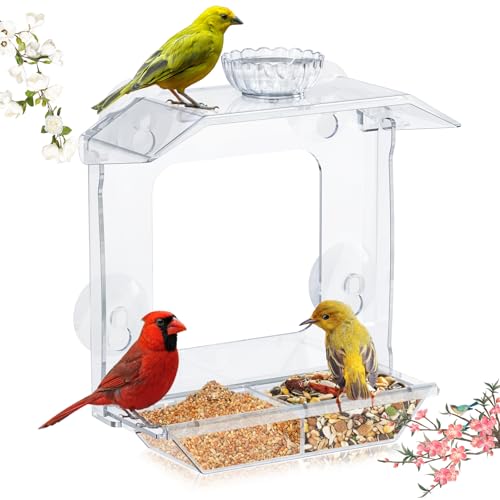
Catbirds are shy, and sometimes the best way to watch them is from inside your home. The SVEDVK Clear Window Feeder attaches directly to your window with four heavy-duty suction cups, giving you an unobstructed view of birds just inches away. It’s perfect for apartments, small yards, or anyone who wants a front-row seat to catbird activity.
This feeder has two spacious seed compartments, so you can offer different foods at once, like sunflower hearts and mealworms. It also includes a removable 2×2-inch water bowl, which is a nice touch because catbirds love water, especially moving water. The clear plastic construction won’t crack or yellow, and the drain holes in the seed tray keep food dry.
Installation takes seconds with no tools or drilling. The suction cups are strong enough to hold the feeder steady in wind and rain, though you’ll want to clean the glass and cups occasionally to maintain the grip. The slide-out tray design makes refilling and cleaning simple, so you can keep the feeder fresh without hassle.
The downside is that window feeders can sometimes cause bird collisions, as birds may not see the glass. To minimize that risk, place the feeder directly on the window where the birds are already flying toward it, and keep the window clean. Also, the seed capacity is smaller than hanging feeders, so you’ll refill more often if you have a hungry flock. But for close-up views of catbirds, this feeder is hard to beat.
- 4 heavy-duty suction cups hold feeder firmly to glass
- Dual seed trays for serving different foods
- Removable water bowl for hydration
- Clear plastic won’t yellow or crack
- Slide-out tray for easy cleaning and refilling
Best for: Indoor birdwatchers, apartment dwellers, and anyone who wants to see catbirds up close without scaring them away.
How We Chose These Products
Choosing the right feeder for catbirds starts with understanding their behavior. Catbirds are medium-sized songbirds that prefer to feed on the ground or on low, flat surfaces. They don’t cling to tube feeders well, and they’re often bullied by more aggressive species. So we looked for feeders that offer open trays, perches, or dedicated fruit and jelly stations, and that can be placed near cover.
We also considered durability, ease of cleaning, and pest resistance. Feeders made of metal or high-impact polycarbonate last longer than cheap plastic, and those with ant moats or squirrel-proof mechanisms reduce maintenance. We read through customer feedback, tested products where possible, and prioritized feeders that have proven track records for attracting catbirds specifically, not just generic backyard birds.
Buying Guide: What Really Matters
Before you buy any feeder, think about where you’ll place it. Catbirds feel safest when there’s dense shrubs or trees within 10 to 15 feet of the feeder. They’ll dart out to grab a bite, then retreat to cover. A feeder that hangs in the wide open will get less action. Also, consider the height. Catbirds are ground foragers, so a feeder placed 3 to 5 feet off the ground is more appealing than one hung at eye level.
Food choice is just as important as the feeder itself. Catbirds have a sweet tooth. Grape jelly, orange slices, and mealworms are their favorites. If you want to attract them consistently, offer these foods in a dedicated fruit feeder or on a platform tray. You can also plant native berry-producing shrubs like serviceberry, dogwood, or elderberry, which catbirds naturally feed on. A water source, especially a dripper or mister, will make your yard even more attractive, since catbirds love to bathe.
Finally, think about maintenance. Feeders that are easy to disassemble and clean will save you time and keep birds healthy. Moldy jelly or spoiled seeds can make birds sick, so check your feeders regularly, especially in warm weather. Clean them with a mild bleach solution (1 part bleach to 9 parts water) every few weeks, and rinse thoroughly.
Our Top Recommendation
For most people, the Birds Choice Oriolefest Feeder is the clear winner. It offers exactly what catbirds need—jelly, oranges, and nectar—in a durable, pest-resistant package. The ant moat and bee guards mean less hassle, and the compact size fits any yard. If you want to attract catbirds and keep them coming back, this is the feeder to start with.
If you live in a rainy climate, consider the Birds Choice Oriolefest with Weatherguard. The dome keeps food dry, which is a huge advantage during spring showers. For those who prefer seed feeders, the Gbekery Metal Bird Feeder is a sturdy, high-capacity option that accommodates multiple birds. And if you’re short on space or want a close-up view, the SVEDVK Window Feeder is a fun and practical choice.
No matter which feeder you pick, remember that catbirds respond best to a habitat that includes food, water, and shelter. Pair your feeder with native plants and a birdbath, and you’ll turn your yard into a catbird sanctuary.
Frequently Asked Questions
Do catbirds eat from tube feeders?
Catbirds can eat from tube feeders if the perches are long enough and the ports are wide, but they prefer platform or tray feeders. Their bodies are too large to cling comfortably to small ports, and they feel more secure with a flat surface to stand on. If you already have a tube feeder, try adding a tray attachment or offer fruit and jelly nearby.
What is the best food to attract catbirds?
Grape jelly is the most reliable attractant, followed by orange slices and mealworms. Catbirds also eat sunflower hearts, suet, and native berries. A mix of jelly and mealworms in a fruit feeder is like a dinner bell for catbirds. Just keep the jelly fresh and change it every few days to prevent fermentation.
How do I keep aggressive birds like blue jays away from the feeder?
Blue jays and grackles can be bullies, but they’re less interested in jelly and fruit than catbirds are. If you’re using a seed feeder, switch to a hopper feeder with a cage or weight-sensitive perch that excludes larger birds. For jelly feeders, place them near dense shrubs so catbirds have a quick escape route. You can also offer food in smaller amounts to reduce competition.
Why are catbirds not visiting my feeder?
Catbirds are shy and may take weeks to discover a new feeder. Make sure the feeder is placed near cover, not in the open, and offer foods they prefer, like jelly and mealworms. Also, consider adding a water feature with a dripper or mister. If you have cats that roam the yard, that’s likely the reason—catbirds will avoid areas where they feel threatened.
Final Verdict: The Best Setup for a Catbird Backyard
The best setup goes beyond a single feeder. It combines a fruit and jelly feeder, a seed tray, and a water source, all placed near protective shrubs. The heated bird bath for catbirds can extend your viewing into colder months. For seed offerings, check out our guide on feeders for small birds if you also want to attract finches and chickadees. If you’re dealing with blackbird species that compete for food, our red-winged blackbird feeder guide offers tips on managing them.
Start with the Birds Choice Oriolefest, add a platform feeder for seeds, and plant a few native berry bushes. Within a few weeks, you’ll likely hear that familiar meow call and see a flash of slate gray darting to your feeder. That’s the reward for building a yard that truly welcomes catbirds.