

Best Bird Feeders for Bullock’s Orioles: 5 Tested Picks
Contents
Bullock’s orioles show up in your western yard around the same time your fruit trees start blooming. They’re striking birds, with the males flashing bright orange and black as they move through open woodland and riparian areas. But they don’t visit just any feeder. Their larger bills and preference for fruit, jelly, and nectar mean you need the right setup to bring them in and keep them coming back.
So what actually works for Bullock’s orioles? The best feeders offer wide feeding ports, a secure place for orange halves or grape jelly, and some way to keep ants and bees from taking over. Nectar feeders designed for hummingbirds often have ports too small for these birds, which is why oriole-specific models exist. You also want something that’s easy to take apart and clean, because fermented jelly and spoiled nectar will drive birds away faster than any predator.
I tested five of the most popular oriole feeders on the market against those needs. Below you’ll find a quick comparison table, detailed reviews of each model, and practical advice on placement, feeding schedules, and maintenance. If you want the short version, the First Nature 32-Ounce Oriole Feeder is the most reliable all-around choice for most backyards, but the other four options serve specific situations better. Let’s dig in.
Here is a quick look at how these five feeders stack up on the specs that matter most for Bullock’s orioles.
| Features | First Nature | FORUP | Monarch Abode | MEKKAPRO | Perky-Pet |
|---|---|---|---|---|---|
| Primary Food | Nectar | Jelly & Fruit | Fruit & Seed | Jelly & Fruit | Jelly |
| Capacity | 32 oz nectar | 3 oz | Small bowl | Removable cups | 32 oz jar |
| Build Material | Polymer plastic | Plastic & metal | Glass & metal | Plastic & glass | Plastic & glass |
| Special Feature | Sealing ring | Open top hook | Fruit prongs | Built-in ant guard | Inverted jar |
| Best For | High volume | Easy cleaning | Decorative | Pest control | Jelly feeding |
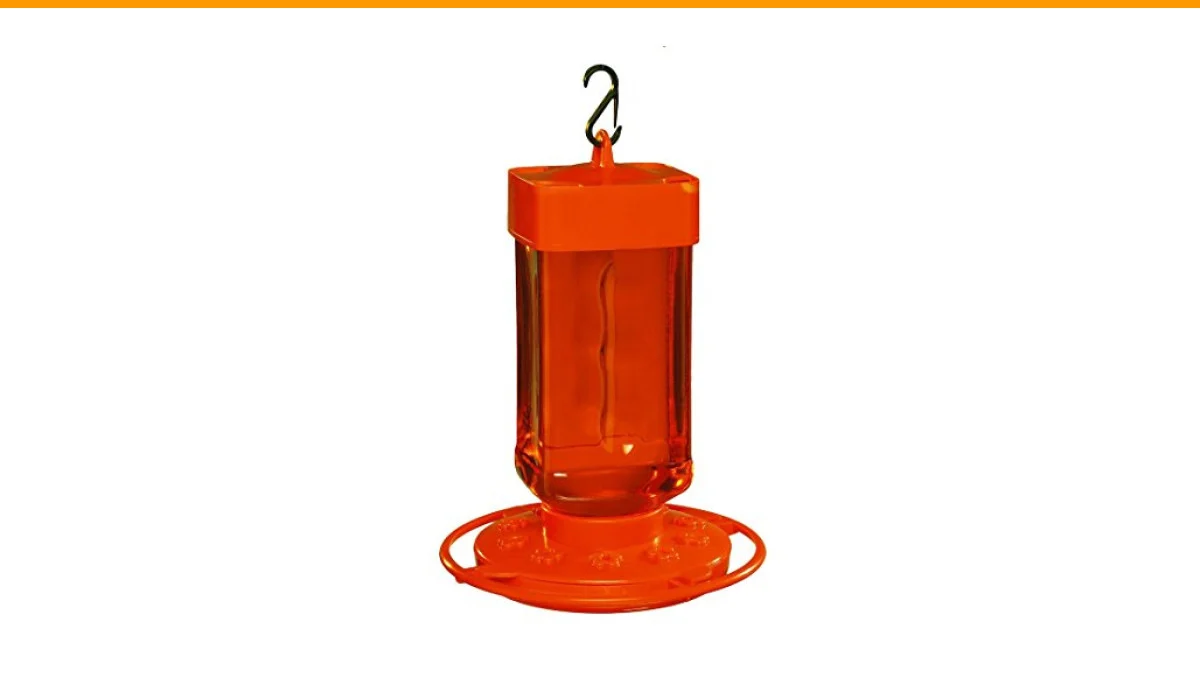
First Nature 32-Ounce Feeder
1st Pick

FIRST NATURE
First Nature 32-Ounce Oriole Feeder - Larger Feeding Ports
- Wide-mouth reservoir and patented two-part base is easy to fill and clean
- The durable polymer feeder features 10 feeding ports, 32 ounce nectar capacity, s-hook, and round perch design
- Innovative sealing ring aids in leak prevention
The First Nature feeder is the workhorse of this group. It’s a straightforward nectar feeder built with a wide-mouth reservoir and a patented two-part base that twists apart for cleaning. With a 32-ounce capacity and ten feeding ports, it’s designed to serve a lot of birds without constant refills.
What stands out here is the engineering for practical use. The base has an innovative sealing ring that actually prevents the sticky leaks you get with cheaper nectar feeders. The orange base color is a smart touch, too, since orioles are naturally drawn to that hue. The S-hook makes it easy to hang from a shepherd’s hook or a sturdy branch, and the round perch gives Bullock’s orioles a comfortable spot to land while they feed.
The trade-off is that this feeder is really just for nectar. Bullock’s orioles need protein and fruit during nesting season, so you’ll still need a separate dish for mealworms or orange halves. The plastic construction is durable but not what you’d call beautiful, so it’s more about function than garden aesthetics. Also, the ten ports are small, which is fine for orioles but might also attract less welcome guests like house finches.
- 32-ounce nectar capacity means fewer refills during peak spring migration
- Ten feeding ports accommodate multiple birds at once
- Patented two-part base and wide mouth make cleaning simple
- Sealing ring minimizes drip and mess around the base
- Made in the USA from durable polymer plastic
Best for: The backyard birder who wants a low-maintenance, high-capacity nectar feeder that will last for several seasons.
FORUP Oriole Bird Feeder
2nd Pick

FORUP
FORUP Oriole Bird Feeder, Orange Fruit Oriole Feeder
- GOOD QUALITY: This bird feeder is made of high quality plastic and powder-coated metal construction, eco-friendly and great for lo…
- EASY TO CLEAN: Detached bowl design supports quick and easy hand-cleaning.
- COLORFUL DESIGN: Vivid colors would attract more birds, make your garden stand out. Open top hook allows for easy hanging.
The FORUP feeder takes a different approach by combining a small bowl for jelly with a platform for orange slices. It’s a compact unit, measuring about 7.5 inches square and 10.5 inches tall, so it won’t overwhelm a small patio or balcony. The powder-coated metal frame gives it a more polished look than the all-plastic First Nature model.
This feeder shines when it comes to offering variety. Bullock’s orioles are especially fond of grape jelly and orange halves, and this feeder puts both within easy reach. The detached bowl design is a practical feature, letting you lift out the dish for a quick rinse without wrestling with the whole feeder. The open top hook simplifies hanging, and the vivid orange color is a visual cue that tells passing orioles this is a food source.
There’s a notable limitation here. The 3-ounce jelly capacity is small, so on a busy day you might find the bowl empty by mid-afternoon. This feeder also lacks any built-in ant moat or bee guard, so you’ll need to monitor for pests during warmer months. It’s a great starter feeder, but you might outgrow it if you end up with a large Bullock’s population.
- Dual-purpose design for grape jelly and orange fruit
- Powder-coated metal construction resists rust and weather damage
- Detached bowl slides out for easy hand-washing
- Compact footprint fits well on smaller decks or patios
- Open hook design allows for quick repositioning
Best for: Gardeners and casual birdwatchers who want a compact, attractive feeder to offer both jelly and fruit without a complex setup.
Monarch Abode Hanging Feeder
3rd Pick

Monarch Abode
Monarch Abode Hanging Bird Feeder for Outdoors – Hanging Oriole Birdfeeder with Clear Glass Bowl and Orange Metal Perch & Prongs, Decorative Wild Bird Feeder for Outside Garden Patio Deck Yard
- PREMIUM GLASS & METAL CONSTRUCTION: Expertly crafted from heavy-duty welded metal, this hanging bird feeder for outdoors is design…
- ORIOLE FRIENDLY DESIGN: Designed specifically as an oriole bird feeder and wild bird feeder, this bird feeder includes two metal f…
- DECORATIVE & FUNCTIONAL STATEMENT PIECE: This Monarch Abode oriole bird feeder features a sleek, powder-coated orange metal frame…
Monarch Abode positions this feeder as much as a garden ornament as a bird feeder, and the design delivers on that promise. The heavy-duty welded metal frame has a bold orange powder-coated finish that resists rust, and the clear glass bowl adds a touch of elegance. It’s the kind of feeder you don’t mind having as a centerpiece on a patio table.
Functionally, it’s versatile. The two metal fruit prongs hold orange halves, clementines, or mandarins securely, which is ideal for Bullock’s orioles. The glass bowl below can hold jelly, mealworms, or even a bit of seed, making it a flexible option for changing diets through the season. The open perch and tray design means birds can feed comfortably without feeling cramped, and it’s light enough to hang from a window hook or a small tree branch.
You should know that this feeder is smaller than it looks in photos. The glass bowl holds only a modest amount of food, so it’s better suited for a quiet backyard than a high-traffic feeding station. The cleaning instructions call for vinegar water and removing the glass bowl from the metal frame, which adds a step compared to feeders that fully disassemble. It’s also not designed to hold nectar, so you’ll need a separate feeder for that.
- Premium glass and heavy-duty welded metal construction
- Two metal prongs hold orange halves or other citrus fruit
- Clear glass bowl works for jelly, seed, or mealworms
- Rust-resistant orange powder-coating attracts orioles naturally
- Lightweight design is easy to hang and reposition
Best for: The bird lover who values aesthetics and wants a decorative feeder that also serves fruit and jelly to orioles and other small birds.
MEKKAPRO Baltimore Oriole Feeder
4th Pick

MEKKAPRO
MEKKAPRO Baltimore Oriole Feeder, Lantern, Ant Guard, Jelly Cups, Hanging
- HANGS LEVEL EVERY TIME – Mekkapro baltimore oriole feeders for outdoors hanging use a center-balanced rod so your oriole feeder ne…
- BUILT-IN ANT GUARD KEEPS PESTS OUT – Fill the top moat with water to create a barrier ants can't cross. This baltimore oriole feed…
- ATTRACTS ORIOLES & MORE WITH EVERY FILL – Fill the removable glass cups with grape jelly, orange slices, or fruit to draw baltimor…
Don’t let the name fool you; this MEKKAPRO feeder works just as well for Bullock’s orioles. Its standout feature is the integrated ant guard, a top moat you fill with water to create a barrier ants can’t cross. That alone saves you from the frustration of finding a swarm of ants in your jelly. The center-balanced rod design ensures the feeder hangs level every time, which prevents spills and keeps food accessible.
The removable glass cups are another thoughtful touch. Each cup lifts out cleanly for refilling or rinsing, so you don’t have to haul the whole feeder to the sink every day. The wide 24cm dome protects the food from rain and sun, keeping jelly fresh longer on hot afternoons. This is a feeder built for daily use during migration season, and the weather-resistant materials hold up well.
The main drawback is the size. This feeder is larger and bulkier than the others, which might look out of place on a small balcony. The dome also limits access for larger birds, though that’s rarely an issue for orioles. And while the ant guard is excellent, it does require regular refilling with water to stay effective. If you forget, the barrier disappears.
- Built-in ant moat keeps pests away from jelly and fruit
- Center-balanced rod hangs level to prevent spills
- Removable glass cups make refilling and cleaning quick
- Wide 24cm dome shields food from rain and sun
- Durable construction supports multiple birds feeding at once
Best for: Birders dealing with persistent ant problems who want a pest-resistant feeder that handles jelly and fruit efficiently.
Perky-Pet Wild Oriole Feeder
The Perky-Pet feeder solves one of the biggest problems with jelly feeders: spoilage. It uses an inverted jar design where a standard 32-ounce jar of jelly sits upside down, dispensing food into a circular tray below as birds eat. This keeps the bulk of the jelly sealed and protected from the elements, so it stays fresh much longer than jelly left out in an open dish.
The wraparound perch is a welcome feature for Bullock’s orioles, giving them room to land and feed from any angle. Multiple birds can feed at once without jostling for position. The built-in stirrer mechanism is a clever addition, letting you turn the jar to release more jelly into the tray as it empties. And since it’s compatible with most standard jelly jars with a 2.5-inch opening, you can buy your own and refill without needing proprietary containers.
This feeder is specialized for jelly, so you won’t be offering oranges or nectar here. The inverted jar system is a bit more complex to clean than a simple bowl, and you need to be careful when handling glass jars. Also, the bright orange color is great for attracting orioles but might also draw in wasps during late summer, so keep an eye on it.
- Inverted jar design keeps jelly fresh and prevents spoilage
- Large circular tray with wraparound perch feeds multiple birds
- Built-in stirrer releases jelly with simple turns
- Compatible with most standard jelly jars for easy refills
- 32-ounce capacity provides extended feeding time
Best for: Dedicated oriole enthusiasts who primarily feed grape jelly and want a high-capacity, low-spoilage solution.
How We Chose These Products
I started with a simple list of requirements based on Bullock’s oriole behavior. These birds have larger bills than hummingbirds, so feeder ports needed to be wide enough for them. They also feed heavily on fruit and jelly during migration and nesting, which meant nectar-only feeders weren’t enough. I looked for models that offered flexibility in food type or excelled at one specific food source.
From there, I compared build quality, ease of cleaning, capacity, and pest resistance. A feeder that’s hard to clean will eventually harbor mold, which is harmful to birds. A feeder with a tiny capacity will frustrate you during peak spring activity. I also considered the practical details, like whether the feeder hangs level, whether ants can easily invade, and whether the materials can withstand a full season of sun and rain. The five products here represent the best balance of those factors across different use cases.
Buying Guide: What Really Matters
Think about what food you plan to offer. Bullock’s orioles need a mix of nectar, fruit, and protein. If you want a single feeder to handle jelly and oranges, look for one with dedicated bowls or prongs. If you prefer nectar, find a feeder with larger ports and perches. Some people run two or three different feeders to cover all the bases, which is fine if you have the space and time to maintain them.
Cleaning is a bigger deal than most first-time buyers expect. Jelly ferments quickly in warm weather, and nectar can grow mold. Look for feeders that come apart into a few large pieces or have removable cups. Avoid designs with many small crevices where gunk can hide. A feeder that takes five minutes to clean will get cleaned; one that takes thirty minutes will not.
Pest control should factor into your decision. Ant moats are the most effective solution, but only if you remember to keep them filled. Bee guards on feeding ports can deter wasps, though orioles don’t seem to mind them. Placement also matters. Hanging feeders away from dense shrubs gives orioles a clear view of approaching predators while making it harder for house sparrows to ambush them.
Our Top Recommendation
The First Nature 32-Ounce Oriole Feeder is the clear winner for most people. It offers the best combination of capacity, durability, and ease of use at a price that won’t break the bank. The ten ports handle multiple birds, the sealing ring prevents messy leaks, and the wide-mouth base makes cleaning a breeze. It’s the feeder you can set up in March and rely on through September.
If you’re dealing with a serious ant problem, the MEKKAPRO Baltimore Oriole Feeder is the better pick thanks to its built-in water moat. For those who want a beautiful piece for a patio or garden, the Monarch Abode Hanging Feeder adds visual appeal while serving fruit and jelly. And if jelly is your primary offering, the Perky-Pet Wild Oriole Feeder keeps it fresh longer than any open dish. For a compact, budget-friendly option that covers both jelly and oranges, the FORUP Oriole Bird Feeder is a solid choice.
For more detailed guidance on other oriole species, check out our Baltimore oriole guide and our hooded oriole feeder review.
Frequently Asked Questions
When should I put out feeders for Bullock’s orioles in the West?
Put feeders out in early March along the Pacific coast and in late March or early April for inland areas. Bullock’s orioles arrive with warming temperatures, and having food ready before they show up increases your chances of them staying. Keep feeders up through September, as some birds linger into early fall before migrating south.
What is the right nectar recipe for Bullock’s orioles?
Use one part white granulated sugar to four parts water. Boil the water, stir in the sugar until it dissolves, and let it cool before filling your feeder. Don’t add red dye, honey, or artificial sweeteners. These can be harmful to birds. Replace the nectar every three to four days in hot weather to prevent fermentation.
Why do starlings and house sparrows chase orioles away from my feeder?
Those species are aggressive and will dominate a food source if they can. To give Bullock’s orioles a fair chance, use feeders with perches that are sized for orioles but too large for sparrows. Also, place feeders near open canopy trees where orioles feel secure. Avoid ground feeders, which attract sparrows and starlings. You can also offer mealworms in a separate dish to keep orioles interested even when bullies are around.
Can I use a regular hummingbird feeder for Bullock’s orioles?
You can, but you’ll need to modify it. The feeding ports on most hummingbird feeders are too small for an oriole’s thicker bill. Look for a feeder with larger ports or use a saucer-style hummingbird feeder that allows easier access. Adding a perch is also helpful, since orioles prefer to sit while feeding. For a hassle-free option, it’s better to buy a feeder designed specifically for orioles. For more details on attracting orioles, see this oriole feeder guide.