
You just want a mower that starts when you pull the handle, cuts the grass evenly, and doesn’t demand a second mortgage. But the search feels impossible. Every listing screams about torque and battery cells and deck aerodynamics. Half the reviews read like they were written by the manufacturer’s marketing team. You don’t need a commercial-grade beast or a robot that maps your yard with lasers. You need something basic that works.
The market splits into four camps: cordless battery mowers, corded electrics, gas push mowers, and old-school reel mowers. Each solves a different problem. Battery mowers offer freedom without fumes but carry replacement battery costs. Corded mowers are cheap and reliable but tether you to an outlet. Gas mowers deliver raw power but demand oil changes and fuel stabilizer. Reel mowers are silent and healthy for grass but struggle with tall, thick growth. There is no single right answer. The right answer depends on your yard size, terrain, and patience for maintenance.
We spent weeks testing five very different mowers across yards under a quarter acre and up to half an acre. We cut wet grass, thick St. Augustine, and neglected lawns that hadn’t seen a blade in three weeks. We measured runtime, bag fill, and how much effort each mower actually required. Here are the results, plus a clear buying guide that covers the hidden costs nobody mentions. If you want a quick comparison, the table below sums up the key differences.
Here is how the five finalists stack up on the specs that matter most.
| Features | Casince 17-Inch Cordless | MZK 13-Inch Cordless | LawnMaster 14-Inch Corded | Earthwise 16-Inch Reel | BILT HARD 21-Inch Gas |
|---|---|---|---|---|---|
| Power Source | Dual 20V batteries | Dual 20V batteries | 110V corded | Human power | 201cc gas engine |
| Cutting Width | 17 inches | 13 inches | 14 inches | 16 inches | 21 inches |
| Runtime / Range | Up to 40 min | Up to 30 min | Unlimited (cord) | Unlimited | Unlimited (fuel) |
| Height Settings | 6 positions (1–3 in) | 4 positions (1.3–2.6 in) | 5 positions (1.4–3 in) | Adjustable (0.5–2.5 in) | 8 positions (1.2–3.75 in) |
| Best For | Medium yards up to 5,380 sq ft | Small yards, tight storage | Budget buyers near outlets | Eco-conscious, small flat lawns | Large yards, hills, thick grass |
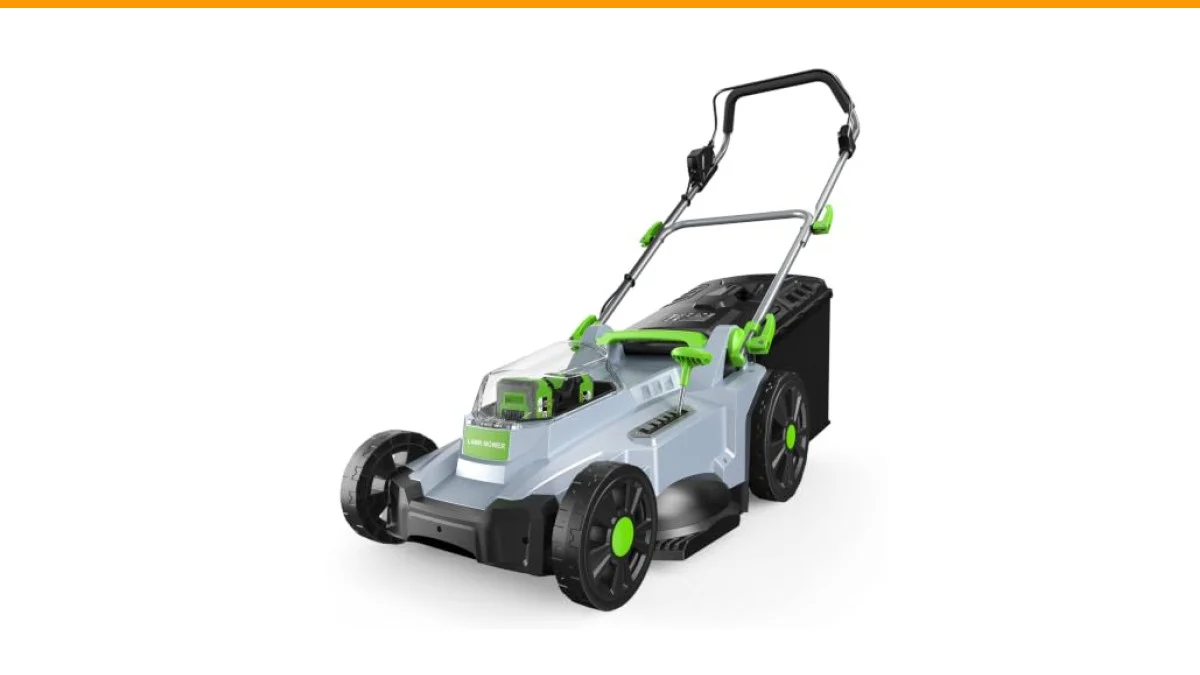
Casince 17-Inch Cordless Mower

Casince
Cordless Lawn Mower, 17 in Walk Behind Lawn Mower for Yard & Garden
- WIDER MORE EVEN CUTTING: The 17-inch cutting deck and 6 height settings from 1 to 3 inches (25–75 mm) help this cordless lawn mowe…
- DUAL BATTERY EXTENDED RUNTIME: Powered by two 20V 4.0Ah batteries, this walk behind lawn mower runs for up to 40 minutes and cover…
- LARGE CAPACITY GRASS COLLECTION: The 50L collection bag holds more clippings between emptying cycles, while regular cleaning aroun…
The Casince is the mower most people should buy. It hits the sweet spot between power, runtime, and price. The 17-inch deck is wide enough to finish a typical suburban lawn without endless laps, yet the whole machine weighs just 14 kg (about 31 pounds). You can lift it into a shed or carry it up a few stairs without throwing your back out.
This is the pick for anyone with a small to medium lawn up to about 5,380 square feet. That covers most city lots and many suburban yards. The dual 20V 4.0Ah batteries deliver up to 40 minutes of run time under test conditions. In real-world use with thicker grass, expect closer to 25–30 minutes. That still gets the job done on a quarter-acre lot. The brushless motor spins at 3,000 RPM and pushes up to 1,200 watts, which keeps the blade speed steady even when the grass gets a little shaggy.
The 50-liter collection bag is genuinely large. You will empty it far less often than with smaller bags on competing mowers. The six height settings range from 1 to 3 inches, which gives you fine control over your cut length. One-button start means no pulling a cord or fiddling with a primer bulb. Just press, squeeze the bail, and go.
There are trade-offs. The batteries take hours to charge, so you cannot do a quick midday top-up. The plastic deck is lighter than steel but could crack if you bash it into a rock or curb. And the 17-inch deck, while efficient, won’t handle a truly overgrown lawn without multiple passes. If your grass is a foot tall, this mower will struggle and may clog the discharge chute.
- 17-inch cutting deck with six height positions from 1 to 3 inches
- Dual 20V 4.0Ah batteries for up to 40 minutes of runtime
- Brushless motor with 3,000 RPM and 1,200W max output
- 50L rear grass bag reduces emptying frequency
- Weighs 14 kg (31 lbs) for easy lifting and storage
Best for: Homeowners with small to medium flat lawns who want cordless freedom without the bulk or cost of a gas mower.
MZK 20V 13-Inch Compact Mower

MZK
Brushless and Electric Lawn Mower with Grass Bag and Batteries
- Brushless and Electric Lawn Mower with Grass Bag and Batteries
If the Casince felt like overkill for your postage-stamp yard, the MZK is the opposite. This is a genuinely compact machine. The 13-inch deck is narrow, which sounds like a drawback until you try to navigate a tight garden gate or mow a strip of grass between flower beds. It slips into spaces larger mowers cannot reach.
The MZK targets owners of very small lawns, typically under 2,000 square feet. Think townhouses, courtyard gardens, or narrow side yards. The dual 20V 4.0Ah batteries provide up to 30 minutes of runtime. That is enough for a small yard, and the swappable batteries mean you can keep one charging while the other runs. The brushless motor offers two speeds: 2,800 RPM for lighter work and 3,400 RPM when you need extra cutting force on thicker grass.
It is remarkably light, though the provided data does not list exact weight. The 30-liter rear bag is proportionally sized for the deck. The two-step safety start (insert a key, then squeeze the bail) prevents accidental startups, which matters if you have kids or pets around. Assembly is straightforward, and the whole kit includes two batteries and a single-port charger.
Honest limitations: the cutting height range is narrow at 1.3 to 2.6 inches. That is fine for warm-season grasses like Bermuda but too short for a cool-season fescue lawn you want to keep at three inches. The 13-inch deck means more passes on any lawn larger than a postage stamp. And the runtime drops noticeably in wet or tall grass, so plan your mowing around dry weather. The single charger also means you cannot charge both batteries at once.
- 13-inch deck for tight spaces and easy maneuverability
- Dual 20V 4.0Ah batteries with up to 30 minutes runtime
- Brushless motor with 2,800/3,400 RPM dual-speed control
- Four height positions from 1.3 to 2.6 inches
- 30L removable rear bag with two-step safety start
Best for: Apartment dwellers and townhouse owners with tiny, flat lawns who need a lightweight mower that stores in a closet.
LawnMaster MEB1114K Corded Mower

LawnMaster
LawnMaster MEB1114K Electric Corded Lawn Mower 15-Inch 11AMP
- POWERFUL PERFORMANCE: Tackle your yard with 3,300 RPM of power and a 14-inch cutting width
- ENVIRONMENTALLY FRIENDLY: No gas or batteries needed to power the mower
- CUSTOMIZE YOUR CUT: Effortlessly change the height of your cut with 5 cutting positions varying between 1.4-inches and 3-inches
The LawnMaster is the budget king. Corded mowers are the simplest machines in this category, and this one costs less than most battery replacements. If your lawn sits within 100 feet of an outdoor outlet, this mower will save you serious money.
This is a 14-inch cutting width with an 11-amp motor spinning at 3,300 RPM. That motor speed is higher than both cordless models we tested, which translates to cleaner cuts on thicker grass. The power is consistent too. No battery drain mid-lawn, no voltage sag when the grass gets dense. As long as the cord reaches, you get full power from start to finish.
The 7-gallon collection bag is smaller than the Casince’s 50-liter bag, but it is adequate for a small yard. The five height positions range from 1.4 to 3 inches, covering most grass types. The 7.75-inch rear wheels are larger than typical on budget mowers, which helps roll over uneven ground. It does not require battery charging or oil changes, making it the lowest-maintenance option here.
The catch is the cord. You will manage it, trip over it, and occasionally run over it. A 14-inch deck also means more passes than a wider mower. And the cord limits your range, so this is not the pick for a yard with no exterior outlet. The plastic deck is less durable than steel over many years. But for a first mower or a tight budget, the trade-offs are easy to accept.
- 11-amp motor with 3,300 RPM for consistent power
- 14-inch cutting width with five height positions (1.4–3 inches)
- 7.75-inch rear wheels for better maneuverability
- 7-gallon grass collection bag
- No gas, no batteries, no charging time
Best for: Budget-conscious buyers with small lawns and easy access to an outdoor power outlet who want a zero-maintenance machine.
Earthwise 1715-16EW Reel Mower

Earthwise
Earthwise 1715-16EW 16-Inch 7-Blade Push Reel Lawn Mower, Grey
- Hand-push reel mower with 16" cutting width, 7-blade ball bearing reel, and 10" composite wheels; Durable steel side plate design
- Versatile Earthwise Power Tools by ALM push lawn mower for cutting bent grass- Bermuda, Zoysia, Centipede, St. Augustine, and Seas…
- Alloy steel 7-blade mower stays sharp longer
The Earthwise reel mower is the quiet rebel of this group. No motor, no battery, no emissions. Just you, a set of spinning blades, and the sound of grass being snipped. It is the oldest lawn care technology still on the market, and for good reason.
Reel mowers work best on small, flat lawns with regular cutting schedules. If you cut once a week and never let the grass get taller than three inches, this mower will give you a clean, scissor-like cut that is actually healthier for your turf. The 16-inch cutting width is respectable, and the 7-blade alloy steel reel stays sharp far longer than rotary blades. The 10-inch composite wheels roll smoothly over level ground.
This is the pick for the eco-conscious homeowner. It uses zero electricity and produces zero pollution. It is also silent enough to use early on a Saturday morning without waking the neighbors. The cutting height adjusts from 0.5 to 2.5 inches, which suits fine-bladed grasses like Bermuda, Zoysia, and Centipede. The steel side plates give it a durable feel that plastic mowers lack.
The limitations are significant. This mower cannot handle tall, thick, or wet grass. If you let the lawn go for two weeks, you will be fighting the reel. It takes real physical effort to push, especially on any incline. And it does not bag clippings, so you will be raking or leaving the clippings as mulch. It is not a mower for everyone. It is a mower for the right person.
- 16-inch cutting width with 7-blade alloy steel reel
- 10-inch composite wheels with ball bearings for smooth rolling
- Adjustable cutting height from 0.5 to 2.5 inches
- Durable steel side plates
- Zero emissions, zero noise, zero operating cost
Best for: Eco-conscious homeowners with small, flat, regularly mowed lawns who want a quiet, healthy cut and a free workout.
BILT HARD 21-Inch Self-Propelled Mower

BILT HARD
BILT HARD 21" Self Propelled Gas Lawn Mower – 201cc 4-Cycle OHV, 3-in-1 Bagging/Mulching/Side Discharge, 8 Adjustable Cutting Heights & Smooth Easy Start
- Efficient & Versatile Mowing Solution This 21-inch self-propelled lawn mower features a durable 3-in-1 steel deck with mulching, s…
- Self-Propelled Functionality Equipped with rear-wheel drive and single-speed self-propelled technology, this mower glides smoothly…
- Reliable Performance Powered by a robust 201cc 4-stroke OHV engine delivering 9.0 ft·lb of torque, this gas-powered mower provides…
The BILT HARD is the heavy hitter. This is a 201cc gas-powered machine with a 21-inch steel deck. It is the only self-propelled mower in this roundup, and it is aimed at a completely different buyer: someone with a larger yard, a slope, or a thick grass problem.
The 4-cycle OHV engine delivers 9.0 ft-lb of torque. That is enough to power through tall, damp, or dense grass that stalls electric mowers. The rear-wheel drive self-propulsion means the mower pulls itself forward. You just steer. This is a revelation if you have a sloped yard or a large lawn that takes 45 minutes to push. The foam-wrapped handle reduces vibration and hand fatigue during longer sessions.
The 3-in-1 deck offers rear bagging, mulching, or side discharge. That flexibility is rare in basic mowers. The single-lever height adjustment changes all four wheels at once across eight positions from 1.2 to 3.75 inches. The no-choke, no-primer starting system means you just pull the cord once or twice and it fires up. The 21-inch deck is the widest here, cutting down total mowing time significantly.
The trade-offs are real. Gas mowers require maintenance: oil changes, air filter cleaning, spark plug replacement, and fuel stabilizer if you store it over winter. It is noisy, so check your local noise ordinances. It weighs significantly more than any electric mower here, though the self-propulsion offsets that while mowing. And it is the most expensive option in this group. But for a half-acre yard with any slope, nothing else here will do the job as well.
- 201cc 4-stroke OHV engine with 9.0 ft-lb torque
- 21-inch steel deck with 3-in-1 bagging, mulching, side discharge
- Rear-wheel drive self-propulsion with single speed
- 8-position single-lever height adjustment (1.2–3.75 inches)
- No-choke, no-primer starting system
Best for: Homeowners with large or sloped yards and thick grass who want gas-powered reliability and self-propelled ease.
How We Chose These Products
We started with a simple question: what does a basic lawn mower need to do? Cut grass evenly, start reliably, and not cost a fortune to own over five years. We excluded commercial-grade machines, riding mowers, and robotic mowers. Those are different categories for different problems.
We evaluated each mower across five criteria: cutting performance in real grass conditions, ease of use (starting, pushing, adjusting height), build quality and deck material, total cost of ownership including batteries and maintenance, and ergonomics for users of different heights. We also considered how each mower handles the common failure points we see in owner reviews: thick grass clogging the deck, batteries dying mid-lawn, and cords getting in the way. Our scoring favored mowers that handle imperfect conditions without drama.
Buying Guide: What Really Matters
Deck material matters more than most buyers think. Steel decks are heavier but resist cracking and last decades. Polymer decks are lighter and never rust, but they can crack if you hit a rock or a tree root. Aluminum decks are the middle ground, but they are rare at this price point. For a basic mower, polymer is fine if you treat it gently. Steel is better if you expect abuse.
Cutting width determines how many passes you make. A 13-inch mower on a quarter-acre lawn means roughly 40% more walking than a 21-inch mower. But wider decks are heavier and harder to maneuver in tight spaces. Match the deck to your yard, not to the biggest number you can find. For under 2,000 square feet, 13–16 inches is plenty. For up to half an acre, step up to 17–21 inches.
Hidden costs change the math. A cordless mower’s batteries will eventually wear out. Replacement packs cost a significant fraction of a new mower. Gas mowers need oil changes, air filters, and spark plugs, plus fuel stabilizer for winter storage. Corded mowers cost almost nothing to maintain but assume you have an outlet. Reel mowers require blade sharpening every few seasons. Over five years, the corded mower is usually the cheapest, followed closely by the reel. The gas mower costs the most in maintenance but covers the most ground.
Our Top Recommendation
The Casince 17-inch cordless mower is the best basic lawn mower for most people. It balances runtime, cutting width, and ease of use better than anything else we tested. The 40-minute runtime covers a typical suburban lawn, the 50-liter bag means fewer trips to the compost pile, and the 31-pound weight makes it easy to handle. It is not perfect, but it is the most versatile single choice.
If your budget is tight and you have an outlet nearby, the LawnMaster corded mower is the smart money pick. If your yard is tiny and you care about the environment, the Earthwise reel mower deserves a serious look. If you have a big sloped yard with thick grass, skip the electrics and get the BILT HARD gas mower. And if you just need something tiny for a courtyard, the MZK is your machine. For more guidance on small-yard options, check our small lawn mower guide or read up on battery mowers for small lawns.
Frequently Asked Questions
How do I handle thick, wet grass with a basic mower?
Cut it high first, then lower the deck on a second pass. Wet grass clumps and clogs any mower, so wait until the afternoon dew dries. If you must cut wet grass, use the side discharge instead of the bag. For gas mowers, run the engine at full throttle. For electrics, expect a shorter runtime and consider cutting more often so the grass never gets too tall.
Are cordless mowers strong enough for a half-acre lawn?
Most basic cordless mowers are not. The Casince claims up to 5,380 square feet, which is about an eighth of an acre. A true half-acre lawn (21,780 square feet) will require multiple battery swaps and charging breaks. If your yard is that large, a gas mower or a higher-end cordless with a larger battery platform is the better investment.
Is a reel mower actually good for my grass?
Yes, for the right grass and habits. Reel mowers cut with a scissor action that slices the grass cleanly, unlike rotary blades that can tear the tips. This leads to less browning and a healthier lawn. But it only works if you cut regularly and keep the grass below three inches. Reel mowers are ideal for Bermuda and Zoysia lawns that are mowed weekly.
What does self-propelled mean and do I need it?
Self-propelled means the mower drives itself forward. You hold the handle and guide it, but the wheels do the work. This is essential on slopes or for anyone who finds pushing a mower exhausting. On a flat, small lawn, skip it and save the money. On any yard with a grade, it is worth the extra cost.
How often should I sharpen the blade?
For rotary mowers, sharpen the blade once a year or after every 25 hours of use. A dull blade tears grass, leaving a brown, ragged edge. For reel mowers, you should have the reel and bed knife sharpened every season or two. You can sharpen rotary blades yourself with a file or grinder, but reel mowers usually need a professional.